Cultural Dimensions Tied to Conflict
For the past 50 years, researchers have examined dimensions on which cultures differ or are similar (see the Oyserman et al. review on individualism/collectiv- ism). These dimensions represent cultural variability.
For some time, researchers of intercultural conflict highlighted the dimensions of individualism-collectivism, power distance, and self-construal (Ting-Toomey & Takai, 2006). Given its dominance in the research, we discuss these three dimensions with a focus on individualism-collectivism. Then we discuss conflict management differences tied to cultural variation.Individualism versus Collectivism
Researchers of the individualistic-collectivist dimension examine how much cultural members value individual rights and resources over group members’ rights and resources. For example, individualistic cultures place a primary emphasis on the self; the individual takes precedence over the needs, desires, and goals of a group. The “I” is emphasized over the “we.” High individualistic values are found in the United States, Australia, Great Britain, Canada, the Netherlands, and New Zealand. Collectivist cultures, however, focus more on the in-group collective than the needs of the individual (Triandis, 1995). In these cultures the “we” is emphasized over the “I.” China, Japan, Taiwan, Mexico, Indonesia, Columbia, Venezuela, Panama, Ecuador, and Guatemala represent collectivist cultures. As Triandis argued, different orientations toward individuals and groups yield different ways of handling and engaging in conflict. (Note to reader: the above two sentences show how cultural dimensions can be equated with different nations—as discussed above.)
Two examples illustrate how people from the same culture can differ in their views of the role of the U.S. national government. The opinions are taken from the Salt Lake City Tribune (June 24, 2011, p.
2):A collectivist view:
In fact, the purpose of government is to do collectively what we could not do as individuals. By pooling our resources, we can assemble a military for our mutual protection, build roads to facilitate commerce, pursue research to achieve better living,... and accomplish many other common goals. (Dana Carroll)
An individualistic view:
As for the idea of “common welfare,” there is no such thing. A society is only made up of individuals—there is nothing greater than that. Take away an individual’s right life and property and you’ve eliminated everything of value. The smallest minority on earth is the individual, and you cannot sacrifice one individual’s rights to benefit the majority. (Amy Sandoval)
These statements reveal individualistic versus collectivistic views, and they show that the views within one nation can differ.
Power Distance
Although people can exhibit individualistic and collectivistic values, Hofstede (2001) argued that cultures also display power distances aligning with their individualist or collectivist values. Power distance refers to “the degree to which inequities in power are viewed as natural and inherent in the individuals in a culture” (Gudykunst & Ting-Toomey, 1996). High power distance cultures view power as vital and necessary to society. In high power distance societies, social hierarchies and status differences clearly emerge. In low power distance cultures, people are seen as equals and inequities in power stem from different roles (e.g., supervisor, father).
As with individualism and collectivism, power distance occurs through interaction and is reflected in corporate cultures (Carl, Gupta, & Javidan, 2004). In this case, power distance refers to the way corporate cultures approach power. Large power distance corporations groom unequal power distributions and desire feedback from experts or other high-status individuals. Small power distance corporate cultures strive for symmetrical relations, equal power distributions, and opportunities for individuals to share information.
Placing the individualism—collectivism dimension on a horizontal axis and large/small power distances at 90 degrees on a vertical axis yields four primary approaches: impartial, status—achievement, benevolent, and communal (Ting- Toomey & Oetzel, 2001; Ting-Toomey & Takai, 2006). Figure 10.1 illustrates how power differences overlap with individualist—collectivistic cultures. In addition, these four approaches can identify how corporations can be portrayed.
The impartial approach combines individualistic values and small power distance. This approach values personal freedom and equal treatment (Smith, Dugan, Peterson, & Leung, 1998) and can be found in Denmark, the Netherlands, Sweden,
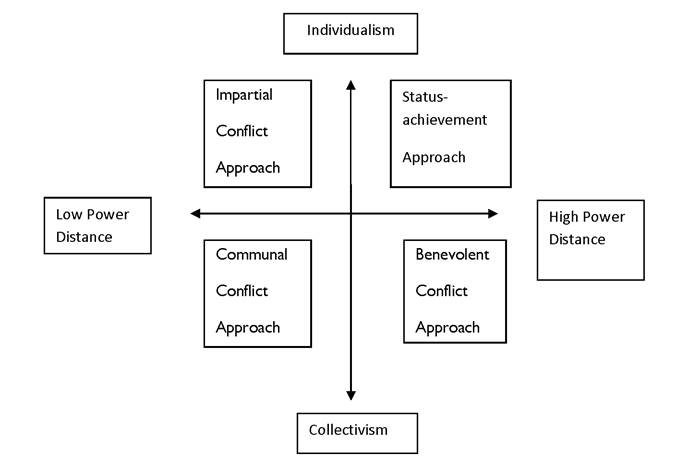
FIGURE 10.1 The Intersection of Power and Individualism
Note: From Ting-Toomey & Oetzel (2001).
and Norway (HofStede, 2001). This approach indicates that direct and straightforward messages reflect how people (e.g., management vs. worker) can confront the other person because status is not a big deal. The status-achievement approach merges individualistic values and large power distance. People highlight the importance of personal freedom, but power inequalities must endure so the company can run efficiently. This approach is reportedly common in France and the United States (Storti, 2001; Ting-Toomey & Oetzel, 2001). The benevolent approach combines collectivist and large power distance, and it stresses obligation to others and power inequalities. This approach occurs in many countries, including Latin and South American nations (e.g., Mexico, Venezuela, Brazil, Chile), most Asian nations (e.g., India, Japan, China, South Korea), most Arab nations (e.g., Egypt, Saudi Arabia, Jordan), and most African nations (e.g., Nigeria, Uganda) (Hof- stede, 2001). Finally, the communal approach, which is the least common of the four approaches, combines collectivist and small power distance.
This approach emphasizes interdependence and equality. Hofstede reported that Costa Rica is the only country to fit this approach.Understanding the individualism-collectivism dimension remains important to the extent that people rely on these dimensions to guide their behaviors. In general, individualistic people tend to use words to convey their ideas and feelings, so they choose direct words, developed explanations, precise usage, and exaggerated
stories (Gudykunst et al., 1996). People in collectivistic cultures rely on context for meaning, so they select indirect language and listen; they show sensitivity, less openness, fewer words, but more words that state appreciation for the identity management of group members (Gudykunst et al., 1996; Oetzel, 2005).
The use of low-context versus high-context communication helps one understand the role communication plays in individualist and collectivist cultures. A low-context style of communication refers to a reliance on explicit language to make one’s ideas clear. Information is shared and expressed to manage conflict and fill in missing contextual information (Hall, 1976). In addition, low-context communicators use overt expressions, focus on the sender, and prefer direct strategies (Ting-Toomey, 1985). Low-context communication occurs within individualistic cultures, such as the U.S., Norway, and Germany. On the other hand, high-context communication offers minimal explicit language, so message receivers must glean relevant information from the context of the interaction (Hall, 1976). High-context communication utilizes an indirect negotiation mode and subtle nonverbal cues. High-context communication occurs in many collectivist countries, such as China, Japan, and Mexico. The above material leads to the first principle regarding cultural variability:
Conclusion 10.1: People in different cultures prefer to communicate directly or indirectly to represent their cultural values.
Suggestion 10.1: Be mindful of the possibility that people from other cultures communicate (in)directly and in ways given the value of their situational cues.