A FRAMEWORK FOR RESEARCH AND PRACTICE
The preceding survey and analysis of approaches to research on media and conflict resolution reveal several fundamental weaknesses. The lacks of collaboration among scholars and practitioners and of multi-disciplinary tools for analysis have been responsible for the slow advancement of knowledge.
The first step to close the gap could be an effort to construct one basic framework for analysis of both theoretical and practical approaches and projects. This effort should be based on careful integration of models and theories from the fields of both communication and conflict resolution. This section suggests a new comprehensive framework for analysis, which is based on several significant distinctions among types and phases of conflict and types, levels and functions of the media.Types of conflict
Since the end of the Cold War, the nature and level of international conflicts have changed considerably (Crocker, Hampson, & Aall, 2001). Until the end of the Cold War, most conflicts occurred between and among states, but afterward they mostly occurred at the intrastate or global levels. Ethnic and civil wars erupted in Yugoslavia and the former Soviet Union and they also exploded in Africa, in places such as Rwanda, Somalia, Sudan and Liberia. At the other end, the September 11 terrorist attacks on New York and Washington by Islamic fundamentalists, and similar subsequent attacks in Great Britain, Spain, Kenya, Indonesia, Bali, Turkey, Tunisia, Saudi Arabia, and Egypt, as well as the US-led wars in Afghanistan and Iraq, represent conflict at the global level. The “clash of civilizations” theory and debates about the economic and social consequences of globalization also deal with conflict at the global level (Barber, 1995; Huntington, 1996; Nye, 2004).
Contemporary conflicts generated analytical distinctions among different kinds and levels of violence.
Even during the Cold War, protracted limited violence, exemplified primarily in terrorism and guerilla warfare, and not large-scale conventional wars, have dominated international relations. Consequently, scholars have distinguished between High Intensity Conflict (HIC), where violence is characterized by major wars, and Low Intensity Conflict (LIC), where violence is characterized by much more limited and irregular uses of force. Luttwak (2002) coined a post-modern term—“post-heroic war”—to describe the essence of LIC. Media coverage of LIC is extremely crucial because the main goal of the sides engaged in this type of conflict is to alter the enemy's perception (Sowers, 2005). A conflict in a particular region may be moving across time from one type of conflict to another. For example, in 2003, the USA fought a full-scale war in Iraq, but since then has been engaged in LIC. Given the basic different characteristics of the two types of conflict, their resolution may require different approaches. Consequently, media intervention and coverage in the resolution of LIC may present different challenges and dilemmas.Phases of conflict
Many scholars and practitioners distinguished among three highly simplistic phases of conflict: pre-conflict, conflict, and post-conflict (Howard, 2002; Spurk, 2002) or pre-violence, violence and post-violence. I think that we need meaningful concepts and not just time frames to describe the pre- and post-conflict phases, and I suggest distinguishing among four stages of conflict based on a critical condition and a principal intervention goal: onset prevention, escalation management, deescalation resolution and termination reconciliation (Gilboa, 2006, pp. 599-601, 2007). Each phase has distinctive characteristics and ends in specific outcomes. Only the last two phases are relevant to this work. I suggest that the post-conflict or postviolence phase should be divided into two separate stages: resolution and reconciliation. The difference between the two stems from the significant distinction Galtung (1969) made between “negative peace” and “positive peace.” Negative peace refers only to the absence of violence, while positive peace refers to the building of new relations in many relevant areas between former enemies, including open borders, trade, tourism, and cultural ties.
Other scholars made a similar distinction between “conflict resolution” and “conflict transformation” (Lederach, 1995, 1997). In the resolution phase, leaders attempt to negotiate an agreement to end violence. If they reach a formal agreement, it may end violence and facilitate transformation; if they do not, they may resume violence or create a stalemate. According to Lederach, conflict transformation usually involves transforming perceptions of issues, actions, and other people or groups; the way conflict is expressed; and it must take place both at the personal and the systemic level.The distinctions between resolution and transformation of conflicts are based on the assumption that even if the sides reach apeace agreement, it is only an agreement between leaders, not between peoples, and it has to be fully implemented and respected over time. Therefore, in the reconciliation stage, the parties attempt to move from negative peace to positive peace. They try to fully engage their respective peoples and transform relations from hostility to amicability. Vayrynen (1999) raised questions about the meaning of transformation and placed the concept in a different context. To him, transformation means a major change in a principal element of a conflict including actors, issues, and rules, and therefore it may occur at any phase. He even argued that transformation must happen before resolution becomes possible. Given this approach and the different meanings applied to transformation, I searched for an alternative concept. The options were “peace building” and “reconciliation.” Several scholars equate the two (Jeong, 2002; Paris, 2004), but others (Howard, 2002; Lederach, 2005; Spurk, 2002) use peace building as a general concept. I prefer “reconciliation” because it best captures the essence of the last stage in conflict resolution (Bar-Siman-Tov, 2004; Brown & Poremski, 2005; Rothstein, 1999).
Types of media
Any analysis of the media roles in conflict resolution must address both the traditional media (newspapers, television and radio) and the new media.
Very little research has been conducted on the functions of the new media. When analyzing the media roles, it is also necessary to distinguish among different types and levels of media. In many studies, authors write about “the media,” but they often mean the Western media. “Global” often refers to the ability of media outlets to reach global audiences or to networks claiming to represent a truly world perspective devoid of any national, ethnic or cultural bias. The hybrid “Glocal” refers to media that deal with local or national issues but are capable of reaching audiences around the world such as the Internet.I suggest distinguishing among five levels of media by geopolitical criteria: local, national, regional, international, and global. Local media include newspapers, television, and radio stations operating in a town, a city, or a district. National media include newspapers and electronic media operating within the boundaries of nation-states. Regional media operate in a region defined by history, culture, tradition, values, language, or religion. Examples of regional media include the Dubaibased Al-Arabia that broadcast primarily to the Middle-East, and the SouthAfrican Broadcasting Corporation that serves Africa. International media include broadcast and print media used or sponsored by states to operate across international borders. International media include the Voice of America, BBC World, Qatar's based Al-Jazeera, France 24, the Russian Vesti-TV and the Iranian Press TV. The global media include privately owned commercial television networks such as CNN International; and print media such as the International Herald Tribune and The Economist.
Both the international and the global media reach global audiences, but the international media present news and commentary from the perspective of a particular state, while the global media have no such official allegiance. It is also interesting to note that both CNN and the BBC operate two separate broadcasting systems: CNN International is a global network while CNN-US is national, and BBC World is an international network while BBC-UK is national.
The global networks don't broadcast respectively in the USA and the UK. There are significant differences in approach and content between the national, the international and the global broadcasting of the same network, but very little research has been conducted to explore how wide the differences are and what their implications are. Al-Jazeera is a unique case because it was established and is subsidized by the Emir of Qatar (Powers & Gilboa, 2007). It is extremely important to distinguish between the local and the national media in conflict regions and external media that operate outside these regions.Media functions
The functional theory is a classic communication theory anchored in sociological system theory, which views institutions, including the media, as performing roles designed to meet the needs of individuals and societies. The functional theory paved the way to several approaches and techniques in modern communication research including media effects, uses and gratifications, agenda-setting, framing, priming, cultivation theory and the spiral of silence theory. Several scholars have even described the functional theory as a paradigm—a master theory in control of most research in mass communication (McQuail, 2000). Application of functionalism to mass communication developed over time through several stages. Lasswell (1948) first suggested three media functions: surveillance of the environment (news coverage); correlation of the parts of society (interpretation of news and information, commentary, and editorial opinion); and transmission of culture (history, values, religion, language, etc.). Wright (1960) added a fourth function: entertainment. He also distinguished between functions and dysfunctions, and constructed a framework for functional analysis. McQuail (1987) added a fifth function, mobilization: the “campaigning for societal objectives in the sphere of politics, war, economic development, work, and sometimes religion” (p. 71).
Wright's important distinction between functions and dysfunctions is very pertinent to this study.
Most approaches to media intervention in conflict resolution have ignored unintended consequences, both positive and negative. The media may provide useful information to citizens who could be motivated to act against their own interests and the interests of their community. For example, the purpose of reporting on financial difficulties of a bank is positive, or functional—warning bank customers of a threat to their accounts—but the result could be dysfunctional if all of them went to the bank, liquidated their assets, and drove the bank to bankruptcy. Application of the Wright formula suggests that even if the media are sincerely interested in positive contribution to conflict resolution, the results may backfire. Media-initiated negotiations could be functional, if coverage helps to build wide public support for the process, but if opposition forces prevail, the coverage could be dysfunctional. In addition, functions and dysfunctions may vary for each of the five basic media functions, all of which are relevant to the study of media intervention in conflict resolution. Even entertainment may include implicit or explicit messages that may either help or hinder efforts to effectively deal with conflict resolution and reconciliation.Substantial research is needed to explore functions and dysfunctions for different types of conflict and media.
The framework
Figure 23.1 describes theproposed framework for analysis. It shows how research can be organized to explore positive and negative contributions of the media by the five media functions and the two stages of conflict resolution. Other possible dimensions include the two types of conflict: HIC and LIC; the two types of media, traditional and new: newspaper, television, radio and the Internet; and the five levels of media: local, national, regional, international and global. The proposed framework is flexible and allows partial or selective applications. Researchers do not necessarily need to apply the whole framework to all the phases, dimensions and variables. They may choose to investigate all the five functions in one stage; or one function, such as news, across the two phases; or they can focus on one function in one phase, such as interpretation in conflict resolution. They may apply the basic framework to each of the three other dimensions. For example, one could investigate the functions and dysfunctions of news in the new media or in the local media.
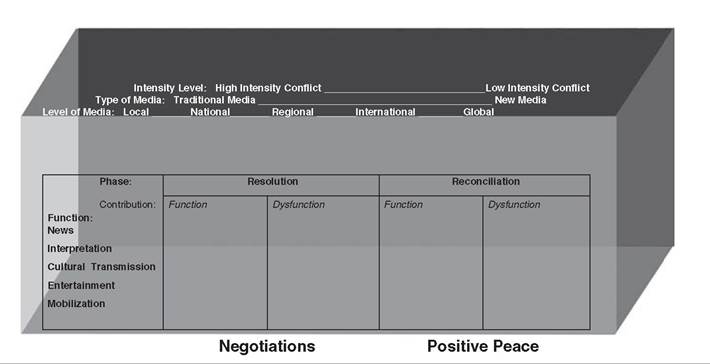
Figure 23.1 Conflict resolution and reconciliation: A framework for analysis