THE CLUSTERING OF CIVIL WAR
It is well known that certain parts of the world have experienced more civil conflict than others, and many researchers have noted the existence of conflict clusters, or areas that experience a large number of conflicts at the same time (Buzan and Wsver 2003; Gleditsch 2002; Singer and Wildavsky 1996.
For example, in the 1980s, Central America saw a large number of Marxist insurgencies, and later, in the 1990s, there were a large number of simultaneous or consecutive conflicts in the Great Lakes region of Africa. Figure 31.1 displays the geographical distribution of intrastate conflicts listed in the Uppsala Conflict Dataset (Gleditsch et al. 2002) over the period 1993-2003, as displayed by the ViewConflicts program (R0d 2003). Certain conflict clusters are clearly discernable, including Western Africa, the Caucasus, and the Balkans.The conventional “closed polity” approach to comparative civil war studies would treat all of these conflicts of war as independent events, where each outbreak occurs in an independent manner, due to factors fully contained within each individual country. This assumption, however, contrasts sharply with much of the case-based discussion of civil wars in conflict-prone regions, which often emphasizes the importance of transnational linkages between conflicts and actors (e.g. Ardon 1998; Bye 1991; Collier and Sambanis 2005; McNulty 1999). Moreover, many statistical analyses have found that countries with neighboring states experiencing civil war appear to have a pronounced higher likelihood of violent conflict onset than other states (e.g. Esty et al. 1998; Gleditsch 2007; Salehyan and Gleditsch 2006; Sambanis 2001; Ward and Gleditsch 2002). Skeptics might wonder whether this seeming clustering in conflict is persuasive evidence for diffusion, since the domestic factors believed to influence the likelihood of civil war such as poor economic performance are also likely to cluster geographically (see e.g.
Gleditsch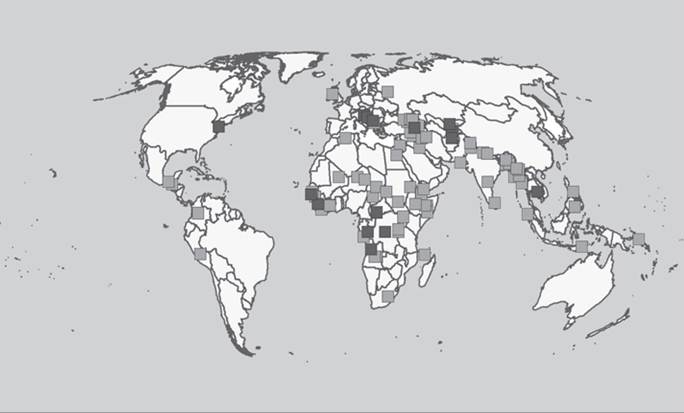
Figure 31.1 Location of armed conflicts, 1993-2003
Note: Location of intrastate conflicts (dark) and internationalized intrastate conflicts (light dots), 1993-2003, based on the Uppsala conflict data. Each dot corresponds to the geographical midpoint of a conflict assigned a unique ID, based on conflict incompatibility. See Gleditsch et al. (2002) for further details on the Uppsala conflict data.
2002).5 However, this spatial clustering in civil war holds even after considering other potential influences on civil war that may be spatially clustered, and has been replicated in many studies. Indeed, Hegre and Sambanis (2006) find that the positive impact of neighboring conflict on the risk of civil war is one of the few predictors in civil conflict studies that remains robust under many possible specifications.
Although the finding that conflict in a neighboring state increases the risk of conflict is not controversial by itself, there is little consensus on what it is about the presence of civil war in one state that increases the risk of civil conflict in another state. Most of the literature on the diffusion of conflict has focused on other forms of conflicts, such as interstate wars (e.g. Siverson and Starr 1991), urban riots (e.g. Midlarsky 1978; Myers 2000), general political protest, including non-violent actions such as demonstrations and strikes (e.g. Hill and Rothchild 1986; Reising 1999), or forms of one-sided violence against civilians such as lynching (e.g. Tolnay, Deane and Beck 1996), and has not been directly related to civil war per se. In the next section, I will consider possible mechanisms linking civil war in one state to an increased risk in other states. Much of the literature on the spread of civil war has been cast rather narrowly around direct conflict contagion and geographic proximity as a measure of the opportunity for conflict to spread.
Buhaug and Gleditsch (2008) find that the risk of civil war does not depend on measures of degrees of interaction opportunity such as length of shared borders, which suggests that particular ties between states are more important than just geographical closeness per se. Moreover, there are many ways other than through the actual onset of a civil war in another state whereby a civil war in one state may “spread” or influence other states. For example, civil wars may spread to forms of conflict other than civil war, and civil wars may have many detrimental consequences for other states even in cases where violence does not erupt. These forms of spread are discussed in subsequent sections.Spread of civil conflict onset
Spread of conflict onset through transnational actor linkages
One of the most obvious mechanisms whereby conflicts may spread is through transnational linkages to actors in an ongoing civil war. The actors in civil wars often have a transnational presence. In particular, many civil wars revolve around peripheral ethnic groups who seek political concessions or secession from a nation state. Most ethnic groups are not confined to a single nation state, but often extend into other states. For example, about two-thirds of the ethnic groups included in the Minorities at Risk data set (Gurr 1993) are considered to have significant segments in other states. Individuals in a minority group may face similar grievances in many states, and decisions to resort to violence in one state are likely to be influenced by decisions made elsewhere.
Transnational ethnic linkages can influence the prospects for conflict onset in a number of ways. Transnational ethnic kin often contribute financially to insurgencies. Moreover, individuals from transnational communities often participate in insurgencies in other states. Hence, groups that can draw upon assets among diasporas can often mobilize resources far greater than would be expected from their size or influence.
Groups with transnational linkages can furthermore often benefit from safe havens among communities in other states. Transnational bases of support in other states can greatly increase the fighting capacity of insurgencies that would otherwise be weak and ineffective. Although international borders are not necessarily difficult to cross in a military sense, their political status as markers of state sovereignty makes it politically more difficult for states to violate them (e.g. Salehyan forthcoming). Members of emigre communities often hold more extreme views than individuals in origin countries, and are less likely to be deterred by government repression, since these cannot as easily be targeted. Just as transnational linkages can influence initial onset, there are many factors that that can increase the potential of civil wars that involve groups with a transnational presence to spread between countries. Successful rebellion by group members in one state can often inspire members of the ethnic community in other states to resort to violence. If a group is already mobilized in one state, then it can count on access to arms and trained combatants in other states.The cases of the Albanian communities in Kosovo and Macedonia illustrate the role that transnational ethnic ties may play in civil conflict onset and its spread. Although Albanians were a majority in the Kosovo region of Serbia, their political and cultural autonomy became severely repressed after Milosevic revoked the province’s autonomy in 1989. Whereas the local Albanian leaders favored a non-violent strategy of confrontation, the more hard-line Kosovo Liberation Army (KLA) advocating violent struggle emerged in the late 1990s. The KLA was heavily dependent upon support from the Albanian emigre community, and recruited massively among Albanians outside the province. Moreover, the organization benefited from bases in Albania, where it could retreat and regroup under repression from the militarily much stronger Yugoslav Federal Army.
Whereas the armed conflict in Kosovo ended after the NATO intervention, theAlbanian insurgency that broke out in 2001 in Macedonia can be seen as a continuation of the prior Kosovo insurgency, seeking to replicate the successful use of violence to gain political concessions in Macedonia. Although formally an independent organization, many of the combatants in the Albania National Liberation Army (NLA) in Macedonia had previously participated in the KLA uprising in Kosovo, and the NLA arose in the wake of the massive influx of Albanian refugees from Kosovo to Macedonia. The specific timing of the NLA insurgency is difficult to explain with reference only to events inside Macedonia proper. Although Albanians faced many grievances in Macedonia, the authorities had made significant concessions to the Albanian community prior to the outbreak and the government at the time included Albanian political parties.The presence of such transnational ethnic linkages in many civil wars suggests that this is likely to be one of the important mechanisms underlying the spatial clustering in civil wars. However, it is difficult to assess more systematically to what extent such linkages influence resort to violence. Most analysis looks only at linkages in actual conflicts (e.g. Heraclides 1999; Salehyan, Gleditsch and Cunningham 2006), which does not allow us to assess how many potential opportunities for transnational support are not associated with onset. Buhaug and Gates (2002) find that civil wars are more likely to take place in border areas, but do not consider whether the actors involved have kin on the other side of an international boundary. Using country level data, Gleditsch (2007) finds that states with a larger number of transnational groups are more likely to experience conflict onset, but this does not directly answer whether the transnational communities with potential transnational support are more likely to rebel. At the group level, data from the Minorities at Risk (MAR) project suggest that ethnic groups with transnational kin support are much more likely to engage in rebellion (see Gurr 1993).
However, there are a number of problems associated with using the MAR data here. The MAR data are organized around minorities in specific countries, and limited to minorities considered to be at risk.6 Moreover, some of the groups identified cannot be considered cohesive actors, such as “Foreign Workers” in Switzerland or “Blacks/Asians” in the UK, and the labels used are not standardized across countries. This makes it difficult to analyze group linkages across state boundaries. New efforts to improve data on ethnicity and political exclusion will greatly facilitate new empirical research in this area (see Cederman, R0d and Weidmann 2006).Spread of conflict onset through government alliances and rivalries
Alliances between peripheral groups and state governments are another form of transnational linkages that can induce the spread of conflict between states. Many insurgent groups count on support from the governments of other states. In some cases, insurgent groups and neighboring governments have shared ties, and support will often stem from sympathy for groups and a desire to see some concession for the group's objectives. However, state support for insurgencies in other states may also be motivated out of antipathy with the government of that state, or pecuniary motives from conflict rather than necessarily sympathy or links with insurgent groups per se. Government involvement in insurgencies in other countries can lead to competitive interventions, where states support insurgencies in rival countries to retaliate for intrusion in their own domestic affairs. Since the prospects for support and its reliability will depend upon who holds power in other states, changes in the coalitions that hold power in relevant countries will augur large changes in the resources that insurgent groups can mobilize.
Western Africa around the turn of the Millennium exemplifies such patterns of competitive interventions giving rise to new outbreaks of civil conflict as well as making civil wars more persistent. Former Liberian President Charles Taylor, for example—who himself rose to political prominence as a warlord in a civil war, operating from Cote d'Ivoire—had consistently poor relations with his neighbors, and is widely held to have supported insurgencies in other states in the region, including the Revolutionary United Front (RUF) in Sierra Leone and the Forces Democratiques de Guinee rebels in Guinea.7 Taylor's involvement in neighboring conflicts in turn brought about new anti-Taylor insurgencies in Liberia, allegedly supported by neighboring regimes seeking to retaliate for Taylor's intrusion in their internal affairs. The government of Guinea is believed to have backed Liberians United for Reconciliation and Democracy (LURD), while the Ivorian government allegedly backed the Movement for Democracy in Liberia (MODEL). By the end of 2003, the two movements had greatly reduced the Taylor government's control over Liberia, and Taylor eventually agreed to resign under international pressure. The Great Lakes Region of Africa in the late 1990s further illustrate how regional shocks and changes in political coalitions in other states influence the prospects for civil war outbreaks (see McNulty 1999). When the Tutsi-dominated Rwanda Patriotic Front seized control in Rwanda with the assistance of Uganda, many ethnic Hutus fled to refugee camps in neighboring Zaire. These refugee camps became dominated by the Hutu Interahamwe militias and former military personnel, who carried out several attacks against Rwandese territory. In retaliation, the government of Rwanda started to support a long-dormant Marxist insurgency in Zaire headed by Laurent Kabila, hoping to undermine the stability of Zaire and afford opportunities for Rwanda to directly intervene and limit the military threat emanating from the refugee camps. With the new outside support, Kabila defeated the Mobutu regime relatively easily, seizing the capital Kinshasa in May 1997.
These tendencies have been supported more generally in some empirical studies, albeit the measures used have often been somewhat indirect. Using democracy as a proxy for constraints and opportunities for intervention in the affairs of other states, Gleditsch (2007) and Sambanis (2001) find that states with less democratic neighbors are more likely to experience civil war onset. Salehyan (forthcoming) show that the risk of conflict onset is higher for states with neighboring rivals. Looking at ongoing conflicts, Akcinaroglu and Radziszewski (2005) find that rivalries tend to prolong war duration. Salehyan, Gleditsch, and Cunningham (2006) develop new indicators of assistance from states, including cases where such support is alleged, but not acknowledged. Their analysis indicates that support from other states tend to make civil conflicts more persistent, supporting the idea that outside support can make conflicts more difficult to resolve.
Spread of conflict through direct conflict contagion
So far, I have discussed how direct linkages between actors in an ongoing civil war and actors in other states can make new conflicts more likely. However, civil war in one country may also increase the risk of conflict in other states, even in the absence of any direct functional links between the actors involved or the issues at stake in the conflict. Conflict in one country may promote conflict onset in other states due to demonstration effects. Resort to violence by one group in one state by one group facing grievances can inspire other groups with grievances against a government to follow their lead, even in the absence of any direct contact. One the one hand, the success of others may promote violence, as groups are likely to emulate the strategies that have been successful in other countries. As a result, we would expect that politically successful insurgencies in one state could give rise to a bandwagon or series of copycat efforts in other states. On the other hand, the problems faced by others may also lead groups to resort to violence for defensive purposes in the wake of experiences from other states undergoing civil war. If actors observe severe repression carried out against a minority group in another state, they may come to believe that similar acts could occur in their own state. Expecting state repression and fearing that they may be at a disadvantage later, groups may be more likely to resort to mobilization and preemptive use of violence.
Demonstration or learning effects across states are difficult to assess directly, since we do not have any way of inferring to what extent decisions to rebel are made contingent on events in other states (see e.g. Kuran 1998). Hill et al. (1998) suggest one approach to study diffusion based on temporal contagion (see also Coleman 1964; Strang and Tuma 1993), but such methods have not yet been applied to the study of civil war. However, the history of anti-colonial movements, particular insurgent tactics, and conflicts within certain regions show temporal dynamics that are consistent with demonstration and learning effects across countries. The colonial struggle in Algeria against the French, for example, became a source of inspiration for movements in many other countries, including the PLO, who shifted to a strategy of guerrilla warfare as it came under control of the Fatah faction lead by Yasser Arafat. The radical Sionists's successful use of terrorism to obtain political concessions under the British Mandate in Palestine was later emulated by the Greek National Organization of Cypriot Fighters (EOAK) seeking independence from Britain. More recently, suicide bombing appears to have diffused and gained popularity based on its perceived success in other states (e.g. Enders and Sandler 2005; Pape 2003). Tull and Mehler (2005) argue that the proliferation of power-sharing agreements in efforts to end civil wars have encouraged insurgencies as the method for would-be-leaders to establish a claim on power. Finally, the end of the Cold War saw a number of outbreaks of civil conflict in the former Soviet Union, which are often seen as evidence of demonstration and emulation effects across conflicts and actors within the successor states.
The spread and availability of arms is another feature that can give rise to the spread of conflicts. Rebels require some military means to launch an insurgency against a state or to resist government forces. Whereas states - within some limitations - can purchase arms on the global markets, rebels have fewer avenues for purchasing weapons openly. Moreover, countries that experience or are considered at risk of civil war often become subject to international sanctions on the sale of weapons (e.g. Tierney 2005). This in turn creates opportunities for black market dealers to capitalize on the demand for weapons (see Brauer 2007). Civil war in another country may increase the risk of civil war by increasing the availability of arms, thereby lowering the costs to launching insurgencies (e.g. Collier and Hoeffler 2004). Since borders are often porous, neighboring countries may find it difficult to prevent arms from coming in from neighboring countries. Hence, all else equal, a higher availability of arms in neighboring states undergoing conflict should be expected to increase the risk of conflict in neighboring states through lowering the cost of launching insurgencies.
There has been relatively little empirical research on how arms availability influences the risk of conflict. Looking at official arms transfer data, Craft and Smaldone (2002,
2003) find that greater availability of arms increases the probability of conflict. Arms transfer data, however, record primarily sales to government, and are less suitable for addressing the issue of access to arms for insurgents, who often may be unable to by arms on the open market. Killicoat (2006) develops a new data set on Kalashnikov assault rifle prices to evaluate the link between the price of arms and conflict outbreaks. His results suggest that lower prices indeed are associated with a greater probability of conflict. Moreover, the price of arms vary strongly by measures of the effective trade barriers for illicit trade, which in turn suggests that civil wars in neighboring states combined with decreased ability to monitor cross border interactions can substantially increase the availability of cheap arms and heighten the risk of conflict.
Spread to interstate conflict and transnational terrorism
In addition to outbreaks of intrastate conflict in other states, civil war may also spread violence outside the boundaries of the state where the conflict occurs through promoting types of violence other than traditional intrastate conflicts.
There are many ways in which a civil war may give rise to a war between states. Just as the activities of civil wars are rarely fully confined within the boundary of a single country, they can often lead to conflict between the origin country and other affected parties. Civil wars often take place in border areas (e.g. Buhaug and Gates 2002), and rebels will often move across international borders to seek safety from government repression (e.g. Salehyan forthcoming). But although borders may afford rebels some degree of protection from government forces since governments face political problems in crossing into the territory of other sovereign states, border violations certainly can and do occur (see Gleditsch and Salehyan 2007). In some cases, military forces may pursue rebels into neighboring territory, or retaliate against rebel activities by aerial bombardment. In some cases, states have even invaded and occupied the territory of other states to deny rebels ground to operate and launch attacks from. Such activities are likely to generate strong protests from the country that sees its territorial sovereignty violated. In some cases, the response may extend beyond diplomatic protest and include militarized use of violence.
Civil wars may also give way to international wars due to the transnational linkages of the conflict actors, even in the absence of any direct border violations. The insurgent side in civil wars will often count on support from sympathetic governments. Such linkages between civil war actors and foreign governments may give rise to conflict between states in several ways. First, repression or abuses against the constituency of an insurgent group may lead an outside government to protest against the conflict host government, possibly backed up with threats of resorting to military force unless the government in the conflict country ceases to suppress the group in question. Second, actual intrusion or alleged support by outside governments for the insurgent side in a civil war government will often lead to protests from the conflict government, which may be backed up by threats or actual resort to military force. Finally, conflict may ensue due to the consequences of conflict for other states, including accidental bombings or refugee burdens imposed on neighboring states.
Many researchers have postulated that the international conflict behavior of states may be related to domestic conflict (e.g. Rummel 1963; Wilkenfeld 1968). However, most of this literature has focused on so-called diversionary conflict, where states are held to start conflict in order to distract attention from domestic discontent (e.g. Coser 1956; Hess and Orphanides 1995; Levy 1989), rather than the possibility that interstate conflict behavior may reflect responses to civil wars. Gleditsch and Salehyan (2007) find that the presence of a civil war almost doubles the likelihood that a country will find itself involved in a militarized interstate dispute (MID). Similarly, at the dyadic level, the odds of a MID increase by a factor of over 1.3 if one of the states involved find themselves at a civil war. Investigating the international security risks associated with particular linkages remain difficult, given the limited information in existing data sources. Salehyan (forthcoming) shows that tacit or explicit support for rebel organizations— particularly the provision of sanctuary— increases the probability of conflict between states, with external rebel bases yielding a particularly large effect. A number of studies have looked at how ethnic minority groups present in other states may predict to conflict with other states (e.g. Davis and Moore 1997; Woodwell 2004). However, these studies do not consider whether the ethnic relations are characterized by violent conflict, or how particular acts at the domestic level influence violence between states.
The lack of empirical research on possible linkages between intrastate and interstate conflict reflects a more general lack of attention to issues in the literature on international conflict (e.g. Diehl 1992). Much of the research on conflict between states simply blackboxes the specific issues over which conflict may arise, and instead looks at how characteristics of relations between states can influence the risk that disputes or crises will turn violent. Statistical models of the probability of conflict between states have tended to emphasize predictors of peace, such as joint democracy, rather than features making war likely (e.g. Fearon 1995; Oneal and Russett 2001). However, Gleditsch and Salehyan (2007) find that about a third of the disputes for which summaries are available in the new Militarized Interstate Dispute (MID) data seem to originate out of issues or conflicts within states. It is unreasonable to expect that one should be able to predict conflict between states well without attention to the potential issues over which conflict may arise, and many models of interstate conflict that focus exclusively on state-to- state relations such as power and trade simply may not have the relevant explanatory factors to identify where conflict is likely to occur.
Investigating the relationship between civil war and conflict between states has also been complicated by ambiguities in distinguishing between forms of conflict and the ways that this has been handled in existing data. For most conceptualizations, whether a given conflict should be considered interstate or intrastate will depend on the degree of involvement of other states on the rebel side. At the extreme end, a direct military intervention on the part of the insurgent side could turn a civil war into an interstate war. However, outside support to insurgents is rarely at a level where the insurgent side ceases to be a meaningful actor. Since a full military intervention is very costly, states often support insurgents in other ways, including military or financial support. Many existing data collection projects impose a strict and mutually exclusive separation between interstate or civil wars. However, such a sharp distinction is often quite difficult to draw in practice, especially when conflicts are treated as aggregate events. The Correlates of War project has, for example, changed its classification of the Kashmiri conflict between the interstate and intrastate categories, due to reevaluations of the extent of Pakistani involvement (see e.g. Gleditsch
2004). A better alternative to conceptualize conflict would be to recognize that a given issue may give rise to both intrastate or interstate events, and instead study linkages between the two by examining to what extent one type of interactions influence the other (see e.g. Gleditsch and Beardsley 2004; Goldstein and Pevehouse 1997).
Civil wars may also give rise to transnational violence by non-state actors, for example, in the form of transnational terrorism. Terrorism is often used as a tool in a civil war (e.g. Kalyvas 2004), but a civil war can also give rise to incidences of terrorism in other states. Individuals associated with insurgents in civil wars may carry out terrorist attacks against government interests in other states. Consider, for example, the Kurdish Worker Party (PKK), which has staged several attacks against Turkish embassies in Western European countries as part of their struggle for Kurdish autonomy. Moreover, terrorism as a tool in a civil war may give rise to demonstration effects and copycat activities in other conflicts. Furthermore, terrorist organizations often collaborate, and offer training and logistical support to other organizations. The Provisional Irish Republican Army (IRA), for example, is widely believed to have cooperated with other terrorist bodies such as armed factions of the Palestinian Liberation Organization (PLO), the Basque separatist organization ETA, and, most recently, the Columbian Armed Revolutionary Forces (FARC). Finally, civil war may give rise to increased international terrorism through its effects on countries undergoing conflict. Civil war can undermine the capacity of states experiencing conflict and lead to “failed states”, unable to exercise effective control over its territory. There is considerable fear that terrorist organizations may take advantage of failed states to operate and carry out attacks elsewhere (see e.g. Rice 2003), although it is unclear to what extent this has actually happened.8
Spread of impact of civil war
In addition to outbreaks of violence in other states, civil war may also “spread” in the sense that the consequences of civil war may be felt severely in states other than the one where the actual fighting occurs. Civil war tends to have many externalities or negative consequences for neighboring states. Conflict tends to disrupt economic activities, and Bayer and Rupert (2004) find that bilateral trade is reduced by about a third. Since trade tends to be between neighboring countries, the effects of decline of trade are likely to be felt particularly hard in neighboring states, and severe trade interruptions can in turn undermine their economies’ performance and growth rates. Civil war in one state may also destroy vital transport, communications, and infrastructure links for neighboring countries, which in turn can have negative economic consequences. Civil war can generate large refugee flows, and people with limited resources tend to flee to neighboring countries (e.g. Shellman and Moore 2006). Refugees can impose a substantial economic burden on the host country, and may give rise to political challenges with an increased risk of violence, especially in cases where refugees originate from countries undergoing armed conflict (Salehyan 2008; Salehyan and Gleditsch 2006). Finally, civil war can undermine health, not just in the country that experiences conflict, but often has pernicious consequences in adjacent countries that experience the fallout from conflict. Refugees are often forced to live in unsanitary conditions in refugee camps, which provide fertile grounds for the spread of infectious diseases (see Iqbal 2006). The ability of a neighboring country to respond adequately to the health and refugee challenges posed by civil conflicts may be further undermined by the economic consequences of the conflict.
Although there are a large number of empirical studies of the consequences of conflict, relatively few studies have examined empirically how civil war affects other potentially exposed countries. Sandler and Murdoch (2004) examine the impact of civil wars on economic growth in neighboring countries in a neo-classical growth model, using a variety of measures of closeness to conflict to capture their spatial impact. Their results demonstrate a strong impact of civil war in nearby locations on growth. Although the magnitude of the estimated effects in their model depends on the number of neighbors and the share at war, the results suggest that the long-term impact of having a neighbor at war is about 30% of the consequences of a country itself being at war (pp. 143-5). Moore and Shellman (2004) consider a variety of measures of violence, and find that both government repression as well as dissident violence exert strong effects on the number of refugees emanating from a country (see also Davenport, Moore and Poe 2003; Schmeidl 1997). While resource-rich individuals can seek security in industrialized states, low resource refugees will typically end up in neighboring states with limited means to accommodate them. Brezis and Krugman (1996) examine the impact of large influxes of refugees, and conclude that the shortterm economic challenges are considerable. Ghobarah, Huth, and Russett (2004) find a significant impact of conflicts in a neighboring state on health in terms of estimates of premature loss of life developed. Toole and Waldman (1993) document severe health problems among refugees in war-torn areas. Whereas countries that have experienced civil war sometimes receive aid for post-conflict reconstruction, such aid is rarely extended to neighbors who may have suffered extensively from civil conflicts.
Implications for conflict resolution
In this chapter, I have reviewed possible forms through which civil conflicts and their consequences may spread to other states. The occurrence of a civil war in one state is likely to increase the prospects that we will see civil war in neighboring states through transnational linkages between actors, alliances with other governments, and conflict contagion mechanisms. Moreover, civil wars can give rise to conflicts between states, either due to border violations, responses to human rights violations in civil wars, or conflict over the consequences of civil war. Finally, civil wars can have many externalities or pernicious implications for neighboring countries, even when these themselves do not experience conflict onset. Although some of these mechanisms are more thoroughly examined and supported than others, they all attest to the fact that civil war is not a security problem limited to the country where a conflict first breaks out, but has many security implications for other countries as well.
Transnational factors have been underappreciated in the study of civil war, perhaps in part since they are more difficult to study systematically across a large number of cases than standard country attributes or profiles. This, however, should not blind us to the fact that countries are not isolated units, and how a wealth of communications and interactions connect individuals across national boundaries. Whereas most work on civil war has focused on features within a given country, researchers need to be sensitive to how the relations between groups at the domestic level can be influenced by outside actors and events in ways that make violence more likely. External forces can promote outbreak of conflict, even in cases that we would not normally consider strong candidates for civil conflict based exclusively on their domestic characteristics. Moreover, many transnational linkages can influence features often though as “domestic”. For example, state strength and economic performance can be undermined by the negative consequences of war in other states (e.g. Easterly and Levine1998). Furthermore, ethnic antagonisms are not static and entirely determined by a country's prior history as is sometimes assumed by the idea that conflicts are driven by “ancient hatreds” (e.g. Kaplan 1993), but the extent to which they become politicized may strongly reflect international influences (e.g. Kuran 1998). Moreover, we should be cautious in trying to impose a strict separation of civil war and interstate conflict, but recognize that intra and interstate conflict can emanate from related issues and often will take place at the same time. If the closed polity model is an inadequate analytic framework for understanding civil war, then it is also unlikely to provide a good basis for effective conflict resolution efforts.
Although there is a risk that civil wars may spread to other states, it is by no means inevitable that they will. In some cases, domestic factors in the exposed countries may help to reduce the risks of the spread of conflict. For example, a more responsive government may be able to accommodate potentially aggrieved groups, and prevent violent conflict. The many dire predictions that violence conflict would arise over the situation of the Hungarian minority in Romania in the late 1980s did not materialize, in part because the two governments realized that they had a severe potential problem on their hands, and therefore had strong incentives to cooperate and contain extremists (see Gartzke and Gleditsch 2006). Just as conflict may be contagious, then so can peace or cases where violent conflicts get settled or issues are solved in a non-violent manner. Saideman (1998) points to how demonstration effects do not necessarily instigate violence in other states, since groups or governments may draw inspiration from cases where conflicts are resolved or managed by means other than violence (see also Gleditsch 2002). Existing peace agreements or settlements in one conflict may be used as templates or focal points in negotiations, and can potentially make it easier to reach settlements in other conflicts (e.g. Schneckener 2002). Finally, states with better governance may be better able to address the externalities of conflict in other states. The case of Malawi, which received nearly 2 million refugees fleeing the conflict in Mozambique in the 1980s and 1990s, shows how concerted government efforts to integrate refugees and help in subsequent repatriation can mitigate the impact of refugees, even in a very poor society (see Salehyan and Gleditsch 2006). Many analyses of the consequences of conflict externalities such as health and immigration insist on how short-term challenges are not inevitably tied to poor long-term outcomes. Although meeting short-term challenges requires a considerable degree of resources that host states often may struggle to come up with, refugees can in the long run actually promise many valuable benefits for host countries (e.g. Brezis and Krugman 1996; Jacobsen 2002).
Conflict resolution studies are often particularly interested in what external parties may do in order to facilitate settlements among the main antagonist. Much of the research on civil war has focused on identifying conditions where intervention by other states can help decrease violence and promote settlement in civil conflicts (e.g. Doyle and Sambanis 2006; Regan 2000), for example, by making it more costly for parties to continue fighting or enforcing settlements in the wake of conflict or serving as independent monitors to verify compliance. However, although efforts to contain civil war within the country where they occur obviously are important, the potential for transnational spread of conflict and their detrimental consequences should not be overlooked, and the effectiveness of peace plans may be enhanced by taking into account other states in a region. If transnational links are important for the onset of a conflict or its continuation, then externally directed conflict resolution efforts are unlikely to be fully effective if exclusively targeted on changing the behaviors of the main conflict antagonist, and can be enhanced by also actively involving transnational constituents and external actors that can exert some influence over the conflict antagonists (e.g. Lyons 2006). For example, international involvement in the conflict in Macedonia, as well as the anticipated implications for relations with the European Union, appear to have helped ensure that the Albanian government adopt a cautious stance, not support the KLA, and contain extremists, which was important in preventing further escalation of the conflict (e.g. International Crisis Group 2004).
External parties can have an important role with regards to changing the incentives for actors to cooperate with settlements of disputes arising out of civil conflicts, as well as their opportunities to undermine them. In particular, researchers have noted that although formal agreements over contentions issues such as territory tend to be effective in preventing further conflict between states (Hensel et al. 2006), agreements have a much poorer record in interstate disputes that arise out of issues related to civil war or conflict within countries (Schultz 2007). One possible explanation for the relative lack of success of agreements in preventing recurrent disputes arising out of civil wars is that these agreements rely on compliance from parties that may be only partly under the control of state governments. In some cases, external parties may be able to influence the incentives of actors that the states themselves cannot control. For example, the United States could limit the ability of IRA supporters to raise resources among Irish emigre communities, over which the Irish Republic or the UK had little direct influence.
Taking the transnational features of civil conflicts into account may also help us better understand motives and constraints for outside involvement in efforts to control civil conflict and their implications for the optimal design and likely effectiveness of conflict resolution efforts. On the one hand, multilateral conflict resolution efforts should avoid too much involvement of certain external actors with particular vested interest in conflicts that could raise concerns among conflict antagonists and aggravate conflicts. Whereas certain neighboring states often may be suspected of having ties to conflict antagonists and their own agendas—for example, Serbia or Bulgaria would be a poor choice for leading a peacekeeping missing in Macedonia—devising peacekeeping forces composed of states outside the region in question can help ensure that forces are perceived as neutral by the main parties. However, other countries less affected by a conflict also have fewer private benefits from conflict resolution and may hence be less willing to finance such efforts (e.g. Shimizu and Sandler 2002). As such, the prospects for effective conflict resolution efforts may be increased when designed so as to combine a greater share in financing efforts by countries most likely to be affected, and therefore willing to take on additional costs, with leadership or a larger share of personnel and participants from countries that can help ensure impartiality.
The transnational dimensions of civil war also suggest that conflict resolution efforts often may be constructive even if it is not possible to directly target the main antagonist. In many cases, efforts to stop civil war through direct interventions in the conflict country may be difficult to enact, either because of a lack of demand (i.e. the parties involved in the conflict are unwilling to accept any outside intrusion) or a lack of supply (i.e. no outside body is willing to commit to peacemaking or peacekeeping efforts in the conflict), and the problematic aspects of the legitimacy of interventions into the affairs of sovereign states without their consent. In instances when policymakers have few means available for addressing conflicts in the country where they occur, efforts that can help sustain neighboring states from the challenges posed by the spill-over from a civil war may provide the best possible investment for decreasing the future risk of expanding war and minimizing the long-term impact on development from conflict. Moreover, strengthening governance and peace among neighbors may eventually help to foster efforts to settle conflict in the country where the conflict originates.