Towards a Revolutionary Constitution: A Long Process of Draft and Provisional Constitution-Making
Before the Constitution was passed in November 1946, and enforced in November 1947, China had gone through a long process of constitution-making irrespective of changing international relations and the turbulent domestic situation.
There had been at least 20 attempts at constitution-making (see the table below) that had failed until after the end of WWII and the end of the even more depressing and excruciating war against the Japanese invasion. In a nutshell, China’s constitution-making is a long process. Generations of Chinese peopleand politicians were involved in this long endured but frequently frustrated saga. Since constitution-making had become high on the national political agenda, Chinese people from all walks of life partook in this overarching national political drive either in the name of elites (experts) or making their voices heard by becoming revolutionaries and nationalists. Due to the fact that the 1946 Constitution was also an offspring of the beginning of the Cold War, the international influence, the US in particular, was clearly felt during the constitution-making process. In a sense, the 1946 ROC Constitution was both a national security constitution and a Cold War constitution. It was a compromise between the national and international ideals, between the real politics and the pure ideology.
Table 2 Major Draft/Provisional Constitutions and Constitutional Texts (1908-1946)
| Year | Title |
| 1908 | Principles of the Royal Constitution of the Qing China |
| 1911 | Nineteen Fundamental Constitutional Articles |
| 1912 | Provisional Constitution of the Republic of China |
| 1913 | Temple of Heaven Draft Constitution |
| 1914 | Constitutional Compact |
| 1919 | Peking New Parliament Draft Constitution |
| 1922 | Unpublished First Draft Five-Power Constitution |
| 1923 | Cao Kun Constitution of ROC |
| 1924 | Fundamentals of National Reconstruction |
| 1925 | Draft Constitution for the Republic of China |
| 1928 | Outline of Political Tutelage |
| 1928 | Organic Law of the National Government |
| 1931 | Provisional Constitution of the Political Tutelage |
| 1931 | Revised Organic Law of the National Government |
| 1933 | John Wu Draft Constitution of the Republic of China |
| 1934 | First Draft of the Constitution of the Republic of China |
| 1936 | May-fifth Draft Constitution |
| 1940 | The Constitutionalism Promotion Committee Draft Constitution |
| 1946 | Political Consultation Conference Draft Constitution |
| 1946 | The Constitution of the Republic of China |
One more salient feature of the long constitution-making process in China is the consensus built over time about the political, social and institutional unpreparedness for a permanent constitution for a quickly changing Chinese society.
From the very beginning, the framers of either provisional or draft constitutions of all versions presumed the legitimacy of brevities (versus endurance) so as to include catchy words such as provisional, tuteleage, draft, temporary clauses. On the other hand, the framers believed that once a formal national constitution was made and enforced, it should become a permanent or endurable constitutional text. After a long process, when chances for a permanent constitution emerged in the post-WWII era, the constitutional framers of all generations were motivated and determined for the long endurance of the constitution. The 1946 constitutionmaking reflected this momentum.Moreover, from the very beginning of the constitutional movement, many constitutional scholars traced the origin of Chinese constitutionalism back to ancient pre-imperial Chinese politics and the later Confucianisation of the dynastic politics, especially respecting the Confucian Classics as ‘China's Unwritten Constitution', hailing the constitution-making movement in twentieth century China as a new era of making a ‘written constitution'.[164] Therefore, we may understand that the constitution-making progress in China necessarily combined two dimensions: developing a written constitution as a new movement and the unwritten constitution as an old convention. The study of constitution-making, as recalled by the American Minister Paul S Reinsch in 1918, is that
it is not only that a great many foreign constitutions have to be studied, their detailed workings understood and their relative efficiency judged of, but a matter of still greater difficulty is the correct perception of what is required by the inherited social constitution of China and the customs and ideas of its people.[165]
Unsurprisingly, through decades of constitution-making, the rising emphasis has been on the unwritten Chinese constitution. As the constitutional scholar observed then,
for over three decades the Government has been more realistic than theoretical in the actual management of government.
Added to this is the fact that the accumulation of the ancient moral principles, philosophy, customs and usages have developed a more or less unwritten constitution, the fundamentals of which are deeply rooted in the conscience of the populace.[166]Sun Yat-sen's five-power constitutional theories is typical of this line of thinking, but much more a ‘radical synthesis' of the Chinese unwritten constitution. Chinese legal exceptionalism grew with this constitutional movement in China.
In other words, we might say that there had been conflict between the two constitutional orthodoxies in the early twentieth century, with one prospective, forward-looking, the other historical and backward-looking. However, in terms of constitution-making, society demands the two orthodoxies to be both innovative and emboldened to meet the needs of national salvation and survival.
Because of national security concerns and other nationalism agendas, the constitution design in China throughout several decades was pretty much functional and realistic, abiding by ‘the principle of functionalism based on expediency’.[167] This was typically manifested by the swiftly shifting models based on which all the constitutional texts had been framed. At first, the Qing’s imperial Government opted for the Japanese Model of Constitutional Monarchy with an eye towards saving and enhancing the absolute royal power. In the wake of 1911 revolution, the royal Government quickly agreed to second the British Model of Constitutional Monarchy by elevating the individual rights while keeping the central Government intact. Into the Republic in 1912, the triumphant revolutionaries were motivated to constitutionalise the United States Model of Republic Constitutionalism which emphasised the supremacy of the Constitution and the birth of a united republican state. In the Constitution, the President was to be the unifying force and the ceremonial executive leader. When the revolutionaries soon found out that they were in weak defence of the new Republic, they immediately acted to pick up the French Model of Parliamentary Constitutionalism to downplay the role of the President and safeguard the Republic against the possible strong man’s rule.
After the founding of the Republic up until the making of the 1946 Constitution, the Chinese constitutional framers of the 20 constitutional texts swung back and forth between the US model of presidential constitutionalism and the French parliamentary constitutionalism model.For example, as one Chinese constitutional scholar noted in his English thesis in 1945,
the Constitution of 1923 was largely modeled upon that of the French Republic with variations borrowed from the German and American Constitutions. The organization of the Central Government, both legislative and executive, the supremacy of the National Assembly and the responsibility of the Ministers are thoroughly French. But, although it was probably the best exhibit of the political ideas of the returned students from both Europe and the United States, yet it must be admitted that they were not practical about their task of building up China, by understanding the real issues and conditions of their own country. The introduction of purely Western governmental machinery and practice in China by these early constitutional reformers was idealistic rather than practical.[168]
So he concluded that ‘From the time when Yuan Shih-k’ai abolished the Provisional Constitution of 1912 until 1926 China's progress toward constitutionalism was at a standstill. Military feudalism prevailed; it was perhaps the darkest period in the constitutional history of China'.22
Further, another leading constitutional scholar of the 1940s noted,
A permanent constitution, designed to meet the needs of modern government, such as China hopes to achieve, must be the result of experience, based upon prolonged trial and error. Finding that western methods were not altogether applicable, she has, since 1928 and under the influence of Kuomintang, set herself to achieve a constitution based upon her own experience and suitable to the peculiar needs of her people... modern China has been, and is, governed by a system which has unique constitutional value, and which has given rise to a new and interesting outlook on future democratic government.
In fact, a constitution is the effect of the political, economic, social and cultural achievements of the nation.23In between the frequently shifting models, a new paradigm budded and blossomed into a dominant model. That is, the five-power constitution based on Sun Yat-sen's political theories.24 It arguably is a perfect case for a ‘revolutionary constitution, which the leading Yale constitutional law professor Bruce Ackerman has recently promoted as a result of the social revolution and constitutionalisation of personal charisma. Sun's theorisation of a five-power constitution can be seen in the following figures:25
Figure 1 Sun Yat-sen's ‘bijiao xianfa (Constitutions Compared)' (1921)
China's (pre-20th century) Constitution
■________________________________________________________________________ ■
• Examination Power
• Impeachment Power
• King's Power-- Legislative Power, Executive Power,
• Judicial Power
Foreign Constitution
• Legislative Power (including the Impeachment Power)
• Executive Power (including the Examination Power)
• Judicial Power
22 ibid.
23 See W y Tsao, The Constitutional Structure of Modern China (Melbourne University Press, 1947) xi. 24See Sun Yat-sen's speeches on five power constitution in 1905, 1921, in Wu and Huang (n 1)
637-63.
25 Figures drawn up from information taken from Wu and Huang (n 1) 652, 655, 660 and 677.
Figure 2 Sun Yat-sen's ‘Five Power Constitution' (1905)
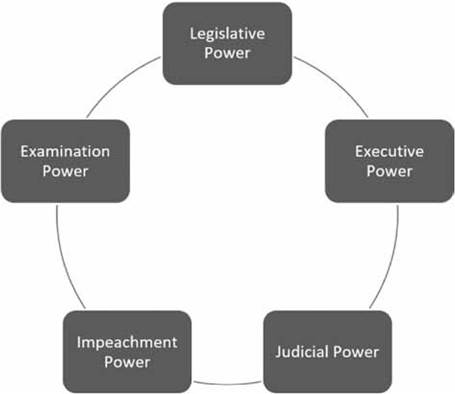
Table 3 Sun Yat-sen's ‘Government Structure' (1921)
| National Assembly (NA) | |
| Central government | Examination Yuan |
| Legislative Yuan | |
| Executive Yuan | |
| Judicial Yuan | |
| Control Yuan | |
| Provincial Government | |
| County Government (organised by direct popular vote) | |
| People’s Political Powers | Elective Power |
| Referendum Power | |
| Recall Power | |
| Initiative Power | |
| One NA Representative per County | |
Sun Yat-sen's works respected as the Kuomintang's partisan ideologies include:
The Fundamentals of National Reconstruction (Jianguo Fanglue, 1917-1920), The Outline of National Reconstruction (Jianguo Dagang, 1924), The Three Principles of the People (San Min Chu I, 1924) and the Manifesto of the First National Congress of the Kuomintang Party (1924).
As a later constitutional scholar said,Sun's aim and revolutionary principles were to establish a new nationalist ideology in order to effectuate the purposes of China's regeneration. Typical of Chinese spirit, he emphasized the unification of the national spirit. In order to accomplish this end, it
Figure 3 Sun Yat-sen's ‘Separation of Powers' (1905;1921)
Political Power (zheng quan)
• 1. Election Power •2. Recall Power •3. Initiative Power •4. Referendum Power
Government Power (zhi quan )
• 1. Legislative Power •2. Executive Power •3. Judicial Power •4. Examination Power •5. Impeachment Power
is necessary (1) to return to the ancient Chinese morality, (2) to return to the ancient Chinese political learning and (3) to adopt Western science. According to the theory of Dr. Sun Yat-sen, democracy as applied to China is a living political institution. Its function not only should guarantee the political rights of the people, but also should safeguard the socio-economic life of the people. While admiring Western democracies, he never desired to import Western governmental machinery.[169]
In the Kuomintang Charter of 1920, Sun Yat-sen's constitutional theories had been formally constitutionalised to become the guiding party agenda for all party members. Sun's ‘five-power constitution' was set out in article 2 to become the designated goal for the party, the consummation of which would declare China's formal entrance to the period of constitutional government after the national military revolution and political tutelage under the leadership of the Kuomintang.
The first national conference of the Kuomintang party in 1924 rewrote the first three articles into a preamble to the party charter, clearly underscoring ‘for the purpose of the realization of three people's principles and creation of the five-power constitution, the Kuomintang does solemnly ordain the Charter’. In articles 21 and 22, the Charter established the unchallengeable authority of Sun Yat-sen's constitutional theories among all party members.
In 1924, Sun Yat-sen drafted the Outline of National Reconstruction, on which he clearly specified the ‘constitution-drafting shall be based’[170] In his will in 1925, Sun Yet-sen himself urged the Kuomintang party members to follow him:
For forty years, I have devoted myself to the cause of National Revolution the aim of which is to secure for China a position of independence and equality among nations... The revolution is not yet achieved. Let all my comrades follow my writings, ‘Outline of National Reconstruction,' ‘Fundamentals of National Reconstruction,' ‘Three Principles of the People,' and the Manifesto issued by the First Convention of the National Assembly and the abolition of unequal treaties, which I have recently advocated, should be accomplished with the least possible delay. This is my will and behest. March 11, 1925.[171]
Later on, the 1946 Constitution, adopted by the National Assembly, promulgated by the National Government on 1 January 1947, utilised the Preamble and article 1 to declare the constitutionalisation of Sun Yat-sen's theories. In the Preamble, it reads:
The National Assembly of the Republic of China,. in accordance with the teachings bequeathed by Dr. Sun Yat-sen in founding the Republic of China,... does hereby establish this Constitution, to be promulgated throughout the country for faithful and perpetual observance by all.
The first article of the Constitution provides that ‘The Republic of China, founded on the Three Principles of the People, shall be a democratic republic of the people, to be governed by the people and for the people'. This first article is the literal transcription of Sun Yat-sen's political theories. All in all, the 1946 Constitution is, first and foremost, a revolutionary constitution, a constitution that legalised the Chinese innovative constitutional theories promoted by the founding father of the Republic of China. The four decades of Chinese constitution-making, ultimately, proved the triumph of a charismatic revolutionary leader and the establishment of a revolutionary constitution. This laid the foundation of Chinese constitutionalism in the mainland and the Taiwan island from the mid-twentieth century on.
III.