Many Interpretations or One?
The epistemicist and supervaluationist pictures also appear to disagree about the extent to which the use of a language determines the meaning of that language.
According to the epistemicist there is exactly one interpretation of the language compatible with the way a vague language is used, yet according to the supervalu- ationist there are many. The epistemicist’s position here is often thought to be highly counterintuitive, and the dispute is often taken—incorrectly, I shall argue—to be a straightforwardly substantive one.Admissible Interpretations: Are there many admissible interpretations of a vague language, or is there exactly one?
At a rough gloss, an interpretation of the language is admissible if it doesn’t get anything determinately wrong. An admissible interpretation won’t include anything that’s determinately not red in the extension of‘red’: thus, for example, no admissible interpretation of ‘red’ includes the ocean. Conversely, an admissible interpretation won’t exclude anything from the interpretation of ‘red’ that’s determinately red either: thus, for example, no admissible interpretation of ‘red’ excludes the Golden Gate Bridge.
Let us investigate this idea a little further. Recall that given classical logic it follows that there’s a first rich person in a given sorites sequence. Moreover, there is a last person in the sequence who is determinately not rich, and a first determinately rich person as well: in terms of wealth, the first rich person lies somewhere between the two. Since an admissible interpretation is an interpretation that doesn’t get anything determinately wrong (i.e. doesn’t classify anyone as rich who is determinately not rich, and doesn’t classify anyone as not rich who is determinately rich) it follows that there are lots of admissible interpretations of the word ‘rich’.
Any interpretation which assigns the cutoff point somewhere between the last determinately not rich person and the first determinately rich person will be an admissible interpretation (Figure 2.1).Now assume temporarily that interpretations are just possible extensions for the word ‘rich’. Notice, then, that there is exactly one interpretation that locates the cutoff
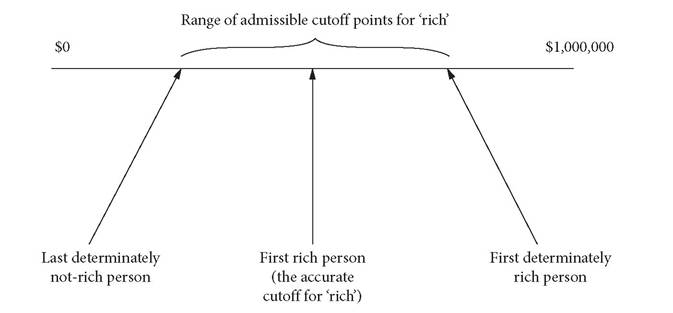
Figure 2.1. The admissible cutoff points for richness.
for ‘rich’ at the first rich person. In summary: there is exactly one interpretation that gets the interpretation of‘rich’ exactly right (to be exactly the rich people) and several interpretations that don’t get the extension determinately wrong.
If we wanted to be completely pedantic about it, we can make our argument that there’s exactly one set (candidate extension for the word ‘rich’) containing exactly the rich people more explicit as follows. Suppose that the set X contains all and only rich people, and similarly for У. It follows that an individual belongs to X if and only if that individual is rich, and that that individual is rich if and only if it belongs to У. So X and У are coextensive—an individual belongs to X if and only if it belongs to У —and so (by the axiom of extensionality) X and У are identical.[25]
Our argument above relied on the idea that interpretations are just extensions for the word ‘rich’. Note, however, that the conclusion that there’s exactly one ‘correct’ interpretation doesn’t really rely on this assumption. When properly formalized it’s a theorem of classical logic and the axiom of extensionality that there’s exactly one set containing all and only the rich people.
Thus it’s necessary that there’s exactly one set (candidate extension for the word ‘rich’) that contains exactly the rich people.[26] Thus there’s exactly one function from possible worlds to extensions that maps each world to the set of people who are rich at that world. So even if we relaxed the assumption that interpretations of ‘rich’ are extensional, and treated them as functions from possible worlds to extensions, we’ d still get the conclusion that there’s only one interpretation of ‘rich’ that necessarily locates the cutoff for ‘rich’ at the first rich person. Call an interpretation like this an accurate interpretation. We have just shown that if there is more than one accurate interpretation the differences between them must be purely hyperintensional. Indeed, I shall ignore this caveat in what follows and just assume there is exactly one accurate interpretation.color=black face=Cambria>Given all this, our notion of an admissible interpretation can now be defined more simply as an interpretation that isn't determinately inaccurate. It is easy to see that if there is something that is borderline red, there are at least two interpretations of ‘red' that aren't determinately inaccurate: one of which will include the borderline red object, and another that excludes it. It thus follows from the existence of vagueness that there are multiple admissible interpretations.
These facts were derived without appealing to any distinctive ideology: the notion of an accurate interpretation is given by the matching of the predicate ‘rich' to rich people, and so on, and the notion of an admissible interpretation relies only on one having the locution ‘it's borderline that A’ (from which one can define ‘it's determinate that p,) and the above notion of accuracy at one's disposal.[27] Since we can extend these notions beyond the interpretation of the predicate ‘red' to the whole language, Admissible Interpretations does not seem to carve out an interesting debate, since every classical logician must accept the existence of a unique accurate interpretation and multiple admissible interpretations of the language.
Note, in particular, that supervaluationists must accept the existence of a unique accurate interpretation, and epistemicists must accept the existence of many admissible interpretations.
2.5