Appendix 3.1: Multilevel governance and international coordination
As discussed in this chapter and captured in the STEHD framework, GPGs can shape the territorial dynamics and trajectories of SHD. This requires a responsible multilevel governance and structured and shared regulatory regimes within the international arena to align actors' expectations and strategies that sustain international collective action.
In order to understand the coordination issue both from a theoretical and policy perspective, it is important to take into consideration the presence of multiple-equilibria in this type of economic analysis. The multiple-equilibria are often generated by the multilevel context of decisions: for instance, the local and the international levels. The former concerns strategic actions taken within a specific LDS, while the latter is the final result of that action at the global level when the decisions of other LDSs are taken into account.
As a theoretical example, consider an LDS1 in a developing country implementing policies to attract FDI flows to foster productivity and technology upgrading, local growth and job creation (Cantwell and lammarino, 2001; Ernst and Kim, 2002; Marin and Bell, 2006). For simplicity, a game-theory model, inspired by Basu (2005), is outlined assuming there are two possible strategies24 for any LDS to attract foreign investment: a sustainable human development competitiveness strategy (HD) and a markdown or "grasping strategy” (G).
As mentioned, grasping (low quality competitiveness) strategy G has been popular in developing countries since the 1990s, and has been characterized by territories, even within the same country, competing against each other for FDI.25 In order to attract more investments, any LDS follows markdown actions to encourage foreign investors (e.g. by reducing workers' rights or curbing the activities of trade unions).
This has the effect of lowering taxation and reducing social and environmental protection (ILO, 2004). However, the position of any given LDS depends crucially on the actions of other LDSs.26In a game-theory setting, the payoffs S(G, HD) show what the LDS1 acquires following a grasping strategy G, while the other LDSs follow an HD strategy. Moreover, S(G, G) and S(HD, HD) denote the two different payoffs expected for LDS1 if it and all other LDSs follow the same strategy (either G or HD). These are conceived as net payoffs, taking into account, for instance, the cost of the grasping strategy and the superior economic results achieved in attracting FDI.
Now take into account a situation characterized by the following assumptions: 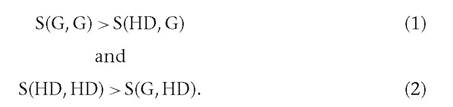
It is clear that in this case, as in the classic prisoner dilemma, there are at least two Nash equilibria. Here it is assumed that there are only two Nash equilibria in this game
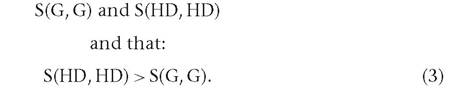
Let us consider the equilibrium in which every LDS follows a markdown strategy S(G, G), as (1) indicates that each LDS prefers a G strategy. In this scenario, the LDS's expectations that other local systems will attract FDI through grasping strategies makes it perform less efficiently.
Suppose that an international law to ban strategy G (policed by an international agency with sanctioning power) is introduced. In this case, each LDS would have to follow an HD strategy. Given that a Nash equilibrium exists with higher payoffs (3), all LDSs would choose this strategy. Thus, disallowing a markdown strategy has, in fact, taken the economy to a Pareto- superior outcome. Moreover, it follows that ‘even if the law is revoked, the economy [will] not return to the original situation, since the new outcome is an equilibrium in its own right' (Basu, 2005, p.
189).However, it is clear the international context is a bit more complex when LDSs from developed countries are taken into consideration. First of all, LDSs in the North (LDSNORTH) and in the South (LDSSOUTH) may have different endowments (in terms of infrastructure, human capital, income, etc.) and different institutions and social capital features, which influence preferences on strategies and actions. Therefore, the following questions emerge: are the effects for LDSNORTH (such as in the European Union) and for LDSSOUTH (such as in the Indian subcontinent or in China) the same? Who is going to determine these outcomes?
If LDSnorth and LDSSOUTH evaluate outcomes differently, it is realistic to assume27 that: 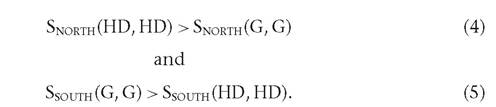
Thus, in this context there are two Nash equilibria: one where every LDSNORTH chooses HD and one where each LDSSOUTH chooses G. Initially, each LDSNORTH chooses strategy G (for instance, England at the time of the first industrial revolution or Italy in the 1960s and 1970s) but later, as national governments bans G, the equilibrium becomes SNORTH (HD, HD).
It is therefore important to take account of the fact that LDSSOUTH and LDSnorth have different characteristics (specifically being at different evolutionary stages and aiming to either maintain their privileged position or to catch up economically). Furthermore, many profit-oriented international stakeholders, especially from developed countries, oppose HD policies that are thought to conflict with their economic interests. This is exacerbated by the fact that the reform of global institutions typically lags behind rapid globalization and development (Basu, 2013, p. 325). It follows that the lack of international coordination pushing economies towards a Nash equilibrium with higher levels of HD means that the likely outcome will probably tend towards equilibrium S(G, G) overall.
Having said this, it is difficult to achieve a superior equilibrium in the absence of shared political willingness and commitment at different levels,28 which also depends on power structures within an MLG framework. As Basu (2013, p. 337) shows, one territory or nation trying unilaterally to upgrade labour and environmental standards (among other things) towards SHD would face the risk of MNCs and local firms relocating their businesses to other more lax locations. In addition, in contrast to the model, in practice reaching the Nash equilibrium with higher HD can take a long time, and can require sustained collective efforts and financing to offset the short-term efficiency losses.
To conclude, a simple game-theory model with multiple equilibria clearly indicates the need for consolidated and strengthened multilevel cooperation across territories and nations, aligning standards, rules, decisional procedures and principles for the provision of GPGs (Sandler, 2004; Goldin, 2013). Moreover, key policy interventions within multiple equilibria models may not be required permanently, as it is possible to revoke them without reverting to an inferior equilibrium (Basu, 2013) as long as social norms, entrepreneurial attitudes and decision-making mechanisms embrace a normative vision of SHD.