Dirk Helbing’s View on Harmony in Society
In a recent study, Dirk Helbing, professor at ETH Zurich, concluded that “The social nature of man has dramatic implications, both for economic theory and for the way we need to organize our economy”.
As we become more and more connected with others, Homo economicus, the independent decision-maker and perfect egoist, is no longer an adequate representation or good approximation of human decisionmakers. Helbing’s view is that “reality has changed. We are applying an outdated theory, and that’s what makes economic crises more severe”.Outdated Theory, Outdated Institutions. Helbing believes that social behavior is vulnerable to exploitation by Homo economicus. In a selfish environment, Homo socialis cannot thrive. In other words, if the settings are not right, Homo socialis behaves like Homo economicus. Helbing suggested that this may be why it has taken us so long to appreciate the existence of humans as social animals, and further pointed out that economic theories and institutions tend to favor Homo economicus, not Homo socialis.
In fact, many of today’s institutions, such as homogeneous markets with anonymous exchanges, undermine cooperation in social dilemma situations, i.e., situations in which cooperation would be favorable for everyone, but noncooperative behavior promises additional benefits to individuals. This calls for new institutions.
New Institutions for a Global Information Society. In the past, people built public roads, parks and museums, schools, libraries, universities, and free markets on a global scale. What would be suitable institutions for the twenty-first century? Helbing suggested that “reputation systems [could] transfer the success principles of social communities to our globalized society, the ‘global village’". Most people and companies care about their reputation, so reputation systems could support social decision-making and cooperation, with better outcomes for everyone.
In fact, reputation systems have rapidly become widespread on the internet. People rate products, sellers, news, everything, on sites from Amazon to eBay and Trip Advisor. We have become a ‘like it’ generation, listening to our friends’ likes.Crucially, systems involving recommendations should not narrow down sociodiversity, as this is the basis of happiness, innovation and societal resilience. Helbing stressed the importance of remaining in touch with an objective picture of the world, and not living in a ‘filter bubble’, Eli Pariser’s term for a world where important things get filtered out in favor of what’s fun.[21] Reputation systems should therefore be pluralistic, open and user-centric. Helbing (2013c, p. 3) noted that “pluralistic reputation systems are oriented at the values and quality criteria of individuals, rather than recommending what a company’s reputation filter thinks is best. Selfdetermination of the user is central”.
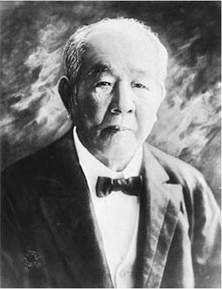
Fig. 1.6 Viscount Eiichi Shibusawa. Cited from Wikipedia:http://en. wikipedia. org/wiki/ Shibusawa_Eiichi
1.9.1.1 Shibusawa’s View of Harmony in Society
Helbing’s idea is compatible with the ideas of Viscount Eiichi Shibusawa (18401931) (Fig. 1.6), a father of Japanese capitalism writing during Japan’s industrial revolution, the Meiji Restoration. Throughout his life, Shibusawa pursued harmony between ethics and the economy, recognizing Adam Smith’s moral philosophy, but basing his thinking on a different source of philosophy. Shibusawa always tried to apply Confucius’ Analects to his thinking on the harmony between ethics and the economy. He was able to fund or support 500 private business enterprises, most of which are now major companies. He also involved himself in 600 projects to set up educational institutes and provide social welfare, including Hitotsubashi University.
Shibusawa’s belief was not in line with traditional Confucian philosophy in the sense that eating plain food, drinking water, resting, my bent elbow as a pillow— therein, too, lie my pleasures.
Shibusawa cited this in a speech and went on to say[22]:Taking these words very literally, one thinks that Confucius does not care about fame and wealth. But such an interpretation ignores the deeper meaning of the phrase “therein, too, lie my pleasures”. Precisely because the sage treasures justice or righteousness, he finds great pleasure in the simple life as well. Confucius does not regard only plain living as his pleasure. ■ ■ ■ [C]ultivated people need not be ashamed of the pursuit of profit in accordance with righteousness. According to what I have read and heard, ■ ■ ■ Adam Smith laid the foundations for modern economics by setting forth an ethic of sympathy. ■ ■ ■ I believe that Confucius and Adam Smith share the same idea, which is the [co-existence of] profit and righteousness. This is a universal principle that holds in both East and West.
Shibusawa’s views lead to the next lemma:
The leadership of a country cannot afford to overlook the importance of enchanting industry and making profit.
Summing up, he called his synthesis of business ethics and profit-making under fair governance in view of public benevolence harmony between ethics and the economy. This harmony is the same as Helbing’s harmony between Homo economicus and Homo socialis.
In this book, I therefore suggest replacing Shibusawa’s description of coordination between ethics and the economy with that between Homo socialis and Homo economicus, in line with Dirk Helbing. Shibusawa’s insight means that from the very beginning of Japanese capitalism, an effort was made to integrate Homo socialis and Homo economicus, which is also why I have not sought to talk only about Homo economicus.
1.10