From Economic to Social Welfare: A Move towards Non-welfarism?
The Manual included an introductory chapter on the social sciences, which was an important step towards Pareto’s attempt to create a general theory of non-logical actions. The next substantive step in that direction materialized in his article ‘Le azioni non logiche’ (Pareto 1910), in which the relationship between logical and non-logical action are discussed in terms of a relationship between the objective and the subjective ends of action.
In the Treatise on General Sociology (henceforth, Sociology) he introduced the third aspect on non-logical action, namely, the aspect of utility. In so doing, it is clear that his sociology steps outside the strict confines of ‘economic welfarism' associated with the concept of ophelimity; and considers the difficult question of what is useful in a social context.In switching his focus from ophelimity to utility, Pareto explicitly considered how an individual's faith and sentiments affect their judgement of what is good in relation to their behaviour and the behaviours of others. But, the sociologist, in Pareto's mind, still practises ‘ethical neutrality' when seeking to act scientifically in the study of how interaction between people, with similar and different values, impacts on social outcomes. In a step towards understanding how sentiment influences social action, Pareto considered how doctrinal theory is created and used to alter action. ‘Certain individuals evolve a theory because they have certain sentiments; but then the theory reacts in turn upon them as well as upon other individuals to produce, intensify or modify certain sentiments' (Pareto 1916 [1935: 11).
About the derivation of a sociological approach to collective welfare, the above has at least three implications for Pareto. First, utility is influenced by the force associated with sentiment that leads a person to action; but that force is also linked to changes with the form of a theory that rationalises a particular sentiment, which Pareto later labels as ‘derivations'.
Second, both the ‘derivation' and its underlying sentiment must be considered from the perspective of those asserting a particular derivation, and its underlying sentiment, and from the perspective of those assenting to that derivation, and its underlying sentiment. Third, although utility is necessarily in a continual state of variation due to the variable force associated with derivations and modifications to aspects of the institutional form of the social states, at some very general level the social state is either preserved or it collapses. This has implications for both the broad character of the social state, which Pareto tends to call the social equilibrium, and the application of social welfare analysis under conditions of a given social state.Pareto's sociological assessment of continuity and change in social equilibrium is a ‘relative' assessment: every force for continuity or change is considered relative to the prevailing social state. The subjective assessment of ends is based on information available at the time; and the aspect of utility, which is given as a quantity (i.e. is cardinal) is calibrated in the context of the prevailing social equilibrium. In that context, the interaction between political elites, as they seek to either change or preserve the prevailing balance of political authority, and the masses, is all considered with reference to the prevailing balance of political authority (political elites) as well as the prevailing distribution of wealth and the access to funds (economic elites). Interaction between economic elites primarily concerns the balance struck between the interests of high-risk speculators and the interests of low-risk rentiers. The political and the economic balances - which are revealed over time as a circulation of political and economic elites tentatively linked through a patron-client relationship - are constrained by the prevailing sentiment among the masses for continuity or change. In substantive terms, Pareto’s social equilibrium is an abstract notion of the prevailing economic and political balances, the stability of which is conditional on its compatibility with the balance in the sentiment for continuity or change among the masses that comprise a society.
The aspect of utility, as it pertains to political and economic action, is influenced by ‘derivations’ that support certain types of social action. A ‘derivation’ is essentially a doctrine that provides a rationale, that is grounded in a blend of sentiment and quasi-logic, for actions that favour a subset of society at the expense of another. Values in their purest form (before values are supported by a philosophical evaluation and rationalisation) are simply sentiments in Pareto’s scheme. But sentiments are not amendable to direct positive analysis, as they cannot be observed directly. To move his enquiry into the realm of the observed, Pareto introduced the term ‘residues’ to refer to the objective manifestations of doctrines or actions inspired by sentiment.[47] ‘[I]n activity based on residues human beings use derivations more frequently than strict logical reasonings... Residues are not, like tastes, merely sources of conduct; they function throughout the whole course of the conduct developing from the source, a fact which becomes apparent in the substitution of derivations for logical reasonings’ (Pareto 1916 [1935, 1442-3]).
Social welfare is, in Pareto’s system, simply given in reference to the current state of the social equilibrium, and given by the views of individuals within society that are subject to the forces that maintain social equilibrium. The utility of Pareto’s sociology, which is something useful to society, is, therefore, almost always path dependent because preferences over social states evolve as they are created through social interactions ‘that function through the whole courses of conduct’. Pareto (1913 [1999]), which was followed by Pareto’s grand three-volume Sociologia (1916 [1935]), was an
attempt to derive a general solution to the problem of welfare on the presumption that the individuals’ assessment of utility is calibrated under the prevailing social equilibrium. As such, Pareto’s general solution is intended to control for the endogenous and path-dependent character of utility by making his sociological assessment conditional on the prevailing social equilibrium.13
The starting point for Pareto’s sociological assessment of welfare is his economic assessment of welfare given by equation (2).
From the Cours onwards, his emphasis had been on the point of equilibrium, so economic welfare tended to be considered in reference to a point. For example, he did not fully develop the second law of welfare economics, as he regarded an efficient socialist collective as using the same coefficients of production as those under free competition, whereas the optimal point on the locus of potential Pareto optimal points will change with the initial endowment. But Pareto (1913) is clearly aware that the economic maximum changes with the initial allocation, indicating that there is a locus of ‘points p’ associated with equation (2) (Pareto 1913 [1999: 308]).The move to the sociological approach to equilibrium starts by removing the role of the numeraire good so that the utility of individual i, Φ,∙, is a quantity that is a cardinal value and a homogeneous quantity, and a socially determined weight, Mi, is used to give individual i weighting in the overall social welfare function. On that basis, the economic maximising relationship for the collective given by equation (2) is replaced by the sociological maximising relationship given by equation (4), in which

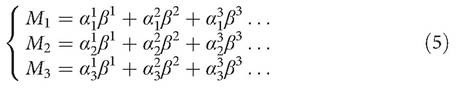
A critical point in Pareto’s approach to ‘social utility’ concerns the two-step process by which weights Mi are derived. In the first step, each individual undertakes interpersonal comparison of utility to establish their own interpretation of social welfare. Formally, oj is the coefficient for each individual’s ‘social utility’ function, with subscript i indicating the person whose utility is being weighted, and superscript j indicating the person who is undertaking the weighting. The government then assigns its own coefficients, βj, to each weight of an individual’s contribution to the social welfare of the collective. The combination of these coefficients gives the weighting designated by the Mi coefficients in equation (4), which are determined by the set of equations (5):
13
This matter is discussed in more detail in McLure (2001).
Pareto also differentiates between two types of sociological maxima.
A ‘maximum for the community’, which is predicated on the Pareto test being satisfied, reflects an image of society as a group of individuals, with each individual’s position representing a veto on policy that results in harm for some. A ‘maximum of the community’ is not subject to the Pareto test. It effectively represents society as if it were a single social entity, so social maximisation of that entity is not constrained to prohibit harm to individuals. The lack of ‘Paretian’ preference ordering, the use of a ‘sociological bridge’ to facilitate interpersonal comparisons of utility and the removal of the Pareto test for the maximum of the community ensures that Pareto’s sociological approach to ‘social utility’ did not anticipate the social welfare function of the Bergson-Samuelson variety. That is, while equation (4) involves maximisation of a function - and the associated maximisation constitutes a first step towards a ‘theory of social utility’ - that function is not ‘Paretian’ in the sense of an analysis associated with ‘economic welfarism’.In the Sociologia, Pareto also produced an additional reflection on social welfare, a point which was first underlined by Vincent Tarascio (1969). This involved a shift away from analysis of utility fields that are implicitly referenced to the commodity space, as in equation 4, towards utility being referenced to individual behaviour relative to the behavioural precepts, or ‘norms’, that prevail in a society. In Figure 6.1 (Pareto 1916 [1935: 1473]), the x axis is behaviour relative to the social norm, with extreme point A representing complete compliance with every social precept and extreme point B representing violation of every social precept. The y axis shows utility. Curve mnp maps an individual’s utility as his or her behaviour moves from complete compliance with social norms (point A) to complete violation of social norms (point B); and curve srv maps the utility to the collective from the behaviour of that individual.
The obvious point to note is that the utility enjoyed by the collective from the behaviour of an individual does not necessarily match the utility that an individual experiences from their own behaviour. In regard to maximisation in Figure 6.1, this individual will maximise their utility at point q, which is relatively conformist (closer to A than B), whereas the welfare of the collective is maximised if that individual behaves in a less conformist way.
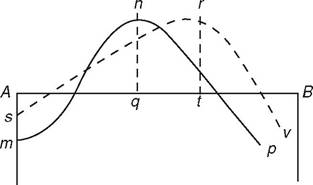
Figure 6.1 Utility from behavior relative to social norms
In short then, Pareto sees social utility as related to two dimensions: (i) the material wealth in the community and its distribution; and (ii) the distribution of behaviour by individual members of a community around the degree of conformity (or non-conformity) that is revealed by individuals' actions. The two dovetail together through his sociological contention that social equilibrium is fundamentally constrained by the balance in the psychological disposition of the people that make up the general masses for either social continuity or social change.
6.4