11 Bash on Regardless
‘Bash on regardless’, urged Brown following France’s second veto in November 1967.1 As well as bashing on, ministers lashed out at the messengers – firing their Paris ambassador and hounding officials for giving poor advice.
In chess parlance policy-makers were in zugzwang. The management of diplomacy had similarities to the ‘Carry On’ series of British comedy films of the period. Having got into a hole, carry on digging! ‘France lost a general and Britain an alibi,’ remarked Britain’s ambassador Christopher Soames after de Gaulle’s resignation in April 1969. The narratives have largely accepted Whitehall’s alibi of a hostile, immovable general. In reality, de Gaulle attempted a rapprochement. In a conversation with Soames in February 1969 he proposed secret bilateral talks on Europe. Wilson shot down the overture. Nevertheless, former minister Douglas Jay hailed a ‘wonderfully far-sighted offer’. The initiative deserved testing.After prevaricating for months Wilson inched closer to a second bid in October 1966. Ministers and officials assembled at Chequers on 22 October for a full discussion of joining the Community. Of the choices presented, Going it Alone (GITA), North Atlantic Free Trade Area (NAFTA) and European Community (EC), Europe won hands down. As for wooing the French, not a whisper. Determined to keep a united cabinet, Wilson did not press for a straightforward decision to apply, suggesting instead that he and the foreign secretary should be authorized to conduct a probe of the Six in order to assess support for an application – ‘a typically Wilsonian ploy for gaining time and putting off debate’, a colleague recalled.2 The Paris embassy offered cold comfort: East–West rapprochement absorbed the general, advised Reilly, and he would not welcome a new bid: ‘We can expect no helping hand … On the contrary, the French are likely to do all they can to spread amongst the Five doubts and suspicions about our “real intentions”.’3
Confirmation of Reilly’s warning came in early December.
Conservative MP Christopher Soames, son-in-law of Winston Churchill, sounded Couve and housing minister Edgard Pisani: ‘French government’s desire to see Britain in the Common Market … no greater today than it was in 1963. Should Britain accept the Rome Treaty asking only for reasonable transitional arrangements for New Zealand,’ concluded Soames, ‘their next line of defence would be the problems that flow from sterling … you will find them arguing about our presence … in Singapore and the Persian Gulf in regard to the load on our balance of payments’. Wilson acknowledged, ‘Much of what you say coincides with our own impressions’. Hailed as God’s gift to British diplomacy, Palliser, the prime minister’s foreign policy secretary, had nothing better to propose than ‘making life thoroughly difficult for the General by explaining to all and sundry how thoroughly willing we are to go in and thereby forcing de Gaulle to find much more explicit reasons for keeping us out’.4The foreign secretary upstaged the premier, and zipped ahead on a personal mini probe, meeting Couve on 14 December and de Gaulle two days later. Brilliant at his best, in his cups a public nuisance – Brown made a fool of himself at a NATO Council dinner in Paris. ‘A chinless Mr Punch in spectacles’, observed the Quai secretary general, who ‘to the great embarrassment of FO officials … interrupted repeatedly … with bizarre theories on the future of the world and of England, referring every instant to his personal position’, and insulting ‘in front of us his ambassador [Reilly] and permanent secretary’ [Gore Booth], claiming that the French ambassador [Courcel], ‘London’s most unpopular diplomat’, ridiculed him.5
Brown’s talks with Couve and de Gaulle scored high in banalities. Conversation opened like a children’s game: Brown: first tell me what you want, then I’ll tell you what I’ll do: Couve: first you must tell us what you want. Brown: you must tell us how you are going to respond when we come in January.
De Gaulle: you say you want to join – what do you want to do? Brown: I ask you in return what you want us to do. Unwisely, the foreign secretary confessed desperation to enter the Community: ‘if we fail we’ll have to rethink all our world position. So we must get in first with a minimum of conditions’. Ignoring his country’s economic tailspin, the foreign secretary insisted UK entry would enrich the Community: ‘entering the Common Market we will bring it a great advantage for we are the centre of the sterling zone; I mean, if we enter with a strong pound and a stable economy.’ The general pithily summarized: ‘there is the Common Market and for us there is no problem, for you there is one; you want to get in and that’s your problem.’6 In his autobiography Brown drew the inescapable conclusion, ‘it was very clear that de Gaulle was adamantly against us’. At the time no record of the talks was circulated and the foreign secretary prevaricated: ‘It was difficult to form any conclusion about his [De Gaulle’s] attitude towards our entry into the EEC … we need not … take it for granted that there would be French objection to our entry’.7 The foreign secretary’s bull-in-a-china-shop style alienated potential allies. ‘Willy, you must get us in, so we can take the lead’, he urged West German Chancellor Willy Brandt. ‘The British’, Brandt observed, ‘were not particularly adroit … we wanted to observe the rules and not have one claim to leadership replaced by another’.8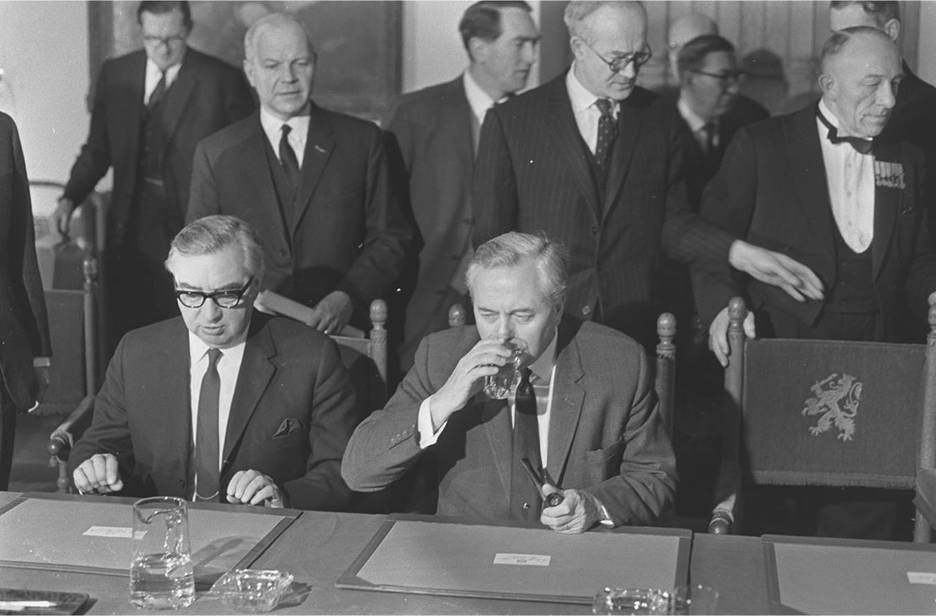
Figure 11.1 Probing the Dutch in the Hague, foreign secretary Brown and premier Wilson, 27 February 1967- note the body language.
‘Not particularly adroit’ sums up the main probe of the Six in January–February 1967, starting with Rome and finishing in Luxembourg. The embassy advised leaving Paris to last, but it came second in order to avoid giving substance to French criticism that Britain was intent on dividing France from the Five.
Wilson said he would ‘free-wheel’ in Paris and ‘take my own line’.9 The grand tour turned the bitchiness of the Wilson–Brown double act into public spectacle. ‘It was a rather undignified excursion and it made us look rather stupid’, reflected a Paris embassy official, ‘Wilson was not well-briefed and George Brown made a clown of himself … I felt rather embarrassed by them’.10 The results of the probe were predictable – the Five would not commit themselves to support Britain against France. In Rome students protested, accusing Wilson of colluding with the United States in the Vietnam war; in Brussels the woman translating the prime minister’s speech collapsed drunk, leaving Palliser to save the day. Wilson confessed that it would be unrealistic to expect the Italians ‘to stand up to de Gaulle in the event of his deciding to veto our application’.The findings confirmed what London already knew: ‘the Five would not be prepared to disrupt the EEC in order to force the French government to agree to our admittance.’ Wilson tried to put a brave face on the Paris talks, assuring colleagues that for ‘personal relationships’ the visit had gone ‘well’. However, the best efforts of prime minister and foreign secretary ‘did not in any way appear to have changed the view of de Gaulle that he would prefer that we should not join the EEC at present’.11 So much for the policy of ‘sucking up to the Five’, as one minister put it.12 Member states had too much to lose from the break-up of the Community. A Brussels reconnaissance in July 1967 forced Palliser to concede that the Five ‘all accept implicitly … Paris as the capital of Europe’.13
Undaunted, Wilson accelerated, announcing on 2 May 1967 a decision to proceed with an application. France’s tactics differed markedly from 1961–3 when de Gaulle allowed negotiations with the Six to drag on for over fifteen months. At a press conference on 16 May the general applied what the media called a ‘velvet veto’. Super optimists denied a rejection since the French president had suggested some form of association with the EC might be more appropriate for Britain.
Quai secretary general Alphand confirmed the general intended a veto – the reference to association was purely cosmetic.14 Wormser, ambassador in Moscow since September 1966, may well have prompted the amber warning. The former economic policy chief recommended swift action on ‘the English affair’. The choice lay between nipping the affair in the bud or risking a repeat of lengthy and potentially damaging negotiations ending in an impasse.15‘All this is a war of nerves … Bash on regardless’, urged a foreign secretary high on an adrenaline rush.16 De Gaulle’s unambiguous formal veto on 27 November is usually portrayed as proof of his determination to keep Britain out. What provoked the November red light, however, was the premier’s manifest unwillingness to pay for admission. Wilson’s bravado about not taking no for an answer, coupled with moves to isolate France, convinced the general he had reached the end of the line – London would give nothing. The emphasis in the UK official history on French hostility does the general a serious disservice. The general hinted at a deal and was rebuffed. When ministers visited Paris on 24–5 January 1967 as part of their grand tour the president invited them to study alternatives to membership: association or ‘something completely new and different’.17 Wilson assumed the president had in mind a new relationship between Britain and the Six. Bizarrely, no one asked de Gaulle what he meant. Reilly later sought illumination from Alphand. The secretary general explained that the president meant ‘dismantling’ the Community ‘and making a new agreement to include Britain’. Reilly cavalierly dismissed the idea as quite impractical. Suspicions of de Gaulle blocked exploration of the suggestion. The cabinet rubbished it as a red herring which would compromise Britain’s standing among the Five and waste valuable time. Engaging with the French in a wider settlement had no support.
De Gaulle tried again. Given the lack of response to his initiative, he changed tack and instructed his former diplomatic adviser Pierre Maillard to open up discussions.
Over lunch with a senior Paris embassy official Maillard, deputy secretary general of the national defence secretariat, emphasized the urgency of both countries working together to create a credible European nuclear deterrent. Defence cooperation would be ‘a very important element’ in Community membership negotiations. France wanted to work with Britain on rocket development and telecommunication satellites. Most importantly, Maillard confirmed France had encountered difficulties manufacturing an H-bomb. ‘The great thing was to be bold,’ urged Maillard, ‘to put forward our candidature in new and imaginative terms, and to avoid niggling over details, difficulties and special problems’.18Reilly dithered for over a week before taking the bait. ‘Our information’, he informed the FO, ‘is that the French do not yet know how to make a thermonuclear bomb … the General might be tempted if we could offer to tell him … as soon as we are safely in the E.E.C, with his help’. He urged a Wilson–de Gaulle summit. Predictably, the FO was not well pleased by the idea of a thermonuclear bribe: ‘It is essential that any European defence arrangements should be within the framework of the Atlantic alliance and should not weaken the commitment of the American nuclear deterrent to the defence of Europe, on which our security rests. Nor must we weaken our own links with the Americans in respect of nuclear know-how.’ The FO sat on Reilly’s letter for three weeks – arousing the suspicions of Wilson’s secretary Palliser. ‘I cannot avoid the feeling’, he wrote, ‘that in certain important matters the Foreign Office are being less than frank with us’.19
Would the thermonuclear card have delivered the keys to Brussels? Perhaps, but Wilson muffed it. In early June he instructed Solly Zuckerman, the government’s chief scientific adviser, to meet French experts. Zuckerman was to find out ‘what the French want from us’ and ‘to make their mouths water with possibilities’, while making clear ‘what degrees of freedom we had to exchange information’. The timing for a trade could hardly have been bettered. France’s H-bomb schedule was in jeopardy. The general wanted a bomb by 1968, but scientists anticipated a two-year delay because of technical difficulties. China scored first – testing an H-bomb on 17 June 1967. Zuckerman confirmed that a nuclear offer ‘might well be the key to the President’s attitude about our application to join the EEC’. The stage seemed set for a deal.20
Wilson returned to Paris on 18 June – anniversary of the battle of Waterloo and of de Gaulle’s broadcast appeal from London in 1940. The location of the talks at the Grand Trianon near the Palace of Versailles presented a perfect backdrop of three centuries of French pride and grandeur.21 The general lodged his guest in the refurbished Petit Trianon. Squeezing into the back of a small French car for a postprandial drive brought the pair physically closer but no more. The encounter confirmed the limitations of the prime minister’s personal diplomacy. After two years of meetings the premier had not fathomed the general’s psychology and statecraft. Instead of bearing gifts Wilson chanced his arm and assumed he could get French sponsorship for free. The result was a personal Waterloo. The third of three sessions with the president in six months brought Wilson to the end of the road. Extraordinarily, he adopted a threatening tone. Britain wanted to be in the Community but had other choices – a North Atlantic Free Trade Area which might become quite powerful and aggressive. In the event of a struggle between the United States and France for influence over Germany, Britain as a non-Community member would have to decide its loyalty. The reference to NAFTA was quite disingenuous. The Johnson administration had already expressed disinterest in the idea.
Wilson posed as his own man, not Johnson’s poodle – having already squared matters with the White House: ‘we might have to make a number of tactical statements and gestures that might seem a bit “non-American” or even “anti-American” for the purpose of proving our Europeanism.’22 Unimpressed by the premier’s disclaimers, the general asked, ‘Was it possible for Britain … to follow any policy that was really distinct from that of the United States whether in Asia, the Middle East or Europe … This was what France still did not know’. Telling de Gaulle that exclusion from the Community would make Britain more Atlanticist could only be counterproductive. On nuclear issues and missile development it was all jam tomorrow. Wilson’s enthusiasm for future technological cooperation in an ETC – first promoted in late 1966, fooled no one. Britain had seriously compromised its track record: regrets over Concorde; misgivings about the Channel Tunnel; reluctance to continue investing in ELDO; cancellation in 1964–6 of several aviation projects, notably the TSR-2, and replacement with US alternatives.
Back in London the prime minister equivocated. De Gaulle ‘was now reviewing his whole position … we should continue to press our application … it seemed probable that he was now prepared to recognize the inevitability of our membership. If … we maintained our pressure … there was a reasonable prospect of our succeeding’.23 Privately, Wilson admitted: ‘He does not want us in and he will use all the delaying tactics he can … I am not sure that he any longer has the strength to keep us out – a dangerous prophecy, as prophecy always is with the General’.24 Belatedly, the premier authorized senior scientist Sir William Cook, deputy chief scientific adviser to the Ministry of Defence, to advise the French on their H-bomb project.25 A year earlier the move might have heralded a breakthrough. In the past, nuclear cooperation initiatives had always stalled because the UK would not jeopardize Anglo–American agreements. Zuckerman now advised that the sharing of Anglo–American nuclear know-how to a third party was not at issue. Since the UK had tested its own H-bomb independently of the United States nothing prevented London from ‘informing the French … about the principles and techniques we had developed on our own’. Cook’s assistance put French scientists on track, but Wilson’s grudging back to the wall concession came too late.26
Threats and bluster multiplied. Downing Street targeted West Germany, de facto leader of the Five. At an EFTA meeting in Lausanne on 26 October 1967 Chalfont, who had Wilson’s ear, gave a non-attributable press briefing, spelling out possible responses to a French veto – British military pull-out from Germany, rethinking NATO and abandonment of Franco–British joint programmes. After dinner, he invited journalists back for a second helping – leaving no room for misunderstanding. The media assumed he spoke for Number 10. The resulting storm forced ministers to apologize to Bonn and Washington, denying policy changes.27 The sterling crisis worsened. Wilson blamed Couve for an October speech attacking the pound ‘with the usual superb French sense of timing’.28 Couve’s intervention was a fleabite compared to the impact of UK rail and dock strikes on international confidence. Intense market pressure triggered a 14.3 per cent devaluation on 18 November, clinching France’s core argument that Britain had to put its house in order before entry. Convinced he would never get a quid pro quo and unwilling to be trapped again in a quicksand of protracted negotiations, de Gaulle delivered a full-throated Non.
Angry ministers rattled the general’s cage. ‘We shall not take “No” for an answer’ replaced defence of the pound as virility symbol. The huffing and puffing could not conceal the bankruptcy of Britain’s international policy: currency woes; exclusion from Europe; failed initiatives in Vietnam and East/West relations; defiant settler regime in Rhodesia; a Nigerian civil war [the Biafran war]. Politicians out of their depth scolded civil servants for faulty assessments of the general’s intentions. Brown’s bullyboy style destroyed trust between minister and officials. Reilly, for example, became extra cautious, having received ‘what amounted to an instruction, to avoid … being negative in my reports about the prospects for British entry’. Senior officials returned fire. Cabinet office deputy secretary William Nield criticized the implication that ‘the responsibility of Ministers and their officials for the adoption of policy and for its success can be clearly separated’ as ‘a total negation of the concept of collective responsibility’. ‘Had he been asked,’ wrote Nield, ‘he would have advised against starting [the application process] for another six months to a year, not least to allow for careful preparation’.29
The official history defends the mandarins: ‘Ministers, not officials, determined the timing of Britain’s application’ and advisers clearly warned of the possibility of a veto. True, ministers rushed their fences. But the conduct of Palliser and other officials in promoting an application that required France’s support for its success without recommending a sound strategy to secure that support was, to say the least, dubious. Years later, Palliser explained: ‘I always made it clear to Wilson that I was very sceptical of his being able to get General de Gaulle to change his mind. But I do not think that I would ever have told him that there was no hope of success … To have told him categorically … would have affected the closeness of our own relationship.’ Palliser flouted civil service convention: ‘it is the traditional duty of civil servants, while decisions are being formulated, to make available to their political chiefs all the information and experience at their disposal … without fear or favour, irrespective of whether the advice … may accord or not with the Minister’s initial view’.30
‘Bash on regardless’ meant insisting on Britain’s European credentials in the forum of the WEU while ensnaring France in wider talks with WEU members. In practical terms, it amounted to little more than sticking pins in a voodoo doll. Whitehall clutched at the Harmel Plan, former Belgian foreign minister Pierre Harmel’s programme for deepening WEU political and military cooperation. In late October 1968 Paris opposed the creation of a study group on the Harmel Plan. When Debre, Couve’s successor as foreign minister, suggested bilateral talks on the future of South-East Asia and other areas, London insisted on WEU multilateral contacts before engaging in bilateral exchanges. The media outcry that followed Tony Benn’s praise of the first Concorde prototype illustrated the rush to vilify de Gaulle. At the Toulouse rollout in December 1967 Benn announced that the ‘British Concord … would be spelt with an “e” … for excellence; “E” for England and “e” for “entente concordiale”’. What went down well in France created ‘a hell of a row’ in the UK. The press accused Benn of capitulating to the general.31
Desperate to be seen doing something, Wilson and Brown replaced Reilly with Sir Christopher Soames, Winston Churchill’s son-in-law and Conservative party nabob. The ambassador’s dismissal marks one of the low points of twentieth-century British overseas policy. The action underlined the inability of ministers and mandarins to formulate effective policies. Rumours of the ambassador’s removal circulated as early as November 1966 with a whispering campaign originating – Reilly believed – ‘mainly in the Prime Minister’s entourage and among party officials’. The foreign secretary considered Reilly a dusty fuddyduddy, and treated him and his wife Rachel appallingly: ‘Your job is simply to see that my car is available when I want it. I do everything that is important here’; ‘You are not fit to be Ambassadress in Paris’ – loud enough for everyone to hear in a formal dinner. Reilly claimed to have had no business meetings with de Gaulle in 1966, alleging that on three separate occasions requests for authority to see de Gaulle were denied: ‘once by Stewart and twice by Brown’. The denials severely shook his confidence; ‘we felt insecure and something of our zest for the job was lost’.32
Summoned home in February 1968, he learnt that Downing Street wanted him out within a month. As a sop to allow completion of a pension year the FO conceded a September separation date. There was no ministerial explanation. A shell-shocked Reilly considered confronting Brown: ‘I am not proud of my decision to shirk it’. Permanent secretary Gore Booth had no ‘healing word’, answering Reilly’s request for an explanation of the firing with an unsympathetic and ambiguous letter, which he later admitted to be misleading. The insensitivity reflected the permanent secretary’s weak leadership and resolve to stay squeaky clean as his own retirement loomed. Shaming Whitehall, de Gaulle went out of his way to offer Reilly support: ‘you have succeeded very well here. I say this as man to man’.33
The envoy left Paris in September 1968 with relations ‘in a much worse state’ than he had found them. The responsibility lay with Downing Street and Whitehall, not the embassy. Apart from beating the British drum and throwing expensive parties, it was unclear how his successor would fill the days. Soames’s vacuous instructions did not feature kiss and make-up, ‘H.M.G.’s policy in regard to Europe would be to invest, but not assault, the citadel of the Common Market and meanwhile to seek to promote European cooperation in fields such as political, monetary and defence, which are outside the scope of the Treaty of Rome’.34 In discussions about Soames’s role Wilson and Brown acted like innocents abroad. Their naïve optimism about early entry to Europe shocked Soames – Wilson talked of admission by 1970. Premier and foreign secretary clung to their old mantra – pressure from the Five combined with exploiting the WEU for non-EEC issues would bring de Gaulle to heel. Gesture politics ruled. The government wanted the embassy ‘opening up to as broad a spectrum as possible of French life’. ‘We needed to be seen to be doing something both for the sake of the morale of our friends in the EEC … and also for political reasons here at home,’ declared Brown. Soames pushed the boat out – ‘regardless of cost’, hiring more footmen and a major domo for the embassy – one of the most magnificent houses in Paris, bought by the Duke of Wellington from Napoleon I’s sister Pauline Borghese, and practically on the Elysee’s doorstep. ‘I have no doubt you will get on famously’, former ambassador Lord Gladwyn reassured a French friend, ‘since he [Soames] is, among other things, an excellent shot and a considerable judge of champagne’.35 A tad taller than the general, with patrician credentials and the confidence of No. 10, Soames had an edge on his predecessor. The Churchill connection with its reminder of wartime exile pleased the president – he relished Soames’s aristocratic aplomb – downing pheasants at a presidential shoot while keeping up a lively banter. Palliser purred away, commending the new envoy for galvanizing the embassy: ‘as I told the PM, the whole place is really humming and one feels this at once’. Lavish parties came at a price. In Wilson’s third government of 1974–6 the Berrill inquiry into the FO, accompanied by a general hue and cry of MPs and media, targeted the profligacy of the Paris embassy.36
What really set Europe humming was the general’s conversation with Soames on 4 February 1969, proposing secret bilateral discussions about the future of European construction and a revived Entente. Ignoring a French request for confidentiality the FCO briefed France’s Community partners as well as leaking a doctored version of the conversation – suggesting the general wanted to retool the EEC and NATO with a European ‘directory’ of France, Britain, West Germany and Italy. Within days the ‘Soames affair’ turned into an international brawl, pushing the envoy to the brink of resignation. France’s commentariat condemned ‘perfidious Albion’ for sabotaging the general’s initiative.
For the FCO, the episode signalled payback time. A pack of ‘Euro-fanatics’, led by deputy under-secretary Patrick Hancock and John Robinson, chief of the European Integration Department, seized on the overture as a ‘devilish trap’ in the long stand-off with France. Acceptance would enable the general to accuse Britain of betraying friends and partners; refusal would allow him to say London did not care about Europe’s future. Officials proposed the offer should be leaked to the Italian newspaper, Il Messaggero, leaving the Italian government to carry the blame. Nevertheless, some cabinet ministers viewed the offer sympathetically. Barbara Castle, normally an ally of the prime minister, criticized the official response: ‘all part of the appalling desire to run to the Five and tell tales out of school to show what good boys we are … there were some very good points in de Gaulle’s ideas’. De Gaulle’s resignation in April made it easy to trivialize the affair as a Gaullist eccentricity – ‘The absurd Affaire Soames.’37
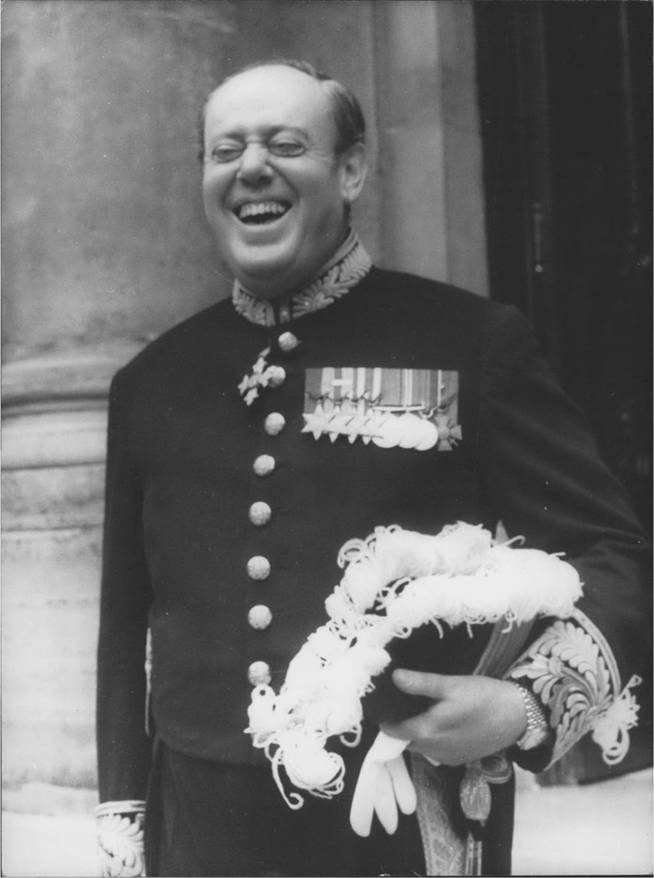
Figure 11.2 Sir Christopher Soames, UK ambassador to France, 22 September 1968. Credit: Keystone Press / Alamy Stock Photo.
A storm in a teacup? De Gaulle’s bid to end the six-year diplomatic war merited exploration, despite its off-piste character. It could have reconfigured the Community and created a real entente. The conversation was part of a full-scale foreign policy reappraisal – monitored by Soames. ‘It was no secret’, confided de Gaulle’s brother-in-law in early November, ‘that a review of French foreign policy was in … progress at the highest level’. Later that month junior foreign minister Jean de Lipkowski talked of changing ‘the attitude … of the old bird at the Elysee’. By the end of November, references to the rethink surfaced in the French press. Le Monde editor Andre Fontaine called for a Franco–British rapprochement and a compromise on ‘the strengthening and enlargement’ of Europe. France’s foreign policy community, signalled Soames, wanted to find ways to end the impasse and were working on de Gaulle.38
What provoked the change of gear? May 1968 and its sequelae – the Soviet-led Warsaw Pact invasion of Czechoslovakia in August, a falling franc, flight of capital and declining exports, frightened de Gaulle and badly jolted the regime. The May troubles stopped newspapers, grounded air traffic and affected telephone services. Exposure to ridicule mortified elites. ‘We are living through a sort of nightmare’, confessed Alphand; ‘the English are making fun of us and taking their revenge for the arrogance of certain over-confident Frenchmen’. Wormser in Moscow, deprived of Le Monde, had to rely on the British embassy for copies of The Times. Returning from Paris, Courcel appeared the worse for wear: ‘English had deteriorated; he looked almost dishevelled … clearly had some of the stuffing knocked out of him by recent events’.39
The Warsaw Pact invasion of Czechoslovakia, downplayed by Debre as a ‘mishap’ [incident de parcours] on the road to detente, was a road closure. A Soviet naval build-up in the Mediterranean, and penetration of Algeria, both heightened anxiety. Nor could Paris count on its West German ally – Bonn refused to revalue the mark in order to support the franc against devaluation. Domestic tensions festered. Anxiety about the deteriorating political and economic climate, especially the danger of France repeating Britain’s trajectory, alarmed Debre and the Gaullist clan.40
The foreign minister became the moving spirit of the policy reappraisal. Anglophile and an opponent of supranationalism, he canvassed partnership with London. When Soames met him on 30 October 1968 Debre lamented ‘this war which is going on between us’. Couve, prime minister since July, admitted relations were such that whatever either government suggested the other suspected an ulterior motive. Debre, noted Soames, canvassed an initiative for several months then sold it ‘to the General in such a way that the General would take it up as being his own idea’. France’s ambassadors in European capitals backed enlargement – except Rome where the envoy worried about the implications for the status of the French language in the Community.41
France’s isolation added urgency to de Gaulle’s initiative. A week before the Soames–de Gaulle talk, Debre consulted advisers: ‘The English question is … a brake on all progress … We … run the risk of cutting ourselves off from Britain. Should France grow weaker … European policy will be German dominated’. He concluded with a question: assuming the inevitability of British entry, ‘what profit can we draw and what initiative should we take in the matter?’ Next day during a regular weekly session with the general the foreign minister underlined the danger of France being blackmailed by its partners. The Five might exploit the ongoing CAP negotiations to deliver an ultimatum – accept British entry or we will refuse to renew CAP.42
At the meeting with Soames on 4 February the general proposed secret bilateral talks on the reshaping of Europe. Confessing to ‘no particular faith’ in the Community, he envisaged it becoming ‘a looser form of a free trade area’. London and Paris might discuss ‘what should take the place of the Common Market as an enlarged European economic association’. The enlarged grouping should have ‘a small inner council of a European political association consisting of France, Britain, Germany and Italy’. He was ‘anxious’ to talk about this and, in reply to questions, conceded NATO would have to be rethought. Had the tiger changed stripes? Yes and no. The proposal for secret talks on a new political partnership reprised the offer made to Wilson and Brown two years earlier. The Soames offer spoke to a change in tactics, not strategy. The general still wanted a French-led European Europe, but Germany’s resurgence and France’s economic slowdown made a makeweight desirable. De Gaulle was not wedded to the Treaty of Rome. Remaking the Community would balance Germany and satisfy Britain’s desire to be a European insider.43
The British response to de Gaulle underscored the muddle of policy-making. Stewart accepted the advice of officials that the Five must be informed, starting with West German chancellor Kurt Kiesinger whom Wilson was scheduled to meet in Bonn on 12 February. To describe the mood of the FCO as confrontational would be a serious understatement. Stewart urged the deliberate leaking of the de Gaulle feeler: ‘The French will show us more respect if they see us doing this.’ The foreign secretary hankered after a German partnership, not French: ‘The heart of the matter is this: in Western Europe there are … only two nations which are both powerful and capable of being resolute in the defence of the West: and these are Germany and ourselves’.44
Biographer Philip Ziegler ticked off the prime minister for trying to ‘dissociate himself’ from the British response while blaming the diplomats for mishandling it. This does Wilson an injustice. His first reaction to the offer was positive: ‘We should follow this up … given encouragement, this could be escalated to higher level meetings – first the foreign secretary then possibly myself’. True, the premier undertook to inform the Germans ‘in such a way as to point up the essentially anti-Atlantic nature of the de Gaulle approach’. But Euro-fanatics Hancock and Robinson who accompanied Wilson to Bonn had a hard time convincing him and overcoming a natural vacillation. The conversation with Kiesinger went badly. The speaking notes prepared by the FCO were ‘much longer and stronger than the premier expected. He tried to water it down … it sounded like waffling and became more confusing for Kiesinger in translation … angry at the muddled meeting, Wilson flew back to London saying he would never have Patrick Hancock travel with him again’. Only then – over a week after the offer – did London authorize Soames to respond to the French.45
Out of the loop and twice refused permission to come to London, Soames watched in anger as his report went the rounds. The French felt betrayed. Debre, thicker-skinned than most, assured the general of his readiness to start talks, provided Britain promised secrecy. An angry de Gaulle squashed the idea: ‘Poor Soames, he was tricked, like me’. The visit of the new American President Richard M. Nixon at the end of February preoccupied London and Paris – no one wanted to be caught washing dirty linen in public. Debre accused London of deliberately trying to upset Franco–American relations before the president’s arrival. At the Elysee Jacques Foccart assumed London leaked the offer in order ‘to create an unpleasant atmosphere for the general when Nixon arrived’.46
The row epitomized the dangerous casualness of Gaullist policy-making. In his memoirs Elysee secretary general Tricot suggested the president was thinking aloud about possible scenarios, not offering talks. But the general undoubtedly meant business – ministers confirmed the offer. Lipkowski stressed France’s desire for bilateral talks, including defence and Anglo–French nuclear collaboration. Debre impressed upon Soames that talks should start as soon as possible. Convinced of the conversation’s significance, Soames handed Tricot a copy of his report to London. The secretary general promised to show it to the president, saying ‘there was much in it which the General had not reported to him’. Two days later Debre confirmed the general had seen the record and ‘there was nothing in it with which he disagreed’. Most likely, de Gaulle used Soames’s narrative as a refresher for his own brief 300-word summary – dictated three days after the talk. Although the Quai rightly complained of British leaks deliberately distorting the sense of the conversation, the absence of a full French record meant that the Soames’ version became the record by default. The published French diplomatic documents do not include the text which the general dictated to Tricot on 7 February.47
De Gaulle’s ageing, together with the inadequacies of Elysee record-keeping, warped decision-making and compromised the initiative. The general’s pessimism, noted confidant and minister Andre Malraux, matched his resignation mood in January 1946. The physical and mental slowing down cast doubt on the general’s political future. Satraps prepared for his departure. In January 1969 dauphin and former premier Pompidou – ‘quite pessimistic about the way France was being governed’ – talked of succeeding de Gaulle as chief of state within the coming year. He planned a series of visits at home and abroad to establish his authority in foreign affairs. Within days the ex-prime minister confirmed his candidacy for the presidency, strengthening Whitehall’s belief that the general was on the way out – another reason not to rush into talks with him.48
Failing powers meant policy-making on the hoof, generating errors of judgement. The seventy-eight-year-old’s clumsy handling of the Soames affair confirmed an alarming loss of touch. With the diplomatic war in its sixth year, prudence dictated preliminary soundings before making proposals. The approach to Soames bore the marks of a rushed, improvised move. Though the ambassador’s appointment with the general was arranged weeks in advance, Debre did not consult senior advisers about Franco–British relations until 29 January, and claimed to have persuaded the general the next day to take the initiative – only four days before the appointment. No advisers, note-takers or interpreters were present at the conversation. The general briefed Debre and Tricot by phone, but kept them waiting days for a record. Uneasy about the meeting the general telephoned prime minister Couve. The premier cranked up presidential anxiety, saying he ‘expected the German Foreign Office had already heard about it from the British’. France’s ambassadors to Community partners came off worst. Bereft of guidance for several days they stumbled in front of the media and host governments.49
Perfidious Albion? The real perfidy was the waste of time, talent and resources in the pursuit of empty great power ambitions. Singly, Britain and France were on a hiding to nothing. Partnership offered the most promising option. Secret talks could have ended a six-year standoff. Applying standard diplomatic practice would have minimized the perceived risk posed by the general’s offer. Recalling Soames for a first-hand report while respecting the request for secrecy would have supplied breathing space. Angry at being locked out of decision-making, the envoy pondered resignation, protesting vehemently, ‘Still feel it was the greatest pity that I was not allowed to come home to talk with you [Wilson] and Michael Stewart … I believe that there was a real chance … of starting something which strong forces in France had every intention of seeing through to fruition’. The next point struck home: ‘it was well within the bounds of British diplomatic skill to have covered ourselves with our friends in such a way as to be able to open honourably a dialogue with the French … As I see it, the General handed me a cup which … was deliberately smashed to pieces.’50
The Soames affair had salutary and lasting consequences. The level of toxicity exposed confirmed the urgency of a modus vivendi. France could not afford continuing isolation. In December 1969, under President Pompidou’s leadership, the Community’s Hague summit agreed enlargement. In London, second thoughts about the UK’s response to the affair fired up a policy debate which had its origins in the autumn of 1968. Stewart recommended the ending of ‘the special restrictions on Anglo–French dealings’ imposed in 1966.51
The couple boxed themselves into a corner. Time mattered for both of them. De Gaulle gained enough of a lead to finalize CAP and consolidate ascendancy in Brussels. Wilson, however, had nothing to tempt the electorate in the June 1970 election. The second Labour government ended with membership undecided. The country paid dearly for late entry. ‘The longer the uncertainty as to the fate of our application persisted,’ Brown had warned colleagues in November 1967, ‘the greater would be the damage to the standing of the Government … if the delay persisted for some months, the support of our friends abroad and public opinion at home would be lost’. The outcome was a defeat for both nations. The general won the face-off on points – but the issue would not go away. Had he remained in power, pressure from advisers and the Five in the early 1970s would doubtless have forced him to lower the drawbridge. The Russian-led occupation of Prague in August 1968 discredited the search for detente with Moscow, dissolving the vision of a French-inspired European Europe mediating between East and West. West Germany’s economic clout and commitment to the United States problematized French leadership. The urgency of finding a counterweight to Bonn provoked the overture to Soames.52
Wilson’s refusal to take no for an answer has won him praise for keeping enlargement on the agenda and thereby facilitating the negotiations of 1970–2. The argument underwhelms. Ministers kept the application on the table because they ran out of ideas. After the Soames affair, ‘Euro-fanatic’ Hancock had nothing more constructive to suggest than carrying on ‘bashing’ the French. Ironically, de Gaulle’s suggestion of a wider political organization replacing the Community or working alongside it – greeted with shock horror by Whitehall in February – became avant-garde wisdom two months later. The Treasury advised the new FCO permanent secretary Sir Denis Greenhill that the state of the economy could delay entry for at least another two years and in the meantime domestic support might drain away. Accordingly, Greenhill recommended exploring alternative groupings.53
Ennui, indifference and scepticism formed no small part of Wilson’s legacy. Heath argued persuasively that Labour’s handling of the second bid alienated ‘UK public opinion against the Community’, destroying the consistently pro-European majority in opinion polls since 1961. By delaying a bid until well into 1967 and making minimal effort to sell it to party and voters, Wilson fuelled distrust of the European project, and left bitter divisions within his party. The indifference and procrastination of Labour and Conservative governments over Europe in the 1960s demoralized Britons. Interminable negotiation and renegotiation took the shine off membership. Other influences disillusioned voters, too: the top-down elitist nature of the enterprise and the ending of the post-war economic boom. The negative effects of Wilson’s legacy were Europe-wide. Post-1967 bashing on, coupled with renegotiation of membership in 1974–5, strengthened Community distrust of Britain’s intentions. The ‘British Budgetary Question’ (BBQ) of the early 1980s – better known in Brussels as the bloody British question – cemented a reputation for sheer cussedness.54
Empty great power aspirations do not fully explain the impasse over Europe. Flawed statecraft – the general’s reluctance to make the first move – made a huge difference. French initiatives were ill-prepared and badly timed. At the January 1967 meeting in Paris, delphic utterances baffled British interlocutors. With goodwill and timely forethought the general’s talk with Soames might yet have changed the plot. British ministers also miscalculated. Assuming a level playing field they saw no necessity to offer France anything. In fact, Wilson, like Macmillan, was a supplicant in search of a sponsor.
The lack of informal pathways and super-domestiques to do the heavy lifting hindered any kind of rapprochement. There are traces of low-level, back-channel contacts which came to naught. Nield, deputy secretary at the Cabinet office, regularly met Jean Wahl, the French embassy’s commercial counsellor. Wilson, explained Nield, had no confidence in the foreign secretary and FO and wanted a line to the Elysee. Wahl replied that he could do nothing without informing the ambassador and head of external economic relations at the finance ministry. There is no evidence of any information reaching the Elysee. Stuart Holland, novice Whitehall economist and friend of Pierre Joxe, son of de Gaulle’s justice minister Louis Joxe, offered to go to Paris at his own expense to meet his friend’s father and plead the case for entry. He met Joxe senior in May 1967 but the justice minister had no influence with the general, and as a rookie official Holland carried no weight.55
Might the story have had a happier ending? ‘The best way to organize Europe was around an Anglo–French entente’, urged US Under-Secretary Eugene Rostow. ‘In almost all essential political areas,’ remarked the Quai’s Inspector General, the convergences between the two neighbours were striking – ‘like us, [London] has to ensure that in the coming years Germany’s relative power in Europe is not excessive’. Partnership at the heart of a reconfigured Community would have empowered both countries. Political elites fought shy of entente, despite a common interest in the containment of Germany and opposition to a supranational Europe. A great power obsession reinforced reluctance to collaborate, and discouraged a radical questioning of options. London and Paris hugely overestimated their ability to exercise a world presence. ‘No prospect whatever of de Gaulle letting us in the Common Market’, Palliser opined in late 1966, ‘unless we are prepared to make changes in our foreign policy and defence policy of such a substantial nature as to be, I believe, out of the question for any foreseeable British government’. Tectonic shifts came anyway. Withdrawal from east of Suez and entry into Europe rewired external policy. Old rivalries die hard, but Soames had the last word – on one subject. At a Paris embassy dinner a French official lit a cigarette. Soames looked ‘savagely’ at him, saying, ‘I wonder if you’d mind putting out that cigarette … You are about to drink some Haut-Brion ’45 … I think it would be a pity to spoil it by smoking’.56