MOBILE PAYMENT PROCESS
Payment transaction process in a mobile environment is similar to typical payment card transaction (Figure 7). The only difference is that the transport of payment details involves wireless service provider.
WAP/HTML based browser protocol might be used or payment details might be used or payment details might be transported using technologies such as Bluetooth and infrared.Figure 7. Payment process
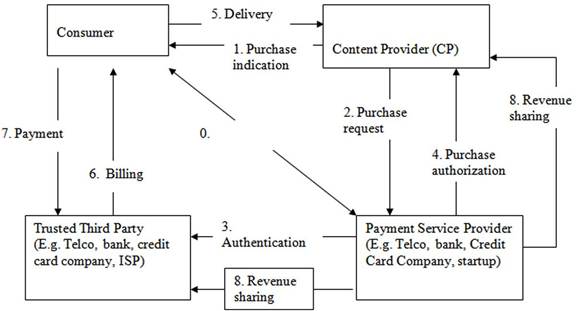
Mobile payment process is explained in the following paragraphs.
3.1. Registration
Customer opens an account with payment service provider for payment service through a particular payment method. During this phase the PSP requires confirmation from the TTP that handles the relationship with the customer. This phase can be seamless for the consumer according to the functional choices made by the TTP and the PSP.
3.2. Transaction
It is accompanied by the four steps.
• Customer indicates the desire to purchase a content using a mobile phone.
• Content provider forwards the request to the payment service provider.
• Payment Service Provider then requests the TTP for the authentication and authorization.
• Payment Service Provider informs content provider about the status of the authentication and authorization. If customer is successfully authenticated and authorised, content provider will deliver the purchased content.
3.3. Payment Settlement
It can take place during real time prepaid or postpaid mode. A real time payment method involves the exchange of some form of electronic currency, e.g. payment settlement directly through a bank account. In a prepaid type of settlement customers pay in advance using smart cards or electronic wallets. In the post paid mode, the payment service provider sends billing information to the TTP. The TTP sends the bill to the customer receives the money back and then sends the revenue to the payment service provider. The PSP is then responsible for computing the revenues of each entity and distributing the funds accordingly.
4.