11.6.4 EFFECTIVE TABLES
Because judges and clerks who read briefs often consult the tables of contents and authorities, it is important that these tables look good as well as contain accurate information.
One of the four basic principles of design is alignment, and effective alignment is crucial in making tables look good. Page numbers and document elements should be aligned consistently, so that readers can easily find the information that they need.In this excerpt from a table of contents, note how none of the elements are aligned; the table does not make obvious how the subparts relate to each other: 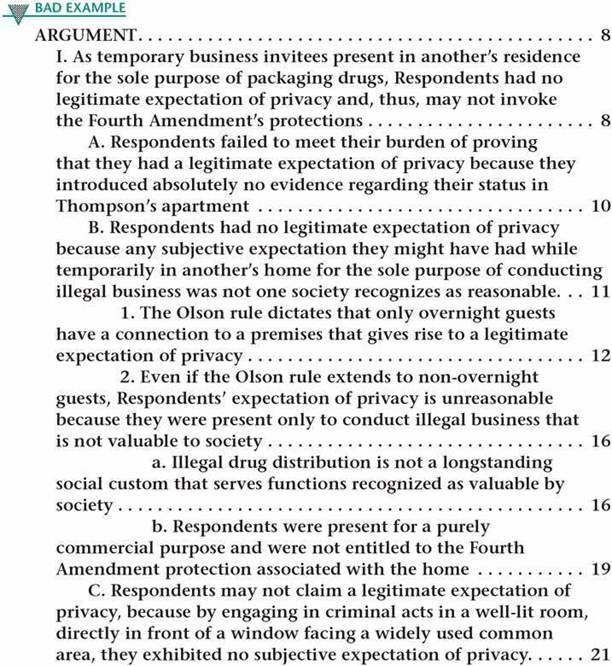
In the next example, note how the writer uses alignment to make obvious the relationships between and among point headings. This method allows the user to find headings he or she cares about more easily or to choose which level of headings to review. The alignment makes the heading numbers stand out along the left side of the page, and the page numbers stand out along the right-hand side.
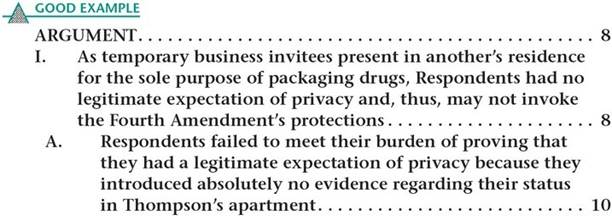
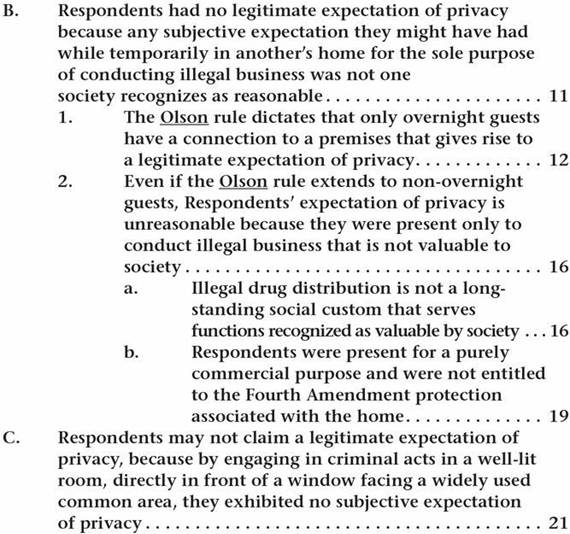
As noted in Chapter Nine, if you are submitting your document electronically, you should convert it to.pdf format and bookmark the headings within the document (not in the table). Bookmarking the headings in.pdf format allows the reader to show a guide on the side and to navigate through the document more easily.29
You may believe that you need not worry about design because in practice you will have an administrative assistant who will type and print the document. You should not presume, however, that your assistant will know or care about document design. You will have to face any consequences for the impression your document makes, so you must take responsibility not only for what your document says, but also for how it looks.