Introduction
In the previous chapters we have looked at how to research, prepare, communicate and present a case. In this chapter we will focus on how to ensure that your presentation meets court procedural rules and processes so that you can work effectively not just with your client but also the court, court staff, experts and other lawyers.
We will focus on the competency of working with other people as found under the Statement of Solicitor Competence C.Establishing and maintaining professional relationships with clients (C2) and others (C3) are key to developing competencies. This also includes effective communication that is tailored for each type of audience (C1). We have already considered aspects of C1 and C2 in Chapter 3. We will build upon the knowledge gained in the previous chapters and consider the various ways in which legal professional relationships are built and sustained.
id="Picutre 30" class="lazyload" data-src="/files/uch_group31/uch_pgroup324/uch_uch7430/image/image030.jpg">
Figure 4.1 Statement of Solicitor Competence.
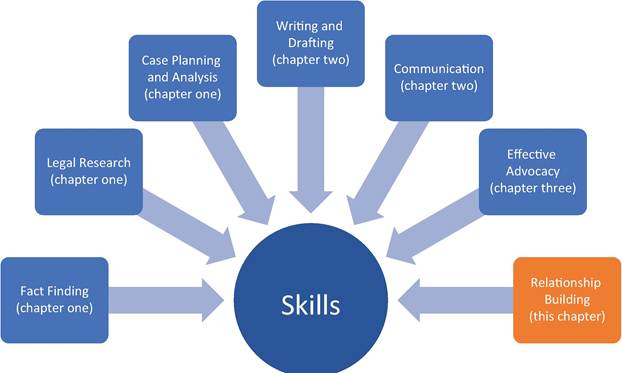
Figure 4.2 Chapter Content.
An advocate must build a relationship of trust with the client. As we have discussed in Chapter 2, this includes responding sensitively to the client's needs and addressing their concerns and mapping out ways to achieve their goals. If the advocate is acting for the prosecution, the client will be the Crown Prosecution Service rather than an individual. If acting for a company or other organisation in civil proceedings the client will be the company/organisation although instructions will be received from directors or other senior managers.