Food web structure
The living portion of an ecosystem is best described in terms of feeding levels known as trophic levels. Green plants make up the first trophic level and are known as primary producers.
Plants are able to convert energy from the sun into food in a process known as photosynthesis. In the second trophic level, the primary consumers - known as herbivores - are animals and insects that obtain their energy solely by eating the green plants. The third trophic level is composed of the secondary consumers, flesh-eating or carnivorous animals that feed on herbivores. At the fourth level are the tertiary consumers, carnivores that feed on other carnivores. Finally, the fifth trophic level consists of the decomposers, organisms such as fungi and bacteria that break down dead or dying matter into nutrients that can be used again.Some or all of these trophic levels combine to form what is known as a food web, the ecosystem’s mechanism for circulating and recycling energy and materials. For example, in an aquatic ecosystem algae and other aquatic plants use sunlight to produce energy in the form of carbohydrates. Primary consumers such as insects and small fish may feed on some of this plant matter, and are in turn eaten by secondary consumers, such as salmon. A brown bear may play the role of the tertiary consumer by catching and eating salmon. Bacteria and fungi may then feed upon and decompose the salmon carcass left behind by the bear, enabling the valuable nonliving components of the ecosystem, such as chemical nutrients, to leach back into the soil and water, where they can be absorbed by the roots of plants. In this way nutrients and the energy that green plants derive from sunlight are efficiently transferred and recycled throughout the ecosystem.
A food web (or food cycle) is a natural interconnection of food chains and a graphical representation (usually an image) of what-eats-what in an ecological community.
Another name for food web is consumer-resource system.Food chain is transfer of food energy up the trophic levels from its source in plants and other autotrophic organisms (primary producers) through herbivores (primary consumers) to carnivores (secondary, tertiary, and quaternary consumers) to decomposers.
When energy moves between trophic levels, 10% of the energy is made available for the next level. (The exception is the transition from the sun to producers, in which case only 1% of the energy is retained). When a consumer eats a plant, it gains energy from the plant. That energy is used for growth, reproduction, and other biological processes. Some of that energy is also lost through heat loss. Thus, when a predator eats that consumer, all of the energy the consumer gained from the plant is not available to the predator: it has been used and lost. As we move up an energy pyramid or a trophic level, we can see that less and less of the original energy from the sun is available. Roughly ten percent of the previous trophic level's energy is available to the level immediately higher up. This is called the 10% Rule (fig. 7).
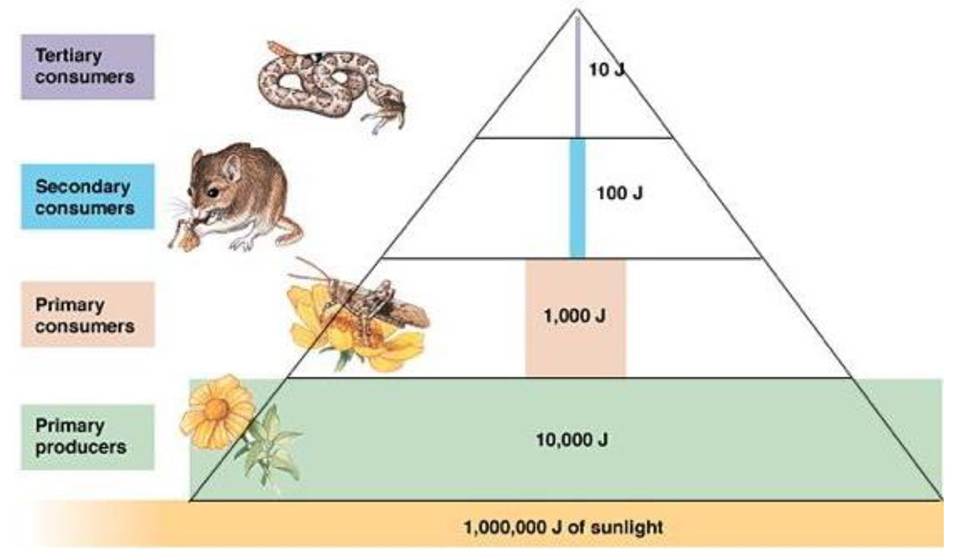
Figure 7 - The 10% Energy Rule in a Food Chain
Succession
Ecological succession, the process by which the structure of a biological community evolves over time. Two different types of succession — primary and secondary — have been distinguished. Primary succession occurs in essentially lifeless areas — regions in which the soil is incapable of sustaining life as a result of such factors as lava flows, newly formed sand dunes, or rocks left from a retreating glacier. Secondary succession occurs in areas where a community that previously existed has been removed; it is typified by smaller-scale disturbances that do not eliminate all life and nutrients from the environment.
Primary succession begins in barren areas, such as on bare rock exposed by a retreating glacier.
The first inhabitants are lichens or plants — those that can survive in such environment. Over hundreds of years these “pioneer species” convert the rock into soil that can support simple plants such as grasses. These grasses further modify the soil, which is then colonized by other types of plants. Each successive stage modifies the habitat by altering the amount of shade and the composition of the soil. The final stage of succession is a climax community, which is a very stable stage that can endure for hundreds of years.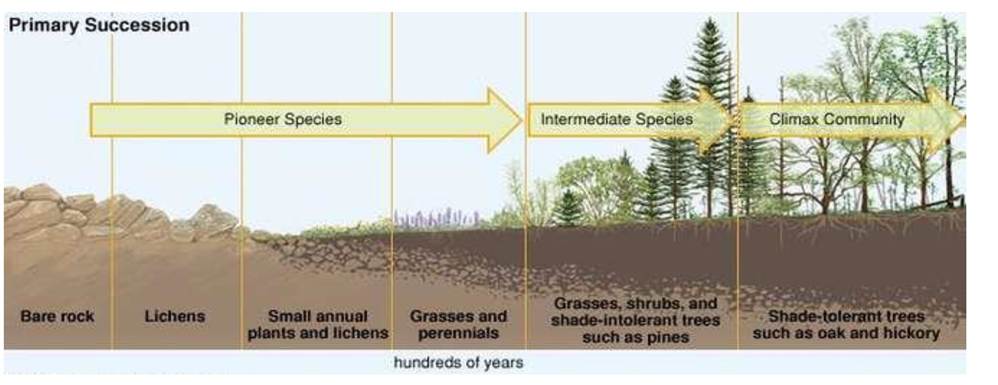
Figure 8 - Primary succession
Secondary succession follows a major disturbance, such as fire or flood. The stages of secondary succession are similar to those of primary succession; however, primary succession always begins on a barren surface, whereas secondary succession begins in environments that already possess soil. In addition, through a process called old-field succession, farmland that has been abandoned may undergo secondary succession.
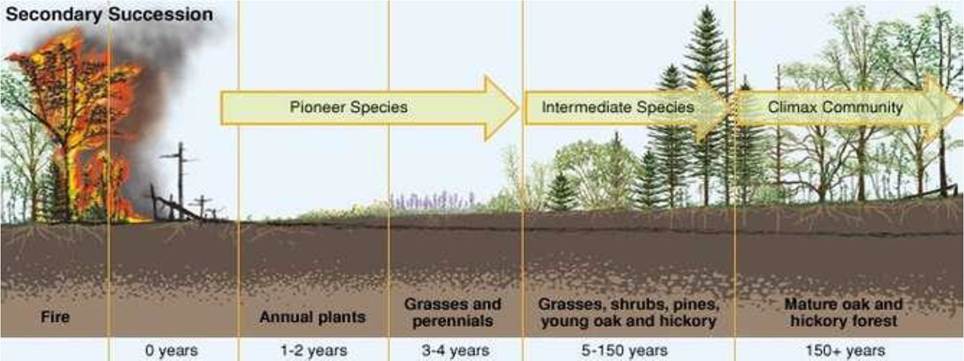
Figure 9 - Secondary succession Agroecosystems
An agroecosystem can be viewed as a subset of a conventional ecosystem. As the name implies, at the core of an agroecosystem lies the human activity of agriculture. However, an agroecosystem is not restricted to the immediate site of agricultural activity (e.g. the farm), but rather includes the region that is impacted by this activity, usually by changes to the complexity of species assemblages and energy flows, as well as to the net nutrient balance. Traditionally an agroecosystem, particularly one managed intensively, is characterized as having a simpler species composition and simpler energy and nutrient flows than "natural" ecosystem.
Artificial ecosystems are terrestrial as well as aquatic. The terrestrial ones include rural and urban settlements, plantations, orchards, gardens, park, croplands and animal farms.
The man-made aquatic ecosystems include dams, reservoirs, lakes, canals, fishery tanks, ponds and aquaria. The most important man-made ecosystems are croplands generally called agroecosystems.The agroecosystems have many common features:
> They are created by man and are, thus, artificial.
> They are maintained and regulated by man.
> They lack the capacity of self-regulation.
> They are aerated, irrigated and fed with manure and synthetic fertilizers. The use of the latter causes water pollution.
> They are protected againsts pathogens and pests (insects, other animals and weeds) by the use of pesticides. The latter are toxic to the herbivorous animals and humans. They are fenced against the attack of cattle and other animals.
> They lack circulation of natural soil nutrients, hence need for artificial manuring.
> They lack stability because they are mostly monocultures and do not have diversity.
> They are prone to destruction by drought, floods, pests and diseases. Such destructions have caused famines in the past.
> Crops grown in agroecosystems are genetically improved to have higher yields.
> Machinery is used in sowing, spraying and reaping the crops.
> No biomass is left in the fields because of reaping.
> Stubbles are burnt to add ash to the fields. However, it causes air pollution.
The agroecosystems are created, regulated, fed, protected and improved by humans lack diversity, stability, circulation of nutrients, and self-regulation and leave no biomass in the fields because of reaping.
Answer these questions:
1. What are the main components of all ecosystems?
2. Can an ecological system be called a steady state? Why?
3. Decide whether these statements are true or false (T/F):
3.1 Components and processes of an ecosystem govern the behavior of some defined subset of the biosphere.
3.2 The ecosystem is composed of two entities, the entirety of life, the biotope and the medium that life exists in, the biocoenosis.
3.3 Energy from the sun is ultimately lost to the system as waste heat.
3.4 Decomposition is the first stage of biogeochemical cycles such as the carbon and nitrogen cycles.
3.5 The Convention on Biological Diversity was ratified by more than 75 countries.
3.6 The whole earth can be seen as a single ecosystem.
3.7 Predation, parasitism, mutualism, commensalism, competition, and amensalism are the elements, which cause a disruptive effect to an ecosystem.
4. What types of aquatic ecosystems do you know? Characterize briefly each one, pointing out the difference between them.
5. What do you know about autotrophic organisms and heterotrophic organisms?
Topic: Doctrine of biosphere
Goal: to study structure and evolution of the biosphere
Plan:
1. The concept of the Biosphere
2. The doctrine of the «Biosphere» by Vladimir Vernadsky
3. Geochemical cycle in the biosphere
4. The evolution of the biosphere