Basing environmental taxation on opportunity costs
‘The tax which each individual is bound to pay ought to be certain, and not arbitrary. The time of payment, the manner of payment, the quantity to be paid, ought all to be clear and plain to the contributor, and to every other person’ (Smith, 1971, bk 5, ch.
2). When we deal with effective environmental taxation, every single aspect of this principle, which is part of the traditional canons of taxation, stands to be violated. To see this, we have to invoke the difference between objective costs and subjective or choice influencing costs that has been effectively introduced into public finance analysis by James M. Buchanan (1969). Pigou’s theory of regulatory taxation, which underlies the current literature on environmental taxation, is based on the notion that the external costs of a particular activity can be internalized into the decision calculus by means of imposing a tax, thereby reducing the externality.2 This requires, however, that the taxing authority be aware of the costs. This in turn requires the notion that costs can be objectively measured. Costs that can be objectively measured, on the other hand, need not be those that influence decisions. As we have seen in the introductory survey, carbon taxes are supposed to meet an inelastic demand for carbon fuel, only in the long run leading to the substitution of more energy-efficient carbon fuels for less energy-efficient ones. Speaking of an inelastic demand subject to taxation means that the tax does not influence the decisions of the taxpayer to any large degree.In order to appreciate the breadth of this statement, consider the example used before in the following way. After the electric power plant has been installed and power supplies have been improved for the region, the wine growers suddenly and unexpectedly experience heavy losses due to the formation of mist in the valley.
They intervene with the government, which proceeds to impose a ‘power penny’, that is, a certain percentage charge on each currency unit billed. The ‘x’ percentage charge, called a ‘power penny’ in order to emphasize its environmental appeal, is calculated to equal the losses of the wine growers and is implemented as an ecological regulatory charge. No doubt this power penny satisfies Smith’s criterion of a certain tax, and it can be readily implemented, since the charge can just be added to the normal bill. Yet the power penny is unlikely to have any significant effect on the activity of the power plant that causes the externality. Although the vintners may be compensated for the damages they suffer, the economy as a whole still suffers loss, with either less wine production or wine of lower quality, or both, while energy will be more expensive for all. Hence the bundle of products available to consumers in the economy will be smaller with the same money income; the power penny only spreads the externality, it does not internalize it. The power penny, in this sense, is no different from the smokestack. It just spreads the externality, like a financial equivalent to the chimney.An environmentally and ecologically relevant tax needs to be a tax that affects the choice-influencing costs. In designing such a choice-influencing environmental tax, we have to look for the time and locus at which environmentally relevant choices are made. Since these choices are not made on any basis of periodicity as a normal tax would require, an incentive needs to be created which triggers the tax. This may sound paradoxical, since a tax is by definition an involuntary payment that for this very reason tends not to be initiated by the entity to be taxed. In the case of environmentally relevant taxes, however, the situation must be different. Neither choice-influencing costs, which are subjective, nor locus and time of decision making are directly or indirectly observable by an outside agency, such as a tax authority.
In our example, the appropriate decisions with respect to the design of the plant, the production process and the management of production with a view to allowing different uses of the same resource can, but need not, be made before production activity actually starts or when new investments are due.The objective of the tax is to encourage environmentally and ecologically preferable plant design, production processes and production management, but what this design, these processes and the management will be is known only to the decision makers involved, and only after an appropriate decisionmaking process has been launched. This implies that the tax involved can only be of the type of an incentive. If that is the case, however, the question arises as to what might constitute the tax base.
As we noted above, partitioning of property rights so as to make different resource use compatible in fact moves the production possibility frontier in a north-eastern direction. The resulting production potential constitutes a source of earnings for the participants, which in itself constitutes a tax base. When a tax authority tries to encourage the creation of a stream of income in order to broaden the tax base, it can grant deductions as an incentive. Such deductions can then form an appropriate lever to encourage environmentally or ecologically desired changes, which cannot be prescribed but can only be triggered by way of incentive. The system then takes on the following form. When a particular project is to be added to an existing ecosystem, as in our case of the power plant, building and operation permits need to be secured as usual. Similarly, financing will be dependent on these permits. Under the present regime, no particular attempt at redefining property rights through multiple negotiations can be expected. The transactions costs required to lead to an optimal repartitioning of property rights in these cases can be assumed to be substantial. It is here that the ecological tax instrument must provide a lever.
An opportunity for renegotiating a partitioning of property rights in order to make different uses of the same resource compatible can be created by providing for a tax incentive on the grounds of ecologically desired improvements. If a scheme such as the one outlined above can be presented and shown to lead to substantial savings and/or extended production possibilities, an x year tax credit for the income generated through the scheme can be granted upon certification by an environmental regulatory authority. The tax credit can, in turn, be used as collateral for the outlays needed in order to facilitate implementation of the agreement arrived at. This solution implies that the information needed for the decision of the tax authority is totally forthcoming from the parties involved and, as it needs to be certified by the environmental regulatory authority and does not require any additional information gathering on the part of the tax authority there is little room for error or misjudgement. The tax credit can easily be implemented within the context of current procedures, and the tax base has been broadened by the volume of the income generated (I) through repartitioning of property rights multiplied by (n - x), with n being the time during which taxes can be expected to be levied. The tax base is:
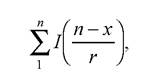
with r being the relevant discount rate.
As we look at Adam Smith’s criteria, we notice that this scheme violates every single aspect of his principle of certainty. The tax incentive is not the same for each taxpayer, as it crucially depends on the specifics of the repartitioning scheme negotiated. Although the tax incentive is not arbitrary, it is certainly not well known in advance. The time at which it becomes effective depends only on the activities of the taxpayers, as does the manner of payment, as even does the quantity to be paid, and none of these is clear and plain in advance. What becomes clear and plain is the tax credit, as this instrument needs to be used as collateral. The tax credit, in turn, drives the implementation of the scheme. If the authorities err in setting the tax credit too low, the scheme will not be launched and the additional increase of the tax base will not be forthcoming. If they set it too high, they still increase the tax base but forgo some tax revenue.
Interestingly enough, the environmental tax as a tax credit satisfies the double dividend criterion. The double dividend even has an institutional realization. The environmental dividend is being certified by the environmental authority and the fiscal dividend is being certified by the tax authority granting the tax credit.