The hold-up problem
To illustrate the hold-up problem, consider the case of a company A producing automobile bodies and a company B producing automobiles. Imagine that A actually produces a standard automobile body which might equally be sold to B and to B’s competitors C and D.
The market value of the automobile crafted with the standard body is €40 000, while the price at which a body is sold by A to automobile companies is €20 000 per unit. Assume now that A and B meet to sign a contract for a new sophisticated automobile body to be produced by A specifically for B. The contract is typically incomplete, given that for the parties involved it would be very costly to specify detailed contractual terms according to all possible contingencies which may arise from a contract signed (at t = 0) according to A’s performance (at t = 1). On the other hand, automobile bodies are specific investments given that, once produced with a specific design tailored for B, they preserve their economic value only if acquired by B. Assume that this specific investment amounts to a value s, such that 0 < s < €30 000 for each body unit and that the market price for the new model produced by B is equal to €100 000. At t = 0, A and B agree upon a surplus sharing rule which gives to A and B, respectively, half of the new model market price (€50 000 each). However, since the contract is not verifiable by third parties, A’s production decisions, after t = 0, are exclusively determined by A’s expectations of B’s attitude either to cooperate or to renegotiate on contractual terms. Figure 10.1 illustrates how A will make his/her decisions.Assume first that A decides to make a specific investment. What about B? B may choose to fulfil contractual obligations (commitment) and pay, say, €50 000 to A; or B may hold up A and threaten to exit the contract unless a price equal to A’s best outside option (€20 000) is obtained at the renegotiation stage.
In this last case (hold-up), B will extract a rent equal to €30 000 from A. Let us assume that at t = 1 B is likely to adopt an opportunistic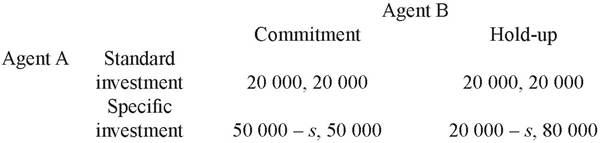
Figure 10.1 The unilateral hold-up problem
behaviour, refusing to transfer the contractually agreed-upon price at t = 0. Will A select the specific investment? Of course not, given that by producing a standard body, he/she can always obtain €20 000, without incurring, in the case of the counterpart’s hold-up, the monetary loss 5 associated with specific investments. This is the underinvestment outcome generated by the risk of hold-up by counterparts. Underinvestment leads to an inefficient outcome (standard investment) given that a potential Pareto-relevant exchange is truncated and a potential social surplus (equal to €60 000 - 5) is entirely dissipated. One could ask whether the case of bilateral specific investments differs somehow from the above case. Assume then that the automobile producer B has also made an investment b which is specific to the body produced by A (for instance, the engine’s dimension). The intuition is that with bilateral specific investments, parties may have a strong incentive both to reciprocally commit to contractual obligations and to share the maximum social surplus. However, as Figure 10.2 clearly shows, unless parties are able to implement some reciprocal commitment device, both may maintain strong incentives to delay investment choice until the counterpart has been committed to the contract. However, as long as one party commits to fulfilling the contract, the counterpart maintains strong incentives to hold up. As a consequence nobody will be induced to invest and investment decisions might be delayed indefinitely. The resulting equilibrium will be the inefficient one, characterized by bilateral underinvestments with a complete dissipation of the potential social surplus, equal to [60 000 - (5 + b)], which would have been generated by specific investments.
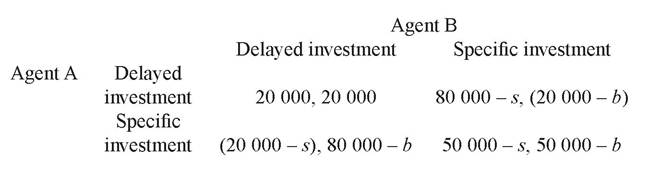
Figure 10.2 The bilateral hold-up problem