Cognition, 2010s: More than meets the eye
Although with some concessions to later research for clarity, the previous paragraph has recapped the main points of the first wave of CSR. CSR 1.0 advanced some detailed meta-theoretical and epistemological reflections that laid the foundations for subsequent in-depth explorations.
Four main contemporary branches might be further identified (it goes without saying that all the branches interact in such a way that in some cases a clear-cut demarcation is very difficult to trace; Figure 15):1. CSR 2.0: the most recent trends in the field have privileged a decidedly experimental outlook, more focused on practical collaboration between neurosciences and anthropology, in order to test quantitatively, in vivo (in the field), in silico (via computer modelling and simulation), or in the lab (via neurocognitive imaging), theories advanced by the first-wave scholars. One of the goals of the CSR 2.0 is to ‘code the data and perform statistical analyses of the resulting database to determine which hypotheses most parsimoniously explain the empirical patterns' (Geertz 2015: 393; cf. Xygalatas 2013; see Ambasciano 2017b).
2. Evolutionary science of religion (ESR): an area of enquiry closely related to the most recent and updated version of cultural evolution (an international organization, Cultural Evolution Society, was founded in 2015) grounded on the quantitative analysis of the evolutionary benefits provided by the adoption of religious beliefs and behaviours. In other words, religions are considered adaptive insofar as they elicit, boost and support cooperation through belief-statements and ritual behaviours (e.g. Wilson 2002). A recent focus of the ESR has been the development and maintenance of ultrasociality, i.e. the enormous amount of cooperation between genetically unrelated strangers in groups made of hundreds, thousands or even millions of individuals (e.g. Norenzayan 2013; Turchin 2015).
Converging and overlapping with CSR 2.0, ESR teams are building huge historiographical databases with the aim of testing quantitative theories about the evolution of human cultures and religions (e.g. Seshat: Global History Databank, http://seshatdatabank.info/; DRH - The Database of Religious History, https:// religiondatabase.org/);3. cognitive historiography: in a sense the scientific successor of the old HoR, cognitive historiography studies from a qualitative perspective the historical interaction between human universals, cultural variants, socio-political systems and cognitive dynamics, with a special focus on data from ‘dead minds' (Eidinow and Martin 2014: 5) and on the religions of the past. The main focus is on the psychological mindsets of historical actors and social groups. The journal of reference, Journal of Cognitive Historiography, was launched in 2014;
4. neurohistory: a historiographical sub-discipline that focuses on the cultural niche and builds on neuroendocrinology (i.e. the study of the interaction between hormonal, nervous, and cerebral activities) to investigate the historical patterns of conscious and unconscious manipulation of ‘moods, emotions and predispositions inherited from the ancestral past', experienced via behaviours (such as rituals and beliefs, gender norms, food consumption, etc.) and modulated or mediated in the brain by neurochemicals (Smail 2008: 117; cf. Shryock and Smail 2011b, and L. H. Martin 2014: 254-71; cf. Geertz 2010).
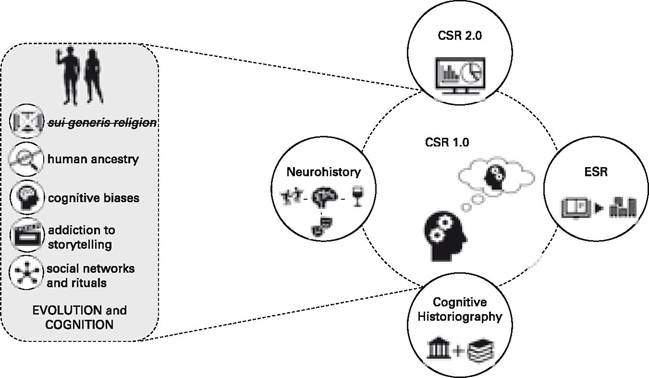
Figure 15 Cognition and evolution reshape the scientific study of religion(s): fundamentals and academic developments