Devotionalism
A major wave of devotionalism (bhakti) occurred during this period when Islam was increasingly visible. Was it a coincidence? Possibly but probably not always. Certainly, bhakti had thrived in the Tamil vernacular marking the Tamilization of Saivism and Vaisnavism in the seventh to ninth centuries.
And tantrism and worship of the goddess were occurring in the eighth to tenth centuries, in a number of regions of India. Yet these movements seemed to have occurred at times and in places of transition. There was reaffirmation of regional and vernacular idioms, and a dialectic of “self’ and “other.” The “other” had sometimes been other sects or communities. It had also included response to Buddhism and Jainism. Islam may well have been one of the catalysts of a resurgence of devotionalism in this period, whether directly or indirectly.13 The connections were sometimes explicit in those bhakti poets who were singing after the thirteenth century, though there were clearly other factors as well. These factors included an emerging consciousness of regional and vernacular identities, the appropriation of indigenous and “folk” forms of religious expression, and the borrowing of (and distancing from) brahmanic forms of orthopraxy.Three vernaculars in particular were beginning to reflect a rich devotional surge: Marathi, Bengali, and Hindi. We look briefly at each context.
Marathi
Among the earliest of the Marathi bhaktas was Jnanesvara (1271-96). He was influenced by the popular Varkari sect which worshiped Vithoba, the god of Pandharpur. Also informed by the Natha sect,Jnanesvara wrote a commentary on the Bhagavadgita in Marathi known as the Jnanesvan}-4 Several features of the bhakti movement were evident in his work: the use of the regional vernacular, the appropriation of indigenous, even “folk,” forms of religious practice, and the selective appropriation of Sanskritic sources.
The result was the Vaisnavization of Marathi country, the equating of Vithoba to Krsna, and the sanctioning of Marathi as a literate form.Namdev (1270-1350) was a low-caste tailor and devotee of Vithoba, by now a full-fledged form of Visnu.15 His songs were passionate and generally transcended caste and became very popular in the Varkari movement. He is generally credited with incorporating the kirtan (group singing) into the poetic repertoire, encouraging group chanting such as was used in semiannual pilgrimage to Pandharpur.16
Eknath (1553-99) was a brahman, but believed that religion could be practiced in every home. He was also something of a scholar as he provided a Marathi commentary on the eleventh book of the Bhagavata Purana and offered a new version of the Ramayana, known as Bhavartha liamiayirn, thereby giving the story of Rama a Marathi cast.17 Eknath explicitly sought some accommodation between Muslims and Hindus as in one of his poems he offers a dialogue between a “turk” and a brahman in which each finds faults with the other, until in the end, accommodations are found and the discovery of “true” religion is offered.18
Tukaram (1598-1650) was born into a rural family of grain traders. His bhakti was born of tragedy - the death of his wife and son. Tukaram composed songs that became favorites of varkari pilgrims. His songs and his devotion were intensely personal; ecstasy was the summum bonum of religion. Though a mystic, his poetry reflected the language and life of the common people.19
The final figure in the devotional heritage of Maharashtra was Ramdas (1608-81). He was the author of Dasobhada, a compilation of his writings and poems and of Manare. Sloka, a compilation of “verses to the mind.” Not part of the Varkari movement, he was a devotee of Rama to whom he built a temple. He also managed to politicize bhakti in Marathi country. He is said to have been concerned with the “degeneration” of brahmanic society and the perceived threat of Islam’s spread.
Ramdas was believed by his followers to be an avatara of Hanuman, Rama’s “monkey general,” and was responsible for emphasizing the tradition of balapasana (worship of strength) in which gyms and Hanuman temples were established. Sivarji, the founder of the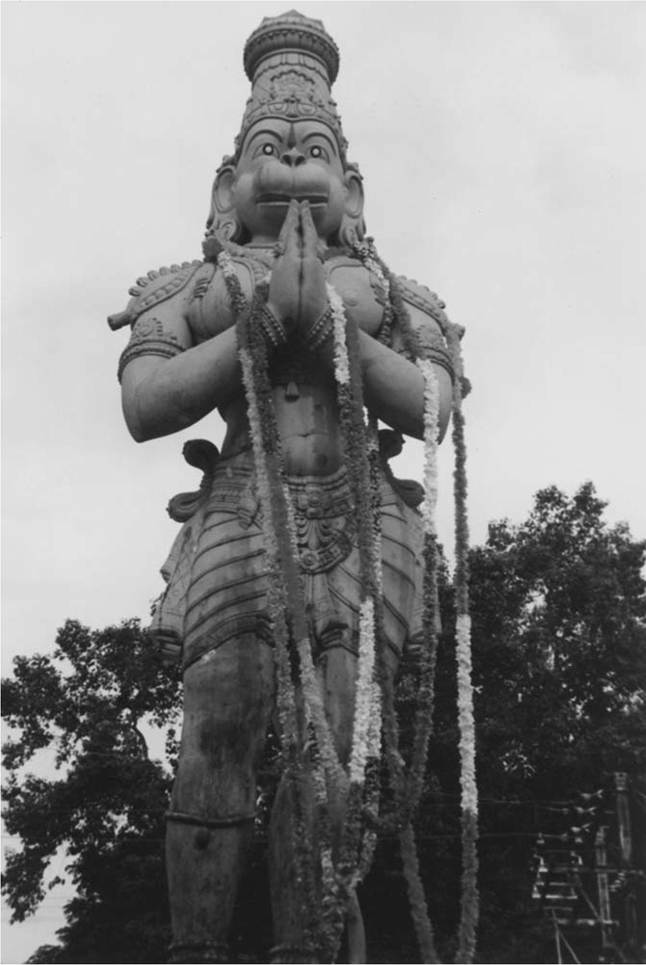
Figure 6 Statue of Hanuman, monkey general of Rama's army. Photograph by Rob F. Phillips.
Marathi kingdom, was a disciple of Ramdas who presented Rama as the militant prototype of a dharmic Hindu king. A tradition had been started in Maharashtra wherein Rama was politicized and “others” deemed to be undesirable were homologized to Ravana.20
These Marathi poets were both reflecting and catalyzing the popular forms that religion was taking in Western India. Pilgrimage, especially to Pandharpur where the god Vithoba was enshrined, was one form of this devotionalism. Yet another was the way Hanuman became a popular deity, especially after the time of Ramdas. (Ramdas had equated Vithoba with Rama and installed a Hanuman shrine at Pandharpur as Rama’s protector.) Known as Maruti in Marathi-speaking country, Hanuman was the monkey general in Rama’s mythical army. Today he is portrayed as the protectordeity and warrior par excellence, the epitome of fidelity, virility, and fitness, an apt model for devout males to follow.21
Bengali
We have observed how in Bengal there were several religious currents at work by the ninth and tenth centuries. There had been a significant Buddhist presence until the eleventh century and a sizable Muslim presence, especially in East Bengal, by the thirteenth century. Tantrism had been a strong movement into the tenth century and a number of goddesses emerged to the status of high deity by at least the twelfth century, especially Durga, Kali, and Radha. Radha’s popularity, in particular, was catalyzed by the appearance ofJayadeva’s Gita Govinda in the twelfth century.
Jayadeva’s Sanskrit text was influenced by a variety of sources: the Bhdgavata Purana; the songs of the Tamil Alvars (probably brought to Bengal by pilgrims during the Cola period); and tantrism. No doubt folk traditions were a part of the mix especially those associated with the herding communities. The Gita Govinda rhapsodized about Krsna as a lovable, approachable local “cowherd” god whose love for the gopis, and especially Radha, was celebrated. The erotic imagery and allegories associated with this relationship came to be sung, danced, and enacted throughout India. The text served to classicize stories and traditions that earlier may have been found only amongst peoples living on the “margins” of society, and which in their earlier form may have had anti-establishment, even anti-brahman intimations.22Chandidas, a fourteenth-century poet, sang extensively to the mother goddess and to Krsna and Radha. The Krsna Kirtan (songs for Krsna) became a favored form of expressing devotion in groups. Chandidas also was not averse to acting out his love for god by embodying it in a relationship with a particular earthly person, a “recycling” of the tantric ritual tradition.23 Vidyapati (fourteenth to fifteenth century) composed in Maithili nearly 1,000 love ballads, which have now been collected. His favorite subject was the relationship between Krsna and Radha and the use of erotic imagery to speak of the bhakta’s relationship with the divine.24
One other significant contributor to the bhakti movement in Bengal was Visvambhar Misra, better known as Caitanya (1485-1533), who started a new movement within Bengali Vaisnavism. Appealing especially to a newly emergent “middle class” in Bengal - for example, merchants, farmers, artisans - Caitanya offered an egalitarian form of Vaisnavism which borrowed brahmanical ideas while critiquing brahmanic hegemony. He sent six followers (gosvamins) to Vrindavan, pilgrimage center par excellence of the Krsna cultus.
There they were asked to work out a theology based on sacred texts, not least importantly, the Bhagavata Parana and the Bhavadgita. In Caitanya’s system, Krsna was the highest form of the divine, its true essence, who was united with Sakti, manifest in Radha. A devotee could ascend the ladder of bhakti until reaching the supreme state, known as madhurya or sweetness. When one was identified with Radha, devotion was expressed in sanktrtana - ecstatic dancing to the sound of tambourines. Sound in the form of chant and recitation of the deity’s name was thought to enable the devotee to draw near to the divine.25 Sound was cosmogonic, a vaidika assertion, but it also incorporated the Sufi notion of becoming one with the divine. Krsna was presented as consistent with the Quranic imagery of Allah, but more pervasive. The school Caitanya founded has survived into the present and is widely known as Gaudia Vaisnavism or the International Society for Krishna Consciousness.Hindi
Though Hindi was only standardized by the early nineteenth century, the language was evolving in dialects by the fourteenth century. In fact, it evolved alongside Urdu, in the Indo-Islamic matrix with which it shared a grammar and a vocabulary.26 Like the language itself, the bhakti singers were a product of their time, sometimes explicitly showing the connections between the Hindu and Muslim experience; sometimes those relationships were, at best, implicit.
The lineage of the “Hindi” bhaktas began perhaps as much as anywhere with Ramananda (1400-1470). Apparently from South India and a follower of Ramanujan, he became an important catalyst for the forms of devo- tionalism that followed. For him Rama was the supreme god who was to be worshiped with Sakti, yet he was rather eclectic in lifestyle. Possibly influenced by Sufism,27 he was opposed to caste and other distinctions of “religion” and class. His own disciples are said to have included a Muslim, an outcaste, and several women.
One of those he apparently influenced was Kabir.Kabir (1440-1512) was apparently born of a low-caste Muslim weaver who, nonetheless, had contact with both Muslim and Hindu saints. His poetry, composed in the Bhojpuri dialect, had a rustic, simple flavor. His songs and religious vision incorporated aspects of Vaisnavism, Hatha Yoga, Sufism, and Vedantic monism: God was one but he had many names. The one way to god was through bhakti, devotion. The enlightening vision of god (dar-s'an) was a gift of his grace. The self was purified by humility, renunciation, and the praise of god in kirtan (song) and meditation. Kabir was something of an iconoclast as he attacked the “externals” of religion - for example, the scriptures, whether the Pur-anas or Qu‘ran, were less important than the experience of the divine itself. Rituals, icons, caste, pilgrimages to various sites were extraneous. In a famous verse he made fun of the unnecessary strategies for attaining release: if celibacy were the way to enlightenment, then eunuchs would be at the head of the line; if going around naked were the way, shorn sheep would enter paradise immediately:
Go naked if you want,
Put on animal skins.
What does it matter till you see the inward Ram?
If the union yogis seek
Came from roaming about in the buff, every deer in the forest would be saved.
If shaving your head
Spelled spiritual success,
heaven would be filled with sheep.
And brother, if holding back your seed
Earned you a place in paradise,
eunuchs would be the first to arrive.
Kabir says: Listen brother, Without the name of Ram who has ever won the spirit’s prize?
* * *
Pundit, how can you be so dumb?
You’re going to drown, along with all your kin, unless you start speaking of Ram.
Vedas, Puranas - why read them?
It’s like loading an ass with sandalwood!
Unless you catch on and learn how Ram’s name goes, how will you reach the end of the road?
You slaughter living beings and call it religion:
hey brother, what would irreligion be?
“Great Saint” - that’s how you love to greet each other:
Who then would you call a murderer?
Your mind is blind. You’ve no knowledge of yourselves.
Tell me, brother, how can you teach anyone else?
Wisdom is a thing you sell for worldly gain, so there goes your human birth - in vain.
You say: “It’s Narad’s command.”
“It’s what Vyas says to do.”
“Go and ask Sukdev, the sage.”
Kabir says: you’d better go and lose yourself in Ram
for without him, brother, you drown.28
The legacy of Kabir was several groups (panths) of seekers, most notably the Kabirpanth. Nanak, the founder of the Sikh movement, may have been influenced by his teachings or at least by the spirit represented in Kabir’s poetry.29
Surdas (1483-1563) was a brahman reciting in the Braj-bhasha dialect. A blind disciple of Vallabha, he was inspired by the Bhdgavata Purana and declared that love of Krsna was central to enlightenment. His stories were often poignant reminders of the true nature of sight - it was seeing within that was important.
Until you wake up to what you really are
You’ll be like the man who searches the whole jungle for a jewel that hangs at his throat.
Oil, wick, and fire: until they mingle in a cruse
they scarcely produce any light,
So how can you expect to dissipate the darkness simply by talking about lamps?
You’re the sort of fool who sees your face
in a mirror, befouled by inky filth,
And proceeds to try to erase the blackness
by cleaning the reflection to a shine.
Surdas says, it’s only now the mind can see -
now that so countless many days are lost and gone -
For who has ever recognized the brilliance of the sun but by seeing it through eyes gone blind?30
Yet another poet of the fifteenth or sixteenth century was Ravidas, an outcaste leather worker, born in Banaras. While Ravidas tended to be “antiestablishment” in his orientation, he was not interested in social reform. Rather, he valued his “low state” so he could attest to how far the divine would stoop to meet a devotee. His bhakti was that for the divine which transcended all forms (nirguna).31 The form of the deity preferred by the bhakta may itself be a reflection of the times. The nirguna (formless) divine is consistent not only with classical Hindu devotion but with Sufi and Islamic perceptions as well, whereas saguna bhakti (that directed to a specific form of the divine, such as Rama) attests to the god’s accessibility and concreteness perhaps in contradistinction to more remote perceptions of God.
Tulsidas (1532-1623), writing in the Avadhi dialect, was an important contributor to the Hindi religious landscape. He was the author of the Ramcharitmanas (the lake of the story of Rama), a Hindi version of the Ramayana, as well as of several other works. It was Tulsidas who was largely responsible for popularizing the cult of Rama in “Hindi” idiom, and it was after his time that pilgrimage sites for Rama became more abundant in upper Central India. Tulsidas’ devotion was that of a servant for his master.32
Mirabai (sixteenth century) has become an especially popular poetess amongst women. She was apparently a Rajput princess who refused to consummate her marriage to her royal husband because of her devotion to Krsna. She is also said to have defied the wishes of her in-laws in not worshiping Durga in favor of Krsna. Tradition also claims she refused to immolate herself on the funeral pyre of her husband when he was cremated.33 In short, she was depicted as the prototypical woman who transcended social conventions in order to become the bride of Krsna. The dialect of her compositions was Rajasthani.
There were bhakti singers in other parts of the subcontinent as well. For example, Dadu of Rajasthan (1544-1603) was a mystic who espoused the perception of the divine as nirguna, yet benevolent and gracious in a manner consistent with both a vaidika vision and a Sufi one. He was a contemporary of Akbar and the Sufi eclectic mystic scholar Dara Shikoh who may have influenced Dadu. In the south, a new wave of bhakti was beginning in Tamil, thanks in large measure to the musical poetry of Arunakiri (early fifteenth century?). Arunakiri was a master of poetic medium - alliteration, meter, assonance, etc. His deity, Murukan, was extolled for his “military prowess” as if to suggest political instability needed the ministrations of a strong leader and to convey the need for internal victory over the passions. His poetry celebrated the Tamil language and landscape in ways that made him a forerunner of an eventual Tamil renaissance.34
While early waves of devotionalism in specific regions reflected local factors, certain general features might be highlighted. First, there was the use of vernacular idiom and the landscape of the particular region, suggesting an increased awareness of regional and linguistic particularities. Second, there was a selective “brahmanizing” of elements that were part of folk society. Even when the poets were not brahmans, there was borrowing of themes from classical myth or symbol, or, conversely, the classicizing of folk and regional idioms. Finally, there was an implicit dialectic of self and other, whether Kabir’s “othering” of the “externals” of both Hindu and Muslim traditions or Ramdas’ more explicit “othering” of non-brahmanic “threats” including that perceived to reside in Islam. At least implicit from the thirteenth century on was a sense that Islam was part of the landscape and response was explicit in the case of several (Eknath, Caitanya, etc.). With some exceptions (e.g., Ramdas and some Sufis), the poets were relatively apolitical and egalitarian.
Parallel and almost indistinguishable at times to this blossoming of vernacular devotionalism within “Hinduisim” was the presence, spread, and interaction of Sufi pietism. Along with the Chisti order which influenced Uttar Pradesh and Panjab, there was the Suhrwardi order which was common in Sind, and the Firdausi order in Bihar and Bengal. New orders also emerged in India such as the Qadiris and the Shattaris, both of which were pantheistic in character. Sufis interacted with “Hindu” streams of devotion. While they at first sang in Persian, by the fourteenth century their songs were in some form of Urdu: Amir Khusrau, who died in 1325; Valli (1677-1741), who actually composed in the Deccani language; Ghalib (1789-1876), et al. Their ghazals became a uniquely Indian poetic form expressed in Urdu or a dialect thereof, using a rich vocabulary of metaphors for the religious experience: a rose was like god; the nightingale or hummingbird was the poet; the garden was where the poet met god; wine was like a means by which a new state of being was attained. Often impatient with the political order, the Sufi saints rhapsodized about the possibility of ecstatic union with the divine and of the desirability of being emptied of the orientations of the self and filled with the fullness of the divine, thereby becoming the vessel of the divine presence.