Judean pillar figurines (JPFs) remain one of the most common ritual objects from the eighth through sixth centuries BCE in Judah, the polity governing southern Israel.
Given that fact, these small terracotta females holding their breasts have been the recipients of a great deal of scholarly attention over the past century. Moreover, because many authors choose to interpret the figurines in light of the biblical text, the figurines have figured prominently in discussions about Israelite religion, monotheism, iconoclastic reform, and women's practice.
Despite their predominance in both the ancient world and in modern scholarship, these objects and their function are still only poorly understood. While part of the problem could be the absence of inscriptions on the objects or clear textual correlates, even greater barriers to understanding are modern methodological approaches to figurines, particularly regarding the connections made between the figurines and female practitioners, female deities, or female religion. In large part, such interpretations are based on a series of methodological assumptions made about the role of women in ancient Israelite religion, the significance of certain iconographic features, like hands holding the breasts, and to what extent archaeological context can be used to undergird such interpretations.
A further methodological problem is the relative infrequency with which interpreters address the figurines as the end products of local industries. In contrast with the issues that garner a large amount of interpretive energy, questions related to figurine production are underexplored. Yet, the answers to these questions are more accessible to modern interpreters than are answers about figurines and the goddess Asherah, for example. In fact, studying figurine style and manufacture can provide information that sheds light on complex problems like the organization of figurine production.
In an attempt to address many of the methodological difficulties and to model a more productive approach to JPFs as ritual objects, this essay first summarizes some of the most problematic methodological assumptions brought to bear on the figurines’ interpretation.
After demonstrating the ways in which these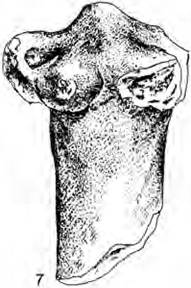
Figure 1. Detail drawing of a pillar body with arms supporting the breasts; courtesy of the Institute of Archaeology, Hebrew University of Jerusalem.
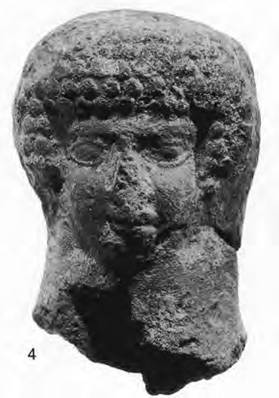
Figure 2. Photograph of a molded head; courtesy of the Institute of Archaeology, Hebrew University of Jerusalem.
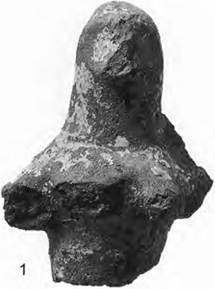
Figure 3. Photograph of a pinched head; courtesy of the Institute of Archaeology, Hebrew University of Jerusalem.
positions are a priori beliefs rather than evidence-driven conclusions, this essay uses archaeological context and the results of petrographic testing to challenge previous interpretations and form a more nuanced interpretive approach. In this process many of the most dearly held interpretations may be found wanting, such as the often-stated association between the figurines and ancient females. At the same time, however, this essay will demonstrate that modern researchers can use JPFs to address a number of research concerns, particularly the polyvalence of ancient ritual culture.