Observations
The everyday life of the Nagas is rooted in a strong belief system resulting from the nature and extent of their relationship with their immediate surroundings. Beliefs shape an individual’s psyche and determine the state of the society at large.
Without beliefs to cling on to chaos will be an imminent fall out.1 The beliefs aim at sustaining the society as a cohesive unit by raising the level of interdependence among the people.
2 The beliefs attempt to maintain a social decorum by preventing the people from doing things that can harm or create discomfort to the other members of the society.
3 The beliefs are the edifice for ascertaining discipline both at the individual and social levels.
4 It is human to attempt achieving all that he/she thinks/feels worth achieving, but such attempts can hamper the fragile nature-man relationship and inducing some fear can be a factor behind such beliefs.
5 Dependence on nature is perennial. It has creative and redemptive aspects.
6 It is difficult to identify the spirits whose existence the Nagas believe in from the real men and women and appearances are deceptive. This heightens the sense of mystery around the supernatural.
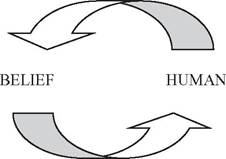
Chart 6.2 Cyclical Nature of Human and Belief Interrelationship
Source: Author
7 The advent and spread of Christianity changed the contours of the Naga belief system, but the people have kept alive the unique features of their rich oral literature and material culture rooted in the old world system.
8 Every belief should be read in the context of the time of its generation. It cannot be that such a belief evolved without a cause. The matter of contemporaneity needs to be addressed from the perspective of the time and social setting of evolution and the function it was intended to serve.
9 The human-belief interrelationship is cyclical in essence and complementary to each other which can be shown as: (Chart 6.2)
That beliefs cannot exist without being conceived of by men is given and as such any belief can be deemed a human construct resulting from socio-political compulsions of the dominant folk group in social, political, and economic parameters and psychological concerns. But once a belief is constructed or put into existence in the social plane it is all set to determine the subsequent flow of beliefs thereby determining the contours of men’s sociopolitical and psychological world thus attempting to propagate the notion of a common belief for the cause of creation of a homogenous society at least in the thought and belief parameter.
6.4