PRIESTHOOD
The Old Norse term “great sacrificer and pirate” (blotmadr ok Viking mikill), used to denote non-Christian rulers, seems to be the term underlying the Latin phrase idolatra et pirata maximus found in Helmold’s characterization of Rochel, the duke of the Slavic Obodrites (Helmold 1.69).
The name of his priest (jlameri) dedicated to the service of the god Prove is given as Mike. This, the only name of any Slavic pre-Christian priest preserved in the sources, was probably derived from the Christian name Michael, hardly surprising given that Helmold describes an area that at the time constituted a border zone with Germany.Among the Western Slavs of Pomerania and Polabia the importance of the priesthood is broadly attested since the late tenth century. In bitter confrontation with Christianity, the Lutitian tribes of this region seem to have developed a kind of theocratic amphictyony centred on the main pan-tribal sanctuary and assembly place in Riedegost-Rethra. The role of rulers (who were frequently inclined to conversion) was in that way at least diminished. In the first half of the twelfth century, the rivalry between princes ready for conversion and the preexterior planks were carved roughly in the shape of human beings (Fig. 25.6). Approximately fifty such planks have been preserved in the ground because they were used as a foundation for the new building. A path leads to the building from the main road of the settlement. The only two available dendrochronological samples of the wood from the building unfortunately result in contradictory datings: 871 and 961 CE (Herrmann & Heussner 1991: 271). Presumably, the structure was built before the great revolt in 983, but possibly after the defeat of the Polabians at the river Regnitz in 955.
building is not easy to determine. The large wooden plank-shaped pole with the top resembling a human head discovered close to the building could be interpreted either as a pillar supporting the roof or as the image of a deity (no post-holes were, however, found inside).
The reconstruction of the walls as a kind of structure decorated with anthropomorphous planks, suggested by Schuldt (1985: 39, 47), is convincing.One similar plank with the carved details of a human face was found in Ralswiek; others have been discovered in Parchim and Wroclaw. The reconstruction of the roof, however, is doubtful, and at least in the version proposed by Schuldt absolutely impossible. His reconstruction involves walls that in the winter would block snow from sliding off the roof, which is unimaginable in a climate where heavy snowfall must be expected and the roof would have to support an excessive added weight. Other reconstructions proposed by J. Herrmann (1993: 143) for Gross Raden and Arkona are therefore more probable. For such interpretations, written sources provide analogies in the descriptions of decorated walls of temples in Riedegost, Szczecin, Arkona and Gutzkow (Slupecki 1997a: 299-301).
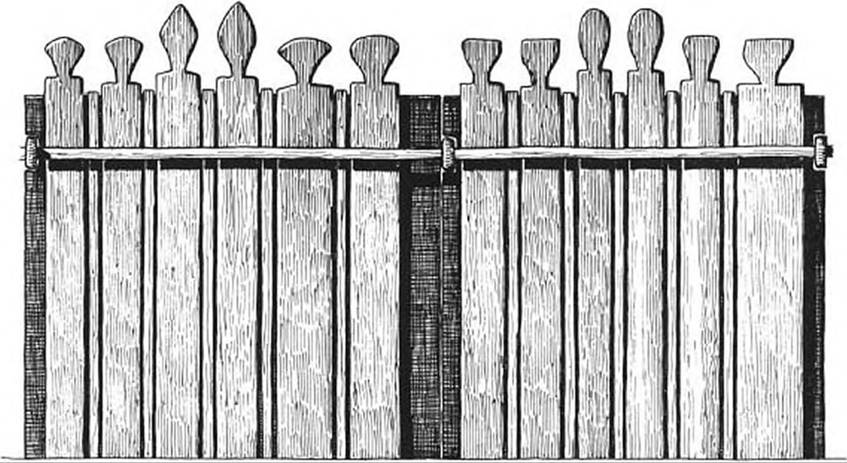
Figure 25.6 Gross Raden. Reconstruction of the wall (Schuldt 1985: fig.
51).
If the building from Gross Raden had a roof, it could have been a temple or a hall; both hypotheses, however, face problems. Compared to other Slavic temples, the building is rather too large. Arguments against the interpretation of this structure as a hall include the small size of the building and the lack of any traces of a fireplace inside it. If the building had no roof, as some scholars suggest, the structure could be interpreted as a kind of decorative fence (atrium) around a sacred space, a construction well attested in written sources concerning the Slavs (Slupecki 1994: 97). If so, the structure would have enclosed effigies of Slavic
6. See J. Herrmann (1974). New excavations on Cap Arcona trying to prove that the place where the temple stands is still preserved on the edge of the cliff are not very convincing; cf. Tummuscheit (2006).
7. He is mentioned also in v.
48 of the Slovo o polku Igoreve, which, however, is a source of disputed authenticity. Very probably, this was a folk epic (a kind of bylina) recorded in the eighteenth century but presented by Russian lovers of antiquity as a medieval source. The best commented edition of the text is Jakobson (1966), who unfortunately uncritically accepted its authenticity.8. In earlier research, Karentia, a seat of the prince of Rügen, was identified with Garz. A recent study by A. L. Mis (1997) proves, however, that it was in fact Rugard, a large stronghold located only a few kilometres from the important port of trade of Ralsviek, a location enabling the prince to take control of the trade.
9. Some finds in open water (including weapons) are better explained as lost objects or the remains of battles. Quite atypical and hard to explain is the fact that a major part of the weapons dating from the tenth century that have been found in Poland were discovered in such bodies of water, and a large number of these from just one location, the lake Lednica. Similar problems face the archaeology of Old Norse religion.
10. Nevertheless, in a similarly shaped but larger building discovered in Parchim, and certainly built without a roof (Paddenberg 2006), such a stone structure was present inside the fence.
SUGGESTED READING
Schuldt, E. 1985. Gross Raden. Ein slawischer Tempelort des 9./10. Jahrhunderts in Mecklenburg. Berlin.
Slupecki, L. P. 1993. “Die Slawischen Tempel und die Frage des sakralen Raumes bei den Westslawen in vorchristlichen Zeiten”. Tor 25: 247-98.
Slupecki, L. P. 1994. Slavonic Pagan Sanctuaries. Warsaw.
Slupecki, L. P. 1997. “Au declin des dieux slaves”. In Clovis. Histoire et memoire, vol. 2: Le bapteme de Clovis, son echo ä travers Thistoire, Μ. Rouche (ed.), 289-314. Paris-Sorbonne.
Slupecki, L. P. 2000. “Heidnische Religion westlicher Slawen”. In Europas Mitte um 1000, vol.l, A. Wieczorek & H.-M. Hinz (eds), 239-51. Stuttgart.