RANKED PRIESTHOODS
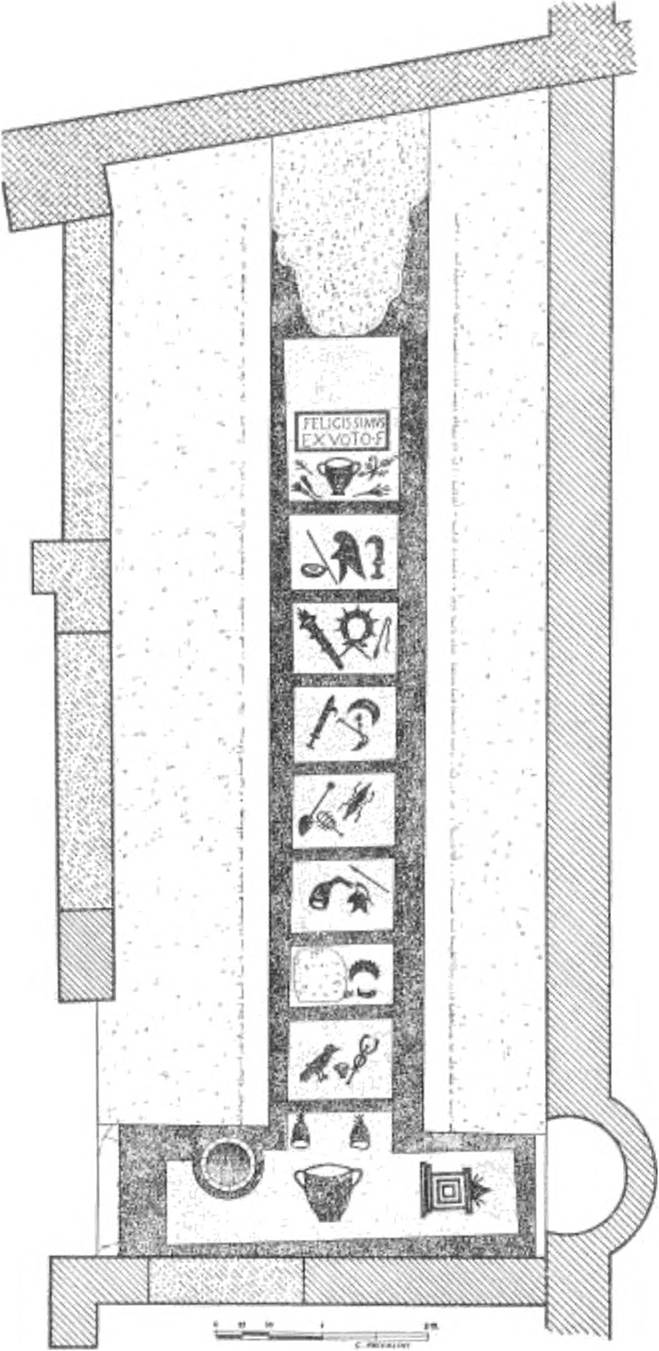
The Church Father Jerome informs us that the cult of Mithras had a priesthood ranked in seven grades: raven (corax), groom (nymphus), soldier (miles), lion (leo), Persian (perses), Sun runner (heliodromus) and father (pater, Fig.
19.6). Although this is not always made entirely clear, most descriptions of Mithraism suggest that all initiates formed part of the graded priesthood (Merkelbach 1984: 77-133). However, of the nearly one thousand Mithras initiates known to us by name, title, rank and function, only some 16 per cent have priestly rank titles (Clauss 1990b). The conclusion is that the cult of Mithras was divided into a large group of individuals initiated into the cult and a smaller group who were further initiated into one of the seven priestly grades.When inscriptions are categorized by region, a pattern emerges. A large proportion of inscriptions mentioning individuals with priestly rank stem from Italy, and particularly from Rome and Ostia. These two cities provide half of the names of priests, but only 17 per cent of all Mithraic inscriptions. A possible explanation could be that Mithraism in Rome and more generally in Italy was so strongly present, perhaps because of its longer history there, that more people felt motivated to pursue a religious career and ascend the ladder of ranks. The provinces present the opposite image: half of all inscriptions come from the Danube area, but only 15 per cent of the individuals documented in them have a priestly title.
Priests needed to be knowledgeable of theological, ritual and undoubtedly also astronomical and astrological matters. We thus possess the funerary inscription of a “Priest of the unconquered Sun god Mithras, learned in astrology” (CIA4RM 708; cf. Caretta 1971). Initiates could achieve such a rank if they had sufficient motivation, funds and time to follow the necessary instruction.
Of the individuals who did, those who achieved the grade of “father” are most commonly mentioned in the inscriptions. This corresponds to what can be observed from other Latin inscriptions, where the highest orders within any given hierarchy tend to be the best documented.Like other religious congregations in the Roman Empire, the initiates of the cult of Mithras were organized as a legal entity with rights of ownership and a regulated management of assets. They were organized like the city councils of the larger polity, with official membership lists (CIMRM 688), and headed by a kind of small-scale senate (CIMRM 519).
accompanying the voyage to heaven of Mithras and Sol, and thus provides a clear image of the function of psychopomp (Fig. 19.7).
Some Mithras congregations give the impression that members were just as interested in their well-known local deities as in Mithras. In the decoration in one of the Mithraea, the representations of local gods equal those of Mithras. In Merida (Spain) statues of the Olympian gods, such as that of Venus in Fig. 19.8, outnumber those of Mithras.
In many Mithraea we find the statue of an anonymous god; no inscriptions help us to establish his identity. The anonymity of character and name is accentuated by the deity’s multiplicity of attributes: the statues are overloaded with signs and mysterious symbols to which we mostly cannot attribute any meaning. The deity is usually represented with a lion’s head with an open mouth, or with a body covered in small lions’ heads. The mouth is sometimes constructed so that fire would come out of its mouth if one were to introduce a torch through the corresponding opening in the back of the god’s head (Fig. 19.9). A relief shows how flames from the deity literally light a fire on an altar. The god was addressed as Aion, a Greek designation of a god of time known from Egypt (Vermaseren 1975).
The deity, however, also presents aspects of the gods Serapis, Apollo, Jupiter, Pluto, Aesculapius, Pan and others, and thus constitutes an example of wide-ranging syncretism.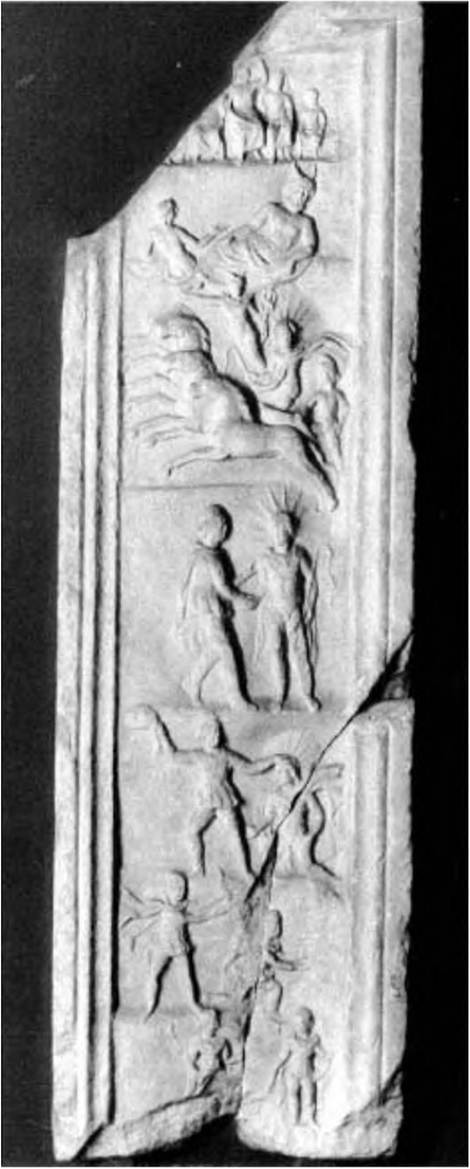
Figure 19.7 Relief from Klagenfurt (Austria). © Manfred Clauss.
traditions. Furthermore, the foundational legend of Mithras had integrated aspects of many beings and myths of Graeco-Roman lore. The symbols of Mithraism were to a large extent not unique to that cult: others operated with such symbolic figures as sun, moon, bull, dog, serpent, scorpion, mixing bowl and flames, to mention just a few. Furthermore, the small-scale congregations could react flexibly to the wishes of its individual members. Finally, the pantheon of the Mithras cult itself already contained numerous deities, since the gods of the planets and the divine representatives of the zodiac were venerated by the initiates. Thus a member of the cult of Mithras in Crikvine (Croatia) had inscribed on an altar that it was “consecrated to Mithras and to the other immortal gods and goddesses” (CIMRM 1872).
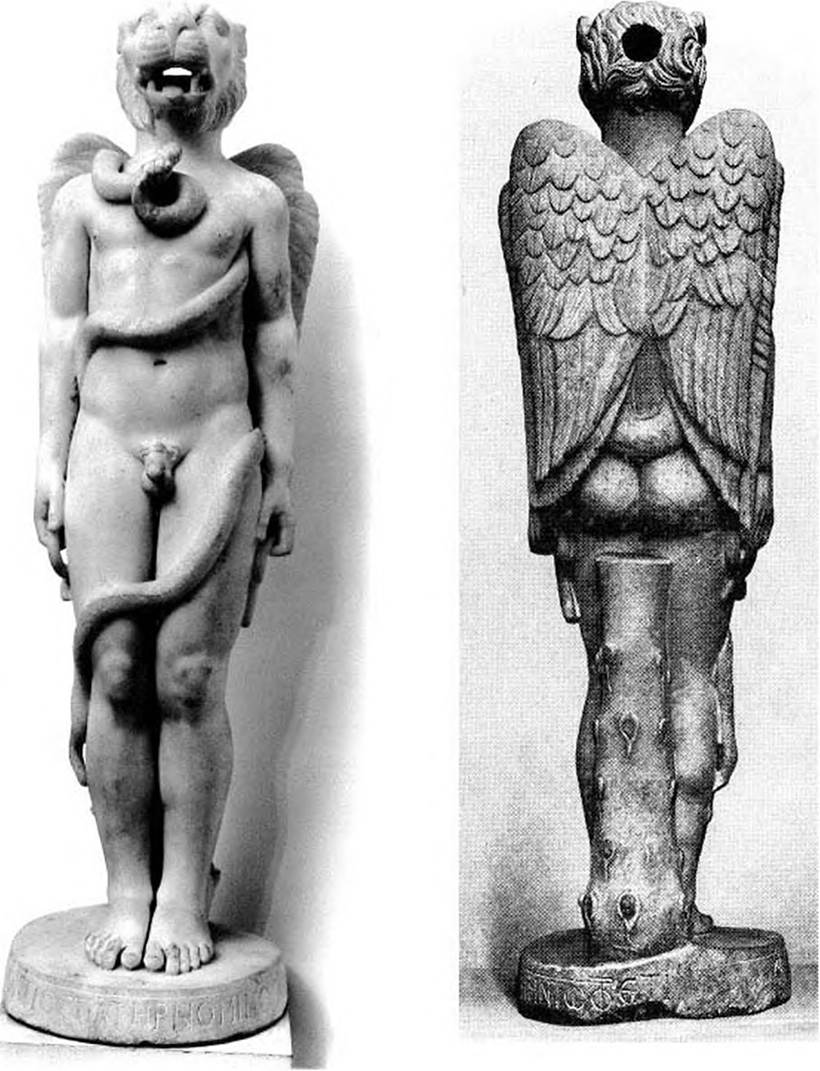
Figure 19.9 Detail of lion-shaped deity. © Manfred Clauss.