Resistance Movements and Social Justice
Many Native communities have resisted European American expansion in North America. Such movements have often had an overtly religious dimension and many have emphasized social and environmental justice—particularly in the twenty-first century.
Indigenous religious leaders have frequently been at the forefront of resistance movements. Many movements have had influence far and wide and might thus be understood as “pan-Indian” religious movements.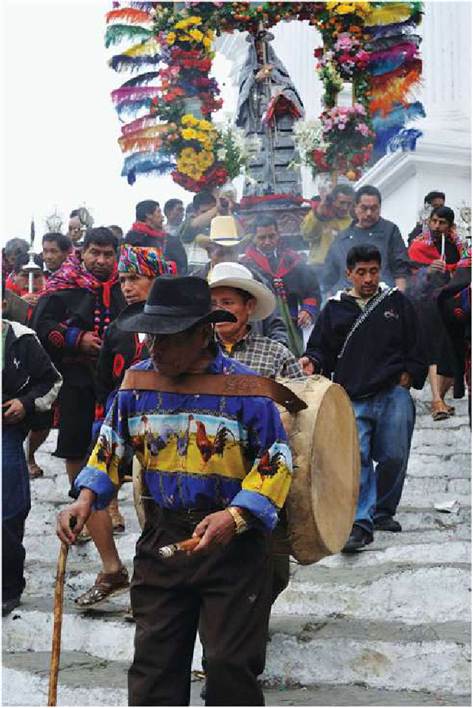
In Chichicastenango, Guatemala, Mayan men take part in a religious ceremony where saints are taken to the streets by members of religious brotherhoods.
One such movement was the Ghost Dance. In the mid-nineteenth century, a religious leader of the Northern Paiute claimed to have had a vision that taught him that the white occupiers would leave if the Native people performed a special dance described by the spirits. This event was called the Ghost Dance because of the belief that it would usher in the destruction and rebirth of the world and that dead ancestors would return. Versions of the Ghost Dance spread rapidly throughout the western United States in 1870 because many Native people embraced the possibility that the dance not only could allow them to communicate with deceased ancestors but also could revive the Native cultures in the face of European domination.
In 1890, another Northern Paiute man of Nevada named Wovoka, who had studied Paiute religion and participated in the first Ghost Dance, founded a second Ghost Dance. In 1889, Wovoka experienced a powerful vision in which the Creator told him the ancestors would rise up. If people demonstrated their belief through dances, human misery and death would come to an end. The dances spread quickly across the Great Basin and to the Sioux of the northern Midwest and other Plains peoples.
Regrettably, many white Americans feared the dances, and the US government interpreted the widespread dances as an armed resistance movement. The Ghost Dance came to a tragic end on December 29,1890, at Wounded Knee, South Dakota. American troops killed hundreds of Lakota people, including women and children, who had gathered for a dance. The Ghost Dance came at a critical time in the history of Native peoples and was seen by many participants as a final attempt to revive the ways of the past. Although the second Ghost Dance ended in catastrophe, the movement brought together people of different Native backgrounds and helped create a shared sense of identity, history, and purpose among peoples of diverse origins.
Although the massacre at Wounded Knee is perhaps the most well-known US attempt to control Native religious practice, government suspicions of indigenous religions continued well into the twentieth century. In 1904, the Sun Dance was officially banned because it was considered chaotic and dangerous. And as we have learned, for much of the nineteenth and twentieth centuries, the US government backed a program in which young Native American children were taken from their homes and relocated to specially built boarding schools, where they were forced to leave behind their religious beliefs, languages, and other cultural practices while adopting the ways of European Americans. In the accompanying “Voices” interview, Brian Melendez describes the devastating impact of the boarding schools on his own family and community in Nevada.
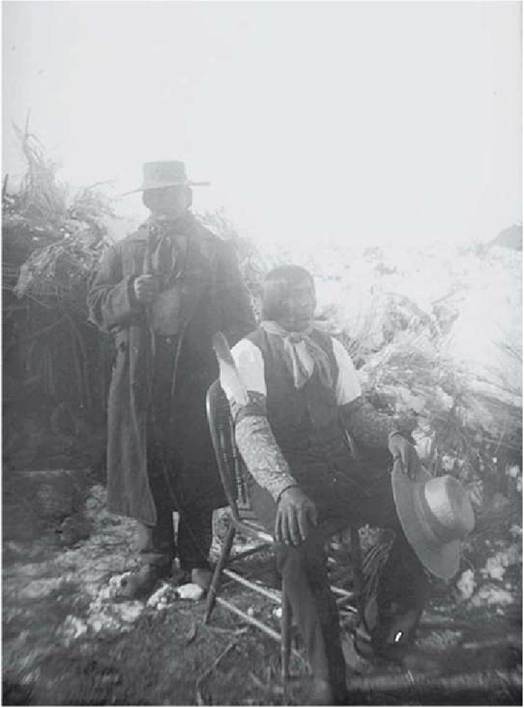
A photograph of Wovoka (seated).
The Native American Church can be considered another resistance movement in the United States. In the early twentieth century, followers of peyote religion formed this church to protect their religious practice. The hallucinogenic peyote cactus has been used for thousands of years in indigenous religions of northern Mexico.
In the late nineteenth and early twentieth centuries, use of the plant spread to Native communities in the United States, particularly in the Plains. Around 1890, a Comanche chief called Quanah Parker (1845- 1911) spread the call for Native Americans to embrace peyote religion. He had been introduced to peyote use in the 1890s when he was treated with peyote for an injury, and he became an important defender of the use of the plant against detractors. Peyote is not habit-forming and is primarily used for healing purposes and to facilitate encounters with the spirit world. However, Christian missionaries and other activists in the United States preached against peyote use, and federal and state governments eventually outlawed its use. (Centuries earlier, the Spanish colonizers had also prohibited the use of peyote in religious practice as a result of a decree of the Spanish Inquisition.) In 1918, followers of peyote religion incorporated as the Native American Church to request legal protection for practicing religion.As you read through this and the next chapter, do you see similarities or differences in how indigenous peoples in Africa and the Americas responded to colonization and the efforts of missionaries?
In 1978, the American Indian Religious Freedom Act was passed in an effort to give Native peoples the right to express and practice their beliefs according to the First Amendment of the US Constitution. However, Native peoples have not always been able to protect their rights to religious freedom by referencing the Act Some practices, like the use of peyote for religious purposes, continued to face challenges from the government for years. Since 1995, however, the use of peyote has been legally permissible.
In 2016, a resistance movement drew the attention of the world to North Dakota and the Standing Rock Sioux reservation. What has become known as the Standing Rock movement is nonviolent resistance to the construction of the Dakota Access Pipeline (DAPL) across the sacred lands and waters of the Lakota Sioux.
Although the movement began with members of the Standing Rock Sioux Nation, it attracted thousands of supporters from around the United States and around the world, many of whom remained in camps during the cold winter of 2016-2017. The resistance movement has focused on the US government’s violation of treaty rights with the Sioux, and the profound environmental impact of the pipeline, which threatens sacred lands and waters. The Standing Rock Sioux argue that the pipeline construction violates an 1851 treaty between the US government and the Sioux. Furthermore, the pipeline crosses the Missouri River and could contaminate the water the Sioux depend on. Indeed, many members of the camp referred to themselves as “water protectors,” and the rallying cry “Water Is Life” (Mni Wiconi in Lakota) remains an important symbol of the resistance movement. In an interview with CNN in 2016, Faith Spotted Eagle, who traveled from the Yankton Sioux Reservation in South Dakota to support the movement, described the importance of the water. She observed that water is not simply the sustainer of life, but it purifies, and also hears and has a memory. The water, therefore, will remember what happened at Standing Rock and will tell future generations.It is important to understand the movement within a framework of Native spirituality and the sacred nature of the land and the water, which we discussed earlier in this chapter. In 2016, the leader of the Standing Rock Sioux, David Archambault Jr., made a statement to the United Nations Human Rights Council describing the pipeline project as the "deliberate destruction” of sacred lands by oil companies. University of Montana professor Rosalyn LaPier, a member of the Blackfoot Nation, has argued that Standing Rock has become a place of spiritual practice and pilgrimage for both Native peoples and non-Natives who support them: the movement drew supporters from over 300 North American tribes. Although the resistance was peaceful, the state of North Dakota called in the National Guard and militarized the police force in an attempt to protect the pipeline construction.
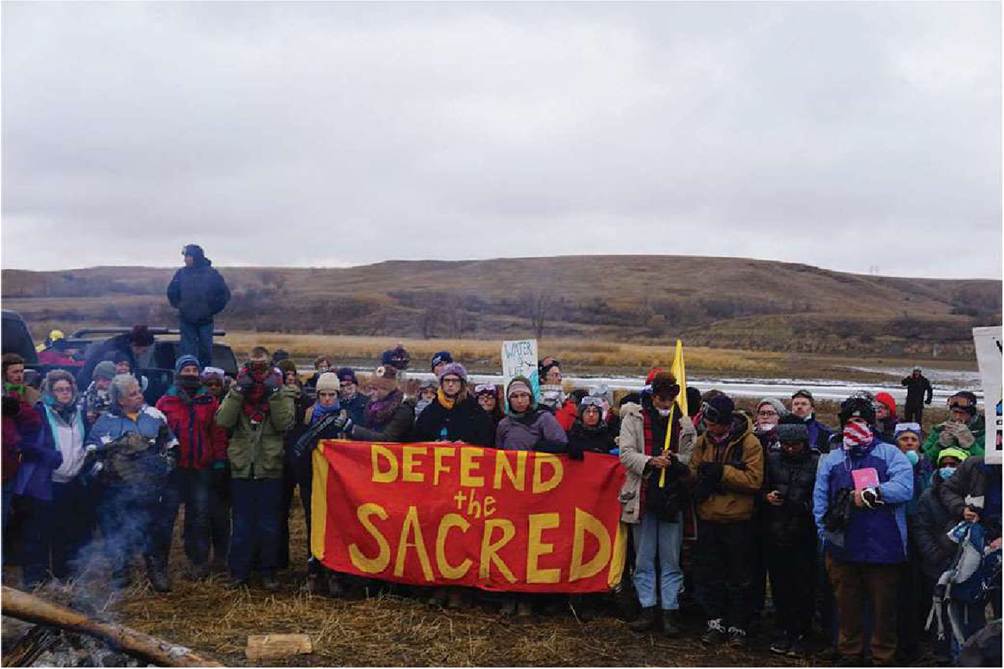
The Oceti Sakowin Camp at Cannon Ball, North Dakota, in January 2017. Campers were protesting the North Dakota Access Pipeline.
In December 2016, the Standing Rock Sioux seemed victorious, as the Army Corps of Engineers announced they would cease work on the pipeline. After Donald Trump was inaugurated, however, he immediately approved construction of the pipeline and it became fully operational on June 1, 2017. Two weeks later, however, a federal court ruled that the DAPL did not go through full vetting for environmental concerns. As of 2020, the status of DAPL is still being litigated in courts. In July 2020, a US District Judge ordered the DAPL to shut down pending environmental review. However, an appeals court reversed the order and permitted the pipeline to continue running. At the time of this book’s publication, a final decision was still pending.
Video: Native Americans Protest Dakota Access Pipeline at Standing Rock
GLOBAL SNAPSHOT
The World Turns to Standing Rock
The Standing Rock movement, or what has also become known as the #NoDAPL (No Dakota Access Pipeline) resistance, attracted the attention of the world. It is fair to say that it truly became a global movement. Social media sites like Facebook and Twitter rapidly spread news of Standing Rock around the world, and thousands of people traveled to the Standing Rock reservation in person to show support for the Sioux people protesting the pipeline. Hashtags like #WeStandwithStandingRock and #WaterisLife have circulated worldwide. Many supporters of the Standing Rock movement made connections to the challenges faced by other indigenous communities involving conflicts over land. For example, Palestinians showed support for the movement and argued that their concerns about land and displacement mirrored the Sioux concerns in the United States. In September 2016, the Palestinian Youth Movement even sent a delegation to North Dakota. The organization Jewish Voices for Peace also declared their support for Standing Rock. The Maori, the indigenous people of New Zealand, showed their support of the #NoDAPL movement by sending videos of hakas, the Maori war dance, through social media like Facebook. One Maori man created a Facebook page called “Haka for Standing Rock” to allow people to share images and videos of their hakas.
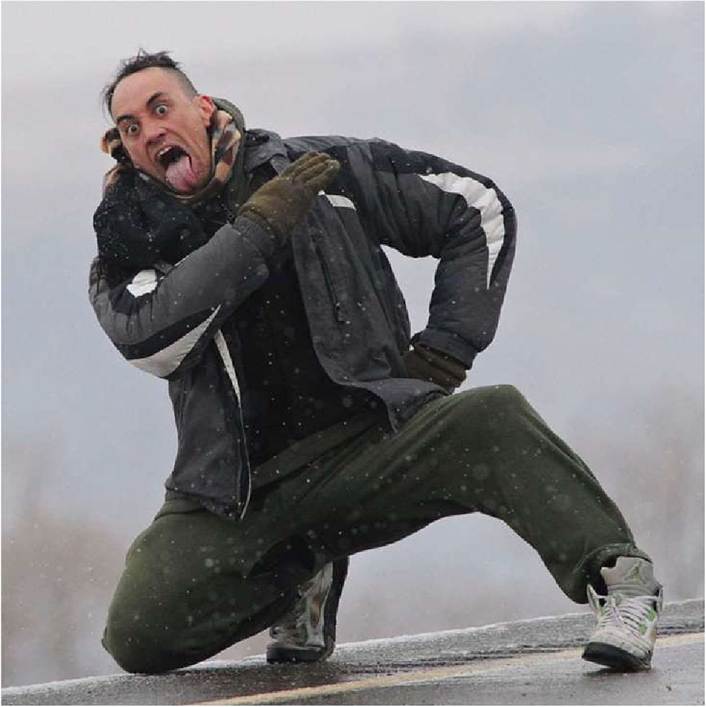
Maori man Kereama Te Ua, who traveled from New Zealand to Standing Rock to perform this haka in solidarity with protesters.
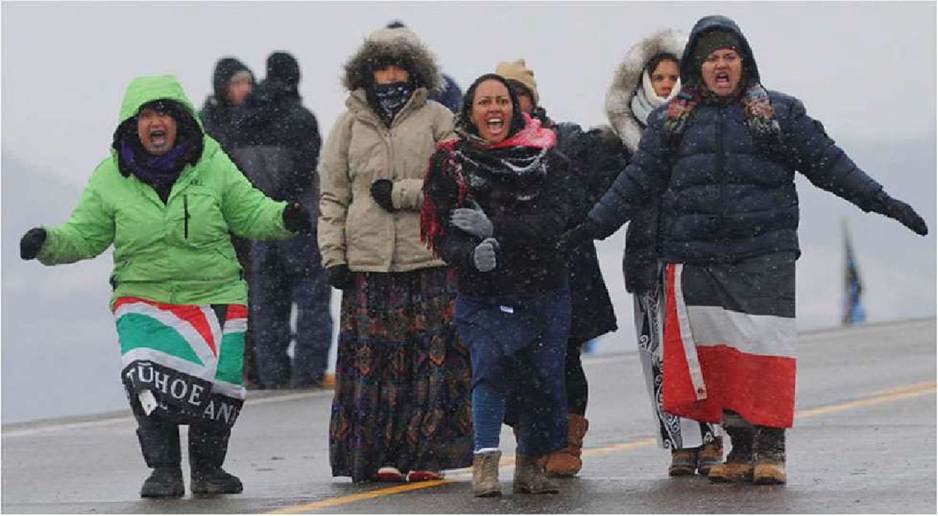
Maori women performing a traditional haka at Standing Rock.