Sanctuaries and rites
In Indo-European Hispania rites were performed in the open, often in hierophanic spaces and in some instances documented in cave inscriptions. Sanctuaries were normally open-air places which Graeco-Latin writers described as loci consecrati or hiera.
Among these places were clearings in the wood (nemeton, the most common term for the Celtic sanctuary, anthropomorphized in theonyms like Nemedus), prominent rock sites, areas near springs, rivers, lakes or on the coast (such as Facho de Donon in Pontevedra, where dozens of inscriptions are being discovered, all dedicated to Deus Lariberus Breus; M. Koch 2005), and, almost certainly, caves.Sanctuaries situated among granite boulders or outcrops were very common in the western regions of the peninsula: they were equipped with carved stairs, openings, trays and small drainage channels for libations or animal sacrifices which, as attested in Pandias, were sometimes performed following detailed rules. Some of these sanctuaries had an urban location, such as the one in the Vettonian oppidum of Ulaca (Solosancho, Avila) (Fig. 14.5), or the “Fonte do Idolo” in Braga, a water sanctuary consecrated to Tongoe Nabiagoi which was monumentalized in Roman times (Garrido et al. 2008).
Ataecina in Santa Lucia del Trampal (Alcuescar, Caceres) was probably a “frontier” sanctuary at the crossroads of various ethnic groups (Vettonians, Lusitanians and Baeturian Celts). Another “ritual space of convergence” may have been the sanctuary of Postoloboso in Candeleda (Avila), located on the border between Vettonia and Carpetania (Alfaye Villa 2009, 214-29).
Some sources document human sacrifice among peninsular peoples such as the Lusitanians (divinatory in nature: Livy Periochae 49; Strabo Geography 3.3.6), the Bletonenses near Salamanca (Pliny Natural History 30.12), and the mountain people in the north of the peninsula (Strabo 3.3.7).
The subject is a commonplace of Graeco-Latin writings on druidic religion (Marco Simon 1999), but such sacrifices must have been exceptional. Such sources are likely to have been used to emphasize the barbarism of “others”.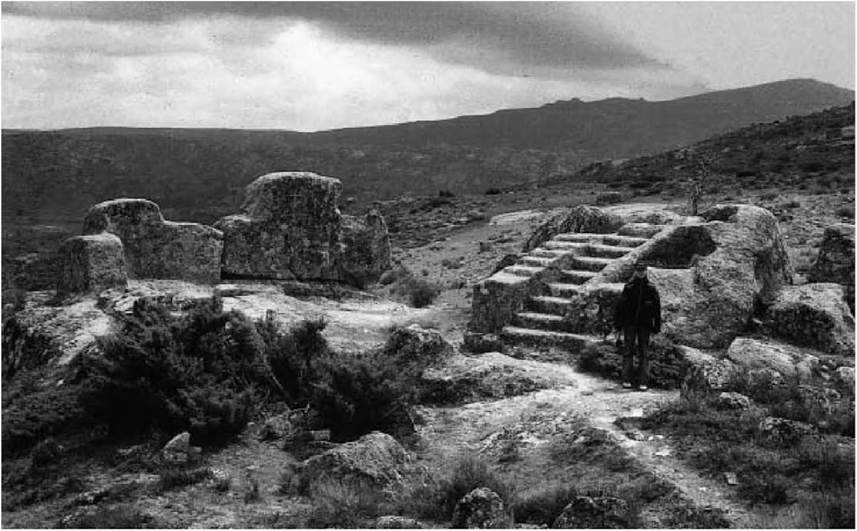
Figure 14.5 Rock sanctuary of Ulaca (Solosancho, Avila). Photo: F. Marco Simon.
There is much more evidence of animal sacrifices, documented in sanctuaries such as the one in Picote, Tras-os-Montes, in inscriptions such as those in Marecos/Penafiel or Cabeqo das Fraguas in Portugal, and in various depictions. Among the depictions are six “sacrificial bronzes” (including cauldrons, torques or axes) from different locations in the north-west of the peninsula. The species mentioned in the Lusitanian inscription from Cabego das Fraguas (bull, sheep and pig) correspond to those shown in these bronzes and are similar to the victims of Roman suovetaurilia (sacrifices of pigs, sheep and bulls) and Indian sautramani (sacrifice of ram, goat and bull) rituals (Santos 2007).
The sanctuary excavated in Castrejon de Capote, Badajoz, is particularly important. The site destroyed by the Romans in the mid-second century BCE includes an altar with a running bench that opens into the main street of the town. The animal and material remains (knives, a stake, grills, cups and glasses) give proof of collective sacrifices and banquets celebrated with the cooked flesh of the animals (Berrocal-Rangel 1994; Alfaye Villa 2009, 236-61) and the consumption of alcoholic beverages, possibly in preparation for war. Similar rituals took place in rock sanctuaries, characterized by the presence of ladders, cavities and receptacles of different sizes in which the victims’ blood would have been gath-ered and their entrails handled. They are characteristic of the Celtiberian area (Pehalba de Villastar, Teruel), the Vettonia (Ulaca, Avila) and especially the Gallacian-Lusitanian north-west (Alfaye Villa 2009; Santos 2010), with the remarkable Panoias complex (Vila Real, Guarda), where Latin inscriptions bear witness to the persistence of animal sacrifice in a range of Graeco-Oriental mystic cults, with references to Serapis and other infernal gods - together with indigenous ancestral gods (Alfoldy 1997; Rodriguez Colmenero 1999).
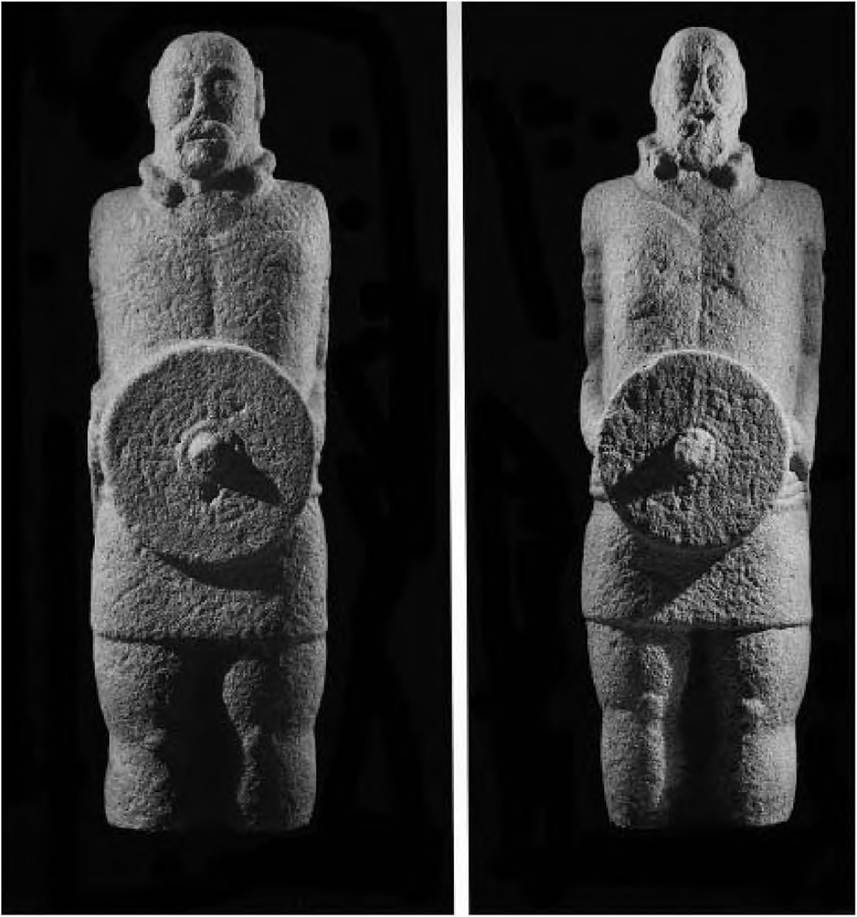
Figure 14.6 Statues of “Lusitanian warriors” from Outeiro de Lezanho (Boticas, Vila Real).
Museu Nacional de Arqueologia de Lisboa. © J. Pessoa and J. A. Moreira.Posidonius and other authors (Diodorus 5.29 and Strabo 4.4.5 regarding the Gauls) documented the rite of cutting off the head of a prisoner or a defeated enemy among Celtic peoples. In the Iberian Peninsula the practice is known from depictions on a type of fibula where human heads are depicted hanging from horses with or without riders (Almagro-Gorbea & Torres Ortiz 1999) and from some skulls perforated by nails, unearthed in Numantia, Ullastret, Puig Castellar and Garvao, Portugal. The skulls are similar to those displayed in the Celtic- Ligurian sanctuaries of Provence.
Some structures within some oppida (in Ulaca and especially in the north-west of the peninsula (Sanfins, Briterios, etc.) have been interpreted as places of ritual baths or saunas. These monuments of the north-west are attested in the same areas of the Conventus Bracarensis as the statues of the “Lusitanian warriors” (Fig. 14.6), perhaps created under the influence of Romanization, which seem to depict deified ancestors and in some instances were placed at the entrance to a village (Schattner 2003).
There is significant data on the role of priests in Indo-European Hispania. Proof of their role is the oracular practice in the sanctuary of Endovellicus, in San Miguel da Mota (where epigraphic formulas indicate that they received instructions from the deity through dreams - incubatio). Further evidence appears in some Celtiberic words that point at priestly functions and in iconography (in a vase from Numantia, an individual wearing a trunk-like tiara sacrifices a rooster on an altar).