Supernatural Beings: Gods and Spirits
Many African religions teach that everyday human life is influenced or even controlled by gods or other supernatural beings. African religions are therefore theistic, a term you will recall from Chapter 1.
Most also share the belief in a supreme deity, or High God. African religions normally believe that the High God is all knowing, all powerful, and the creator of the world and of humanity. This supreme deity is often associated with the sky and may be more specifically connected to the sun or the rain because both the sun and rain have life-giving powers. Most African religions regard the High God as eternal. And although the High God is generally not thought to be human-like, the supreme deity maybe described as having human-like attributes, such as mercy, goodness, and a concern for justice.Many African religions consider the High God to be transcendent and removed from the lives of humans. As a result, there are rarely temples, churches, or shrines devoted to the High God, and most religious practice focuses on communicating with spirits or lesser gods. In the religion of the Dogon, the High God Amnia is an example of a deity who is distant from the lives of ordinary humans. The Dogon creation myth tells that Amma made the earth out of mud and clay. Although he was active in creation, Amma eventually retired from the earth and left lesser deities to manage earthly affairs and attend to human interests. Other African mythologies explain the transcendence of the High God as the result of a transgression committed by humans or animals that upset the High God, who then left this world for a supernatural realm. We will examine some of these myths later in this chapter.
In some African religions, the High God is associated with the qualities of both a father and a mother. In others, the High God has no gender. The Samburu people of Kenya believe that God, known as Nkai, is flexible in gender and in form.
In the Samburu language, the word Nkai is feminine. God is associated with procreation and is considered to have many female characteristics. Interestingly, some Samburu people who claim to have been taken to the divine home of Nkai have reported that the deity is not one individual but rather a family group.4VOICES:
Interviews with Sammy Letoole and Festus Ogunbitan
Sammy Letoole, a young Samburu man from Kenya, is a student at Friends Theological College in Kaimosi, Kenya. Although he is studying Christianity, he was raised in the Samburu religion and finds that it does not conflict with his Christian faith. The Samburu people live in northern Kenya, and Samburu culture and religion share some elements with Maasai culture and religion. Festus Ogunbitan is a scholar of religion from Nigeria whose ancestry is Yoruban. Festus was raised in a Christian home, but he explored his ancestral religion as he matured. An author, he has written several books on Yoruba religion.
What is your religious background?
Sammy: My religious background is Samburu and now I am a Christian. I was raised in a pure Samburu family who believed in traditional Samburu religion. Everyday, my father woke up very early in the morning to go out and pray for everything—including the animals and the children. As a result, my faith in God became very strong because I saw my dad praying without stopping. And this makes my Christian foundation strong.
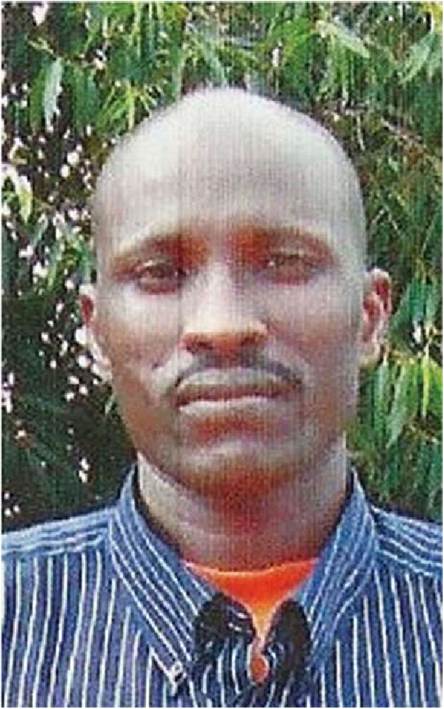
Sammy Letoole.
Festus: I am from the Yoruba nation of the southwestern part of Nigeria. I was born into a Christian family who were biased about the values and virtues of their ancestors’ culture. This happened to many Africans, since Christianity and Islam declared their religion as the universal religion. When I grew up, I started to read books about the religion of my ancestors, and I discovered that religion is a social process—it is like a plant growing up to bring forth fruits.
Therefore, my Yoruba religion does not need to be suppressed by any foreign religion.Sammy, you don’t seem to see much conflict between Christianity and Samburu religion. Could you explain their similarities and differences? How does your religious practice draw on both traditions?
The Samburu religion and Christianity have a similar conception of God. In both traditions, God is a creator, provider, and protector and is caring and loving. The Samburu people believe that God is found in the mountains, so they name their gods after those big mountains. During the time of the Old Testament, Moses climbed Mount Sinai to pray, and he was given the commandments; similarly, the Samburu pray to their God to give them direction.
There are many things that the Samburu religion shares with the Bible, especially the Old Testament. During that time, the Israelites were not supposed to eat animals without divided hooves and who did not chew the cud. Even now, the Samburu do not eat those animals. Also, the people in the time of the Old Testament offered sacrifices to their God; the Samburu also offer sacrifices to their God.
Festus, could you explain your view of the nature of the world and humanity’s place in it and how this developed through learning about the religion of your ancestors?
I believe that the universe is created by God, and the universe is part of God through nature. I believe in the ancient Yoruban concept of God which says that nature is part of God—plants, animals, outer space, and human nature. As a result, they worship nature and human nature by reinforcing them with praise singing. I believe that nature is divine, and a sincere and ingenious person is divine, and we should respect them. If we treat nature and creativity in humans as divine, we shall be able to get lots of good things from them—such as the invention of products and services for the needs of mankind.
Could you both describe your worship and religious practice?
Sammy: My worshiping styles and praises are influenced by Samburu religion.
Samburu prayers and Christian prayers differ because the Samburu believe that God is found in mountains, rivers, and good springs. Therefore, when performing prayers, a person must face a certain mountain like Mount Kenya or Mount Nyiro. Christians forward their prayers to God through Jesus Christ, our savior. Although people pray to God in different ways, they all seek protection, guidance, love, and satisfaction.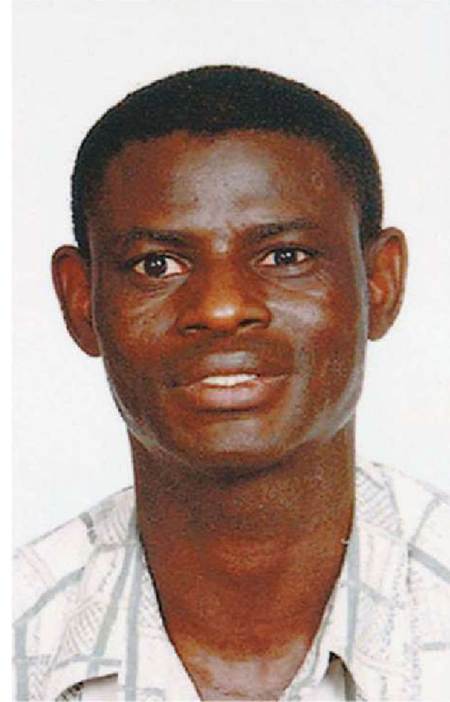
Festus Ogunbitan.
Festus: I am not a Christian, and I don’t really practice Yoruba traditional religion in a shrine. But I have faith in the religion of my ancestors, most especially Ogun—the Yoruba god of Iron—which is half of the pronunciation of my last name. My last name, Ogunbitan, means “a child through whom Ogun the god of Iron shall create history.” By writing a book called Lyric Poems on Creation Story of the Yorubas, I have fulfilled this promise.
In addition to the belief in a High God, most African religions also recognize other supernatural beings that are lower in status than the High God but are still powerful. As you learned in Chapter i, a belief system in which many supernatural beings (including gods and spirits) are recognized but in which one of these beings is elevated to a higher status is known as henotheism. In African religions, gods or spirits interact with human beings and are sometimes thought to be mutually interdependent with humans. Accordingly, much religious practice focuses on these beings. Therefore, unlike the High God, these lesser gods and spirits often have temples, shrines, and rituals devoted to them.
In many African religions, including the Dogon, the Ashanti, and the Igbo, the earth is an important female deity. She is often understood to be the consort or daughter of the High God, who is typically associated with the sky, the sun, or the heavens in general. In Dogon mythology, Amma created the earth and then forcibly took her as his mate.
A jackal was born from this union. The Dogon consider the birth of the jackal to be unfavorable because it was a single birth, not a twin. In Dogon culture, twin birth is considered ideal. This misfortune of the jackal’s birth is attributed to Amma’s unjust rape of the earth.5Dogon religion provides another example of lesser deities. Although the original union of Amma and the earth was problematic, Dogon myths tell of a second union. This union was favorable and produced twins—an ideal birth. The twins took the form of another supernatural being—a lesser god called the Nummo. The Nummo twins represent the balance of male and female elements. The Nummo plays an important role in Dogon myths about the origins of humans and the development of human social structure. The Nummo is active in the affairs of humans, while Amma is not.
Some African religions have large and complex pantheons, or groups of deities. One example of a pantheon is in the religion of the Yoruba people, a large ethnic group in West Africa. Although many Yoruba have converted to Islam and Christianity, indigenous beliefs are still prominent, even among the converts. In Yoruba religion, the High God, known as Olodumare, is accompanied by other categories of deities. One such category is the Odu, who were the original prophets gifted with the ability to look into the future. Another category is the orisha, who are believed to inhabit an otherworldly realm called orun. The orisha live in a hierarchical social order that closely reflects Yoruba social organization. Yoruba mythology teaches that the hundreds of orisha were the first inhabitants of the earth. The High God sent the orisha to earth to create land from the water and gave each a specific duty. Yoruba people believe that the High God ultimately determines their destiny, although they serve different orisha as their personal deities.
One of the foremost orisha is a goddess known as Oshun. Oshun is merciful, beautiful, and loving, and she is associated with fertility and the life-giving properties of water.
Yoruba people may therefore call on her to help them with matters pertaining to childbirth and family. She is also known as the “hair-braider” or “hair-plaiter” and has the power to make people beautiful. In Yoruba mythology, Oshun was present at the time of creation, but she was the only female, and the Odu ignored her. However, Olodumare reproached them and explained how important Oshun was. The following passage from a Yoruba myth relates how the Odu appealed to Oshun for forgiveness. In the myth, Oshun eventually bears a son who joins the other Odu.They returned to Oshun
And addressed her: “Mother, the pre-eminent hair-plaiter with the coral beaded comb.
We have been to the Creator
And it was discovered that all Odu were derived from you.
And that our suffering in the world would continue
If we failed to recognize and obey you.”
So, on their return to earth from the Creator, All the remaining Odu wanted to pacify and please Oshun.-
In some African religions, such as that of the Nuer people of Sudan, the High God may manifest as multiple deities. The anthropologist E. E. Evans-Pritchard (1902-1973) lived with the Nuer in the 1930s and made a detailed study of their religion.7 He argued that the Nuer belief system should be considered both monotheistic and polytheistic because the different deities recognized were simply reflections of the High God. Although many Nuer people are Christian today, some elements of Nuer religion remain important. The Ashanti people of West Africa similarly regard the many gods in their belief system as the way in which the High God manifests.
In African religions, spirits are often considered to be a part of God’s creation, like humanity. Most often, spirits are thought to live alongside human beings in a shared world. As a result, in many African cultures, spirits are a part of normal daily life. Spirits are commonly believed to be immortal and invisible. Many African religions associate spirits with elements of the natural world, such as mountains and trees, and forces of the natural world, such as rain and lightning. However, they are able to interact with human beings in various ways. Like human beings, spirits are neither entirely good nor entirely evil. They are typically thought to be more powerful than human beings, but humans can learn to interact with and even manipulate them to some degree. Religious experts or leaders may even call upon the spirits to act as messengers between humans and God.
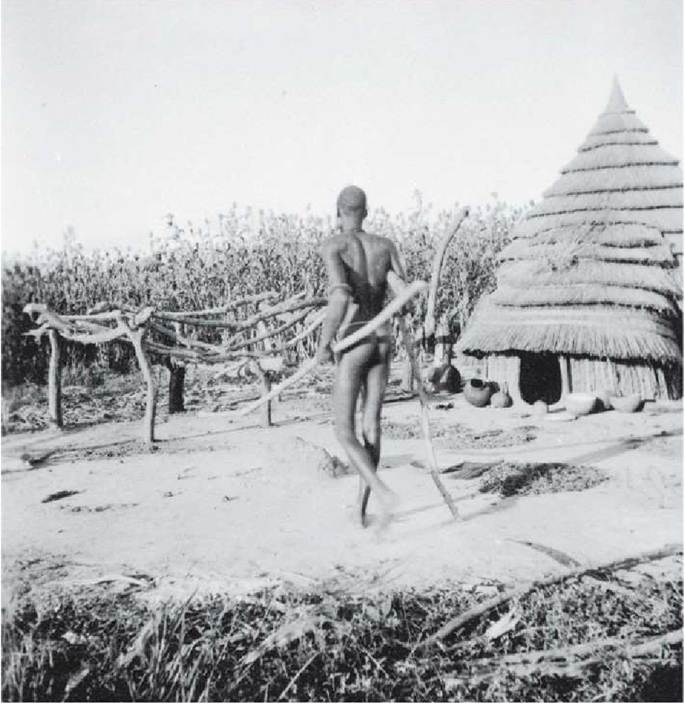
This picture of a Nuer homestead was taken by anthropologist E. E. Evans-Pritchard in the 1930s.
Spirits of the Dead
In many African religions, the spirits of deceased humans are very important. In fact, most African religions do not regard death as a final state of oblivion. Instead, death is seen as a change to another spiritual state. As birth is believed to be a transition from the world of the spirits to the world of the living, death is a transition back to the spirit world. This belief often has a basis in mythology. In Dogon myths, the original human ancestors became spirits, who then paved the way for later generations to enter the spirit realm after their death. Although the spirits of the dead are sometimes called “ancestor spirits,” scholars of African religions argue that this term is not very accurate. This is because the category includes the spirits of many people who have died—not just those who bore children and have living descendants to whom they are ancestors.2 Therefore, children or people who died childless can also become spirits.
The spirits of the dead are often active in the lives of their relatives and descendants for several generations. These spirits may also be concerned with upholding cultural values and family unity from beyond the grave. They are also frequently believed to be the most effective intermediaries between the High God and humans. Consequently, living people engage in specific practices to maintain positive relations with these spirits. And the spirits depend to some extent on humans. The living may symbolically care for the spirits by offering food and drink or by making sacrifices to them. Like other supernatural beings of African religions, ancestor spirits are not necessarily good or bad, and they can both help and hurt their living relatives. If spirits are neglected, they may become angry and cause problems for the living. It is therefore very important for the living to respect their elderly relatives, who are close to transitioning to the spirit world. It is also essential to remember to pay respect to the deceased.
The Gikuyu people of Kenya (also known as the Kikuyu) recognize several categories of spirits of the dead. One category consists of deceased members of the immediate family, and another category includes the deceased members of the extended family group, or clan. The former are active in the day-to-day life of the living immediate family, and the latter spirits maintain an interest in the welfare of the clan. Living people may consult with the spirits of the dead for advice or guidance in their own affairs.9 Therefore, in African cultures such as the Gikuyu, a person’s family is considered to include not just his living relatives but also those who have passed on. The Gikuyu believe that if the spirits of the dead are neglected, they can harm the living as a form of punishment for such bad behavior. They may cause illnesses or bring about other misfortunes on their negligent descendants. Usually, the living make an effort to care for the spirits of the dead until the last person who knew the deceased during his life has died. At this point, the deceased moves into a different spiritual category in which he will have less active involvement in the lives of the living, or none at all.—
Why is it difficult to describe some African religions as simply “monotheistic” or “polytheistic”? Do you see this difficulty in any other religions you have studied so far?