The Class of Beings Defined as “Demons”
The class of harmful beings improperly defined as demons[145] encompasses different entities that are usually grouped together because of their common evil purposes. Therefore they are usually treated in incantation collections as if they were part of an indivisible entity.
In general, we can describe them as chaotic natural forces which can harm humans, but which can also be adjured or subdued, as their apotropaic uses against other “demons” testify.[146] In fact, the heads of the demons Huwawa and Pazuzu[147] were used as apotropaic protection. Images of Pazuzu and the Seven demons[148] are often depicted on amulets against the Lamastu, a being which will become the main babysnatching demon in Mesopotamian tradition,[149] [150] and are invoked in order to neutralize the latter as well. Furthermore, Pazuzu, who is considered the king of demons, appears in the sources mainly, if not exclusively, with this apotro- paic function.In the pantheon, demons are considered primordial beings, not properly gods. Their primeval nature is characterised by their incompleteness, both physical—they are hybrid monsters, whose body is composed of parts of aggressive animals—and functional—they are not independent beings, but subjects and messengers of the gods?2
Despite their monstrous and aggressive features, demons' bodies are incorporeal. They are made of air and associated or even identified with winds.13 Thus, they can slip through openings and enter the house or the human body; in the same manner, when expelled they are exhaled as vapour or smoke from the victim's bodyd4
They are billowing clouds which cause gloom in Heaven,
They are the blast of the rising winds which cause darkness on a bright day (uh xvi, 15-16)
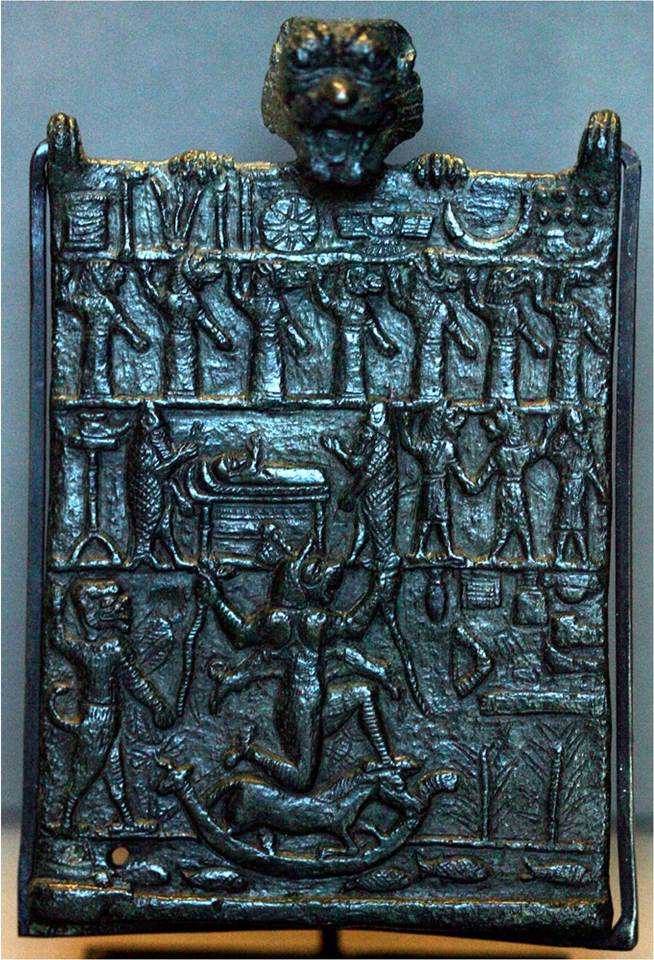
figure 5.1 Bronze plaque from the Louvre (ao 22205; by Rama, licensed under CeCILL).
[You, demon] who will have entered the house [from the window], when I shout, fly far away through the window (uh ix, 32)
Fly off to heaven, although you have no wing (uh iv, 176; V, 72; vi, 185) May you ascend in heaven like incense (uh i, 35’)
Despite their aerial nature, demonic attack is described mainly in physical terms. The Old Babylonian incantations against the Lamastu highlight these two aspects. The Lamastu slips through the door’s pivot like smoke, but she then attacks the human being’s belly, her long claws ready to grasp the victim.
She entered the door of the house,
Slipping through the door socket.
Once slipped through the door socket, she saw the boy: She seized him seven times in his abdomen.[151] [152] [153]