The emigration of South Asians
It was also subsequent to the 1960s that South Asians began to arrive in significant numbers in Great Britain, Europe, and the United States. In Britain, the mass migrations started shortly after the peoples from the Caribbean had arrived.
Many went at first as refugees. First there were the Panjabis; then peoples from East and West Pakistan (especially after the war of 1971); from East Africa (especially Gujaratis and others fleeing Idi Amin’s “eviction notice” from Uganda); from Bangladesh; and Tamils fleeing the war in Sri Lanka. These werejoined by those who came for professional and economic reasons. They settled in cities away from London at first - Birmingham, Leeds, Leicester; they tended to keep to themselves, followed parental discipline, and worked hard to save money. They were generally lumped into a generic category known as “Asian.” Yet in recent decades, as their numbers increased, as British society came to value “multiculturalism” more than “integration,” as democratic politics tended to encourage power blocs, as migrants learned more about the politics of their home countries and states - for all these reasons, these migrants came to see themselves more as Kashmiris, Bengalis, and Gujaratis, as Hindus, Muslims, and Sikhs. Increasingly, the communalism found in the Indian subcontinent has fueled (and, occasionally, been fueled by) communalism in Great Britain.33By the late 1960s, South Asian sojourners to the United Kingdom were becoming settled and women and children were joining the men who had come to seek work. The first Hindu temple was constructed in Coventry in 1967. Since the end of mass immigration in 1973, temples and places of worship have proliferated - estimates are that by 1982 there were some 100 Hindu temples in the UK and that these had increased to over 300 in the early 1990s. By the mid-1990s there were over 1.25 million South Asians in Great Britain, of whom some 440,000 were Hindus.34
Other European countries have witnessed migration on a more modest scale.
In the Netherlands, for example, most of the Hindus are of Surinamese background. Some 100,000 such Hindus have brought their particular form of Caribbean Hinduism, divided into factions associated with the Arya Samaj and Sanatana Dharma and maintaining some twenty temples all told. In addition, some 4,000 Tamil Hindus and 3,000 Hindus from Uganda have settled in the Netherlands. Furthermore, scholars have estimated that some twenty-seven Hindu-related groups are to be found in the country. There is considerable rethinking of the nature of Hinduism among these settlers as they look to India and well-established centers in London for guidance in this process of reinterpretation.35Germany, in the meantime, has received refugees, especially from Afghanistan and Sri Lanka. About 75 percent of the 60,000 refugees from Sri Lanka are Hindus; while most of the 40,000 Afghan refugees are Muslim.36 Other countries of Western Europe have even less visible South Asian populations. In Portugal, for example, it is estimated there are some 20,000 persons of Goan Catholic descent and another 5,000 or so Hindus who are refugees from Mozambique.37 In France, some 60,000 Hindu Tamil refugees from Sri Lanka have found asylum, while some 10,000 Gujarati Hindus, most of them from Uganda, have settled. In Switzerland, most of the South Asian settlers are Tamils, about 24,000 of them, who have established fifteen places of worship in the country’s major cities since the mid-1980s. In Scandinavia, there are said to be a total of 10,000 Hindus, about half of these Sri Lankan Tamils while most of the others are Gujaratis from Uganda.38
The year 1965 witnessed a change in US immigration laws. These changes were such that professionals and their families could enter much more easily and a steady stream of Indians have made their way into the US ever since. According to one study, some 85 percent of this early wave of immigrants in a particular city held graduate degrees and were professionally employed,39 though in the 1980s and 1990s, more than half of these immigrants were joining families already here.
Apparently unlike the early migrants into Britain, these immigrants were quite conscious of their ethnicity, religion, and caste. The same study cited above, for example, found that 40 percent of the pre-1980 immigrants claimed to be brahmans and most of the respondents were more likely to identify themselves by their linguistic/ “ethnic” nature (e.g., Tamil, Gujarati) than by any other designation.40 At first these immigrants understood themselves to be temporary residents in the US and practiced their religious expressions within their homes. But as they stayed on and their children grew to the age of accountability, many sought more permanent ways of expressing their Indian-American passage. Makeshift “cultural centers” became temples, especially for the South Indians for whom a temple made a town “home.” Moreover, as family and “ethnic” networks succeeded in bringing more kin into specific cities, the tendency for these communities to associate by language and/or caste affiliations increased. The higher the caste and the larger number of members of that caste in a given city, the more likely was the tendency to express those caste and “ethnic” associations. The same study cited above indicated that Indian immigrants in the US into the 1980s were likely to draw their best friends from their own language groups.41 Hence, while Indians in the US have succeeded remarkably well in the professions and have forged Indo-American alliances and entered increasingly into the discourse of American public life, in their private relationships they remain, in significant measure, Tamil brahmans or Gujarati patels.One of the most visible ways in which these Indian settlers have expressed their religious sentiments in the US is in the building of temples which represent the lineage and taste of its builders. Within these temples, not only are rituals conducted with various degrees of orthopraxy, but festivals and holidays representing the appropriate region “back home” are also conducted.
Classes in classical dance and/or music are offered to girls in the effort to train them into representations of Indian or sub-Indian culture. Languages are taught sporadically, summer camps are held, oratorical contests are conducted - all to increase visibility of the “home” culture to a second generation. The temple, in short, has increasingly replaced the home as the sphere where “tradition” is enacted, complete with the compromises that life in a new society requires.The story of one community settling into a small American city can illustrate certain of the patterns to be found in a number of North American and European cities. Pittsburgh, Pennsylvania, had attracted many East European workers into steel mills and other industries in the late 1800s. They had built churches in which their cultural and ethnic values were enshrined. By the late 1960s Pittsburgh was losing its steel base and beginning to go
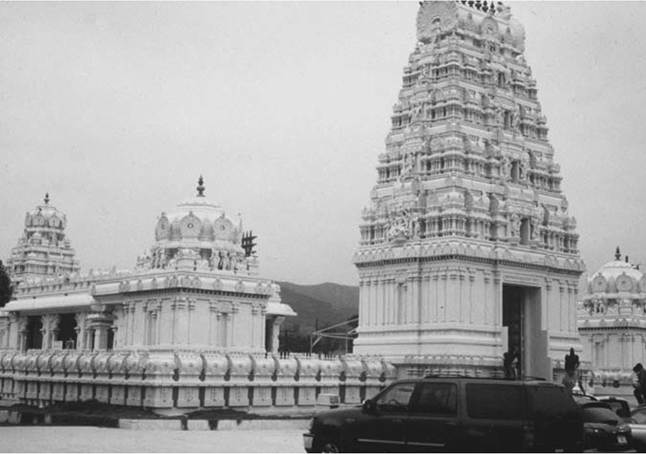
Figure 12 Sri Venkatesvara Temple, Malibu, California. Photograph by Rob F. Phillips.
“high-tech.” Indian professionals were finding study opportunities in its universities andjobs in its hospitals and technological industries. By the early 1970s their children were coming of age and a certain nostalgia was setting in. Accordingly, an apartment in one part of town was set aside as a cultural center and puja room. A desire for a pucca (authentic) temple increased, especially on the part of the South Indians. These same southerners established connections with the famed pilgrimage center at Tirupati, whose officials promised help in the form of advice and provision of services. An old Baptist church was purchased in a Pittsburgh suburb and served for a while as a cultural center for all South Asians. At the same time, preparations were made for building a temple dedicated to Sri Venkateswara, the manifestation of Visnu to be found in Tirupati. The North Indians, however, were not comfortable with what they perceived to be a regional and narrowly focused temple and wanted something more “catholic.” Accordingly, the community split - South Indians purchased land in another suburb and constructed the Sri Venkatesvara Temple in Penn Hills.
Its groundbreaking, dedicatory ceremonies, and ongoing ritual practices were orthoprax, following as closely as possible the Pancaratra Vaisnava tradition. Its priests were traditionally trained and represented the southern states of the temple’s builders.42 This temple has continued to offer classes in Bharata Natyam and Kuchipudi dance, styles which are part of the South Indian tradition. A summer ‘academy’ in Carnatic (Southern) music is offered, as are occasional classes in Tamil, Telugu, Kannada, and Sanskrit.The “SV Temple” has sponsored elaborate ritual events, some for the first time in the US. Because it was one of the first and claims to be the most “authentic” of the South Indian temples to be built it has become a major pilgrimage center for Indian-Americans on the eastern seaboard. Families come there for rites of passage (e.g., marriages, ear-borings). Indeed by the time of its twenty-fifth anniversary in 2001-2002 it had become one of the two or three most prosperous Hindu temples outside of India. It is viewed by South Indians throughout North America as the prototypical temple to be emulated as new temples are built throughout the continent.
In the meanwhile, North Indian Hindus and Jains were collaborating in building the Hindu-Jain Temple on the property originally purchased in Monroeville. Upon its completion,Jain tirthankaras and a variety of Hindu deities were enshrined and represented by the kind of white marble icons favored in North India. The temple sponsors language study and cultural events for its various clientele - Bengalis, Gujaratis, etc. The people of this temple have continued to express their North Indian roots within the structure. They sponsor such holiday events as Divali, and provide Indian dance entertainment for the city’s annual folk festivals.
The cooperation of the Jains in the construction of this temple is itself of historic significance. Not only is it one of the few structures in which Hindus andJains worship under the same roof (a few Hindu temples in North America may include a Jain puja room, but seldom does one find shared space).
More than that, thanks to the vision of a local Jain physician, Digambaras and Svetambaras worship in the same building, contrary to tradition and all known advice back home. It was the Birla family, known for the building of temples in a number of Indian cities, who helped with the construction of the building and the provision of icons. In addition to the ongoing ritual life at the temple, in which lay Jains offer rice and arati to the tirthankaras, Jains gather from miles around for two special occasions during the year. One of these is Mahavira Nirvana, the samadhi (death) of Mahavira, which occurs at the new moon of October-November (the same new moon which marks Divali, and the New Year in Northwest India). The other is Mahavira Jayanthi (the birthday of Mahavira) in March-April. Traditionally, the former celebration is of special interest to Digambara Jains, and the latter to Svetambara Jains; but here all Jains commemorate both events.By 1984 the Sikhs had built their own gurdwara. The construction was done entirely with “local help” by copying pictures of favored gurdwaras in India. The structure serves some 75-100 families in southwestern Pennsylvania who are proud of their Sikh identity, careful to distinguish themselves from both Hindus and Muslims. Weekly rituals will include a reading of a portion of the Guru Granth Sahib and the community meal (langar). Among the festivals taken most seriously by the community is the birthday of Guru Nanak (celebrated at the Divali New Moon of OctoberNovember) which includes a reading of the Guru Granth. Sahib over a period of two days; and the anniversary of the formation of the Sikh brotherhood (khalsa) by Guru Gobind Singh (observed in December-January). The gurdwara also sponsors a regional conference in September for Sikh youth living in the eastern United States.
In a similar fashion, Muslims of South Asian descent have built their own masjid and maintain their own traditions within it. In the 1970s South Asian Muslim immigrants were meeting in the simple cultural center in the university district (Oakland) shared by all the Muslims in the city. Yet as their numbers grew and with it the perception that the Oakland “mosque” was being run by students and other short-term visitors from the Middle East, the “South Asian” families determined to have their own center closer to where they lived and more representative of their own more “liberal” points of view. Accordingly, a house was purchased in an eastern suburb (Monroeville, where most of the other religious edifices serving South Asian settlers are to be found). This house served as a cultural center until the early 1990s when construction was started on an authentic masjid. A social hall was completed first and on May 13, 1995 the completed mosque was dedicated.
It is here that families gather for most social, cultural, and religious events. On Sundays, classes are offered in Arabic and in the interpretation of the Qu‘ran run by lay participants. Open discussions are held on various issues arising in the community: should American Muslims be free to eat meat prepared by Jews and Christians even though these may not be strictly halal (the consensus was yes)? Which religious days should be observed? (Most of the participants are of Sunni background, so Shia observances are generally ignored). Other elements of the Sunday agenda are a time for public prayers (namaz) and a common meal. The masjid is also open for prayer daily for the handful who can attend and on Friday noon when all those of the community who can will participate.
The masjid was established primarily for South Asian emigres and at least three-quarters of its constituency of some 150 families are South Asian, whether Indian, Pakistani, or Bangladeshi. They have beenjoined by persons of other national origins - Indonesian, Malaysian, Egyptian, even EuroAmericans who have married into the community. The South Asians share a common language, Urdu, but insist their primary identities are “American Muslim.” Yet at mealtime, in patterns of dress, and in accent, such subidentities as Panjabi, Hyderabadi, or Bengali became apparent.
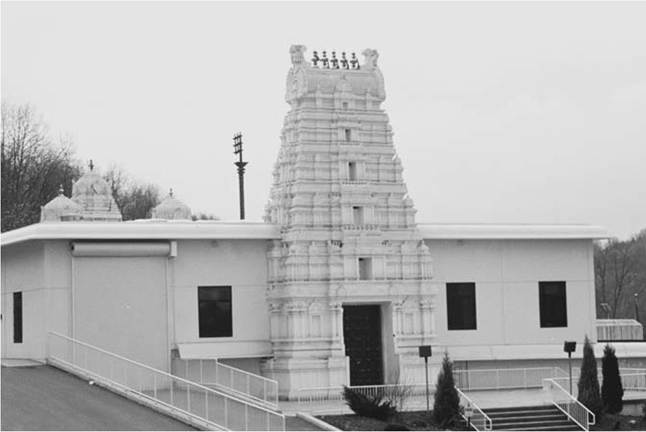
Figure 13 Sri Venkatesvara Temple, Pittsburgh, PA. Photograph by Ann Clothey.
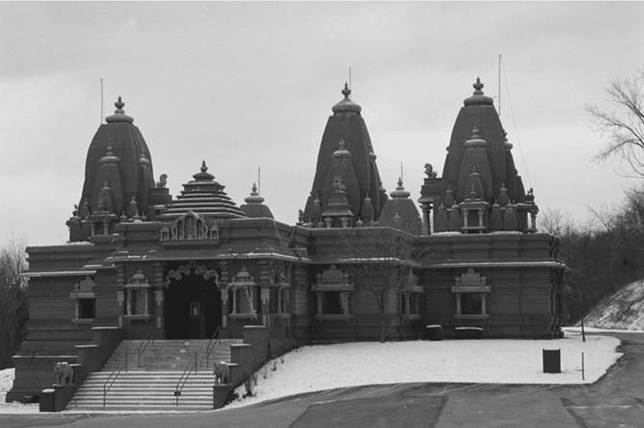
Figure 14 The Hindu-Jain Temple, Pittsburgh, PA. Photograph by Rebecca Clothey.
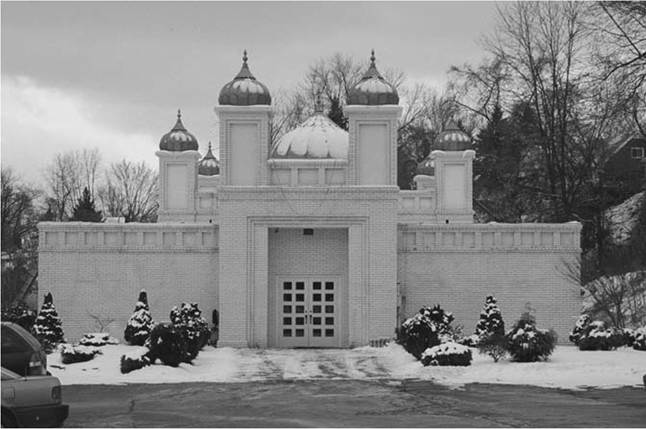
Figure 15 The Sikh Gurdwara, Pittsburgh, PA. Photograph by Rebecca Clothey.
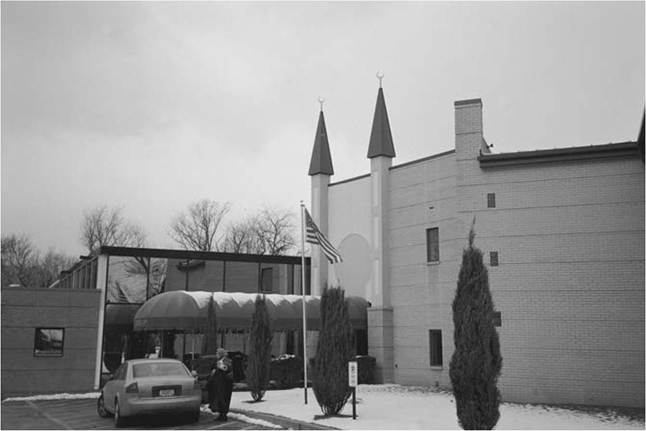
Figure 16 Masjid, founded primarily by South Asian Muslims, Pittsburgh, PA. Photograph by Rebecca Clothey.
The major annual celebration is Ramadan. The ‘id closing the Ramadan fast is usually marked by prayers held in a large auditorium with all the other Muslims of the city. But socialization thereafter reverts to the “home mosque” and to “family gatherings” where ethnic, sub-ethnic, and family traditions may be maintained. The other major annual event is the ‘id that marks the “day of sacrifice” during the hajj. This is usually observed in the “home mosque” and at home.
These South Asian settlers of the Pittsburgh area share much in common with their compatriots of whatever religious commitment. The men are almost invariably professional and well-placed in the community. Most of the women are similarly professionally engaged - and the majority of those working in the home are at least college graduates. The laity of the groups are active in the governance of the religious institutions; leadership is elected and rotates regularly. The women have an active role in the institutions’ lives - an extension, as more than one put it, of their domestic agendas. They assume roles, not only as cooks for public meals, but also as teachers, officers, and interpreters of the tradition. For each community, the religious structure serves not only as religious space, but also as a cultural and social space for the socialization of their children and for sharing of common concerns relative to living in a society where they remain a religious minority.
The story of the global dispersion of Indian ideas, culture, and people, only sketched here, suggests a number of implications. It is clear, for example, that religion is now transnational. No longer is “east east” and “west west.” Hindus, Muslims, Sikhs, and Buddhists have become the neighbors of Christians and Jews. Muslims, for example, are the second largest religious population in France and are as abundant in the US as are Jews. Hinduism is not confined to India and to Indians; Buddhism, with its active publishing agencies in the US and the concomitant construction of stupas and meditation centers is stronger in the US than it was in its first century in China, where it became the “state religion” within centuries.
This leads us back to the conclusion with which we started this study. It is not possible to ignore these religious traditions in our study of history, of religion, or of the human experience, for to do so would be to ignore something of the world’s history and of the changing face of the West’s religious landscape. In fact, the presence of these alternative religions and of South Asian immigrants in most countries of the world is an invitation for persons raised in any single religious tradition or in no religion at all, to rethink the ways in which fundamental human issues are answered in light of the questions raised by these transnational migrations. After learning what we can from the people of South Asia, their questions, their interactions, their responses to the exigencies of history and the modern world - we should not be able to remain the same as we were before we started this study.
In many ways, Indians who have sought to revivify or reinterpret their religious orientations since the nineteenth century have been a people living “on the boundaries.” They have been renegotiating identities in response to multiple cultures and religions. They have reacted - even over-reacted - to the effects of colonialism and have been tempted by the lure of nationalism, orthopraxy, and ethnicity. They have sought to maintain anchorage in the face of increased mobility, and the loss of a sense of rootedness and community. Their experience has become, in many respects, a mirror of the experience of most persons living in the twenty-first century. Many persons today live “on the boundaries,” familiar with more than one culture or religion through travel, education, or life experience. Many persons look for authentic humans worth emulating, experiment with “rituals that work,” and long for a sense of community. Not infrequently, people “on the boundaries” have turned to orthopraxy - the practice of a “tradition” thought to affirm certainty and heritage. Others experiment with alternative ideas and construct collages of religion. In any case, the Indian experience demonstrates that we have come to an exciting and important moment in the history of religions, one in which new religious landscapes continually emerge like the images of a kaleidoscope and where people will have to learn whether it is possible to share the same planet. In effect, the search for a new world order - to say nothing of more satisfying religious orientations - has just begun.
Recommended reading
On the global dispersal of South Asian culture and people
Agarwal, P. Passage From India: Post 1965 Indian Immigrants and Their Children. Palos Verdes, CA: Yuvati Publications, 1991.
Ballard, R. ed. Desh Pardesh, the South Asian Presence in Britain. London: Hurst, 1994.
Buchignani, N. et al. Continuous Journey: A Social History of South Asians in Canada. Toronto: McClelland and Stewart, 1985.
Coedes, G. The Indianized States of Southeast Asia. Honolulu: East-West Center Press, 1968.
Daniels, R. History of Indian Immigration to the United States. New York: The Asia Society, 1989.
Desai, S. Indian Immigrants in Britain. London: Oxford University Press, 1963.
Jain, Ravindra K. South Indians on the Plantation Frontier in Malaya. Kuala Lumpur: University of Malaya Press, 1970.
Jensen, J. M. Passage From India: Asian Indian Immigrants in North America. New Haven, CT: Yale University Press, 1988.
Kamath, M. V. The United States and India. Washington: The Embassy of India, 1976. Rawlinson, H. G. Intercourse Between India and the Western World. Cambridge: Cambridge University Press, 1916.
Riepe, D. The Philosophy of India and its Impact on American Thought. Springfield, IL: Charles C. Thomas, 1970.
Rukumani, T. S. ed. Hindu Diaspora: Global Perspectives. Montreal: Concordia University, 1999.
Saran, P. The Asian Indian Experience in the United States. New York: Praeger Publishers, 1980.
Saran, P. and Eams, E. eds. The New Ethnics: Asian Indians in the United States. New York: Praeger Publishers, 1980.
Singh, J. et al. South Asians in North America. Berkeley: University of California Press, 1988.
Singh, J. and Bahadur, J. ed. The Other India: the Overseas Indians and their Relationship with India. New Delhi: Arnold Heinemann, 1979.
Tinker, H. The Banyan Tree: Overseas Emigrants from India, Pakistan and Bangladesh. Oxford: Oxford University Press, 1977.
Vikram, R. Ayahs, Lascars, and Princes: Indians in Britain, 1700—1947. London: Pluto Press, 1986.
Wales, H. G. Q. The Malay Peninsula in Hindu Times. London: Bernard Quaritch, Ltd., 1976.
West, M. L. Early Greek Philosophy and the Orient. Oxford: Clarendon Press, 1971.
Religion and the Indian diaspora
Barrier, N. G. and Dusenberg, V. A. eds. The Sikh Diaspora. Columbia, MO: South Asia Books, 1989.
Bhachu, P. Twice Migrants: East African Sikh Settlers in Britain. London: Tavistock, 1985.
Boucher, S. Turning the Wheel: American Women Creating the New Buddhism. Boston: Beacon Press, 1993.
Burghart, R. ed. Hinduism in Great Britain: the Perpetuation of Religion in an Alien Cultural Milieu. London: Tavistock, 1987.
Coward, H., Hinnels, J. R. and Williams, R. eds. The South Asian Religious Diaspora in Britain, Canada, and the United States. Albany: SUNY Press, 2000.
Ellwood, R. S. Alternative Altars: Unconventional and Eastern Spirituality in America. Chicago: University of Chicago Press, 1979.
Ellwood, R. S. and Partin, H. Religious and Spiritual Groups in Modern America. Second edition. Englewood Cliffs, NJ: Prentice Hall, 1988.
Fenton, J. Y. Transplanting Religious Traditions: Asian Indians in America. New York: Praeger, 1988.
Fenton, J. Y. South Asian Religions in the Americas: An Annotated Bibliography of Immigrant Religious Traditions. Westport, CT: Greenwood, 1995.
Haddad, Y. Y. The Muslims of America. New York: Oxford University Press, 1991. Helweg, A. Sikhs in England. Delhi: Oxford University Press, 1985.
Hinnels, J. R. Zoroastrians in Britain. Oxford: Clarendon Press, 1995.
Jackson, C. T. The Oriental Religions and American Thought: Nineteenth Century Explorations. Westport, CT: Greenwood Press, 1981.
Jackson, C. T. Vedanta for the West: the Ramakrishna Movement in the United States. Bloomington: Indiana University Press, 1994.
Jackson, R. and Nesbitt, E. Hindu Children in Britain. Stoke-on-Trent: Trentham Books, 1993.
James, A. Sikh Children in Britain. London: Oxford University Press, 1974.
Kalsi, S. S. The Evolution ofa Sikh Community in Britain. Leeds: Leeds University, 1992. Kanitkar, H. and Jackson, R. Hindus in Britain. London: University of London Press, 1992.
Knott, K. Hinduism in Leeds. Leeds: Gmmumth Related Projects, 1986.
La Brack, B. The Sikhs ofNorthern California, 1904-1975. New York: AMS Press, 1988. Manikka, Eleanor. Time, Space, and Kingship. Manoa: University of Hawaii Press, 1996. Miller, T. ed. America’s Alternative Religions. Albany: SUNY Press, 1995.
O’Connell, J. T. et al. eds. Sikh History and Religion in the Twentieth Century. Toronto: University of Toronto, 1988.
Rayaprol, A. Negotiating Identities: Women in the Indian Diaspora. Delhi: Oxford University Press, 1997.
Raza, M. Islam in Britain: Past, Present and Future. London: Volcano Press, 1991.
Richardson, E. A. Islamic Cultures in North America: Patterns, Belief and Devotion of Muslims from Asian Countries in the United States and Canada. New York: The Pilgrim Press, 1981.
Richardson, E. A. East Comes West: Asian Religions and Cultures in North America. New York: Pilgrim Press, 1985.
Sharma, J. C. Hindu Temples in Vietnam. New Delhi: Sankalp Publications, 1997.
Singh, N. Canadian Sikhs: History, Religion, and Culture of Sikhs in North America. Ottawa: Canadian Sikhs Study Association, 1994.
Tatla, D. S. Sikhs in America: An Annotated Bibliography. New York: Greenwood Press, 1991.
Trout, P. Eastern Seeds, Western Soil: Three Gurus in America. Mountain View, CA: Mayfield Publishing, 2001.
Tweed, T. and Prothero, S. Asian Religions in America. Oxford: Oxford University Press, 1999.
Williams, R. Religions of Immigrants from India and Pakistan. Cambridge: Cambridge University Press, 1988.
Williams, R. B. ed. A Sacred Thread: Modern Transmission of Hindu Traditions in India and Abroad. Chambersburg, PA: Anima, 1992.