The “princely graves”
After the fall of the Tartessic culture, monumental funeral complexes continued to express the power of certain tribal groups who considered themselves to be descendants of a mythical ancestral hero.
By the first half of the fifth century BCE an imposing funeral complex was built in Cerrillo Blanco, in Porcuna (Jaen), that depicts as a central element a hero’s struggle with a lion or griffon (which has well-known parallels, such as the tales of Dumuzi, Sargon of Agade, and Melqart or Herakles). It also shows combat between armed warriors (Negueruela 1990) and has Greek stylistic influences.Iberian necropoleis present two types of arrangement of monumental sculptures in “princely” graves. One is known as “stelae pillars” (Izquierdo Peraile 2000) which depict, atop columns, sculptures of bulls, sphinxes, lions, does or wolves of an apotropaic nature (typical of Contestania, a region between Valencia and Murcia that seems to have been the true centre of Iberian culture). The second kind consists of the arrangement of sculptures directly on the funeral mounds, such as the horseman found in Los Villares (La Hoya Gozalo, Albacete).
Towards 375 BCE there must have been a social crisis that translated into the destruction of several complexes, and resulted in important changes to the society of the “princely graves”. The leading iconographic role that had been played since the arrival of eastern culture by the lion (for example, in Nueva Carteya, Cordoba, with clearly neo-Hittite influence) and the bull (Porcuna, Jaen) now seemed to be concentrated on the wolf. The “El Pajarillo” heroon (funerary monument) at Huelma, Jaen, with a combat between a young hero and an imaginary is moulded and offered in sites of worship that are places of symbolic memory, endowing the present with prestige (Rueda Galan 2009).
The complex rituals typical of the south-east (the region of Contestania) have different characteristics.
El Cerro de Los Santos and El Llano de La Consolacion in Montealegre del Castillo, Albacete, were characterized by stone statuary (Fig. 14.2). Other good examples include El Cigarralejo (Mula) and Nuestra Seriora de La Luz (Verdolay, Murcia). Of the more than two hundred statues that have been found in Cerro de Los Santos, the most famous are those of worshipping females, which probably depict devout aristocrats or priestesses. Most of these sanctuaries were active into the advanced Roman imperial age.The emergence of the territory-wide periurban sanctuaries associated with the construction of ethnic or political projects coincides with the decline of ritual caves, which were especially common in the fifth and fourth centuries BCE. Some of the complexes (El Cerro de Los Santos, La Luz, and La Encarnacion in Caravaca, Murcia, as well as Torreparedones in Jaen) experimented with a process of monumentalization in the second and first centuries BCE, when they adopted Italo-Hellenistic concepts. Human terracotta masks found in some sanctuaries may have been used by the faithful when performing ritual dances like those known to have taken place in the Artemis Orthia sanctuary in Sparta and other locations.
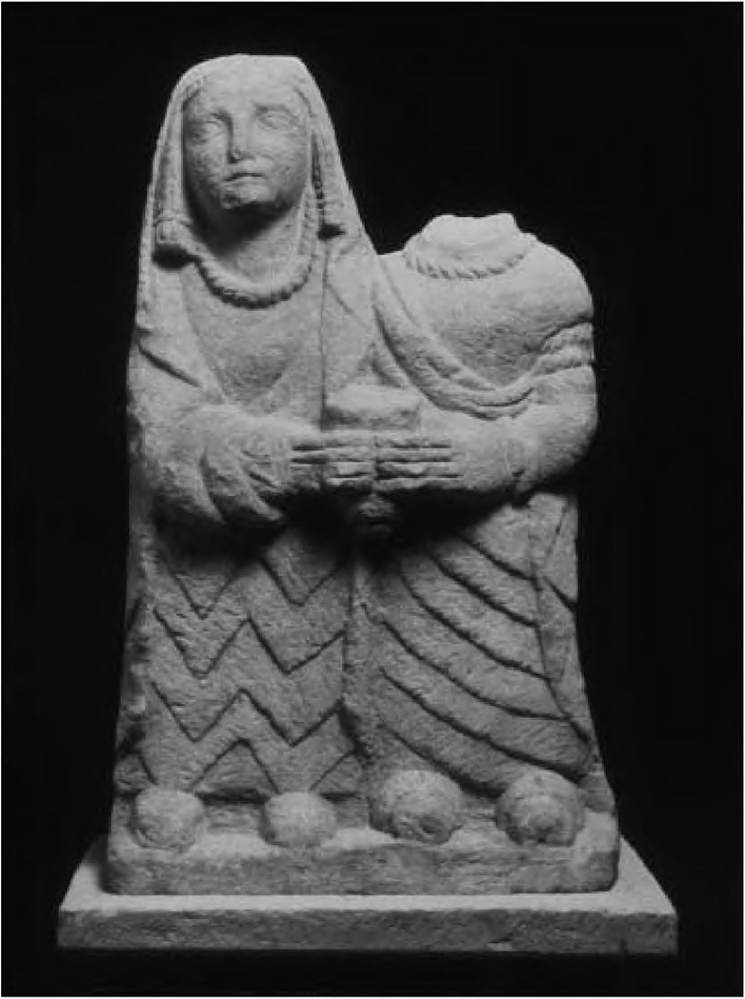
Figure 14.2 Offering figures from El Cerro de los Santos (Albacete). Museo Arqueologico Nacional de Madrid, inv. no. 3508. Photo © Marc Llimargas, reproduced with permission.
A similar variety may be seen in urban sanctuaries, with three main variations. First are domestic or dynastic family sanctuaries, which were integrated into a noble family’s dwelling inside the oppidum or fortified village: La Serreta de Alcoy in Alicante; Sant Miquel de Lliria in Valencia and Ullastret in Girona are good examples. Second are “properly” urban sanctuaries, isolated structures with an autonomous relationship to the oppidum. These include two kinds. First are the “open-air” areas (La Alcudia de Elche and Campello Island in Alicante), which consist of square enclosures (temenos) and the remains of columns or structures that have been interpreted as altars or offering tables following the typical Phoenician tradition, whereas the other type, present in the north-east of the peninsula, manifests the expansion of the Roman-Hellenic temple and consists of buildings set on stone bases and located on the highest point of a settlement: typical examples include Azaila (Teruel) and Ullastret (Girona), with influences from Emporion (Ampurias).
The third variation includes “entrance sanctuaries” located beside the entrance to a settlement, in some instances within the walls (especially in the east and north-east of the peninsula) and in some outside the walls.Necropoleis show a wide diversity of funerary practices related to cremation. The exceptions are child burials, performed inside homes. Bodies ranging in age from fetuses to six-month-old babies have been documented in eastern Spain (from Alicante to the French Languedoc) and in the mid-Ebro valley. When the remains are found within structures such as walls or benches, they have been interpreted as sacrificial in nature, having a functional or propitiatory character, and are accompanied by, or substitute, animal sacrifices.