‘Two-Party’ Cases: The ‘Barwick Test’
D --------------------- ► P
The basic approach to the duty question in Australian law in cases in which information, opinion or advice is supplied directly by the defendant to the plaintiff or one of the plaintiff's agents, is set out the judgment of Chief Justice Barwick in the Evatt case.[1546] Evatt involved a demurrer, so that it did not technically decide the duty issue, but the High Court nonetheless held by a majority of 3:2 that an insurance company might owe a duty of care to a potential investor (also one of its own shareholders) when supplying financial information about an associated company at the investor's request.[1547] The decision in Evatt was subsequently overruled by the Privy Council,[1548] but that reversal has since been thought a mistake and Barwick CJ's reasoning has been affirmed in the High Court on several occasions.[1549] In his speech, Barwick CJ said that he had derived ‘assistance' from their Lordships in Hedley Byrne, but he was nonetheless setting out his own, distinct approach for Australia.
In addition to the foreseeability of harm, his Honour referred to the need for a ‘special relationship' between the parties. In the following extract, he details the ‘essential elements' of that relationship:First of all, I think the circumstances must be such as to have caused the speaker or be calculated to cause a reasonable person in the position of the speaker to realize that he is being trusted by the recipient of the information or advice to give information which the recipient believes the speaker to possess or to which the recipient believes the speaker to have access or to give advice, about a matter upon or in respect of which the recipient believes the speaker to possess a capacity or opportunity for judgment, in either case the subject matter of the information or advice being of a serious or business nature.
It seems to me that it is this element of trust which the one has of the other which is at the heart of the relevant relationship...[Secondly]. the speaker must realize or the circumstances be such that he ought to have realized that the recipient intends to act upon the information or advice in respect of his property or of himself in connection with some matter of business or serious consequence. Of course, utterances in the course of social intercourse with no thought of legal consequence could not satisfy such a condition.
[Thirdly]. it seems to me that the circumstances must be such that it is reasonable in all the circumstances for the recipient to seek, or to accept, and to rely upon the utterance of the speaker.[1550]
It has subsequently been suggested that these three requirements of trust, actual (or constructive) knowledge and reasonable reliance are reducible to two— knowledge and reasonable reliance. This is on the basis that the essence of the relationship of ‘trust' to which Barwick CJ was referring in the first paragraph above is in fact the reliance that the advisee places on an advisor.[1551] Trust (or reliance) is the mechanism via which a defendant's words come to have an effect upon the world in general and the plaintiff's financial interests in particular, which explains the concept's role in misstatement cases. Words do no harm in and of themselves and must influence human behaviour to have causative effect. They are not sticks and stones. In all two-party cases, the plaintiff's reliance therefore provides the causal pathway from the defendant's negligent words to the loss that the plaintiff suffers.
A. Reasonable Reliance
Such reliance usually results from an unequal position between the parties, but the defendant need not be a professional advisor, nor need he be holding himself out as possessing any special skill[1552]—his possession of a monopoly of knowledge or factual information on a matter of interest to the plaintiff is enough.
Whether reliance by the plaintiff is reasonable turns on a variety of factors, including the nature of the subject matter, the occasion of the interchange between the parties, their identity and relative positions as regards knowledge, and their capacity for the exercise of judgment.[1553] It may also depend on whether or not the defendant has issued a disclaimer or responsibility alongside the information or advice,[1554] or has, to the plaintiff's knowledge, made deliberate efforts to restrict the purposes for which the information is to be used, or the audience to which it is to be distributed, so as effectively to provide a ‘warning' to the plaintiff not to use it. Whether or not the plaintiff might reasonably have protected himself against the loss (whether he is ‘vulnerable' in the modern language of the High Court) is also relevant. Indeed, the language of ‘ vulnerability' and reasonable reliance are now effectively synonyms in Australia in the misstatement context.From one point of view, if the function of reliance is causal only, the concept should form no part of the test for duty at all. From the same aspect, the reasonableness of a plaintiff's reliance in making use of information or advice goes to the question whether his own decision to use the information as a basis for investment constituted a novus actus interveniens, rendering him the true, legal cause of his own subsequent loss;[1555] or to the question of whether the plaintiff has been con- tributorily negligent in respect of that loss and ought to have his damages reduced accordingly. It is interesting to note in this regard that the Third Restatement Draft now omits any formal requirement that a plaintiff's reliance be ‘justifiable' from the duty formula and simply applies normal comparative (contributory) negligence principles where a plaintiff has acted unreasonably in relying. This is a deliberate and important change from the approach in the Second Restatement,[1556] which makes it more likely that those relying unreasonably will receive at least some compensation.
In Australian law, however, as in the United Kingdom, both reliance and the need for it to be ‘reasonable' are currently firmly embedded in the duty rules in cases of this type.Personally, I regard this as illogical and would reassign questions of reasonable reliance to the causation, remoteness of damage and defence inquiries, rather than dealing with them at the duty of care stage, but matters of responsibility are notoriously migratory across the various conceptual boundaries of negligence law and it is sometimes thought that discussing such matters at the duty stage makes the underlying questions of policy clearer. To the extent that judgements about the ‘reasonableness' of reliance are distributive judgements about the appropriate onus of precaution as between plaintiff and defendant that require open discussion and more considered, general debate, there is certainly some justification for this view. One of the functions of the ‘duty' inquiry is thought to be to provide generalised conclusions about the scope of defendant responsibilities, which constitute clearer signposts or ‘markers' about where responsibilities for protection lie. There is some irony in this, of course, given the very individualised way in which duty questions are nowadays determined in new cases, but the aim is understandable enough. Which approach is taken is not without significance in terms of the amount of compensation a plaintiff can receive and reflects one's underlying views as to the importance or otherwise of the plaintiff's economic interests.
B. Actual or Constructive Knowledge
When it comes to knowledge, it is clear from Barwick CJ's judgment that his Honour did not consider it necessary for the defendant to know of the particular transaction in which the plaintiff subsequently relies, but thought it enough that he knows that it will be used ‘ in connection with some matter of business or serious consequence'. [1557] This formulation is similar to (if slightly more generous than) the stipulation in the Third Restatement Draft that the defendant must know the information will be used in a ‘substantially similar transaction' to that in which it is used in fact.[1558] In the Tepko case, the High Court was divided on the degree of specificity attaching to this aspect of the knowledge requirement, which is odd, given that all members of the Court purported to be applying Barwick CJ's approach.
The majority refused to allow a property developer's claim against a Water Board for inaccurate statements of likely water connection costs the latter had provided, partly on the basis that the Board had been ‘kept in the dark' about the particular, crucial financing transaction in which the information was being used by the developer.[1559] The minority considered this approach too strict, saying that it should be enough that the defendant knew the information was required for a ‘serious [financial] purpose'.[1560] This is closer to Barwick CJ's original proposition and perhaps also to the American approach, although it is unclear whether the latter would have yielded a different outcome on the facts of Tepko itself, because there the majority also cited a number of reasons why the developer's reliance on the figures provided was unreasonable.[1561] The minority approach to knowledge, or that suggested in the Third Restatement Draft, is probably to be preferred.As regards the defendant's knowledge of the person using the advice or information, Barwick CJ considered it unnecessary for the defendant to know that the information will be relied on by the plaintiff himself, provided the latter is a member of an identifiable class on whose behalf the information is sought.[1562] This approach again finds support in the Third Restatement Draft, according to which it is sufficient if the plaintiff is one of a ‘limited group' of persons to whom the defendant knows the information will be supplied.[1563] The criterion makes sense if it is designed to accommodate concerns about indeterminacy or crushing liability, but its application to real world facts is often very difficult.
C. UnrequestedAdvice
It is possible for the two limbs of the Barwick test to be satisfied even when the information the defendant has provided has been volunteered, not requested, although the facts are likely to be exceptional.[1564] The functions played by a request lie in alerting a defendant to the prospect of another's reliance (ie in proving that he knows it is likely to occur); in identifying to the defendant the person or persons intending to use the information (so as to minimise concerns about indeterminate liability); and in helping to prove that the plaintiff has in fact relied[1565] on the information when making his investment (ie in proving causation).
There is no reason in principle, however, why a request should be necessary for a plaintiff to make out any of these elements. In the S an Sebastian case, where a council had volunteered public information about its plans for the development of an area of Sydney that was then detrimentally relied on by a developer, the joint majority suggested in a well-known obiter passage that a duty might arise in respect of even volunteered information if (1) the defendant has special skill, (2) he warrants the information's correctness, (3) he invites the plaintiff to rely on it, (4) he intends the plaintiff to rely on it, or (5) he has a pecuniary interest in the plaintiff so relying.[1566]It is not wholly clear whether these criteria were intended to constitute a distinct and stricter set of duty rules for cases involving unrequested information; or whether it was thought that they would serve as alternative ways of proving the essential elements of Barwick CJ's approach. Each criterion could certainly assist in proving that a defendant knew (or ought to have known) that a plaintiff would be likely to rely on his advice and in proving that reliance to be reasonable. This is probably how they are best understood, since the passage in which they are set out follows on immediately from the Court's discussion of Barwick CJ's approach.[1567] There is nonetheless some doubt, since some of these criteria have been selectively deployed in the more problematic three-party cases to which we shall come in Section IV, where there are signs of a more restrictive approach to the duty question. Certainly, some of the criteria—such as the requirement that a defendant must intend that the plaintiff will rely, or must ‘warrant the correctness' of his advice—are stricter than the requirements of knowledge under Barwick CJ's original formulation. If they were to be understood as distinct requirements applying in a separate ‘subcategory' of case involving unrequested advice, they would therefore potentially operate restrictively (and without any good reason) in cases of the more basic, two-party type. The best approach, I suggest, is to regard them as being evidentially relevant to establishing the elements of the Barwick approach, not substantive requirements in their own right.
D. Advice to the World
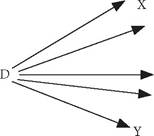
A feature of the San Sebastian case that might explain the joint majority's reference to the more restrictive criteria just outlined was the fact that the information in question was not simply volunteered, but volunteered directly ‘to the world', by being made publicly available. This is likely to be a rare case in practice—the most obvious examples being public authority or other governmental announcements, statements made by broadcasters, and inaccurate information published on websites (of which there is surely a great deal). In such cases, plaintiffs clearly stand in a remoter relation to the advisor. Even if it can be shown that a firm representation has been made, it will be rare that reliance upon it will be reasonable, or that the defendant will be seen as the main legal cause of a plaintiff's loss, if the latter chooses to use the information without making his own investigations about its reliability. There are also obvious concerns in cases like San Sebastian about indeterminate or large liabilities, akin to those that prevail in many three-party cases. Whether or not more restrictive criteria should apply to the duty issue in consequence depends entirely on whether that policy concern can be accommodated through application of the more basic Barwick approach. I suggest that the knowledge requirements under that approach are sufficient for this purpose. There is support for that view in the fact that his approach has garnered the support of some judges even in the more controversial type of three-party case, which we consider in the next section, where similar concerns about indeterminate liabilities are regularly voiced.
With the exception of some minor uncertainties in cases involving the provision of information or advice to the world, there is therefore a reasonable level of level of certainty in the legal criteria governing the duty question in ‘direct' two-party cases in Australia. The (once three-stage, now two-stage) ‘Barwick test' prevails. Once we leave the basic, two-party case, however, we sadly step out on to very uncertain ground.
IV.