Chapter 7 Roxolana in Turkish Literature: Re-Writing the Ever Elusive Woman of Power and Desire
Ozlem Ogüt Yazicioglu
The Harem and the life in the Harem, which you claimed can never be accessed by people outside, are recounted to their minutest details in historical novels [...
] Writers employ the same strategies you used when you were trying to persuade Kanuni[462] to have §ehzade[463] Mustafa killed, and they succeed [. ] Many people know you from such novels rather than history books.[464]Considering that Hurrem Sultan (Roxolana)[465] was wife to the most “magnificent” emperor of the Ottoman Empire, Kanuni Sultan Süleyman (Suleiman the Lawgiver), and is known to have had much more influence and power in the palace than any other woman in the history of the Ottoman Empire, the number of literary works written in Turkey, which focus on her life, is rather limited. The main reason is probably the secrecy of the harem, a place that no man, other than the eunuchs and of course the Sultan himself, was allowed to enter. Likewise, the women in the harem were not allowed to leave its quarters, except for some concubines who were close to the powerful women of the harem, such as valide sultan (the mother of the Sultan), the Sultan’s hasekis, or other members of his family, and were married off to eligible men of status or of a promising career outside the palace. Therefore, even references in history books to the lives of women in the harem are often based on word of mouth and are more or less subjective. Literary works revolving around women in the harem largely draw on historical sources but include elements that are either produced or colored by their author’s imagination.
This essay studies the prominent works of Turkish literature in which Hürrem plays a central role: two history novels, Hurrem Sultan (1960), by Feridun Fazil TülbentQi, and Hurrem Sultan (1937), by M.
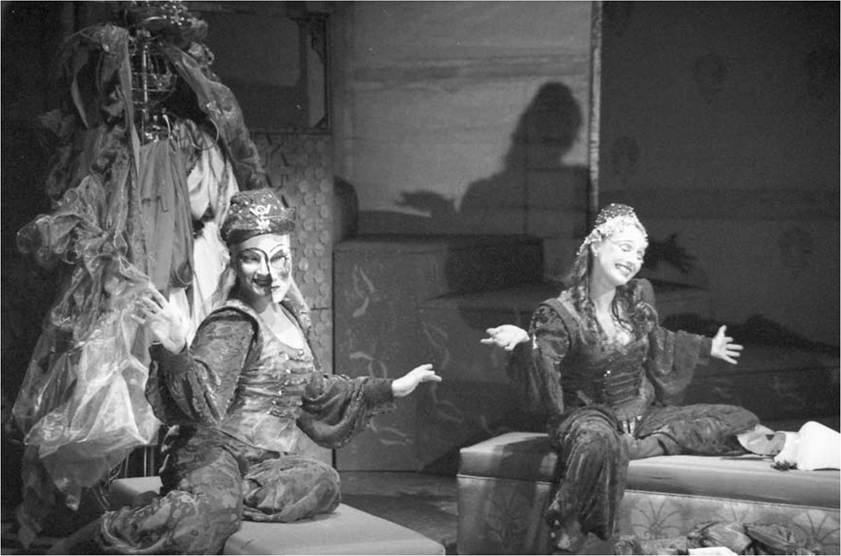
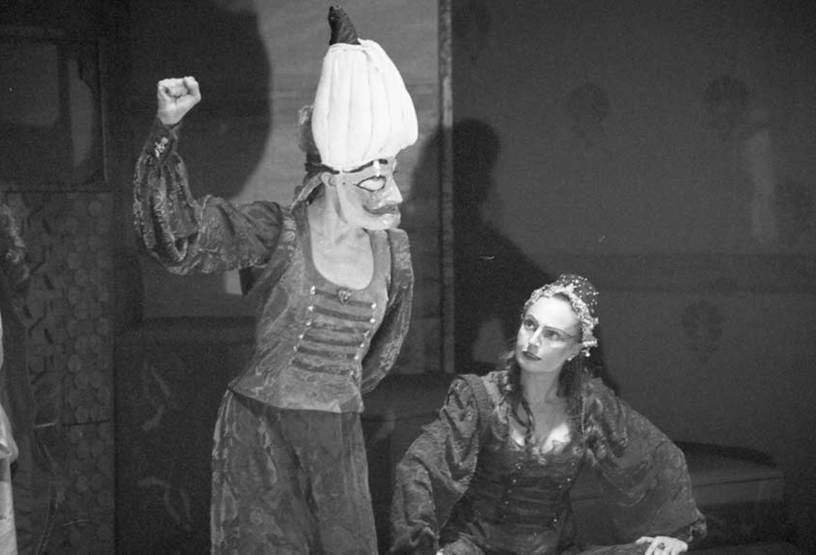
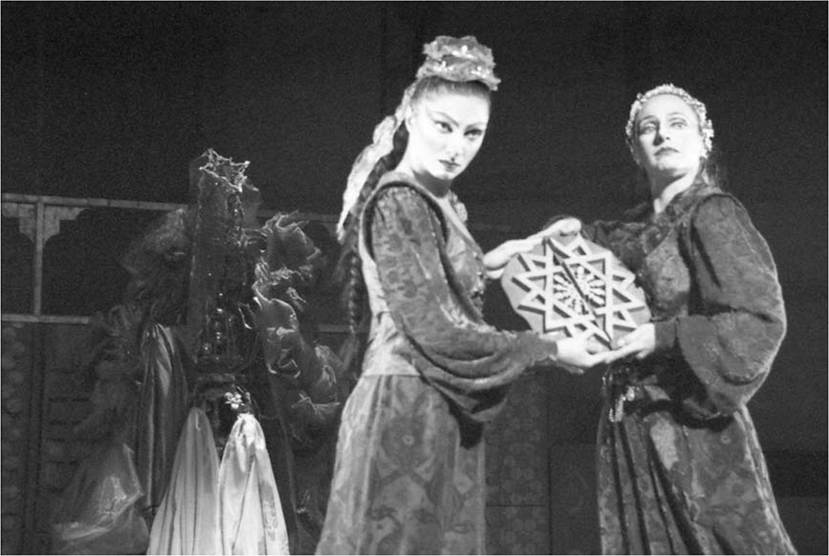
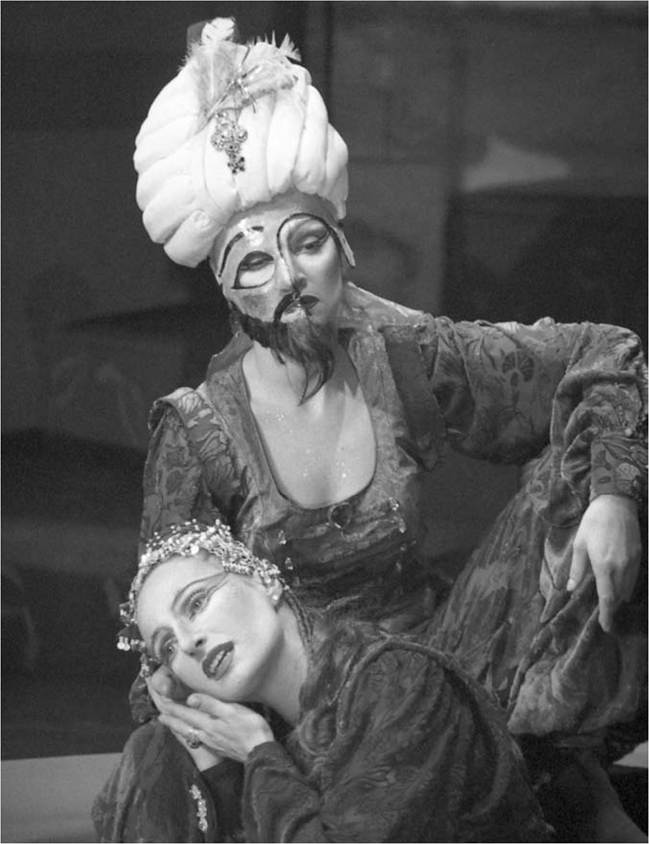
Turhan Tan,[466] focus on the period of Ottoman history from Hürrem’s arrival at Sultan’s palace (the Topkapi Palace) in Istanbul to her death and the death of her son Bayezid, respectively. Three history plays from Kanuni Sultan Süleyman Dortlemesi [Suleiman the Lawgiver Tetralogy] by Orhan Asena—ilk Yillar [The First Years], Hurrem Sultan, and Ya Devlet Baga Ya Kuzgun Lege [Either Power or Death][467]—written in the 1950s represent significant chapters from Süleyman’s reign, from Hurrem’s arrival at the imperial palace through her death and the continuing rivalry for succession to the throne between her sons Selim and Bayezid. In Adnan Nur Baykal’s Hürrem Sultan ile Soylegi [Interview with Hurrem Sultan] (2004), Hurrem assumes a voice of her own and relates how the conditions in Süleyman’s palace and her desires that were fostered by those conditions led her to manipulate others in an attempt to reach her goals. Ozen Yula’s play GayriResmi Hurrem [UnofficialHurrem] (2005), with its embedded plays and performances, represents Hurrem as every woman in the past, in her contemporary present, and in the future of the Ottoman harem, and highlights her ability to perform and transform herself, which undoubtedly contributed much to her successes in the history of the Ottoman Empire.[468]Approaching the genres of the historical novel and the history play from a critical and parodying stance, Baykal’s and Yula’s works, written almost half a century later than the works by TülbentQi, Tan, and Asena, interrogate the intricate relationship between fact and fiction, narrative and history. Although Asena’s, Tan’s, and TülbentQi’s works revolve around KanunTs military campaigns and power games in the imperial palace, the details in the three writers’ accounts of Hurrem’s life display variations. The three authors complemented and embellished their narratives of history, especially the mysterious aspects of Hurrem’s life, with their imagination, often in line with the patriotic or romantic undercurrents of their works.
Baykal’s and Yula’s works point to the processes of such fictionalization of history or historical figures in order to underline the multifacetedness of truth. Furthermore, these two contemporary works display Hurrem as constantly acting—in a way fictionalizing or re-writing herself—so as to simultaneously conform to and defy the system (the imperial harem) in which she was forced to live. Her “performances” of complicity mark her resistance to the system. This is very much in line with Judith Butler’s conception of “performativity” as the “stylized repetition” of bodily or psychic acts/aspects of identity, produced in the foreclosure of normative social/historical power yet providing subversive possibilities of agency and resistance.[469] Interestingly, when read in this light, the earlier works by Tülbentgi, Tan, and Asena also exhibit such “performativity” by repeating the style and content of historical narratives, yet pointing to the social and literary constructedness of their characters, which, in a way, empowers those characters, as they can remain elusive.
In Act I, scene i of Yula’s play Unofficial Hurrem, the character Hurrem says, “I’ve never told anyone about my past. This is the source of my power. When they don’t know about it, they construct a past of their own imagination [... ] They didn’t know and the less they knew the more they told my story, and as they told it they created another Hurrem.”[470]... Indeed, the earlier works depict the first encounter between Hurrem and Süleyman rather differently, thus creating varying images of Hurrem. Tülbentgi’s novel opens with Kanuni Sultan Süleyman entering the palace with his mother Hafsa Sultan (valide sultan), who welcomes him back from an expedition. He is alarmed and angered by the screams coming from the harem, which implies a lack of discipline and respect, but he calms down when he sees the “wild and restless beauty” of the 17-year-old “Roksolan” (“Roxolana,” thereafter named “Hurrem”), who is terrorizing the concubines, odalisques, and eunuchs alike in her attempts to escape from the palace.
Hafsa Sultan is surprised by her son’s interest in the girl, because, in her opinion, she is not even beautiful compared to other gorgeous women in the harem, let alone her improper, rebellious behavior. In Tan’s novel, however, it is Hafsa Sultan who is impressed by Hurrem’s beauty and offers her to the Sultan in the presence of his haseki Mahidevran (Gülbahar),[471] a scene that introduces the reader to the power games among the women in the harem. In Asena’s play The First Years, it is again the valide sultan who wants to educate and present Hurrem to Süleyman, also with the purpose of taming Gülbahar’s pride. But Hurrem, in a passionate and revolutionary mood, unexpectedly throws herself at the Sultan’s feet and manages to capture his attention. Her behavior both hurts valide sultan's pride and defies a norm of the harem where valide sultan has the authority to choose, educate, and present concubines to her son.All three of the earlier works grant central importance to three major victories Hurrem wins during Kanuni's reign: her victory against Gülbahar, the Sultan's former haseki, the mother of his son Mustafa, in their competition for Süleyman's love; her victory against Ibrahim Pa§a (Ibrahim Pasha), Süleyman's Grand Vizier, in their mutual scheming and struggle for prominence in the palace, which results in Süleyman's death order for Ibrahim; and her elimination of qehzade Mustafa from the competition for the throne through her long-term efforts and schemes to persuade Süleyman that Mustafa is preparing to usurp the throne, wherefore the Sultan has him killed. Tan’s Hurrem Sultan and Asena’s Tetralogy also focus on Hurrem’s part in the ensuing power struggle between her sons Selim and Bayezid, which, however, takes a different course than the one intended and plotted by Hurrem and Rüstem Pa^a,[472] who are outsmarted by Lala Mustafa Pa§a.[473] Hurrem herself does not live to see the outcome of Selim and Bayezid’s competition, which eventually leads to Bayezid’s death.
All of the early works portray Hurrem as a rather unruly, ambitious, and calculating woman who determinedly pursues her self-centered goals and accomplishes her short- and long-term plans by carefully choosing her spies and catering to their self-interests to gain power over them. In other words, they represent Hurrem as the main perpetrator of several dramatic and violent episodes in the history of the Ottoman Empire, with the implication that the consequences of her actions and conspiracies, particularly the death of qehzade Mustafa, who had distinguished himself among his brothers as the best candidate for the throne, may have contributed to the weakening and the ultimate decline of the Ottoman Empire. This idea finds dramatic expression in Orhan Asena's play Hurrem Sultan, in Süleyman's dialogue with Cihangir Sultan, Hurrem and Süleyman's youngest and most beloved son, a handicapped yet wise, sensitive, and insightful young man. At the time when Süleyman starts suspecting Mustafa of treason and considering his execution, which causes him great pain at the same time, Cihangir also suffers from painful daydreams that portend calamities for the Ottoman Empire. He feels that a big catastrophe is being prepared by some whom he cannot clearly identify in his mind. His prophetic statement, in Act II, scene vi, that black clouds gather above the Ottoman skies[474] sounds like a warning and implies that Mustafa’s death will have tragic consequences for the Ottoman Empire. In Act V, scenes v and vi of the same play, Bayezid expresses his pain at his half-brother Mustafa’s death, whose professional abilities and exceptional personality cannot be surpassed by anybody else in the Empire, and he openly blames his mother and Rüstem for preparing this end. Addressing Hurrem and her faithful ally, he says, just like Cihangir before, “Do you see the darkness falling Mother? And the terrible men guarding it? This shouldn’t have been the fate of the Ottoman Empire.”[475]
In Asena’s play, as well as Tan’s and TülbentQi’s novels, Cihangir dies of sorrow soon after Mustafa’s death.
Tan’s novel ends with a fantastic scene following the murder of Bayezid and his four sons upon Süleyman’s order. It describes Hurrem’s daydreams, mixed with her nightmares and her madness, which ultimately lead to her death before she witnesses the outcome of her sons’ struggle for succession to power. Tan describes how Hurrem foresees the course of events in her dreams. In those dreams she undergoes insufferable pain, fever, and convulsions, which in a way serves as retribution for her evil deeds. Tan supports this idea with a direct reference to the description of Hurrem’s death in Hammer’s History, in which Hammer claims that Hurrem deserves to be condemned by history due to her extensive abuse of power.[476] In Tan’s novel Hurrem is recurrently referred to as a “femme-fatale” (“fettan kadin”) or even a “sorceress” (“büyücü”) who put a spell on Sultan Süleyman. Tan also alludes to a number of well-known early modern Ottoman historians, such as Pe^evi, Celalzade, and Solakzade, who unanimously held Hurrem responsible for the death of Mustafa, whom they all described as innocent, with the exception of the sixteenth-century historian Ni^anci who described Mustafa as guilty but could not provide convincing evidence.[477]The problem of recording or representing truth or history constitutes a central aspect of Ozen Yula’s Unoffical Hurrem, which underscores the subjectivity of representation that undergoes constant de-/re-construction. In his Preface and Introduction to his Interview, Baykal describes how he himself became “deconstructed” while trying to construct his work. He confesses that he thought his primary task before writing a book on Hürrem Sultan was to peruse all possible sources (history books, historical novels, travelogues, embassy reports, etc.) that recorded details about her life and then form a coherent life story with a full characterization of Hurrem Sultan, from his own standpoint, which he thought would develop after such an extensive and in-depth reading. However, he realized that far from attaining a personal perspective on Hurrem Sultan, he became fragmented in his assessment of her. Since his divided halves could not agree on a consistent representation of Hurrem Sultan, he decided to write this text in the form of an interview in which the half of him that blamed Hurrem Sultan would, like a prosecutor or a journalist, pressure her with questions and comments justifying the accusations and judgments of the historians, whereas his other half, which understands and sympathizes with her, would let her speak for herself and defend herself against such allegations by rationalizing her actions. Contrary to the general pattern of interviews, it is Hurrem, not the interviewer, who poses the first question which now points to Hurrem’s ambivalent, dialogical self: “Have you ever negotiated with yourself?” (“Kendinizle hi? hesaplafjtiniz mi?”)[478]
Interestingly enough, the ambivalent or multifaceted quality of identity, truth, and representation that marks Baykal and Yula’s contemporary texts, is subtly present in the earlier works by TulbentQi, Tan, and Asena, whether the authors were conscious of it or not. When read against Baykal’s and Yula’s works, the earlier texts deconstruct themselves by appearing judgmental on the surface and suppressing an underlying ambiguity, which nevertheless reveals itself behind the seemingly flat statements and characterizations. In other words, Baykal and Yula’s works stimulate the reader to detect in the earlier texts aspects that undermine monolithic readings of Hurrem’s character and even betray an authorial consciousness in the process of “negotiating with himself,” much like Baykal and his interviewee Hurrem. For example, towards the end of Tan’s novel, where Hurrem’s delirium and nightmares about the future of her sons are described, the author’s passing reference to the doctors’ being used to treating mad or hysterical women in the harem implies Tan’s awareness that the restricted lives of the harem women, who were physically and mentally confined within its narrow boundaries, often cost them their health. Thus, Tan’s novel which contains many pejorative references to Hurrem, but demonstrates sensitivity towards issues concerning the women in the harem, emerges as the product of a divided self. It is important to note here that the subject of madness is central to Ozen Yula’s Unofficial Hurrem, in which it is associated with the loss of memories of the past and past identities, pointing to the repressed selfhood of the harem women.
Tan’s sympathetic attitude towards the sufferings of the women in the harem, often caused by ongoing power struggles and thwarted expectations, becomes evident already at the outset of his novel, in the scene where Hafsa Sultan and Mahidevran are talking about the new Russian concubine Roksolan. Valide complains that the Sultan is not interested in seeing Roksolan although she is very beautiful. Mahidevran is upset and interrupts valide by saying, “This is the first time I hear the ugly are called beautiful. What is beautiful in her? Her eyes are matt, her face is mournful. Moreover, her nose is crooked. If you call her beautiful, what are we[479] supposed to be called?”[480] Süleyman who overhears their dialogue walks towards his jealous haseki and says, “The value of a diamond is assessed by a jeweler, the value of gold by the gold expert, and it’s my mother’s eyes that can best judge beauty. They are never wrong.”[481] Both the Sultan and his mother want to punish Mahidevran for her arrogance. Hafsa Sultan “takes advantage of this opportunity to act as a merciless mother-in-law” (“bir kaynana insafsizligiyla bu firsattan istifade etti”) and asks Mahidevran personally to go and call Roksolan in.[482] Tan describes Mahidevran’s feelings as follows: “It was a big blow [... ] but what could she do? Although she was mother to a qehzades, she was still a concubine in the harem where only the Sultan and then his mother had the right to speak.”[483] Mahidevran is inconsolable but when she thinks of Mustafa, who will take over the throne when his father dies, she realizes that the future will bring her status and power as the new valide sultan and that she is supposed to “wait for that happy time with patience and calm” (“o mesut günü sabirla, tahammülle, tevekkülle bekleyip §imdi ses Qikarmamak gerekti”).[484] Hurrem, likewise, displays patience and modesty. She often uses the statement, “I am just a concubine” (“Ben bir halayigim”), when the Sultan asks her opinion on private or political issues, although she carefully calculates the emotional effect of her simultaneously submissive and complaining tone on the Sultan. In fact, it is the same statement that gradually ingrains in Süleyman’s mind the idea of taking Hurrem as his wedded wife, which he does, thereby defying another long-standing Ottoman custom. Tan’s novel thus subtly interrogates whether Hurrem or any other woman in the harem is to blame for trying hard to rise to the top in a system that fuels such desires—a rather difficult and painful process. For Hurrem it was a life-and-death issue, as she underscores in the Interview.
When asked about the lives of women in the harem, in Baykal’s Interview, Hürrem describes them as follows: concubines were expected to bear sons to the Empire; in other words, it was forgotten that they were women or rather human beings.[485] If a concubine managed to become one of the Sultan’s favorites and to give birth to a son, she would secure herself a status as a haseki. If her son
succeeded to the throne, she would rise to the most prestigious position of valide sultan who possessed the greatest power in the harem, sometimes even over the Sultan. However, should her son be eliminated from the struggle for the throne, she would be sent to the Old Palace “to disappear among the shadows of history” (“tarihin golgeleri arasinda yitip gitmek”).[486] Hürrem stresses that she never submitted to fate, nor left the control to others, because her slightest mistake could erase her whole life.[487] She adds, “[I]f I had submitted myself to the existing system I would have perished. You would not even feel the need to have an interview with me.”[488] She claims that her greatest fear is to be forgotten, which is the same as not having lived at all.[489]
Her desire for life constitutes the driving force behind her resistance to the power structure that dominates her, and it displays significant parallelism with Deleuze’s argument, in his Foucault, that “the most intense point of lives, the one where their energy is concentrated, is precisely where they clash with power, struggle with it, endeavor to utilize its forces or to escape its traps,” that “the diffuse centers of power do not exist without points of resistance that are in some way primary,” and that “power does not take life as its objective without revealing or giving rise to a life that resists power.”[490] Indeed, Hürrem’s desire for power, which can hardly be dissociated from her desire for life, constitutes her rebellion against the existing order that threatens to crush her unless she utilizes its tools more rationally and skillfully than others. That is why she improves her knowledge of history, literature, and politics of the Ottoman Empire and gains full insight into the affairs of the state, including those of the harem. Hürrem derives her power to resist the established system and her rivals, who are also trained in that system, from her complicity with the system itself, as her attitude and statements in the Interview clearly indicate. Hürrem remarks that the kind of information she provides about the harem is just enough to understand her position as well as the position of all other women in the harem, stressing that so much is known by almost everyone anyway. When asked about the details, however, she refuses to betray the secrets hidden in the recesses of the harem and purposely withholds information: “I imprisoned things I have seen and heard in my mind, heart and soul. The curtain of secrecy that surrounds the harem is so thick that information inside cannot leak out [... ] Secrecy was a very important part of our training.”[491] Hürrem’s refusal to provide detailed information about the harem —which of course empowers her vis-à-vis her writer(s)—along with her emphasis on secrecy, implies not only the gaps in the knowledge of the historians and the writers of history novels or plays, but also highlights secrecy and conspiracy as integral aspects of life in the harem.
The intricate web of intelligence among competing power centers and their conspiracies in the palace constitute an important leitmotif in TülbentQi’s, Tan’s, and Asena’s works. Thus, Hurrem emerges in these works not (only) as a victimizer but also as a forced participant, a captive, if not a victim, in a society whose norms and hierarchies have long been established and fixed. In the Interview, Hürrem repeats several times that she was brought to the harem by force and not of her freewill, but she quickly learned to make the best of the limited opportunities allowed by the system to attain for herself and her children the highest possible status, the positions of valide sultan and the Sultan respectively, both of which are implied, when not directly stated, in the earlier works, too.
Hurrem’s strategies to gain and maintain power were common within the system, as indicated by recurrent references in TülbentQi’s, Tan’s, and Asena’s works to the violent acts of the acclaimed Ottoman sultans before Süleyman, such as Mehmet Il’s murder of his brother and Yavuz Sultan Selim’s [‘Sultan Selim the Stern ’] usurpation of power from his father, all of which undermine the authors’ apparently judgmental attitude towards Hurrem. Moreover, allusions in all three works to Süleyman’s paradoxical feelings of love and doubt towards his sons—even on the day of their birth—whom he cannot help but regard as potential usurpers, reduces the force of the idea that Hurrem is the sole perpetrator of the scheme against ^ehzade Mustafa. In fact, if she had not conspired against Mustafa, someone else may or would have done so. As underscored in all three works, Ibrahim Pasha was ambitious enough to overshadow and usurp the Sultan’s power through his military achievements and political negotiations, as well as through gaining popularity among people and soldiers. In this respect, it can be argued that by outsmarting and eliminating Ibrahim Pa§a, Hurrem did service to the Sultan and the Empire.
In the Interview, Hürrem points out how her careful observation of Ibrahim Papa’s rhetorical skills in manipulating the Sultan enabled her to adopt and successfully employ the same skills against Ibrahim himself,[492] which is clearly illustrated in all of the earlier works and which subtly raises the question whether she could be blamed for using the very codes of the system to her advantage.
TülbentQi’s Hurrem Sultan describes the amazingly wide and intricate web of Hurrem’s agents and their activities directed at slandering and defeating Ibrahim Pa§a. Gülbahar, Ibrahim Pa§a, and Hatice Sultan—the Sultan’s sister, who marries Ibrahim Pa§a—also form their own network of spies to overpower Hurrem. The novel abounds in scenes that describe feasts and celebrations (involving food, wine, and gorgeous virgins) that Ibrahim organizes to divert the Sultan from both the affairs of the state and Hurrem. In the vain hope of climbing the ladder all the way to the top, Ibrahim first plots the removal of Piri Mehmet Pa§a[493] [494] from his position of Grand Vizier and then his murder. He then accuses Iskender Celebi3' of the failure of the Persian campaign and slanders him for corrupting his post of a treasurer, which results in Iskender Qelebi's execution. Ironically, all these intrigues were planned by Hurrem in advance, as she anticipated Ibrahim’s motives and manipulated the course of his actions in a way that ultimately would lead to Ibrahim’s demise rather than rise. First, she uses Rüstem to persuade Ibrahim to eliminate Piri Pa§a and Iskender Qelebi, both of whom have been of great service to the Empire. Then, Hurrem and Rüstem gradually convince Süleyman of the injustice done by Ibrahim to both statesmen. They also make explicit and implicit remarks about Ibrahim’s excessive pride and his plans for treason, whereupon Süleyman starts observing his Grand Vizier’s actions closely, either personally or through his agents, mainly Rüstem. Finally, the Sultan decides to kill Ibrahim. The networks of intelligence and power games extend from top to bottom of the harem hierarchy, as manifested in TülbentQi’s novel. Nazniyaz, Hurrem’s odalisque, flatters Hurrem, thinking her own prestige in the harem will rise too, if Hurrem becomes a haseki. She tells Hurrem that it is upon the Sultan’s request that she is treated with such kindness and respect. As Hurrem dreams about becoming the Sultan’s woman, the concubines and odalisques at her service pamper her pride and perpetuate her desires by telling her about the many favors bestowed on hasekis. As Hurrem gains experience in the harem’s intrigues, she uses the women as spies. Hurrem’s networks of intelligence and conspiracy emerge as an indispensable element of her struggle for existence in a system that may easily send her into oblivion. At the beginning of Asena’s The First Years, Hafsa Sultan herself refers to the necessity of networking as part of one’s allegiance to the system, as she explains her motives for trying to find and train concubines who can divert the Sultan’s attention from haseki Gülbahar.[495] Valide sultan Hafsa refers to fear and worry as an essential part of life in the harem. Her words reflect Hürrem’s in the Interview, where she emphasizes the need to be alert at all times in the face of a latent rival or conspiracy; therefore, she regards her life as one moving on the threshold of being and non-being. The fact that Hafsa Sultan was able to rise to the status of valide sultan implies that she may have led a similar life to Hurrem’s and followed similar methods to consolidate her power. In this sense, valide sultan's words, while betraying an anxiety to reassert her superiority over Gülbahar, are also suggestive of an attempt on her part to help Gülbahar in this tough game, by curbing her pride and fostering her desires for the future. What she does not realize, however, is that Hurrem will not disappear with a clap of hands. On the contrary, she will challenge the power of both valide sultan and the haseki. After Hurrem catches Süleyman’s attention, in Tülbentfi’s novel, valide sultan starts to educate her about the customs, rules, and manners in the harem. She conveys to Hurrem that the primary responsibility for Hurrem’s education lies with her, and it is she who will decide when Hurrem can be presented to the Sultan. She also points out that the harem girls do not like it if one of them distinguishes herself in some way, especially if she is favored by the Sultan and his family. She says that they grow jealous and spread unimaginable rumors.[496] She advises Hurrem never to pay attention to them, nor to get mad or lose self-control.[497] Valide sultan's attitude throws light on the questions that have puzzled people for centuries: How could Hurrem rise from a slave to a haseki, then a sultans’s wife, and finally valide sultan, eliminating other strong rivals, such as Ibrahim, who was not only the Grand Vizier, but also the Sultan’s most cherished companion; Gülbahar, who was Süleyman’s haseki for almost a decade; and Mustafa, Süleyman’s son by Gülbahar and the legitimate heir to the throne? How could she maintain her power for over three decades? What was it that distinguished her from or rendered her superior over other hasekis and valide sultans, who came before her, and that inspired the ones after her?[498] First of all, Hurrem strictly followed Hafsa Sultan’s advice to always maintain self-control, and never allowed her emotions get in the way of her careful reasoning. In the Interview she points out that she always carefully reasoned with herself about the situations she found herself in, calculating her behavior and reactions in a way that would bring the results she wanted. “If I had not constantly negotiated with myself I would not be myself; in fact, I would not be” (“Kendimle sürekli hesapla^masaydim ben olamazdim, hatta olmazdim”),[499] she says. Secondly, she carefully observed and pondered people’s actions and reactions in accordance with their personal, professional, and social statuses and motives, and she calculated the possible effects of her own actions on them, thereby reducing the risk of failure. Thirdly, she never acted impatiently, waiting for the right time to put her plans into action. When she set herself a goal, she first weighed the probabilities of success and failure. If the time and conditions were not ripe, she waited until a better opportunity arose, when the probability of success would weigh heavier.[500] Her life was calculated as a chess game, which appears to be a significant metaphor in Asena’s play The First Years. The chess game between Hurrem and her odalisque, Daye Hatun, in Act I, scene i, foreshadows the series of victories she will win throughout the Tetralogy plays. Hurrem perfects her skills, as delineated above, and defeats her rivals at their own game. Foremost among Hurrem’s strengths distinguishing her from other harem women and from her rivals are her acceptance of change and ambiguity, her insight into the minds and psyches of her favorites and her rivals, and her refusal mentally to remain within the boundaries assigned to women in the harem. Unlike Hafsa Sultan, who is only content with her power within the framework of the harem, Hurrem extends her power to the political domain of the Empire, which finds expression in one of TülbentQi’s subtitles for the fifth part of his novel: “Hurrem puts her henna dyed fingers into the affairs of the state” (“Hurrem Kinali Parmaklarim Devlet I^lerine Sokuyor”).[501] As for Hurrem’s ability to change along with changing circumstances and to keep self-discipline in the face of challenging situations, her comments in the Interview mark the difference between her and her rivals in this respect. She states that unlike Mahidevran and Ibrahim, she never got carried away with pride or joy over her successes so as to take present happiness for granted and erroneously believe in its permanence, forgetting that everything was subject to change. She did not lavishly waste her strength and she knew where to use her strength and where her weakness,[502] which becomes manifest in her account of her reaction to Sultan Süleyman and valide sultan, who asked her opinion about two concubines who were presented to the Sultan. She kept calm despite her burning jealousy and immediately thought of a way to prevent the Sultan from developing an interest in those girls, without giving the Sultan the impression that she was attempting to impose an opinion on him, which he might interpret as disrespect for his authority. So, although her eyes and facial expression purposely betrayed her jealousy, disappointment and pain, she humbly said, “What can I say?” (“Ne diyebilirim ki?”). This way she indicated that she acknowledged the rules of the palace as well as the Sultan’s needs and superiority even if it caused her great pain to have to share his interest and affection. Realizing that the Sultan was pleased by her jealousy, which she supposedly was trying to hide, she considered the battle as half-won and took another step that she saw fit at that moment. She pretended to faint, whereupon the Sultan sent those two concubines away never to see them again.[503] This is one of the many instances in which Hurrem’s “performance” demonstrates the body as the embodiment of possibilities conditioned and circumscribed by historical convention and as a means of resistance.[504] The marked difference between Hurrem and Mahidevran, who had to face a similar challenge but could not handle it well earlier, as well as Hurrem’s ability simultaneously to accept and defy authority, become even more pronounced when Mahidevran physically assaults Hurrem, which results in the former’s banishment from the Sultan’s sight forever. This incident constitutes one of the most dramatic scenes in all of the earlier works, as well as in the Interview, all of which describe it as Hurrem’s definitive victory over Mahidevran. When Mahidevran asks Hurrem to her room, sensing that Süleyman’s interest in her young rival was not just a temporary affair, Hurrem takes utmost care to behave properly and to exhibit due respect to the haseki. In the Interview, Hürrem relates that day as follows: However, my eyes were free! I looked contemptuously at the woman across from me who wanted to display her dominating power. The subtly sarcastic expression of my lips, which did not openly invite reproach but could not be ignored either, contrasted with my behavior that was in full conformity with the rules. It was my facial expression which implied to her that I had snatched from her the man she loved and she was defeated. The laws of the harem contained a gap concerning the expression of the eyes and the face. They must have thought that when the body was tamed so well the rest would automatically be restrained, too [... ] It had not occurred to anybody else to make use of this only remaining freedom.[505] She goes on to say that when Mahidevran attacked her in anger and started beating her, she did not attempt to defend herself nor raised a hand against her but kept that facial expression all along.[506] She remarks, “If Mahidevran had attacked me at the time when the Sultan had just started to show an interest in me I may have been erased from the scene forever. However, she was late; she had missed the time when she was supposed to interfere.”[507] Hürrem attributes Mahidevran’s bad timing to her acceptance of the harem system, according to which the concubines were supposed to deny their selfhood by not objecting to sharing the Sultan. As Mahidevran had accepted the system, she had not interfered in Süleyman’s relationship with Hürrem, but when she started to feel neglected, she made a move to prevent it and thereby rebelled against the system. Her move was too emotional and too belated by that time.[508] Hürrem points out that she was informed about everything in time and rewarded those who brought her news in advance whereas Mahidevran was so sure of herself that she did not feel the need for such an information network.[509] Hürrem summarizes the secret of her achievements as follows: her refusal to internalize the dominant system despite her apparent conformity to it, her carefully chosen spies on whom she bestowed favors in return for their service, and her utmost attention to the timing of taking a step towards her goals. Hürrem’s statements in the Interview also indicate that her victories were attributed at least partly to her rivals’ lack of insight into the Sultan’s psyche, as well as to their reliance on their past and present accomplishments and status, instead of their readiness to prepare for the changes the future might bring, and their surrender to their emotions and loss of self-control, instead of rational calculation of all possible consequences of their words and actions. The failure of Hurrem’s rivals to read the psyche of others is again subtly illustrated in the early works. These works repeatedly emphasize Sultan Süleyman’s attachment to and exceptional treatment of Ibrahim Pa§a in a way unprecedented in the history of the Ottoman Empire, until Hurrem and her allies start to sow the seeds of doubt in Süleyman’s mind. Thus, all three works compel the reader to trace in Hurrem’s moves a full insight into the nature of this relationship, which enables her to break it up. In fact, the Sultan’s relationship with Ibrahim must be scrutinized along with the question what it was that attracted Kanuni to Hurrem the moment he lay eyes on her, although none of the works discussed in this study describe her as a particularly beautiful woman. What made the Sultan love Hurrem for almost 35 years, despite the fact that the harem was full of beautiful and talented girls eager to please him? The triangle of desire that links Hurrem, Kanuni, and Ibrahim emerges as an important leitmotif in Tan’s novel, which often refers to Hurrem as the owner of KanunCs heart and to Ibrahim as the servant of his pleasure.[510] Moreover, the novel highlights a “triangle of emotion,” whose angles are occupied by the Sultan’s love Hurrem, his pleasure Ibrahim, and his duty, the Empire.[511] In the final scene of Asena’s First Years, when Hurrem has almost managed to convince Süleyman of Ibrahim’s dishonesty, the Sultan becomes almost suicidal, because he finds himself in a position where he has to make a choice between Hurrem and Ibrahim, one of whom must be lying.[512] As TülbentQi’s, Tan’s, and Asena’s works emphasize, there are two characters the Sultan blindly relies on and spoils with all kinds of privileges and concessions, sometimes even to the point of disrespecting the customs of the palace: Hurrem and Ibrahim. In TülbentQi’s novel, for example, he invites Ibrahim to his room to spend the night, listen to the music Ibrahim plays and sings, and converse with him.[513] Likewise, even before Hurrem becomes a haseki, the Sultan has a separate room with a view arranged for her in the harem, so that he can personally go and visit her, which reverses the pattern of sultans inviting concubines to their own quarters. Süleyman’s behavior makes Hafsa Sultan uneasy since it also implies disrespect for her own superior standing in the harem. Once upon a time, she herself was not only more beautiful than Hurrem but also more noble. Still, Yavuz Sultan Selim, Süleyman’s father, had not bestowed the same kind of honor on her.[514] Of course, the magnitude of Süleyman’s passion which defies all traditions becomes most evident when he gives in to Hurrem’s wish to become his wedded wife. KanunVs attachment to both Hurrem and Ibrahim can be explained through Rene Girard’s statement that “When the ‘nature’ of the object inspiring the passion is not sufficient to account for the desire, one must turn to the impassioned subject. Either his ‘psychology’ is examined or his ‘liberty’ is invoked.”[515] Indeed, Kanuni’s desire for both Hurrem and Ibrahim grant him some freedom from his duty as sultan of the Ottoman Empire to live up to the legacy of his father Yavuz Sultan Selim, an ideal he must strive for yet wants to rebel against at the same time. In that respect, his psychology resembles that of Hurrem, who also desires to defy the system to whose standards she must conform meticulously. The Sultan also emerges as an ambivalent character; on the one hand, he seeks to emulate his father Yavuz Sultan Selim, and on the other, he tries to prove himself differently from him. In a way, he suffers from an “anxiety of influence” and wants to find his own identity as an intellectual and merciful emperor rather than a fierce one, such as Selim, whom everyone presents as a role model to him. In Act I, scene ii of Asena’s The First Years, Süleyman says that his father was like a storm that blew over three continents and turned them upside down, but a voice inside him tells Süleyman that he should be that great beautiful light after the storm.[516] In scene iii, he complains to Gülbahar that his unusually informal friendship with Ibrahim whom he made “a brother” to himself is disapproved. Referring to his father’s rules and victories that left a strong mark on the Empire, he admits that he sometimes doubts whether he can really fill his father’s place, noting, however, that times are changing and he must rather promote peace and the study of man.[517] In scene v, however, he admits to Ibrahim that Selim himself was aware that the world was changing and his conquests in the East were a step towards expanding the Empire to the West, and that his own aim should be to emulate his father’s success by conquering western lands where he could establish peace forever.[518] His growing paranoia about his sons and about Ibrahim constituting a potential threat to his rule can also be traced back to his father, because Selim had killed his brothers and usurped his father’s throne. Eventually Süleyman ends up killing not only Ibrahim but also two of his own sons, Mustafa and Bayezid, as well as Bayezid’s sons, which finds most dramatic expression in Asena’s Either Power or Death. The ideal emperor must not tolerate any threat to his power even if it comes from his kin. This is the model Kanuni was raised with, and he follows this model. Hurrem has full insight into KanunCs psyche because her own life is marked by the necessity to always keep alert against possible threats to her power. Thus, she consciously caters to the Sultan’s ambivalent desires. In Baykal’s Interview, Hürrem says that it was not just her modesty but also her restless and rebellious soul, her self-confidence, and her free spirit that attracted the Sultan, who was mostly surrounded by submissive and flattering people. Unlike the “women of duty” trained in the harem, she approached him as a man, a lover, and a human being, rather than an emperor. Süleyman liked her wild and unruly self, which was clothed in modesty.[519] She stresses that her difference never went so far as to hurt the Sultan’s pride, and she never crossed the borderline of respect and humility towards him.[520] That is why she was superior to Ibrahim who crossed that borderline. She also adopted the principle of change in appealing to the Sultan’s sense of beauty. She says that true beauty is elusive and does not let itself be understood and enjoyed easily; otherwise, it is destined to be overlooked or forgotten quickly: “Only the woman who looks different in each light and environment is beautiful” (“Ancak her x^ikta, her ortamda farkli gorünebilen bir kadin güzeldir”).[521] She combined her posture, clothes, hairdo, make-up, the speed of her talk, even her mood in infinite ways, depending also on the mood of the Sultan: “I would exhibit hundreds of steps between sorrow and joy” (“Hüzünle ne§e arasindaki yüzlerde basamagi ayri ayri sergilerdim”).[522] Moreover, she did not count on the success of the day and renewed herself every day so that each time was like the first time for Süleyman.[523] The constant erasure and re-inscription of identity marks Ozen Yula’s Unofficial Hurrem, which focuses on the attempts of the 54-year-old “mad” Hurrem Sultan to remember and return to her past life back in her hometown where she left her freedom.[524] She complains, “This palace makes one forget herself’ (“Bu saray, insana, kendini unutturuf’).[525] Two of the main motifs of the play are rebellion and escape, and madness is associated with both. At the beginning of the play she escapes into her room, which paradoxically stands for both her freedom and her enclosure in the palace, and locks the door behind her, refusing admittance to the doctors, contrary to the Sultan’s order. The entire play takes place in this room where Hurrem and a concubine (“Concubine”) named “Hurrem,” who sneaked into the room through a secret passage and who represents Hurrem Sultan’s youth, enact episodes from her life in the palace. Almost the entire play consists of the two Hurrems acting the roles of different personas, who played a part in Hurrem’s life, by projecting their puppet figures on a “dream screen,” thus creating a shadow theater. The structure of the play embedded with multiple performances represents Hurrem who constantly had to transform herself to win her power games. However, she underlines that a passion for power, which equals a passion for life, pervades the whole established system: History labels women as “passionate.” However, history itself rests upon passion, so why should women be blamed? [... ] One should destroy in order not to perish. For instance, when love is concerned... If love will destroy you, you must destroy your heart. That’s the only way to avoid danger. You must solve the problem once and for all.[526] Hurrem’s words seem to refer to her secret lover in the play, a fictive lover, a character in the puppet show that is imagined and directed by Hurrem and that constitutes a significant part of the play Unofficial Hurrem. Her secret lover is an artist named Mihal, who was commissioned to paint her room with pictures from her past. Mihal appears in the play only in the form of a puppet with whom Hurrem conducts a rather impassioned dialogue. Although Mihal had taken an oath not to speak about the room after his work was finished, he was murdered Fig. 9 Performance of Ozen Yula’s play, Gayri Resmi Hurrem [Unofficial Hurrem], by Istanbul City Municipality Theater, Jan. 2005. Dir. Ay^enil §amlxoglu. Perf. Rozet Hube§ and §ebnem Kostem. Photo by Ahmet Yirmibef?. By permission of Istanbul City Municipality Theater. Fig. 10 Performance of Ozen Yula’s play, Gayri Resmi Hurrem [Unofficial Hurrem], by Istanbul City Municipality Theater, Jan. 2005. Dir. Ay^enil §amlxoglu. Perf. Rozet Hube§ and §ebnem Kostem. Photo by Ahmet Yirmibef?. By permission of Istanbul City Municipality Theater. Fig. 11 Performance of Ozen Yula’s play, Gayri Resmi Hurrem [Unofficial Hurrem], by Istanbul City Municipality Theater, Jan. 2005. Dir. Ay^enil §amlxoglu. Perf. Rozet Hube§ and §ebnem Kostem. Photo by Ahmet Yirmibef?. By permission of Istanbul City Municipality Theater. Fig. 12 Performance of Ozen Yula’s play, Gayri Resmi Hurrem [Unofficial Hurrem], by Istanbul City Municipality Theater, Jan. 2005. Dir. Ay§enil §amlxoglu. Perf. Rozet Hube§ and §ebnem Kostem. Photo by Ahmet Yirmibe§. By permission of Istanbul City Municipality Theater. upon completion of his work, which was decided by Hurrem and Kanuni together, because nobody was supposed to hear anything about the secrets of the room. The words spoken by Mihal’s puppet in the voice of the younger Hurrem expose both women’s feelings about their lives in the harem: “Death is the place where you live Hurrem” (“Olum, i^inde ya^adigin diyardir Hurrem”).[527] On the other hand, the passage quoted above also throws light on Hurrem’s relationship with Kanuni, which required her to suppress her emotions. She did not delude herself with the idea that she could possess Kanuni because she had full insight into his divided soul. She admits that she had to share the Sultan’s attention and affection with other women who also meant a lot to him: his mother Hafsa Sultan, his sister Hatice Sultan, and her daughter Mihrimah Sultan, but above all she had to share him with the Ottoman Empire. She asks Concubine: “Have you ever gone to bed with vast lands, wars during which many lives were lost, long, tiresome sieges, treaties, poverty, and wealth? Have you ever made love to a huge history while trying to construct history, especially while another fire was burning in your heart?”[528] Later in the play, she tells Concubine, “The hallways of the palace teach you a lot Hurrem, even to produce more selves from within yourself and to make people believe in the reality of those.”[529] Indeed, Hurrem’s life is composed as a series of perfectly crafted plays of her authorship, in which she emerges as both real and fictive, a conformist and a rebel, a puppet and a puppeteer at the same time. Her identity reflects Karen Christian’s claim that identity is “an ongoing narrative that can never be outside representation.”[530] Christian mainly draws on Stuart Hall’s reference to identity as “something that happens over time, that is never absolutely stable, that is subject to the play of history and the play of difference.”[531] Before Hurrem escapes from the palace, she tells Concubine a story, the story of several generations of two concubines—one concubine being the Sultan’s favorite—who talk about the past and the future by acting roles, telling stories and playing games, giving free reign to their imagination, and even inventing fictive lovers.[532] Although the two Hurrems are sorry for all those women in the story who “tried to find happiness by leading a borrowed life” (“Hep odunQ bir hayati ya§ayarak mutlulugu bulmaya Qali§mi§”), they both agree that at least they left a mark in the world at a certain period of time, which provided material for a story.[533] The last scene of the play starts with applause, and it turns out that the previous scenes presenting the dialogues of the two Hurrems and their role-acting were themselves parts of a play organized by Handan Sultan[534] and enacted by two concubines. Handan Sultan says that she saw her own story in Hurrem’s, although she realizes the concubines mixed reality with fiction in the stories they enacted. She adds that embellishing reality with fiction has always been customary, thereby also referring to lies and conspiracies in the palace.[535] Handan also insists that this rebellious play be kept secret from Safiye Sultan[536] and Sultan Mehmet III,[537] which implies that she, like Hurrem, both conforms to and rebels against the system. It must be noted here that the concubine who acted the role of the young Hurrem in the embedded play is the future Kosem Sultan,[538] another important woman, after Hurrem Sultan and Safiye Sultan, in the history of the Ottoman Empire. In the closing lines of Yula’s play, Kosem says, “One must determinedly pursue one’s goal in order to reach it. The throne is as alluring as it is dangerous... There will be a Kosem Sultan, too. Take note of that.”[539] Kosem’s words and her future life, as it is recorded in history textbooks and history novels, reflect Handan Sultan’s statement in the play: “Stories don’t bring death [. ] On the contrary, they chase away death. They prolong life. Everyone writes her story, plays it and leaves.”[540] By successfully writing and enacting her own story/history, Hurrem inspired women such as Kosem Sultan who sought to emulate her in their own writing/acting and thereby immortalized both her and themselves. Hurrem Sultan left her imprint in history by constantly erasing and rewriting herself, thus escaping from “closure” while living within the closure of the harem. Her desire for power and her resistance to power made her the ever elusive woman who will never be captured in writing but always live in writing. The two contemporary texts studied in this essay, Ozen Yula’s Unofficial Hurrem and Adnan Nur Baykal’s The Interview with Hürrem Sultan, focus on the complexity and ambivalence of Hurrem’s identity, thereby contesting the apparently judgmental attitude of historians as well as writers of history novels or plays. With special focus on Hurrem’s “performative” acts, Baykal’s and Yula’s works display the ways in which Hurrem resisted the power structure that constrained her, by enacting the very roles it assigned to her. At the same time, they encourage the readers to revisit earlier works on Hurrem, such as Feridun Fazil TülbentQi’s and M. Turhan Tan’s history novels, and Orhan Asena’s history plays in his Kanuni Sultan Süleyman Tetralogy. Hurrem’s portrayal in these works as an overly ambitious, egotistical, and manipulative woman—never satisfied with anything less than the best for her interests and conspiring against her rivals and the innocent alike—converges with another Hurrem emerging from between the lines to tell us that she was yet another woman in the harem whose actions involved nothing outside the scope of reason, considering the established order of the palace, and whose power transcended all individuals. This dual Hurrem manages to become an individual by rebelling with submission, by loving with reason, and by reasserting her life with constant transformation.