Illustrations
Image 1. MykoIa Ivasiuk, The Entry of Bohdan Khmelnytsky into Kyiv in 1649 (1912). NationaIArt Museum of Ukraine, Kyiv. Public Domain, p. 51.
Image 2. Fedir Krychevsky, Life: Triptych (Love, Family, and Return) (1925-7).
NationalArt Museum of Ukraine, Kyiv. Public Domain, p. 131.Image 3. Matvey Vaisberg, Painting from The Wall Cycle (2014). Reprinted with the artist's permission, p. 275.
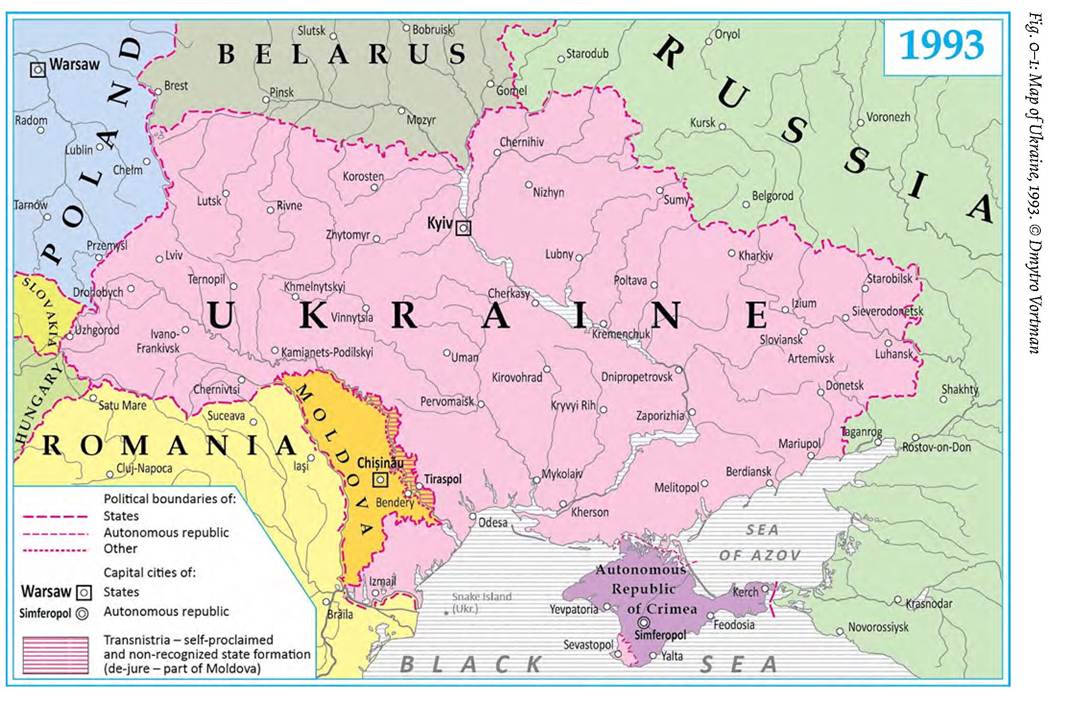
Fig. 0-1. Map of Ukraine, 1993. © Dmytro Vortman, p. 15.
Fig. 1-1. Ukrainian Economy, 2006. Wikipedia Commons, p. 103.
Fig. 1-2. Soil Map of Ukraine. Source: General Directorate of Surveying and Cartography of the Soviet Ministry, GUGK, SSSR, 1977. Downloaded from the European Soil Data Centre (ESDAC), p. 104.
Fig. 1-3. "Wheat Exports of the Russian Empire (including Ukraine), 1861-1913”, Source: FaIkus, M.E., Russia and the International Wheat Trade, 1861-1814, New Series, VoI. 33, No. 132 (Nov., 1966), p. 417, p. 108.
Fig. 1-4. "Donbass - serdtse Rossii." The New York Public Library Digital CoIIections. 1921, p. 111.
Fig. 2-1. The formation of the Russo-Ukrainian border between 1919 and 1928. Courtesy of Stephan RindIisbacher, p. 168.
Fig. 2-2. A prospective pIan of the apartment bIock for Traktorobud 3.1930. TsDAMLUkraIny. F.8, op. 1, spr. 261. Reprintedwith permission, p. 207.
Fig. 2-3. Workers cIub of Shestopark Theatre. New Year's Eve, 1924. Kharkiv HistoricaI Museum. Reprintedwith permission, p. 210.
Fig. 2-4. Workers from the KhoIodnohirs'kyi raion on 1 May 1923. Kharkiv HistoricaI Museum. Reprinted with permission, p. 212.
Fig. 2-5. Father playing the violin, while his son is performing a traditional Crimean Tatar dance Haytarma. Uzbekistan, the 1950s. Photo by MustafaTomak. Courtesy of Nizami Ibraimov archive, p. 250.
Fig. 2-6. The Karabash family in the central park of Simferopol, 1968.
From the family archive, p. 254.Fig. 2-7. Forced eviction from Crimea, the 1970s. From Gulnara Bekirova archive, p. 255.
Fig. 2-8. MusaMamutfuneral. From the book Reshat Dzhemilev,ed., Zhivoy fakel: samosozhzhenie Musy Mamuta (New York: Fond Krym, 1986), p. 257.
Fig. 2-9. “Homeland or Death”. Crimea, 1990. PhotobyValeriyMiloserdov, p. 258.
Fig. 2-10. “Here will be our home, son!”. Crimea, 1991. PhotobyRifatYakupov, p. 259.
Fig. 3-1. Distribution of desirable solutions for the Donbas Conflict (’’Ukrainian Regionalism” Survey, Universityof St. Gallen, 2015-2017), p. 302.
Fig. 3-2. Results of the second ballot for the Ukrainian presidential elections by winning candidate per oblast (2010; 2019), p. 304.
Fig. 3-3. The dynamics of feeling proud for being a Ukrainian citizen, 2002-2020, Ukrainian Society: Sociological Monitoring Survey, p.
305.
Fig. 3-4. Predominant language of communication with various groups, 2017 (’Ukrainian Regionalism” Survey, University of St. Gallen), p.
306.
Fig. 3-5. Preferable geopolitical choice, 2013-2017, Ukrainian Regionalism Survey, p. 307.