The Slavs and the Khazars
The origins of the Slavs
The origins and early development of the Slavs are, like those of other peoples, clouded in uncertainty. The few written references to the Slavs from the earliest period, together with extensive archaeological evidence uncovered in the nineteenth and twentieth centuries, are still insufficient for modern scholarship to provide conclusive answers to many thorny questions concerning their origin, location, way of life, and sociopolitical organization.
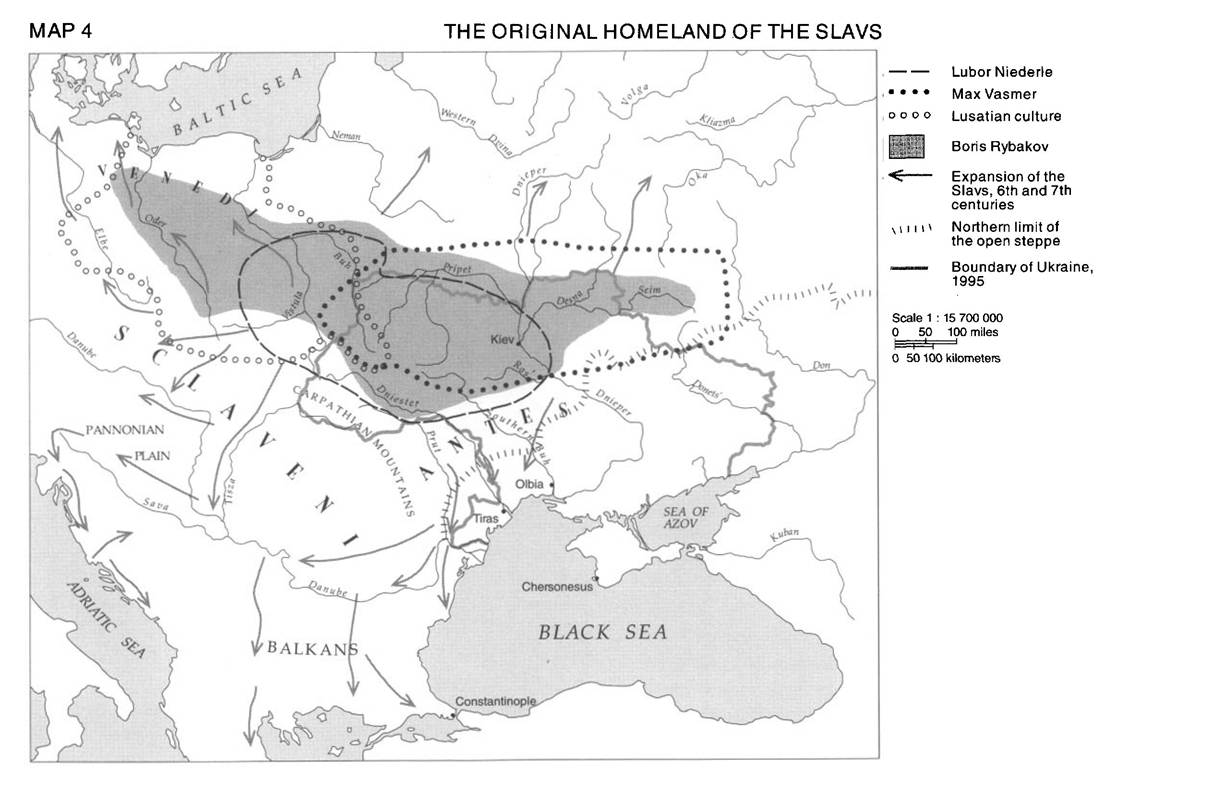
The written evidence about the early Slavs is scanty and consists of little more than brief descriptions of them by the Greek historian Herodotus in the fifth century bce and by Byzantine and Gothic historians (Procopius and Jordanes) in the sixth century ce. Moreover, despite the best efforts of some scholars, the link between the growing body of archaeological data from these early centuries and any particular tribe of people is still a matter of speculation. The only thing that seems certain is that the Slavic peoples and their Proto-Slavic ancestors were present in eastern Europe from at least the first millennium bce. Precisely where in eastern Europe the Slavs had their origin is a question that will probably continue to remain a topic of debate among specialists.The current consensus suggests that the original homeland of the Slavs was located somewhere north of the Carpathian Mountains within a territory stretching from the upper Oder River valley in the west through the upper Vistula and Buh Rivers on to the middle Dnieper River in the east. In modern terms, this means that the original Slavic homeland included some parts or all of central and eastern Poland, southern Belarus, and northwestern Ukraine.
In terms of geography, the Slavic homeland was clearly north of the line that divided the mixed forest-steppe zone from the open steppe farther south - a line that ran diagonally across Ukraine from the lower Prut and Dniester Rivers in the southwest to the upper Donets' River in the northeast. In the mixed forest-steppe zone north of that line, the sedentary agricultural Slavs found a modicum of protection from the aggressive nomadic peoples of the open steppe.