14 Truth in Our Times
“Did it really happen?” “Was it really so bad?” “Is it true that they were so unprepared?” These are the questions I have been receiving again and again in the last few months in connection with the stunning success of the HBO/Sky miniseries Chernobyl (the Ukrainian city of Chornobyl became known to the world in its Russian spelling).
The five-episode television drama took the world of entertainment by storm, becoming history’s most popular miniseries in a few short weeks. It brought to life the tragedy of people who lived through, were affected by and, yes, caused the world’s worst nuclear disaster.My book Chernobyl: The History of a Nuclear Catastrophe, which was released in May 2018, one year before the airing of the miniseries, tells the story of the disaster on the basis of recently released archival documents, which I checked against people’s diaries, memoirs, and interviews. Thus, on the factual level, both the book and I as its author can provide answers to many questions about the accuracy of the miniseries. But the inquiries that I have received in the last few months also made me think about the bigger question of what is true in our current understanding of the Chornobyl disaster, its causes, development, and consequences. That big “truth” about Chornobyl is at the very center of my current inquiry.1
On the one hand, we now know more than ever before about the history of the Chornobyl accident. We are also aware as never before of the dangers that nuclear energy poses to the world. But we are also confused more than ever before about the meaning of the Chornobyl experience and the closely related question of whether we can rely on nuclear energy in our efforts to deal with the challenges of economic growth and climate change. Thie answer to that question requires the attainment of a consensus on what happened in Chornobyl, the consequences of the disaster, and the lessons to be learned from it.
Finding common ground on these issues becomes more difficult with every passing day. We feel overwhelmed by the constant influx of information and find it hard to make sense of competing opinions. It is tempting to stop trusting anyone or limit the circle of trust to a few friends or social-media gurus, creating an echo chamber in which truth cannot be born and nurtured, let alone survive. Meanwhile, the nuclear age meets the post-truth era before our very eyes, testing our capacity to maintain life on the planet.
As “truth” becomes ever more compartmentalized and instrumentalized in the service of individual politicians, regimes, and countries, the threat of nuclear disaster remains global. Our survival in the nuclear age is possible only as a world community but, as noted, this requires a consensus on the facts and their meaning. The “truth” of our time must transcend private, political, and national compartments and become universal. Hiding the truth about problems with Chornobyl-type reactors and ignoring the truth about the flawed Soviet system of government led to the Chornobyl catastrophe; concealing the truth about its scope made the catastrophe much worse; inability to agree on the political and social reasons for the disaster may very well lead to new disasters in the future.
**
There are few places more suitable to start the search for universal truth than the Chornobyl exclusion zone. At its center is a modern-day nuclear Pompeii, the city of Prypiat, devastated by radiation and located only a few kilometers from the Chornobyl nuclear power plant. The city, which had been home to 50,000 construction workers and operators of the plant before the accident, is now completely overgrown with vegetation and inhabited by animals, offering a unique glimpse of what the planet would look like without us. The destruction of Prypiat is a story of the concealment of truth, first about science and technology, then about the scope of the disaster and, finally, about its consequences.
There are good reasons to believe that Prypiat would still be populated by humans and not animals if its inhabitants had known about an accident that happened seven years earlier at another Soviet nuclear plant in the settlement of Sosnovyi Bor, located 50 kilometers from Leningrad, now St. Petersburg. In the fall of 1975 the operators of the RBMK graphite-water reactor—the kind that exploded in Chornobyl—almost lost control of their nuclear “pot.” A meltdown of the reactor and a Chor- nobyl-like catastrophe were avoided thanks only to pure luck and the professionalism of the operators. The reactor became unstable after running for some time at a low power level, and once the operators used control rods to shut down the reaction, they got the opposite of the expected reaction: the power level kept increasing. The operators managed to stop the reaction only by adding control rods manually.
Although a major disaster was avoided, a smaller one occurred. One of the fuel channels in the active zone of the reactor burst, releasing radioactive uranium into the core of the reactor. The management ordered the reactor to be “cleaned” with a release of 1.5 million curies of radionuclides into the environment. One curie suffices to make 10 billion quarts of milk undrinkable, but no one was informed about the release. The accident remained secret and, more important in the long run, its cause—the deficiencies of the reactor, which caused the emergency—remained highly classified. The control rods used by the operators to slow down the reaction were tipped with graphite, causing a spike in the level of the reaction when they entered the active zone. Information about the problem, known in the industry as a “positive void effect,” was kept secret from the operators of similar reactors, including those in Chornobyl.
Since the truth about the Leningrad accident of 1975 was hidden, its lessons remained unlearned. The operators at other Soviet nuclear plants did not know and could not imagine that their reactors were prone to such problems, which might cause them to melt down and explode.
When the next “positive void effect” occurred on the night of 26 April 1986 at the Chornobyl nuclear power plant, the Soviet nuclear industry ran out of luck. The combination of factors such as the inexperienced crew on duty that night at block no. 4 and the rush to complete the test program of the reactor’s turbine before the start of the long weekend turned the “positive void effect” into a disaster that forced the inhabitants of Prypiat out of their city and left a good part of Europe to deal with the consequences of nuclear fallout.The officials, institutions, and services in charge of dealing with the disaster were psychologically or physically unprepared to do so because they lacked information about previous accidents and were not trained to deal with new ones. The firefighters assigned to the power plant were never told that such things could happen and never trained to fight anything but regular fires. Safety instructors were not equipped with radiation counters that could accurately read the levels of radiation released by the explosion, and when they were finally ready to report the actual levels, their bosses were not psychologically prepared to accept their reports.
The director of the Chornobyl nuclear power plant, Viktor Briukhanov, was given two reports on the radiation level soon after the explosion and chose the one that gave significantly lower readings, pushing aside the safety inspector who insisted on the accuracy of his data. Briukhanov, who is somewhat unfairly portrayed in the miniseries as the embodiment of heartless official servility, was in fact a rather compassionate and competent technocrat. Nevertheless, he preferred “alternative facts” to those that turned out to be true, doing so for a variety of reasons, from psychological unpreparedness to deal with the grim reality to a desire to cover up his own mistakes or avoid the wrath of higher-ups about a situation for which he was not responsible and could not directly control.
The Soviet culture of secrecy, which overrode the emerging culture of safety, became a key factor not only in causing the Chornobyl catastrophe but also in magnifying its scope by concealing information about the accident from those most affected by it. The first thing that the KGB did after learning of the explosion was to cut the telephone lines and prevent all unauthorized communication between the power plant and the outside world. Even the members of the state commission sent to Prypiat by the Kremlin to deal with the consequences of the disaster were not allowed to communicate by phone with their families or tell them where they had gone and what they were doing there.
The first terse information on the accident, which was allegedly under control, appeared in a Soviet television broadcast three days after the explosion, and that bulletin was released only because the Swedish authorities had expressed public concern about a possible nuclear accident in the Soviet Union that had sent clouds of radioactivity across Europe, causing safety alarms to go off at Swedish nuclear power plants. It took another ten days for health authorities to start issuing recommendations on what the public at large was supposed to do in order to minimize exposure to radiation.
Mikhail Gorbachev, who first addressed the country about the Chornobyl disaster eighteen days after the accident and waited almost three years to visit the site, explained the official silence by claiming that it had taken a long time for him and others in the leadership to learn what had actually happened and that they were unaware of the true extent of the catastrophe. His second in command, Prime Minister Nikolai Ryzhkov, was more open in his explanation of the cover-up: the authorities were afraid of causing panic. They were also concerned about losing face and compromising the prestige of the Soviet regime and its nuclear program. Those considerations turned out to be more important to the authorities than saving human lives.
The citizens of Prypiat, who could see the exploded reactor building from the windows of their apartments, were evacuated a day and a half after the accident, but only after the decision to do so had been made at the highest level in Moscow.The most horrific example of official callousness in dealing with the accident, coupled with criminal negligence with regard to the lives of citizens, was the May Day parade in Kyiv, ordered by the supreme authorities in Moscow (some sources suggest that the decision was made by Gorbachev personally). They were concerned, first and last, to create the impression that life was going on as usual in the capital of Ukraine, and that Western media claims to the effect that the Chornobyl explosion constituted a real and present danger to Kyivans were groundless. Moscow ignored the protests of local officials about rising levels of radiation and ordered the parade to go on. Among those marching and dancing in downtown Kyiv were folk ensembles and schoolchildren. When the suits in which the schoolchildren trained for their performance and then marched on ι May were checked for radiation, they turned out to be radioactive. We have learned of this from recently released KGB reports: KGB officers oversaw the decontamination of the suits while keeping information about dangerous levels of radiation under wraps.
The truth about the causes and consequences of the Chor- nobyl disaster was fairly well known to the authorities by early July 1986, when Gorbachev convoked a session of the Politburo, the highest decision-making body in the USSR, to discuss the accident, punish the guilty, and decide what to do with the flawed reactors. Gorbachev knew about the design problem with Chor- nobyl-type reactors but remained silent about it, since an admission would have jeopardized the entire Soviet nuclear program, a good part of which relied on Chornobyl-type reactors. Gorbachev believed that he simply lacked sufficient funds to replace the dangerous reactors with safer ones. “Human error,” meaning the managers and operators of the reactor, was declared the sole reason for the explosion.
Publicly admitting mistakes did not seem to be an option until Valerii Legasov, one of the key characters both in my book and in the miniseries, began the process of unveiling the truth about Chornobyl in his report to a conference called by the International Atomic Energy Agency in August 1986. People in Legasov’s industry treated his action as a betrayal, but in fact even he was dealing in half-truths. He admitted the problems with Soviet safety culture and pointed to mistakes and safety violations committed by the personnel of the power plant, especially the operators in charge of the reactor during the explosion. Yet he remained silent about the “positive void effect” and the design problems with the reactors.
The real-life Legasov, unlike his character in the miniseries, never visited the trial of Viktor Briukhanov and other managers held responsible for the accident. It was a classic show trial designed to hide a significant part of the truth about Chornobyl and staged to reinforce the official party line: the managers and operators were solely responsible for the accident. Newly released KGB documents suggest that the KGB placed its agents in the prison cells of the accused to collect information on their mood and defense strategies and convince them to adopt the line favored by the authorities at their trial. Thiis was especially important in the case of Anatolii Diatlov, an intelligent but arrogant technocrat and one of the key characters in the miniseries, who based his defense on the argument that, while he had indeed violated some safety rules, the true culprits were the designers of the reactor. What Diatlov said about the design flaws of the reactor in the Chornobyl courtroom remained secret from the public. The so-called “open” trial was conducted in a “closed” zone. Back in the summer of 1987, as is still the case today, one needed special permission to visit the city of Chornobyl, where the accused were put on trial.
Valerii Legasov committed suicide in April 1988, one day after the second anniversary of the Chornobyl disaster, crushed psychologically by the ire of his fellow scientists about his partial exposure of industry secrets. The industry’s critical problems would remain under wraps for another three years, to be revealed only in the dying days of the Soviet Union, a country that was good at keeping secrets and bad at learning from mistakes.
**
There is general agreement among historians of the Soviet Union that the Chornobyl disaster contributed to profound change in Soviet politics and society by encouraging, if not forcing, Mikhail Gorbachev to launch his policy of glasnost or openness. The Soviet media finally got the right to deliver bad news and discuss economic, social and, eventually, ecological problems besetting Soviet society in the last years of its life. It is indeed hard to overestimate the role of the Chornobyl disaster in finally opening public debate, first on ecology and then on politics, although it would be more accurate to state that the change was caused and promoted not so much by the disaster itself as by the government’s mishandling of its consequences, its addiction to secrecy, and its readiness to lie to its own people.
Glasnost began in 1987, the year after the accident, and was directly related to it. As Gorbachev, bruised by the Chornobyl debacle, began to introduce the first elements of glasnost into the Soviet media and public debate, early ecological activists concerned about the consequences of the disaster became the first to take advantage of the new policy and push its boundaries. Discovering the truth about Chornobyl became the life mission of the first Soviet ecological activists, among whom was Iurii Shcherbak, the author of the first oral history of the disaster. Shcherbak, who worked on his collection of interviews in the Chornobyl exclusion zone, could not publish it in his native Kyiv but managed to do so in Moscow, where control over information about the disaster was not as strict as in Ukraine and Belarus. Thiose were the republics most affected by radiation, where the authorities believed they had most to lose by initiating public debate on the disaster. The publication of Shcherbaks book in the liberal Moscow journal Iunost' (Youth) in 1987 was one of the first systematic attempts to get at the truth of what had happened at the station before, during, and after the explosion.
In 1988, Shcherbak founded Green World, an ecological association that would become the first independent political party in Ukraine in the following year. He and his friends turned their attention to the plight of areas especially hard hit by the disaster but officially pronounced safe for living and consumption of crops. The decision to draw a circle of 30 kilometers around the plant was made in early May 1986, long before the authorities knew what areas had been affected by the Chornobyl fallout. Meanwhile, radiation was spread by the wind and brought down to earth by precipitation. This meant that while some parts of the exclusion zone remained fairly clean, others, well outside the zone—sometimes as distant as the Austrian Alps—were affected. As the authorities ordered the evacuation of more than 100,000 people from the exclusion zone, some of the evacuees were settled in places even more affected by radiation than their native villages.
One of the areas that suffered most but received little government attention or assistance was the Narodychi district, located west of the reactor and outside the exclusion zone. Its fate and the future of its citizens became a concern of Alla Iaroshyns- ka, a young journalist in the city of Zhytomyr, southwest of the Chornobyl nuclear power plant. She accidentally came across information suggesting that the authorities had built and were continuing to build housing for refugees from the exclusion zone in the Narodychi district. A kindergarten and school building were constructed in one of the most polluted villages. Iaroshynska wrote about her discovery, but her articles were never published, and she was subjected to intimidation by party officials in her city. Alerted by the disturbing news about Narodychi, Shcherbak helped to produce a documentary film about the area, but it had little chance of being shown—information about radiation fallout was considered a state secret.
It took the first relatively free elections to the Soviet parliament in the spring of 1989 for Iaroshynska, Shcherbak and others to make their concerns known to society at large. Both were elected to parliament, where they pushed, along with dozens of other activists-turned-politicians, to carry out their agenda of truth about Chornobyl. To that end, they made use of Soviet television channels broadcasting debates in the newly elected parliament. The secret of Narodychi was revealed, becoming an information bomb that destroyed what little trust the public still had in the government. Appalled by this development, Soviet officials maintained that the government was doing all it could to protect people, while activists such as Iaroshynska and Shcherbak were exploiting the tragedy to achieve their narrow political goals.
The anti-nuclear mobilization, powered by the demand for the government to tell the truth about Chornobyl, created fertile ground for the formation not only of the first political parties in the Soviet Union but also broader movements, “popular fronts” that raised the banner of political independence from the USSR in the Soviet republics. In Lithuania, the home of the Ignalina nuclear power plant—a twin station of Chornobyl where most of the HBO/Sky miniseries was shot—20,000 people created a living chain to protest the continuing operation of the power plant. Out of that protest came Sajudis, the movement for Lithuanian independence. In March 1990, Lithuania became the first Soviet republic to declare full independence from the USSR.
In Ukraine, the anti-nuclear mobilization produced not only Iurii Shcherbaks Green World but also Rukh, the Ukrainian equivalent of Sajudis, an organization that initially advocated perestroika but then shifted gears to demand the independence of Ukraine. Rukh was led by people who had cut their teeth in politics as ecological activists. One of them, Volodymyr Iavorivsky, became head of the newly created Chornobyl commission in the Ukrainian parliament. He also happened to be the first to read the declaration of Ukrainian independence from the floor of that institution in August 1991. The subsequent referendum on Ukrainian independence, held on ι December 1991, produced a majority of more than 90 percent in favor. That pretty much finished the Soviet Union, which was dissolved on 8 December 1991 by the leaders of the three republics that had suffered most from the Chornobyl disaster.
The anti-nuclear mobilization in Lithuania, the first republic to officially leave the Soviet Union, and Ukraine, the republic whose decision sounded the death knell of the USSR, indicate the importance of the Chornobyl nuclear disaster not only in bringing elements of democracy to the Soviet Union but also in putting an end to that nuclear superpower. The Soviet Union collapsed under the weight of its mismanaged economy and mounting social problems, but also under the weight of the secrecy and lies surrounding Chornobyl. It was not the explosion of the reactor itself that did in the USSR but official efforts to hide the truth about the disaster and its consequences from the population.
The Soviet Union simply could not handle the truth about Chornobyl. The country that had developed the reactor, let it explode, and then dealt with the technological problems caused by the disaster much better than with the environmental and, most particularly, the human and social problems produced by it is no longer to be found on the world map. But the legacy produced by it will stay with us for generations to come. The new sarcophagus over the damaged reactor no. 4, completed in 2019 by an international consortium of companies at a cost of 1.5 billion euros, is designed to stay in place for one hundred years. After that a new solution and new investment will be required, as the spent fuel in the reactor will present a danger for centuries if not millennia to come.
**
What stands between us and the truth about Chornobyl today? Let us begin by noting the positive developments in the debate about the meaning of Chornobyl for the future of nuclear power. There is no longer a Soviet Union to monopolize information. Instead, we have as many parties and voices in the debate as one can imagine, as well as freedom to discuss different versions of the events and their possible consequences.
The debate on Chornobyl has become international on more than one level. While Ukraine houses the damaged reactor, its ownership is anything but absolute or exclusive, as even the thirty-kilometer exclusion zone is now divided between two sovereign states, Ukraine and Belarus. Besides, the money and expertise that were mobilized to construct the new sarcophagus and will be needed to run it for decades to come were supplied from abroad. The consequences of the disaster have been felt by many European countries, making them active participants in the debate. And the debate itself ranges far beyond Europe, especially after the Fukushima disaster. Almost anyone might be affected by the next nuclear catastrophe, and everyone looks at Chornobyl to grasp how that catastrophe might be avoided or, should that prove impossible, how its consequences could be mitigated.
Does this mean that we are closer to the truth about Chor- nobyl, meaning the understanding of its causes and consequences? I would suggest that we are. The internationalization of the debate and the progress of science allow us to better understand the causes of the accident, which should help to avoid future catastrophes. We also know more about the long-term impact of low doses of radiation on human beings and the environment. But there is still a long way to go, as the available data are quite fragmentary and opinions on the number of people affected extremely diverse, with estimates ranging anywhere between 4,000 and more than 90,000. The impact of the disaster on mental health, which includes emotional, psychological, and social well-being, is hard to assess, although we know that in self-perception the Ukrainians consider themselves the least healthy nation in Europe.
Thus, we are now better informed but want to know much more, and theoretically the openness of the debate should help in that regard. The irony is that technological progress creates unlimited possibilities for tampering with today’s “openness,” making it even more difficult to establish the “truth” about Chornobyl and assess the benefits and drawbacks of nuclear power. What the public thinks about Chornobyl and nuclear power is extremely important, since it is the public that votes in elections and influences political decisions on matters of energy and ecology. But the arrival of the age of “alternative facts” and so-called “post-truth,” engendered by the explosion of social media and the resulting crisis of the mainstream media, makes informed debate extremely difficult. Uninformed opinion flourishes, as do conspiracy theories, with the result that science finds itself under attack, unable to win a fight without rules in a world shaped by Twitter.
Let me present a couple of examples of the ease with which conspiracy theories vitiate meaningful debate about Chornobyl and the pros and cons of nuclear energy. In 2015, The Russian Woodpecker, a documentary that promotes an “alternative” version of the Chornobyl explosion, received the World Cinema Documentary Grand Jury Prize at the Sundance Film Festival, lending international recognition and legitimacy to what is in essence a conspiracy theory of the disaster. The film introduces and promotes the view that the Chornobyl explosion had something to do with the super-secret Soviet Duga radar system, built a few kilometers away from the plant and abandoned after the disaster. I cannot count the number of questions raised about the possibility that it was the Soviet military that blew up the Chornobyl reactor.
If The Russian Woodpecker encourages the viewer to seek the causes of the accident in a secret Soviet military program, a new Chornobyl miniseries announced by the Russian television channel NTV points a finger at CIA operatives. The Russian production is first and foremost a response to the enormous success of the HBO/Sky Chernobyl drama, which received substantial but mostly negative attention in Russia. Many are upset that it was the British and Americans, not the Russians, who were the first to tell the world a story that the Russians consider their own in such epic fashion. Others saw the British-American production as an attack on the prestige of the Russian state in its Soviet incarnation or as a Western plot to undermine Rosatom, the Russian monopoly enterprise producing reactors and equipment for the nuclear industry, and its prospects of obtaining lucrative contracts outside Russia.
While the effort of the Russian miniseries to pin the blame for the Chornobyl disaster on the CIA strikes one as bizarre, there is little doubt that it will gain currency in Russia. The KGB seriously considered such a possibility immediately after the explosion, and attacks on the West for political exploitation of the disaster were commonplace in the Soviet media for weeks and months afterwards. Ironically, Mikhail Gorbachev, the father of glasnost himself, led the way in anti-Western propaganda at the time. Almost two-thirds of his first address to the country on the Chornobyl catastrophe, which he delivered in mid-May 1986, consisted of attacks on the United States and its Western allies. It would appear that when it comes to the nature of debate in Russia, we have come full circle to the beginning of our story about the pursuit of truth concerning Chornobyl. In Moscow today, as in 1986, before Gorbachev’s glasnost and perestroika, the main values to be promoted and defended are the prestige of the state and its nuclear program, while the main enemy from whom those values must be protected is once again the West.
Critics of the HBO/Sky miniseries point to the inaccuracies in the miniseries’ portrayals of the individual episodes and characters as well as misrepresentation of some of the realities of the Soviet life. They are often correct. But what is missed in that critique of the television drama is that the creators of the HBO/ Sky Chernobyl did a much better job of accurately recreating and visualizing that reality than any other Western and most postSoviet television productions. While making mistakes here and there, they grasped the big truth about the political and social conditions that caused Chornobyl better than any other filmmakers before them. That masterful and evocative presentation of the big picture is the main contribution of the miniseries to our common understanding not only of the Chornobyl story but also of the challenges we face together as a world community in dealing with nuclear energy.
Today we are witnessing a global revolt against globalization and a revival of populism and nationalism reminiscent of interwar Europe. The “America First” sentiment in the United States, Brexit in the United Kingdom, and Putinism in Russia are aspects of a major shift away from the universal and back to the particular. Many look at the world around us from ever more narrow vantage points, geographic, political, social, and cultural. But nuclear disasters recognize no international, social, or cultural borders. They affect people and countries that had nothing to do with the construction of this or that nuclear plant, and their consequences stay with the human race forever—after all, the half-life of the plutonium-239 released by Chornobyl and spotted in Sweden is 24,000 years.
An essential truth about Chornobyl is that we cannot live with conflicting “truths” about the same event created and disseminated within isolated national, social, or cultural spaces. It was just such “truths” that created the monstrous Chornobyl disaster: authoritarian control over economy and society, lack of free discussion and distribution of scientific information, and disregard for human life and health in the pursuit of allegedly higher economic or political goals, to name a few. Improving reactors and making them safer is important but not sufficient. We must reach agreement on the political, economic, and social conditions that produced disasters in the past if we are to prevent future catastrophes that may threaten the existence of humankind as a whole.
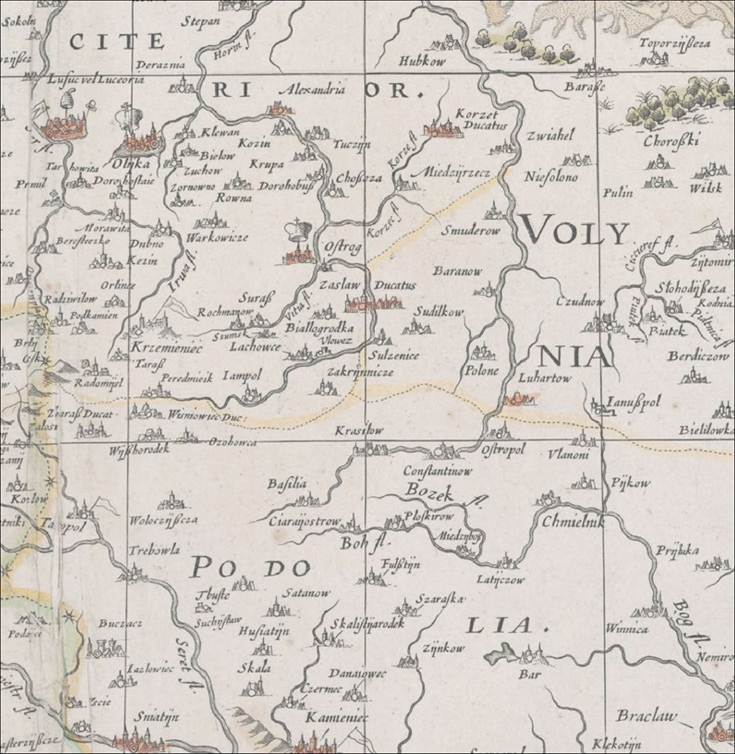
Figure 1. Fragment of Radvila map with depiction of Volhynia and area on the right bank of Dnieper River referred to as “Vkraina.” Joan Bleau, Le The atre Du Mondou Novel Atlas (Amsterdam, 1649).
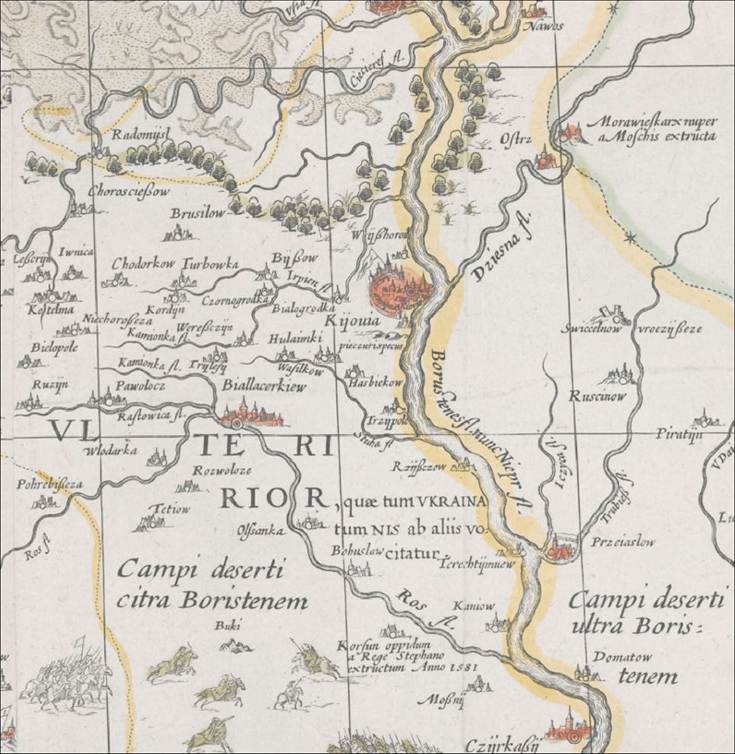
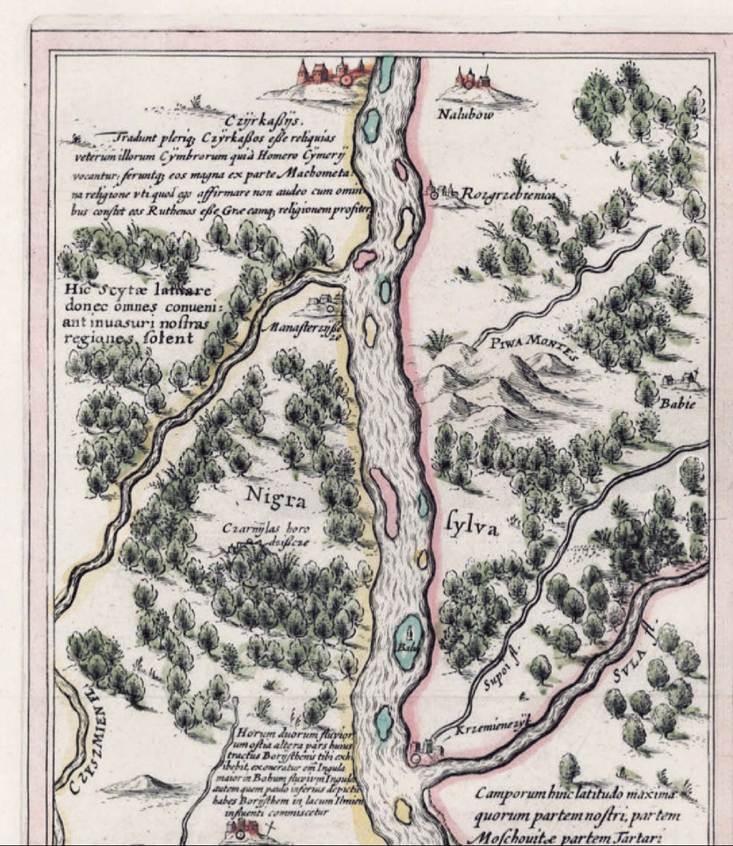
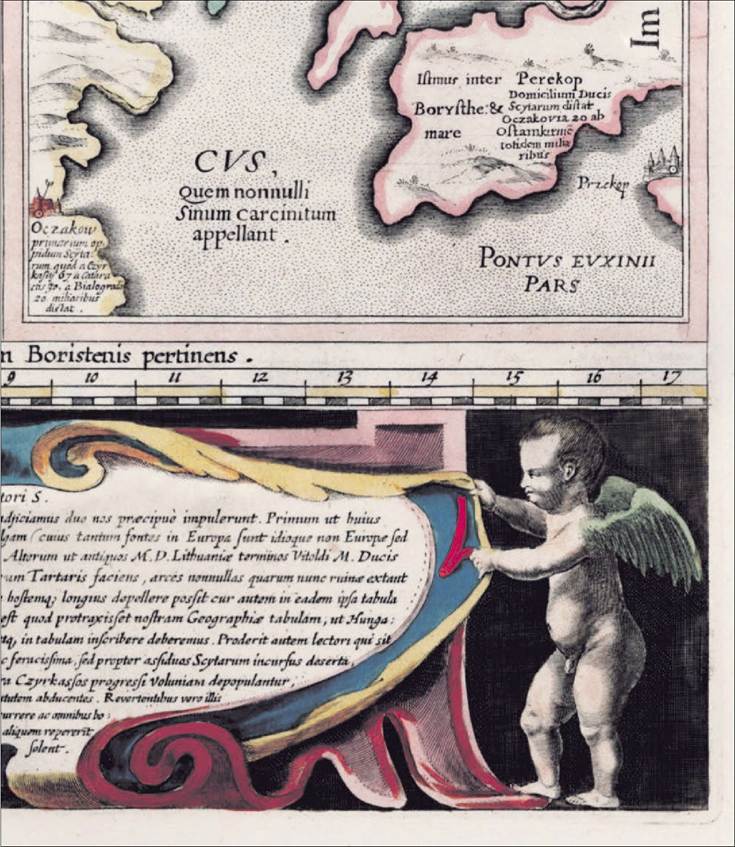
Figure 2. Fragments of Radvila map depicting part of the Dnieper River with Cossack settlements. Joan Bleau, Le Theatre Du Mondou Novel Atlas (Amsterdam, 1649).
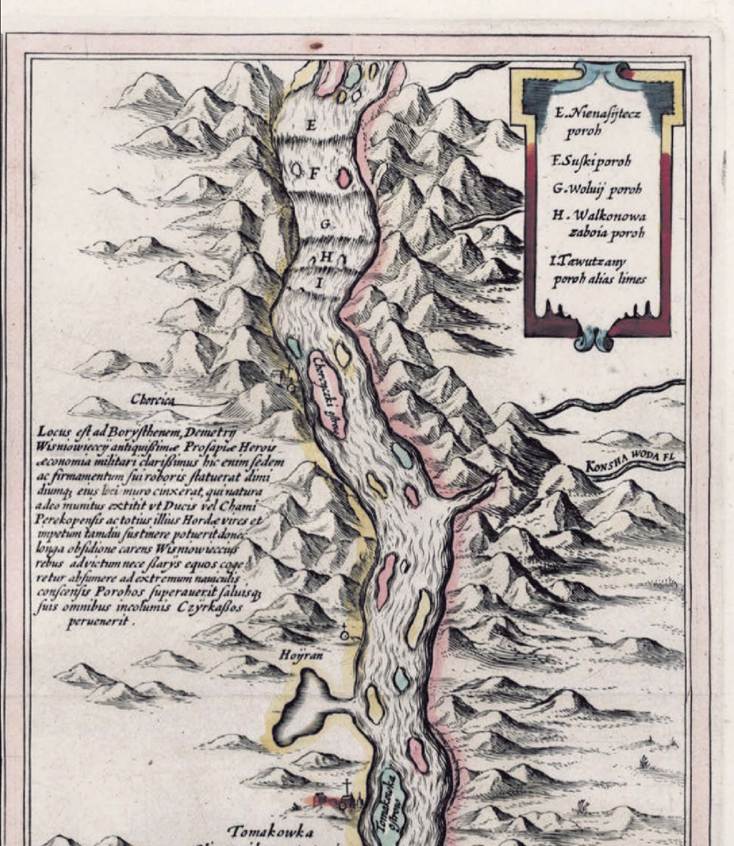
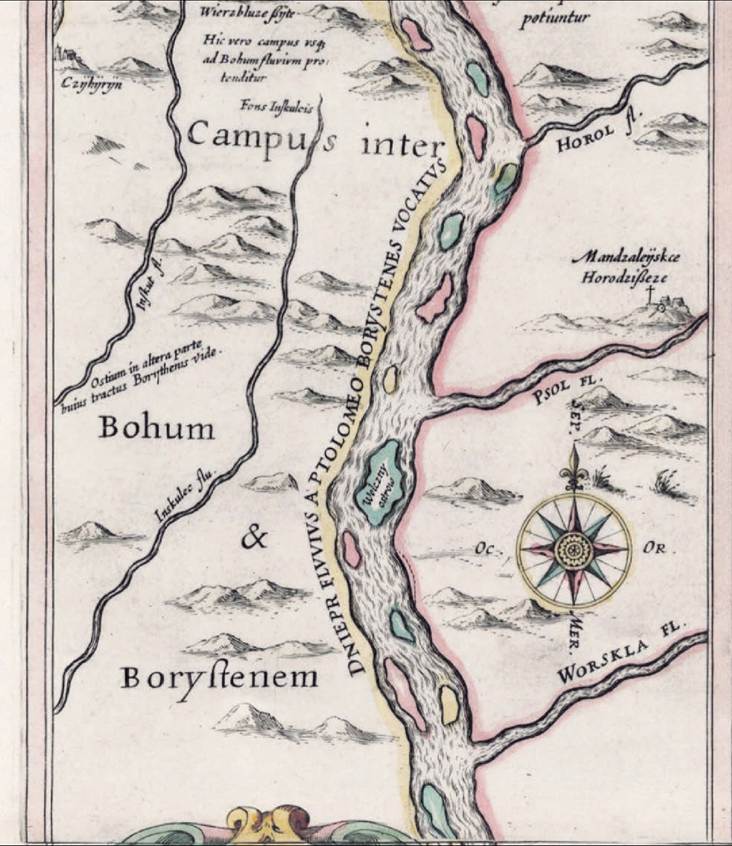
Figure 2, cont.
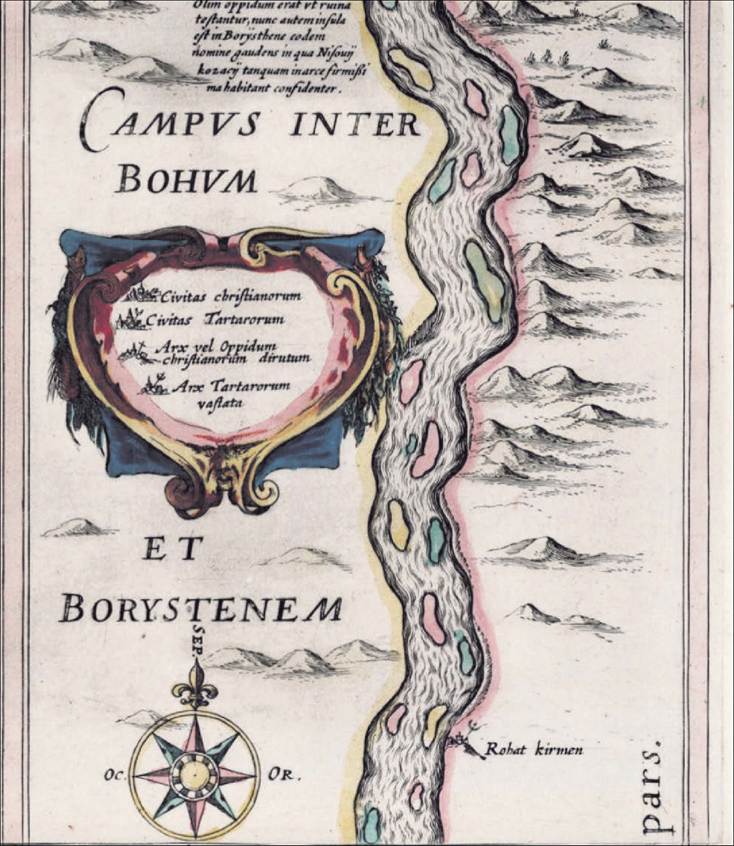
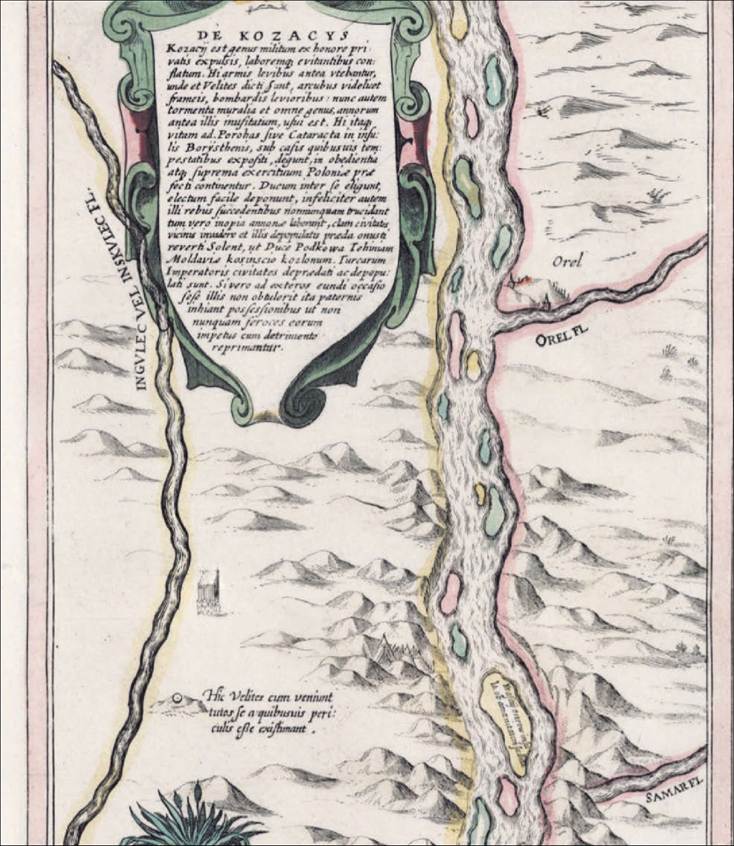
Figure 2, cont.
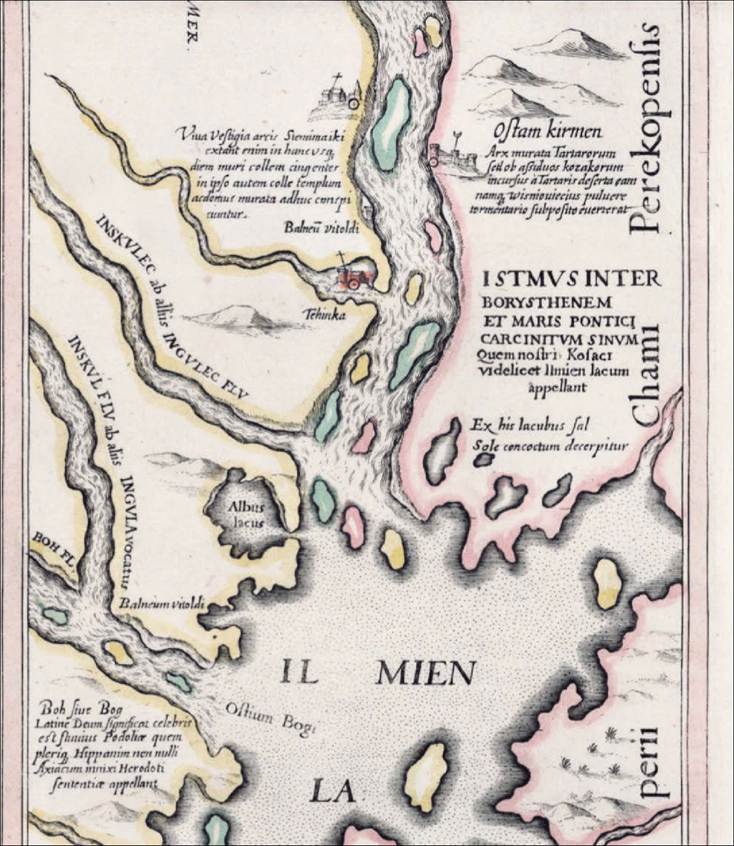
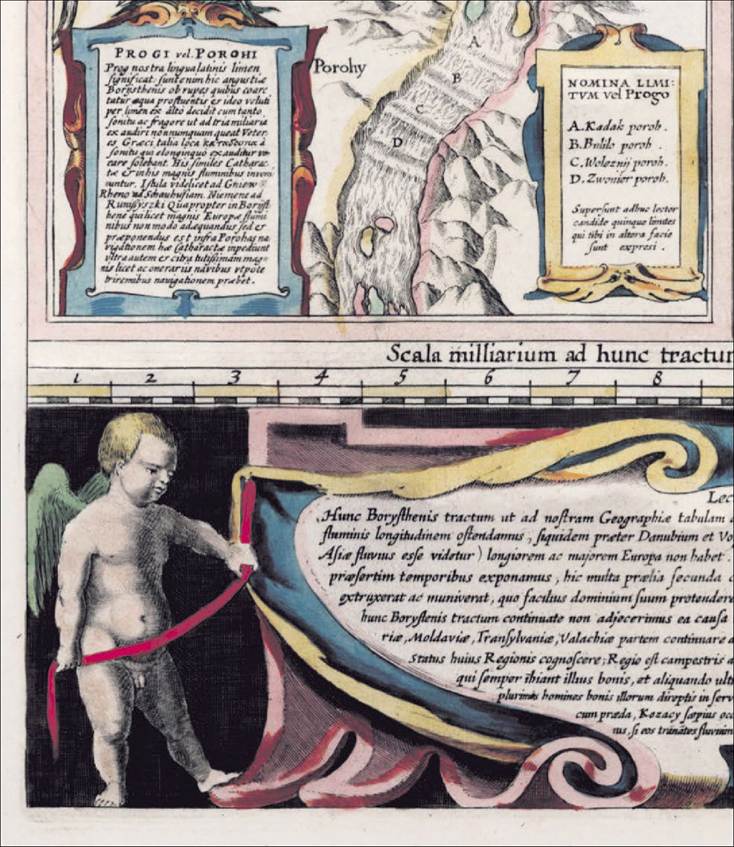
Figure 2, cont.
PLOKHY. THE FRONTLINE
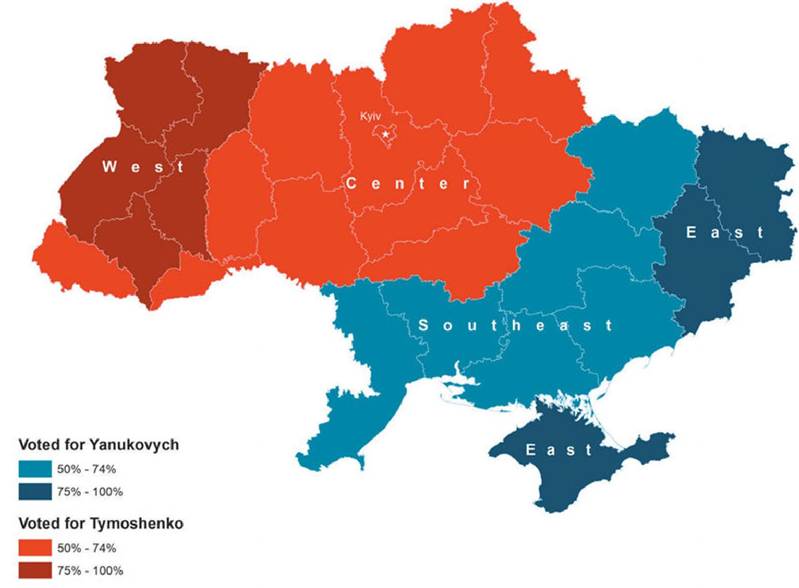
Map і. Presidential election in Ukraine, 2010. Map source: MAPA: Digital Atlas of Ukraine. Ukrainian Research Institute, Harvard University.
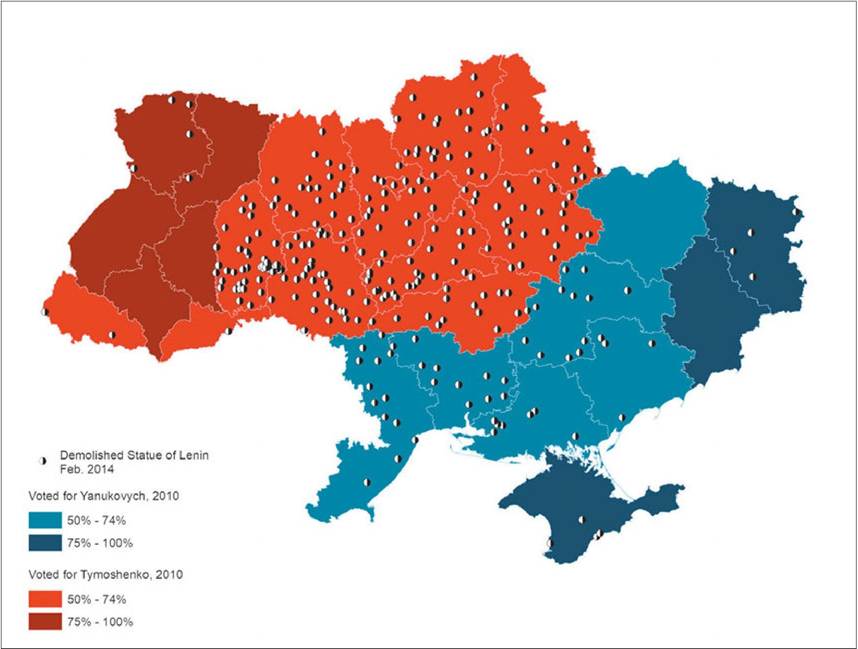
Map 2. Demolition of Lenin statues and results of presidential election. Data source: Den. Map source: MAPA: Digital Atlas of Ukraine. Ukrainian Research Institute1Harvard University.
2l8
PLOKHY. THE FRONTLINE
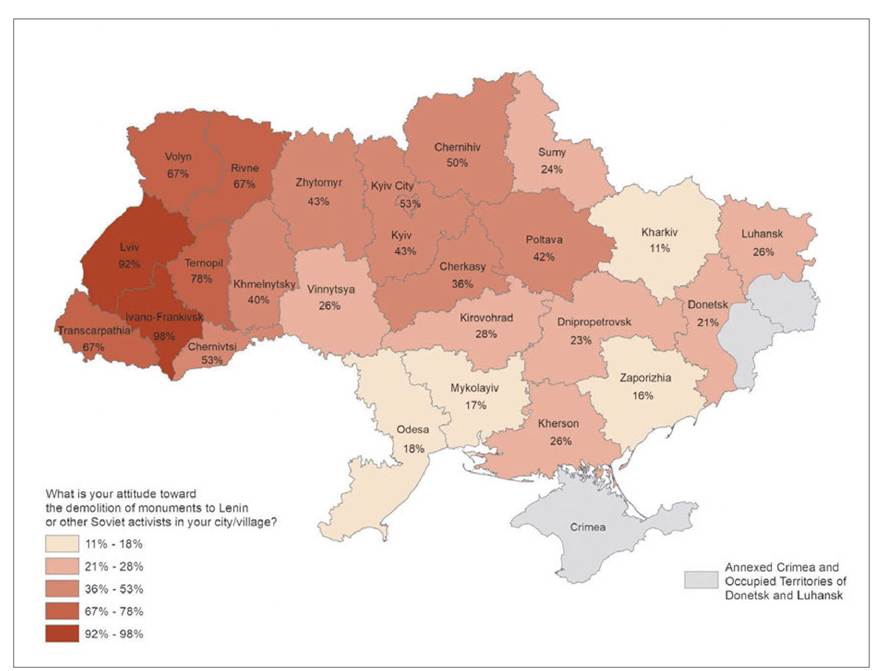
Map 3. Support for the demolition of Lenin statues, March 2015. Map source: MAPA: Digital Atlas of Ukraine. Ukrainian Research Institute, Harvard University.
біг
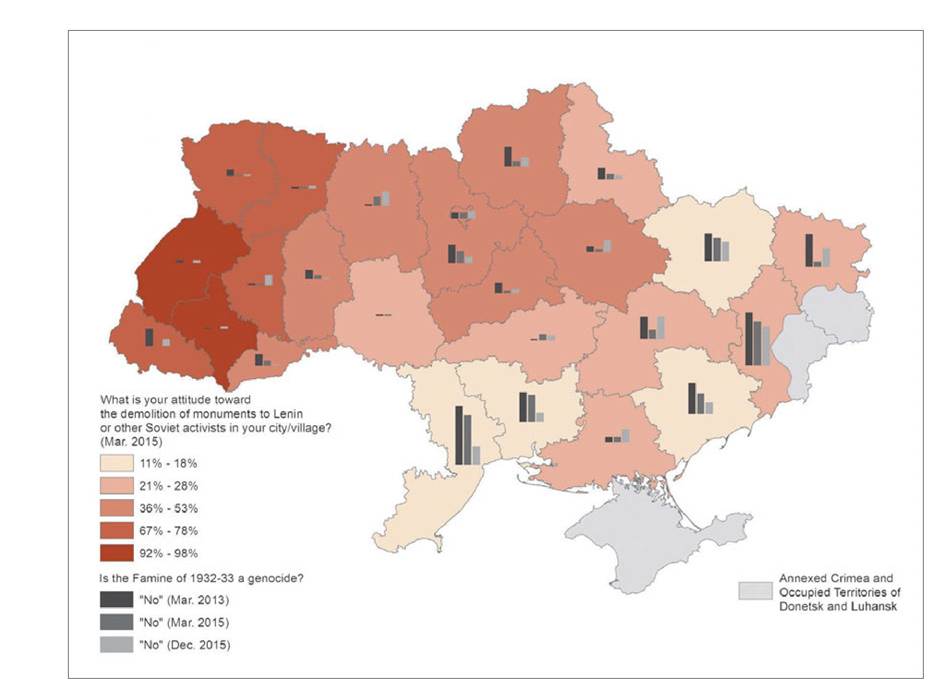
Map 4. Demolition of Lenin statutes and the Holodomor as genocide. Map source: MAPA: Digital Atlas of Ukraine. Ukrainian Research Institute7Harvard University.
MAPS
220
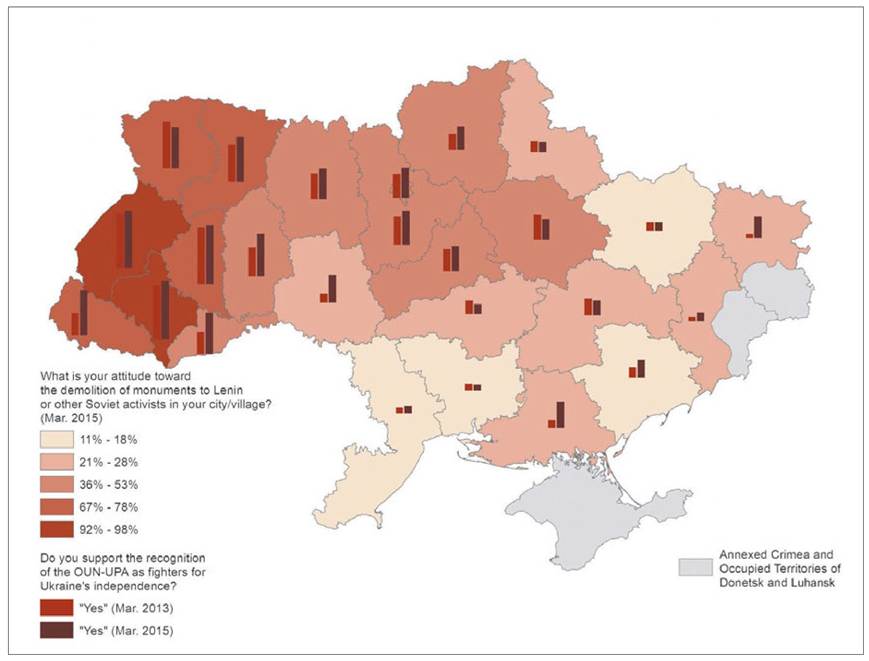
Map 5. Demolition of Lenin statues and recognition of the UPA. Map source: MAPA: DigitalAtlas of Ukraine. Ukrainian Research Institute, Harvard University.
PLOKHY. THE FRONTLINE
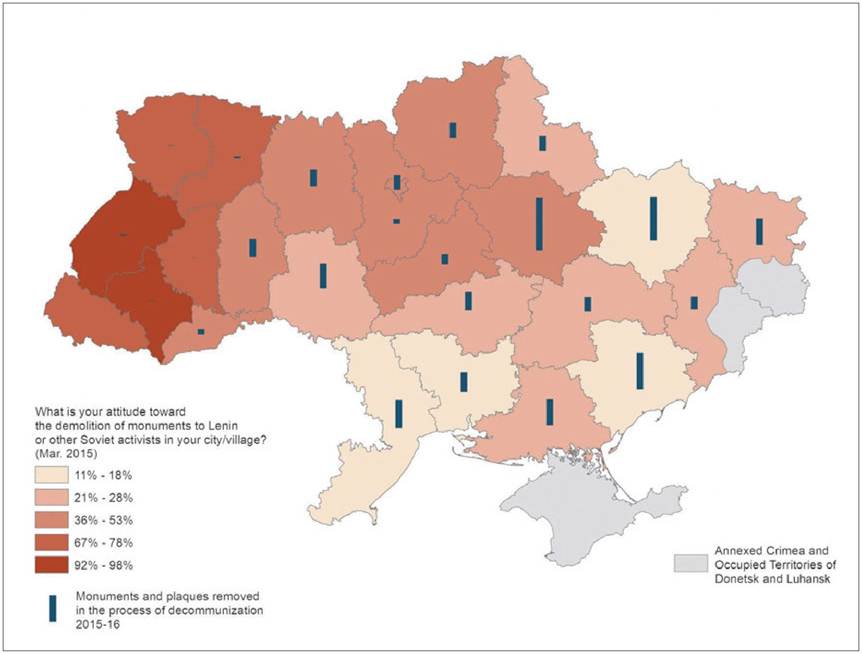
Map 6. Demolition of Lenin statues and removal of monuments. Map source: MAPA: DigitalAtlas of Ukraine. Ukrainian Research Institute, Harvard University.
ZZZ
PLOKHY. THE FRONTLINE
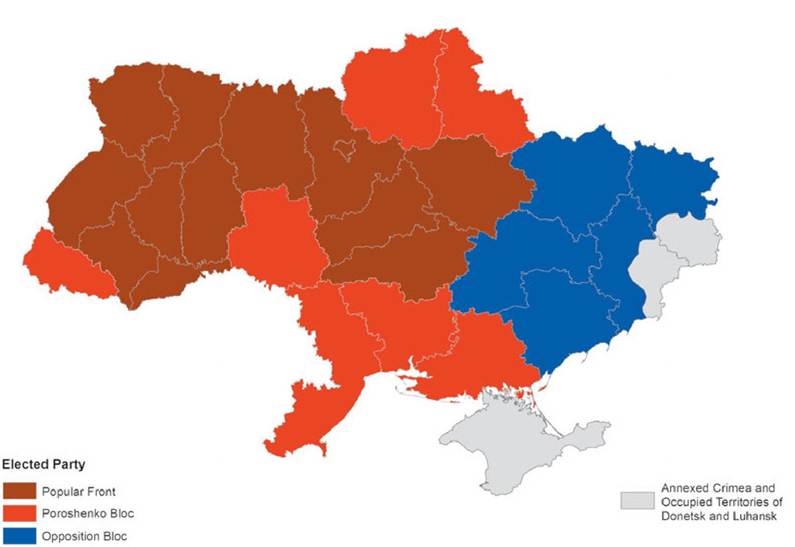
Map 7. Parliamentary elections, 2014. Map source: MAPA: Digital Atlas of Ukraine. Ukrainian Research Institute, Harvard University.
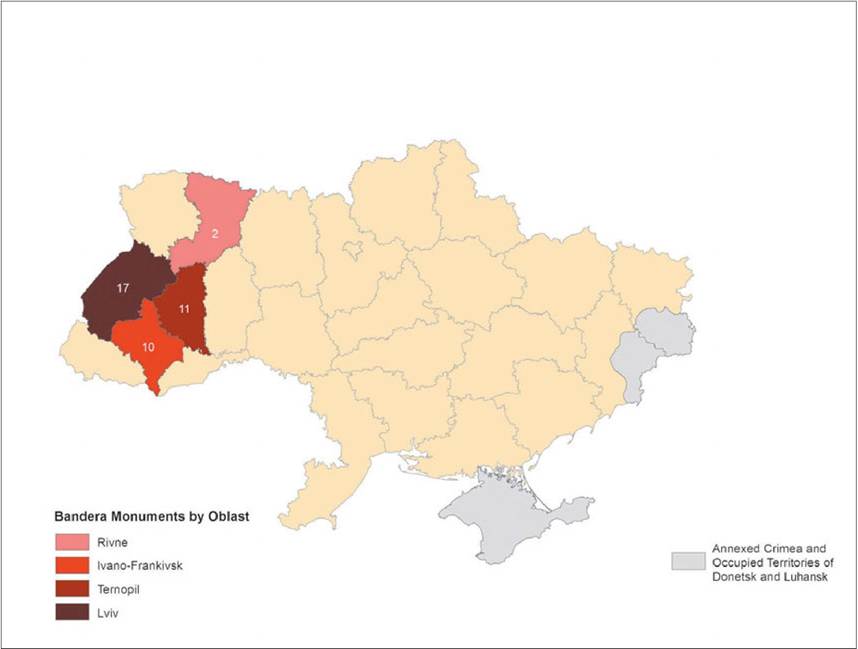
Map 8. Stepan Bandera monuments, 1991-2016. Data source: DyvysJnfo. Map source: MAPA: Digital Atlas of Ukraine. Ukrainian Research Institute, Harvard University.
224
PLOKHY. THE FRONTLINE
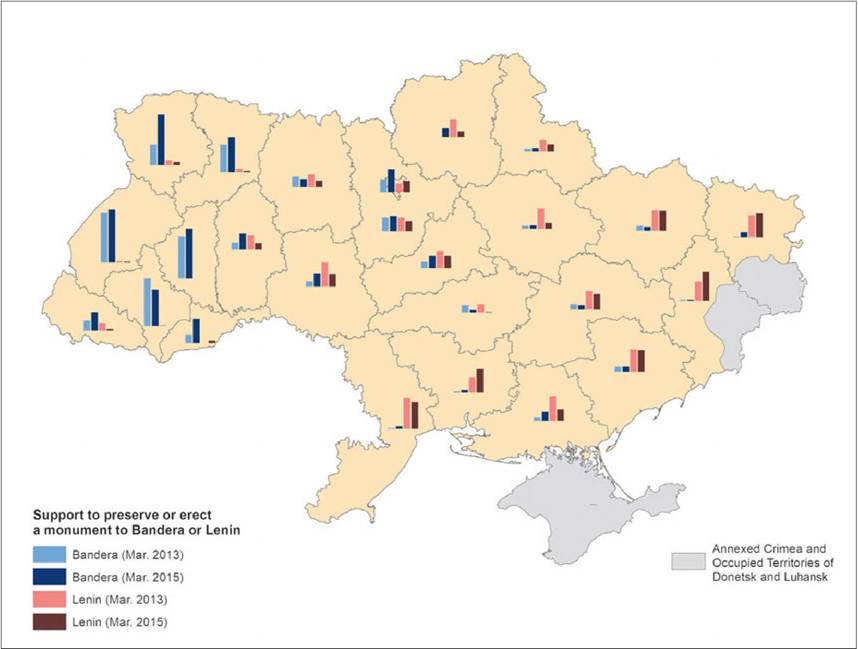
Map 9. Support for Bandera and Lenin monuments. Map source: MAPA: DigitalAtlas of Ukraine. Ukrainian Research Institute, Harvard University.