Fungal infections
Dermatophytic fungal infections respond well to imidazole creams. Oral candida is often asymptomatic in its early stages and may not require treatment. In more severe infections local treatment with frequent nystatin suspension, or pastilles, or amphotericin lozenges can be used.
Systemic treatment with oral ketoconazole or fluconazole daily is required for more severe oropharyngeal and oesophageal candidiasis. Long-term maintenance treatment may be required to prevent recurrences, and liver function tests should be monitored. Clinical resistance to treatment can occur and in the case of fluconazole may be related to emerging candida species that are less sensitive to fluconazole or to Candida albicans-res'istant strains. Intermittent therapy rather than maintenance may be a more appropriate strategy to reduce this risk but has yet to be assessed in a large controlled trial. Itraconazole solution has been found to be useful in cases of clinical resistance and this may be related to its topical action, better absorption and greater spectrum of activity.Vulvovaginal candidiasis can be a recurrent problem in women and should be treated either with topical agents (clotrimazole or miconazole pessaries and cream) or single high dose fluconazole.
Cryptococcal meningitis is treated with either fluconazole or amphotericin B with or without flucytosine. A large comparative study has shown that the overall mortality was similar in both treatment groups. However, there were more early deaths in the fluconazole group, and amphotericin sterilised the cerebrospinal fluid more rapidly but fluconazole was better tolerated. There was a 20% mortality and the factors predictive of death were an abnormal mental state, a cryptococcal antigen titre above 1 024 and a white cell count below 0.02 ? 109∕l in the cerebrospinal fluid.
Physicians will probably therefore prefer to treat patients with these poor prognostic markers with amphotericin rather than fluconazole. With a 20% mortality irrespective of what treatment is used it is clear that improvements in treatment are required.Maintenance treatment is required in those who remain severely immunosuppressed, as replase is common. Fluconazole (200 mg/day) was more effective than amphotericin B (1 mg/kg/week) in a large randomised study. The comparative efficacy of higher doses of amphotericin maintenance treatment is unknown. Liposomal preparations of amphotericin B may be useful, particularly in patients at risk of renal toxicity. Controlled studies of high doses of fluconazole suggest greater efficacy. As with other severe opportunistic infections, immune reconstitution following HAART will allow safe discontinuation of secondary prophylaxis regimens.
Amphotericin B is still the mainstay of treatment of other systemic fungal infections. Itraconazole has shown to be effective in induction and maintenance treatment of disseminated histoplasmosis.
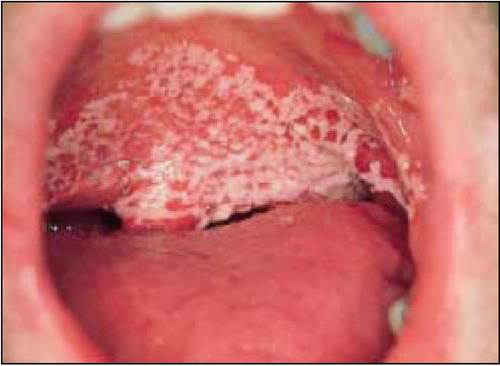
Figure 9.7 Oral candida
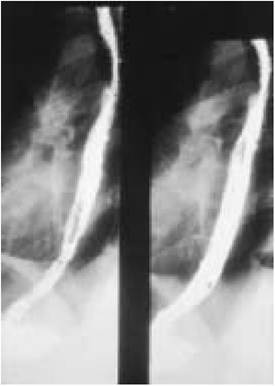
Figure 9.8 Barium swallow: mucosal ulceration secondary to oesophageal candida infection