Nutritional Deficiencies as a Factor in Left Ventricular Dysfunction
Nutritional deficiencies are common in HIV infection and may contribute to ventricular dysfunction independently of HAART. Malabsorption and diarrhea can both lead to trace-element deficiencies which have been directly or indirectly associated with cardiomyopathy [34-36].
Selenium replacement may reverse cardiomyopathy and restore left ventricular function in selenium-deficient patients [34-36]. HIV infection may also be associated with altered levels of vitamin B12, carnitine, growth hormone, and thyroid hormone, all of which have been associated with left ventricular dysfunction [36].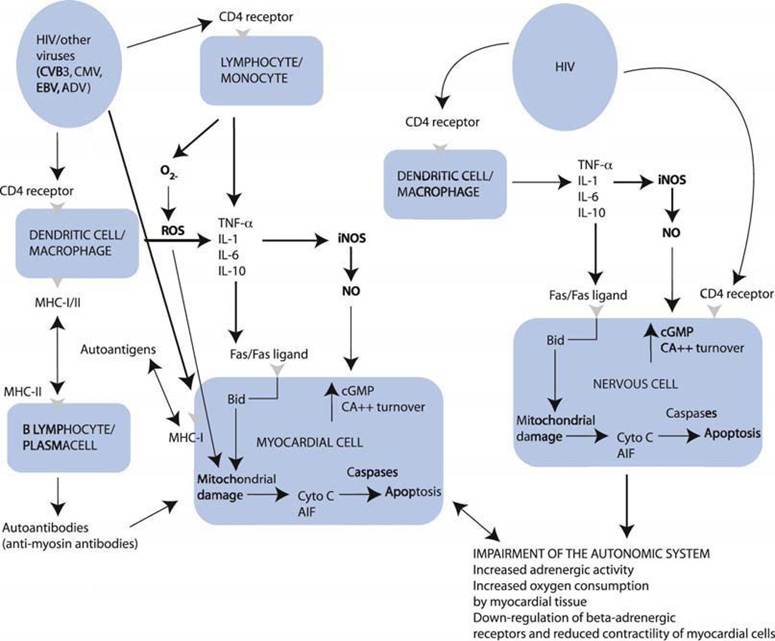
Fig. 6 The possible pathogenic mechanisms involved in the development of HIV-associated cardiomyopathy and encephalopathy and their relationship. The infection of dendritic cells, of CD4 lymphocytes, and of myocardial or neuronal cells by HIV-1 or by other viruses may be responsible for the release of specific cytokines (TNF-α, IL-1, IL-6, IL-10) that activate the inducible form of nitric oxide synthase (iNOS). The interaction between cytotoxic T lymphocytes and the receptoral complex Fas/Fas ligand located on the surface of the target cell may cause mitochondrial damage with release of mitochondrial pro-apoptosis factors-cytochrome c, apoptosis inducing factor (AIF). Similar mitochondrial damage may be caused by reactive oxygen species (ROS) released by activated lymphomonocytes.The interaction between autoantigens and major histocompatibility complex (MHC) molecules on the surface of dendritic cells/macrophages, of myocardial cells (MHC-I), and of B lymphocytes (MHC-II) determines the production of autoantibodies (e.g., alpha-antimyosin) that are responsible for direct cellular damage. The neuronal damage, specifically the impairment of the autonomic system, may enhance the functional damage to myocardial cells because of increased adrenergic activity and down-regulation of beta-adrenergic receptors. CVB3, coxsackievirus B3; CMV, cytomegalovirus; EBV, Epstein-Barr virus; ADV, adenovirus; Ca++, calcium; cGMP, cyclic guanine monophosphate; Bid, a protein of the bcl 2 family involved in apoptosis. (From the Lancet [20], with permission from Elsevier)