Skin and mouth problems
Many skin problems occur in patients with HIV infection (Box 4.5). These may represent exacerbations of previous skin disease, or a new problem. Identical skin conditions occur in HIV-negative persons.
However, in the immunocompromised, these common conditions may be more severe, persistent and difficult to treat. Many minor opportunistic infections (Group IVC2) manifest themselves on the skin and in the mouth. Seborrhoeic dermatitis is frequently seen and usually presents as a red scaly rash affecting the face, scalp and sometimes the whole body. This condition often responds well to 1% hydrocortisone and antifungal cream.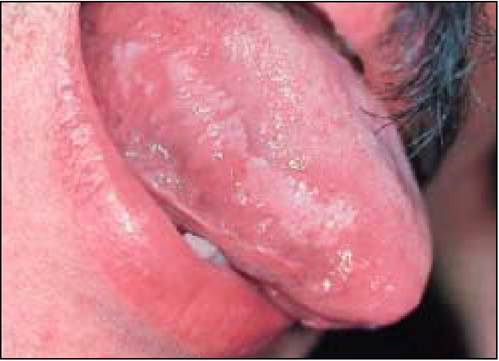
Figure 4.2 Hairy leukoplakia
Box 4.4 Constitutional symptoms in HIV infection
• Weight loss >10% baseline
• Fever lasting at least 1 month
• Diarrhoea lasting at least 1 month
Box 4.5 Skin and mouth problems associated with HIV
Skin problems
Miscellaneous
Seborrhoeic dermatitis
Fungal
Tinea
Cruris
Pedis
Other
Candida
Genital
Perianal
Other
Pityriasis versicolor
Bacterial
Staphylococcal infection (impetigo)
Acneform folliculitis
Viral
Herpes simplex (types 1 and 2)
Oral
Genital
Perianal
Other
Varicella zoster
Human papilloma virus
Molluscum contagiosum
Neoplastic
Cervical dysplasia
Mouth problems
Hairy oral leukoplakia
Dental abscesses/caries
Gingivitis
Candidiasis
Ulceration
Bacterial
Herpetic
Aphthous
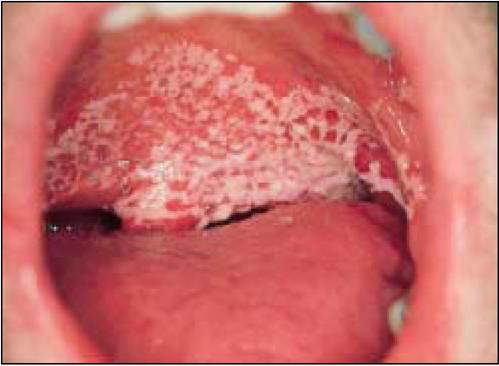
Figure 4.3 Oral candida
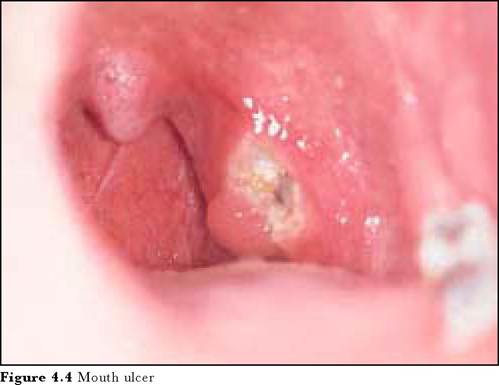
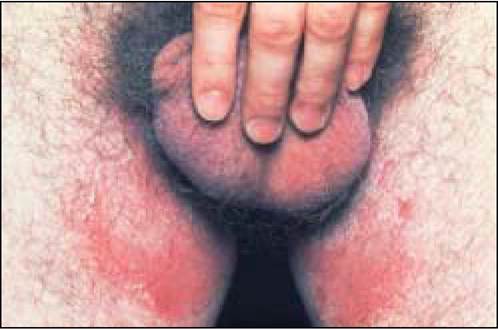
Figure 4.5 Tinea cruris
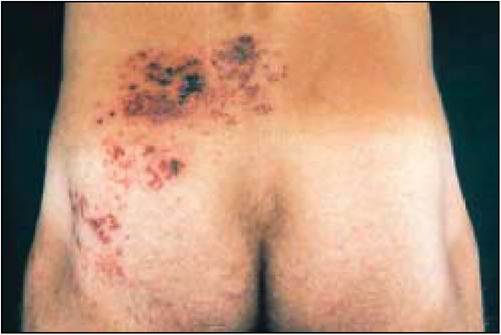
Figure 4.6 Varicella zoster
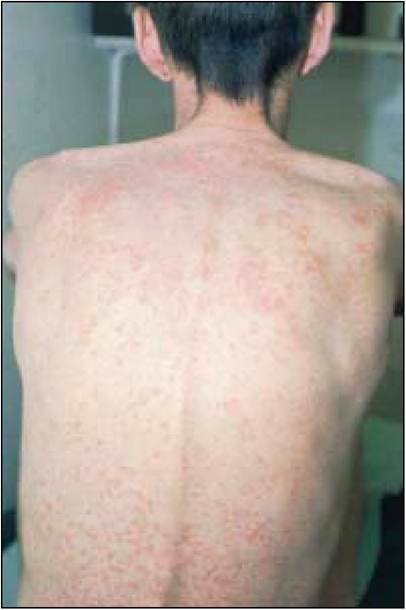
Figure 4.7 Extensive seborrhoeic dermatitis
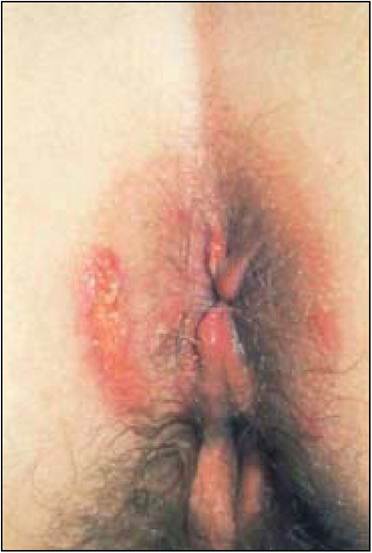
Figure 4.8 Perianal herpes
Other common dermatoses that respond to antifungal creams (for example Clotrimazole) include tinea cruris and pedis and candidiasis. Folliculitis often responds to 1% hydrocortisone and antifungal cream, impetigo to antibiotics and shingles to aciclovir, valaciclovir or famciclovir.
Recurrent perianal or genital herpes may become more troublesome, with recurrences lasting longer and occurring more frequently; if this persists for more than 3 months it is considered an AIDS- defining opportunistic infection (Group IVC1). Treatment with long-term acyclovir, valaciclovir or famciclovir suppression is often required. Genital and perianal warts are common, difficult to treat and frequently recurrent, and high-grade cervical dysplasia is seen more often in HIV-infected women.Mouth problems are also common, cause considerable distress and when severe may result in difficulty with eating and drinking. Oral candida can be managed with topical or systemic antifungals (eg, nystatin, ketoconazole or fluconazole). If dysphagia develops, oesophageal candidiasis should be suspected and investigated. Oral hairy leukoplakia can be differentiated from oral candida by its characteristic distribution along the lateral borders of the tongue and the fact that it cannot be scraped off. Although unsightly, this condition which is due to Epstein-Barr virus reactivation is painless and temporary remission can be obtained with acyclovir, valaciclovir or famciclovir. Other oral conditions including dental abscesses, caries, gingivitis and oral ulceration (herpetic or bacterial) may occur. Mouth ulcers may be particularly difficult to treat and expert specialist assessment is recommended. Metronidazole, acyclovir, 0.2% chlorhexidine mouthwashes and analgesic sprays may all be effective depending on the cause and, in extreme cases, thalidomide has been used. Maintenance of good oral hygiene and dental care are important.