Bioterrorism and Emerging Infections
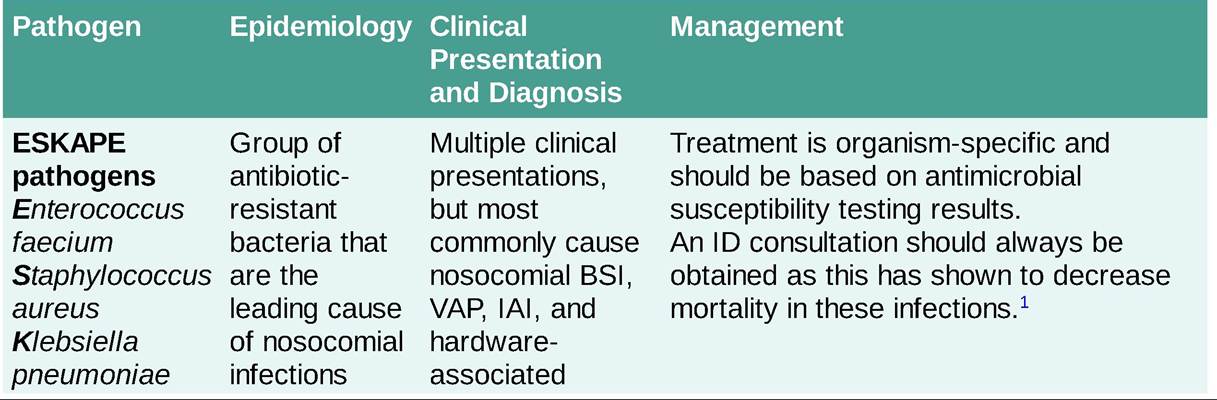
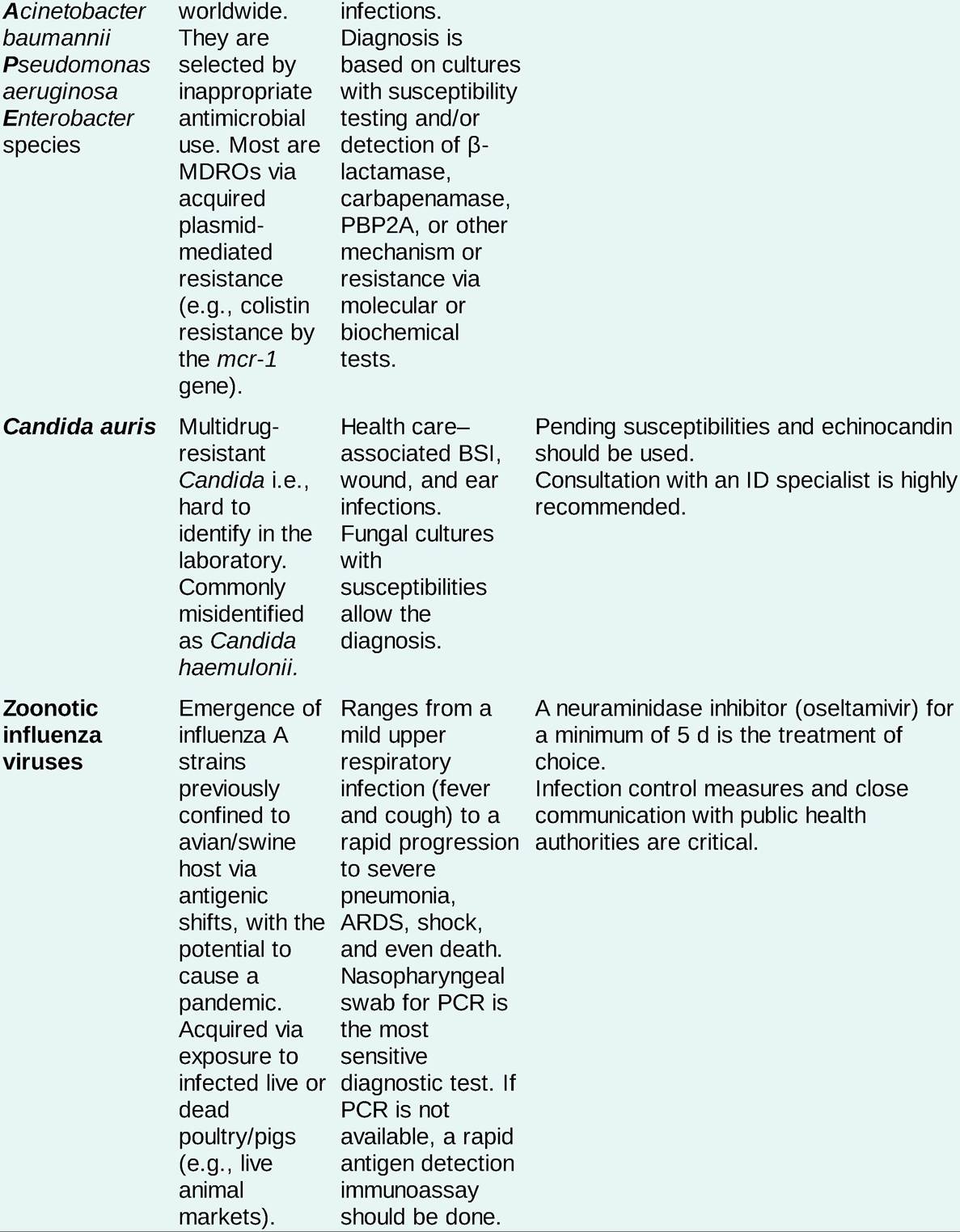
• Changing patterns in human behavior and demographics, natural phenomena, and microbial evolution lead to new infections within a population or increased incidence or geographic range of known pathogens (emerging infections) (Table 14-14).
Included in this category are several highly fatal and easily produced microorganisms, which have the potential to be used as agents of bioterrorism and produce substantial illness in large populations via an aerosol route of exposure. Most of these diseases are rare, so a high index of suspicion is necessary to identify the first few cases.TABLE 14-14
EMERGING INFECTIOUS DISEASES
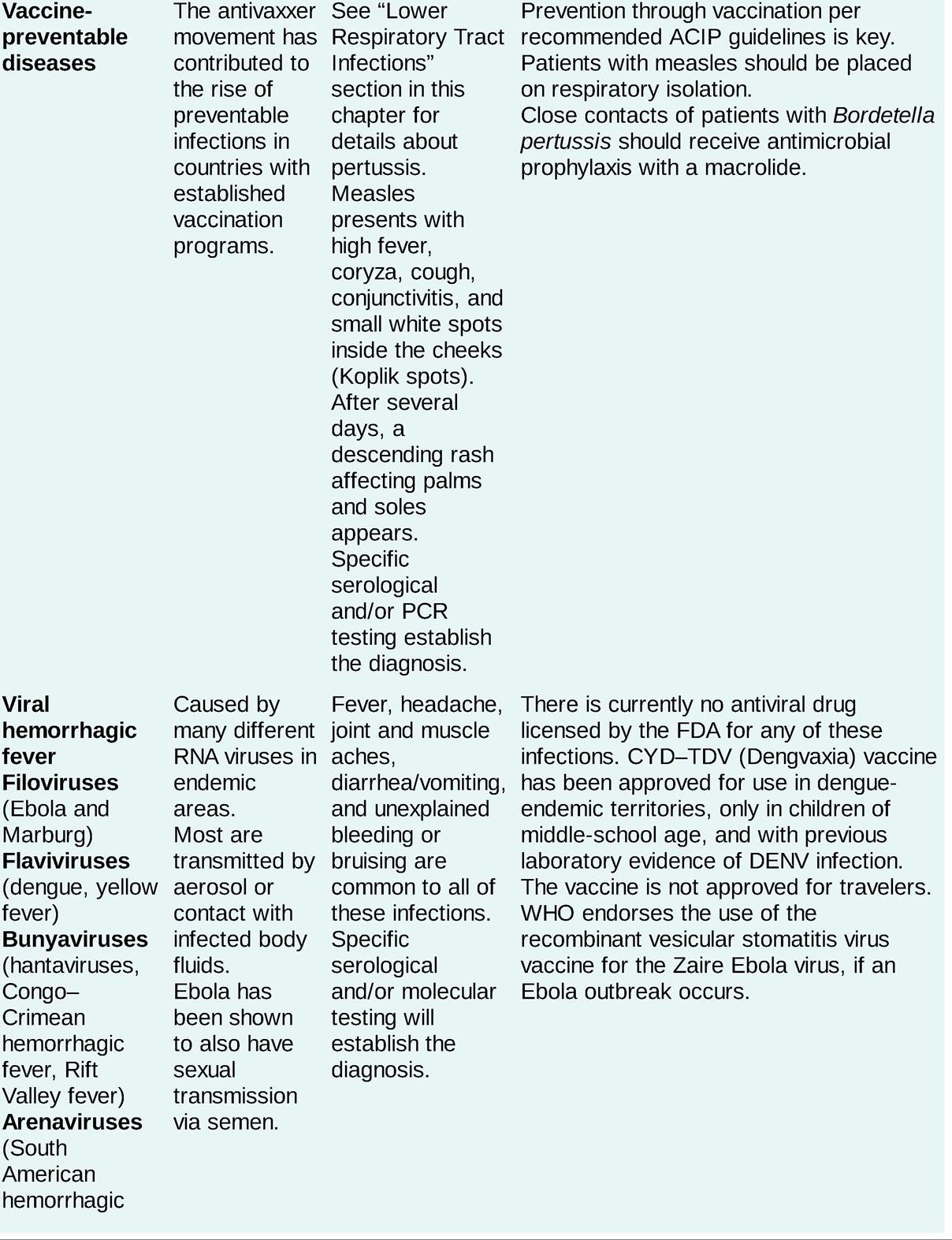
fever, Lassa
fever)
ARDS, acute respiratory distress syndrome; BSI, bloodstream infection; FDA, Food and Drug Administration; IAI, intra-abdominal infections; ID, Infectious Diseases; MDRO, multidrug-resistant organism; PBP2A, penicillin-binding protein 2A; PCR, polymerase chain reaction; VAP, ventilator-associated pneumonia; WHO, World Health Organization.
• A bioterrorism-related outbreak should be considered if an unusually large number of patients present simultaneously with a respiratory, gastrointestinal, or febrile rash syndrome; if several otherwise healthy patients present with unusually severe disease; or if an unusual pathogen for the region is isolated.