Fungal and Atypical Organisms
• Clinical presentations are varied and not pathogen specific. Consider systemic mycoses in normal hosts with unexplained chronic pulmonary pathology, chronic meningitis, lytic bone lesions, chronic skin lesions, FUO, or cytopenias.
In immunocompromised patients, besides the above presentations, the development of new pulmonary, cutaneous, funduscopic, or head and neck signs and symptoms should prompt consideration of fungal and other atypical pathogens.• Mycoses can often be identified by considering epidemiologic clues (many are geographically restricted), site of infection, inflammatory response, and microscopic fungal appearance. These infections can be complex and difficult to treat, and infectious disease consultation is recommended in all cases.
• Antifungal agents have variable doses, depending on severity of infection and the patient's renal and hepatic function. Lipid formulations of amphotericin B are preferred over the deoxycholate formulation due to its more favorable toxicity profile. Significant drug-drug interactions exist between azole antifungals and many other medications, including immunosuppressant drugs. Loading doses of azole antifungals may be recommended in certain circumstances. Because treatment may be prolonged (weeks to months), it is recommended to check therapeutic levels of several antifungals to minimize toxicity. Levels may be checked for flucytosine, itraconazole, posaconazole, and voriconazole but not for isavuconazole or fluconazole.
• For details on treatment of fungal pathogens, Nocardia, and Actinomyces, see Table 14-13.
TABLE 14-13
TREATMENT OF FUNGAL INFECTIONS, NOCARDIA, AND ACTINOMYCES
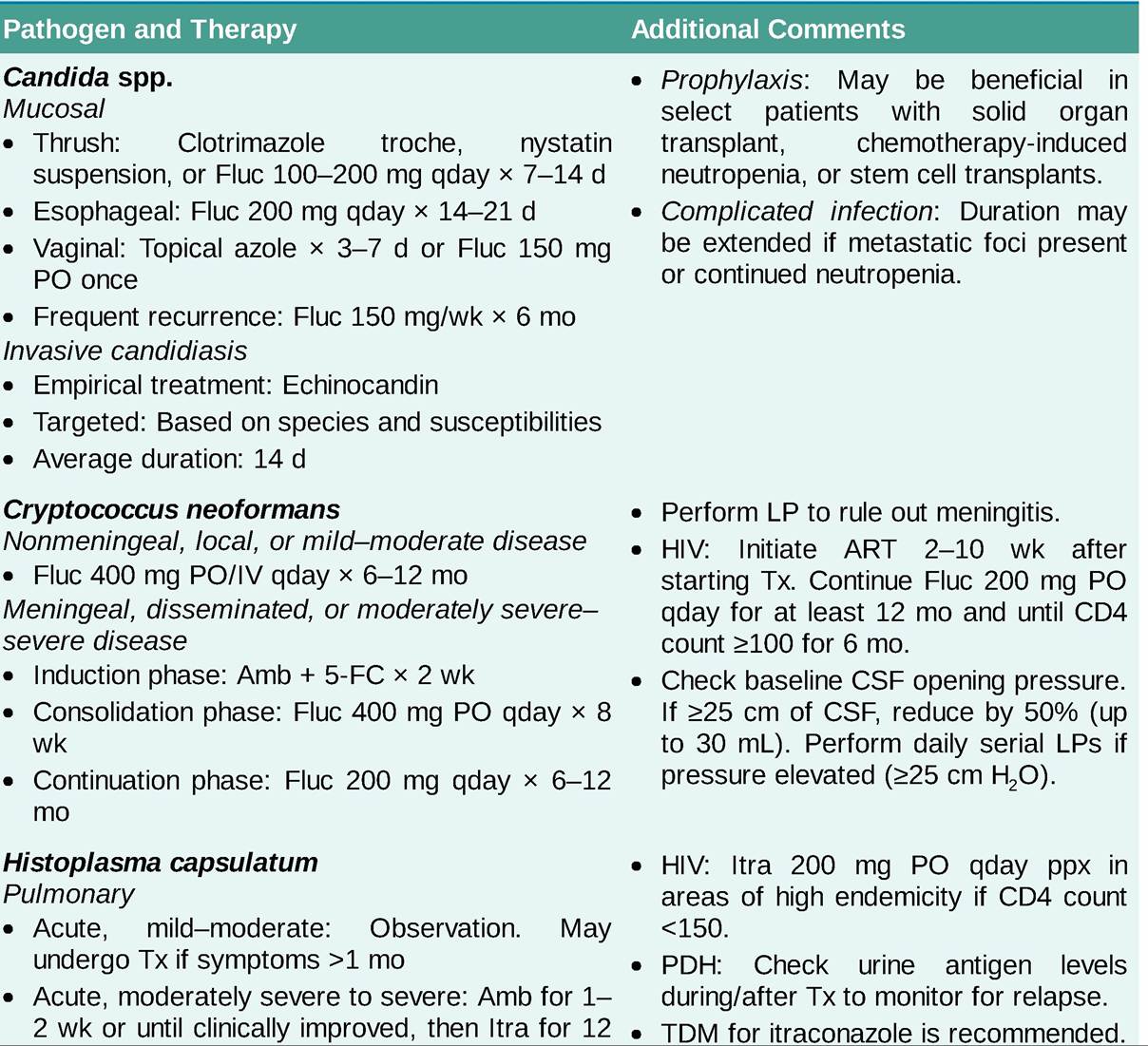
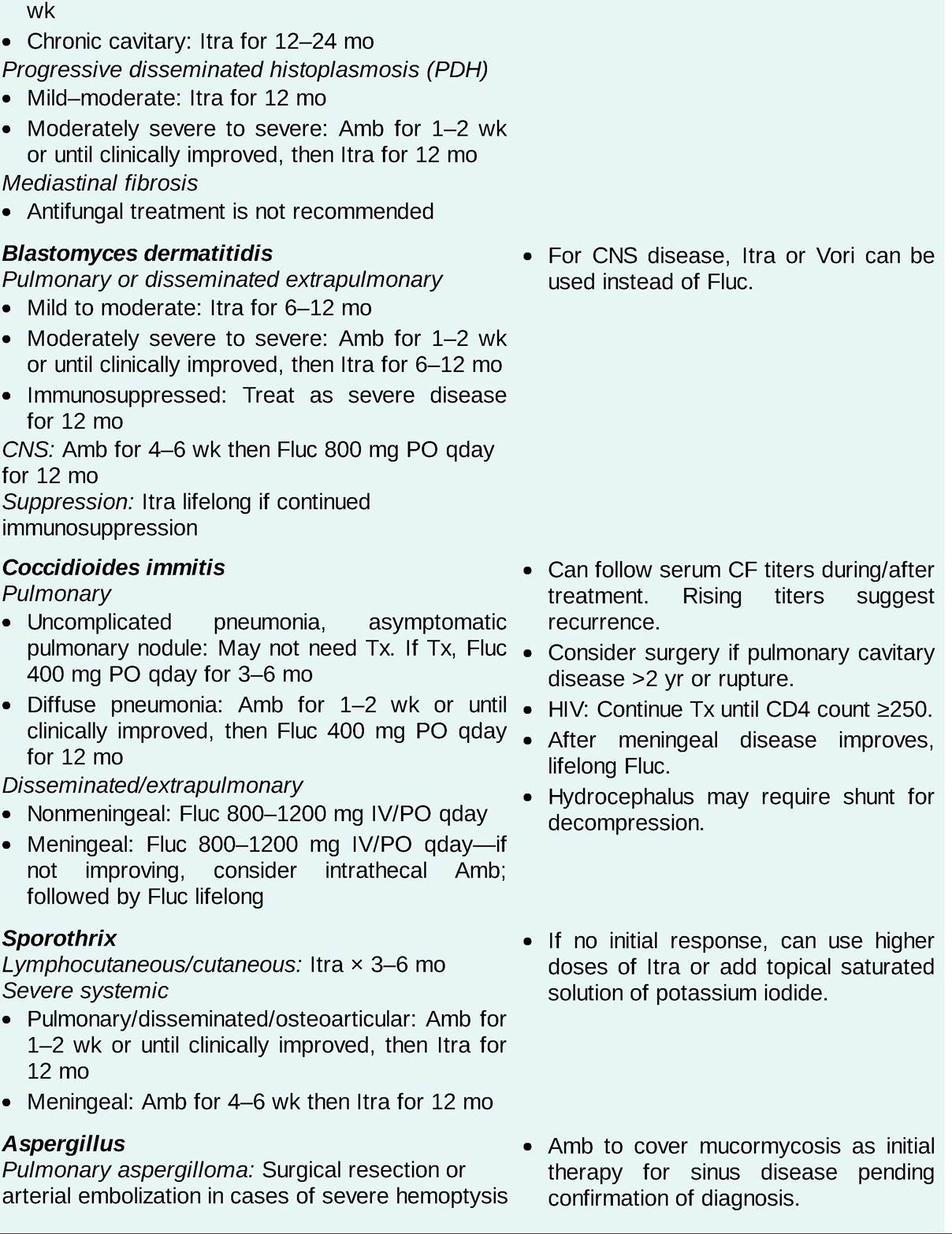
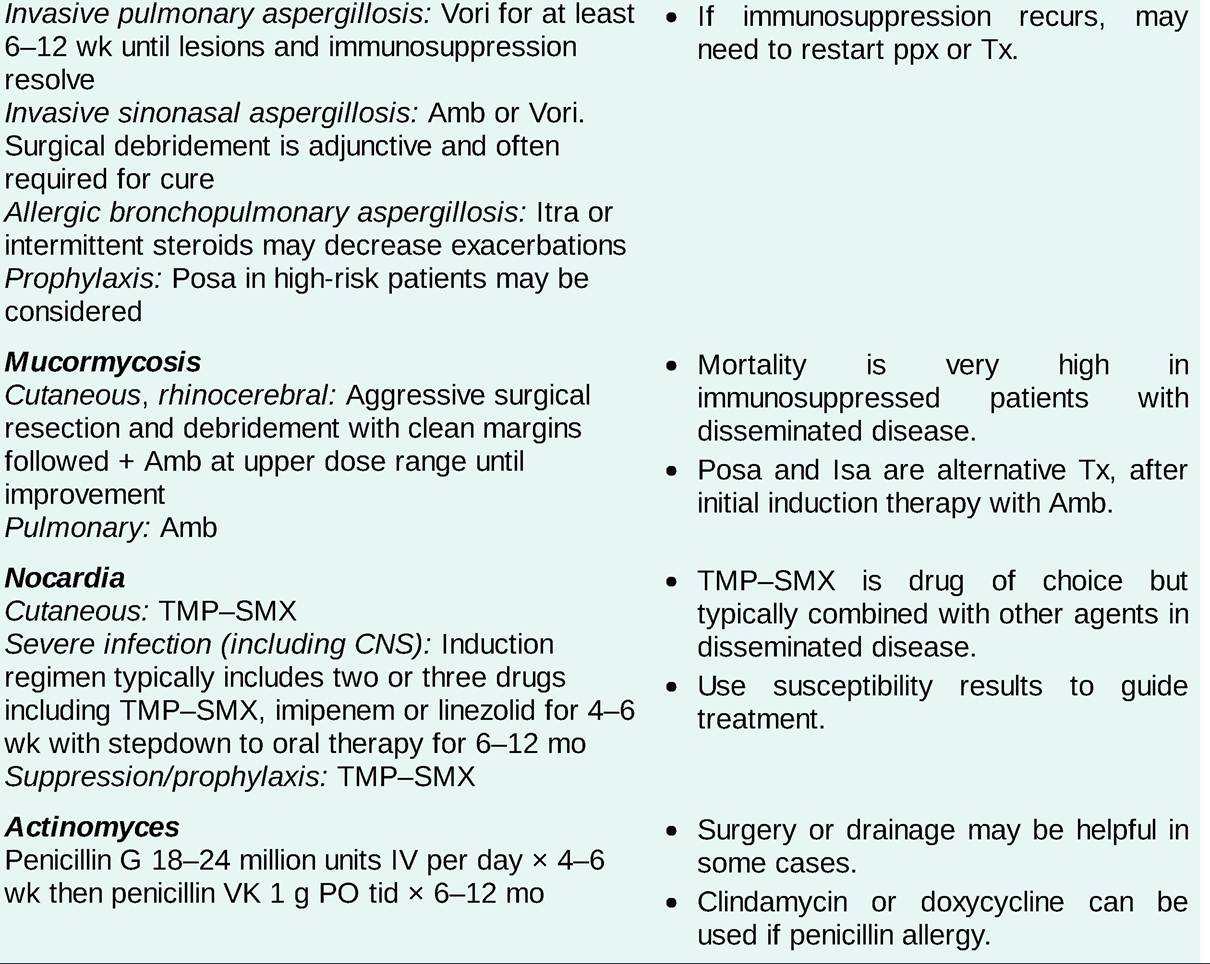
Б-FC, flucytosine; Amb, amphotericin B; ART, antiretroviral therapy; CF, complement fixation; CNS, central nervous system; CSF, cerebrospinal fluid; Fluc, fluconazole; Isa, isavuconazole; Itra, itraconazole; LP, lumbar puncture; Posa, posaconazole; ppx, prophylaxis; TDM, therapeutic drug monitoring; TMP-SMX, trimethoprim-sulfamethoxazole; Tx, treatment; Vori, voriconazole.