ModelingAwareness
We will introduce Justification Awareness Models, or JAMs, in Section 11.3. These incorporate two principal ideas:
(1) justifications are prime objects of the model; thus knowledge and belief are defined evidence-based concepts;
(2) awareness restrictions are applied to justifications rather than to propositions, which allows for the maintaining of desirable closure properties.
JAMs naturally include major justification models, Kripke models and, in addition, can represent situations with multiple possibly fallible justifications. As an example, we will build a JAM for the Russell Prime Minister Example, which brings an attention to the details that was missing in previous epistemic modeling.
For formalizing epistemic scenarios one needs specific domain-dependent models, with additional features that are not necessary for the usual soundness and completeness analysis of proof systems.
Awareness is an important concept in epistemic modeling, but when applied to propositions directly, it may seriously diverge from intuition due to the lack of natural closure properties, see Fagin and Halpern (1988); Fagin et al. (1995); and Meyer and van der Hoek (1995). We propose applying awareness directly to justifications
agent is aware/unaware of a justification tfor a proposition F
rather then to propositions, “agent is aware/unaware of a proposition F.” As we will show, this approach allows for maintaining natural closure properties.
In JAMs, justifications are primary objects, and a distinction is made between accepted and knowledge-producing justifications. Belief and knowledge become derived notions, which depend on the status of supporting justifications. We argue that JAMs can work in a wide range of situations in which standard nonhyperintensional tools fail to fairly represent the corresponding epistemic structure.
Some samples of justification logic analysis of epistemic situations (specifically Gettier examples and the Red Barn example) are presented in Artemov (2008) using Fittingjustification models (Fitting, 2005), though due to the relative simplicity of those examples the analysis could be replicated in a bi-modal language (cf. Williamson, 2015). However, one cannot go much farther without adopting a justification framework because the situation changes when we have to represent several conflicting pieces of evidence for a stated fact. We now begin our examination of the promised example, due to Bertrand Russell in 1912 (Russell, 2001).
Russell Prime Minister Example Ifa man believes that the late Prime Minister’s last name began with a “B,” he believes what is true, since the late Prime Minister was SirHenry Campbell Bannerman.1 But if he believes that Mr. Balfour was the late Prime Minister, he will still believe that the late Prime Minister’s last name began with a “B,” yet this belief, though true, would not be thought to constitute knowledge.
To keep it simple, from here on P is the following proposition.
The late Prime Minister’s last name began with a “B.”
According to Russell's description, there are two justifications for P: the right one, which we call r, and the wrong one, which we call w. The agent chooses w as a reason to believe that P holds, and therefore cannot be said to know P.
One might suggest that the shortcomings of justifications in the Russell Prime Minister Example have to do with “false premises.” To avoid such a reduction consider another Russell example, from 1912.
Russell True Premises Example IfI know that all Greeks are men and that Socrates was a man, and I infer that Socrates was a Greek, I cannot be said to-know-that Socrates was a Greek, because, although my premisses and my conclusion are true, the conclusion does not follow from the premisses.
This example illustrates that “false premises” in the story told in the Russell Prime Minister Example is an instance of a more general phenomenon, namely an erroneous justification, which, in principle, can fail for many different reasons not limited to unreliable premises: hidden assumptions, deduction errors, an erroneous identification of the goal sentence, etc.2
There is a mathematical version of the story with a true proposition and two justifications, where one is correct and the other not.
1 Which was true in 1912.
2 Moreover, one can easily imagine knowledge-producing reasoning from a source with false beliefs (both an atheistic and a religious scientist can produce reliable knowledge products though one of them has false beliefs), so “false premises” are neither necessary nor sufficient for a justification to fail.
Arithmetic Example Consider the display:
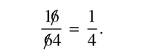

Given these considerations, we prefer speaking about erroneous justifications in a general setting, without reducing them to propositional entities such as “false premises.” To be specific, we'll continue with the Russell Prime Minister Example.
To formalize Russell's scenario in modal logic, we introduce two modalities: K for knowledge and J for justified belief. In the real world,
(1) P holds,
(2) JP holds, because the agent has a justification w for P,
(3) KP does not hold.
This yields the following set of assumptions

However, Γ doesn't do full justice to Russell's scenario: The right justification r is not represented and Γ instead corresponds to an oversimplified Russell scenario in which the right justification r is absent. The epistemic structure of the example is not respected.
Within the JAM framework we will provide a model for Russell Prime Minister Example in Section 11.4, which, we think, fairly represents its intrinsic epistemic structure.
11.2