Exercises
Exercise 16.1. Show that Assumption 16.6 (iii) is satisfied if and only if for any j" > j' and any j = 1,...,N, we have that What does this imply about the
relationship between the conditional distribution of z given Zj∣∣ and given Zj∣?
Exercise 16.2.
* Prove Lemma 16.1.Exercise 16.3. * Prove Theorem 16.4.
Exercise 16.4. * Prove Theorem 16.5.
Exercise 16.5. * Prove Theorem 16.6.
Exercise 16.6. * Prove Theorem 16.7.
Exercise 16.7. Consider the stochastic permanent income hypothesis model studied in Section 16.5 and suppose that u (c) is not quadratic. Explain the conditions under which the excess sensitivity tests described in that section would fail even when the stochastic Euler equation (16.24) holds. [Hint: you may want to consider the constant relative risk aversion preferences for concreteness].
Exercise 16.8. (1) Consider the stochastic permanent income hypothesis model stud
ied in Section 16.5 and assume that the interest rate r is no longer constant, but is equal to r (t) > 0 at time t. Derive the equivalent of (16.24) in this case. Show that excess sensitivity tests can be applied in this case as well.
(2) Now suppose that r (t) is a random variable taking one of finitely many values, rι,...,rj, and to simplify the analysis, suppose that the realizations of the interest rate are independent over time. Derive the equivalent of (16.24) in this case. Show that excess sensitivity tests can be applied in this case as well.
Exercise 16.9. Consider the stochastic permanent income hypothesis model studied in Section 16.5. Suppose that instead of being distributed independently, w (t) follows a Markov chain. Show that (16.24) still holds. Now suppose that u (c) takes a quadratic form and assume that the econometrician incorrectly believes that w (t) is independently distributed, so that the individual has superior information relative to the econometrician.
Show that a regression of consumption growth on past income realizations will still lead to a zero coefficient (thus the excess sensitivity test will not reject). [Hint: make use of the law of iterated expectations, which states that if Ω is an information set that is finer than Ω0 and z is a random variable, then
Exercise 16.10. In the stochastic permanent income hypothesis model studied in Section
16.5, suppose that c (t) ≥ 0, u (∙) is twice continuously differentiable, everywhere strictly concave and strictly increasing, and u” (∙) is increasing. Suppose also that w (t) has a nondegenerate probability distribution.
(1) Show that consumption can never converge to a constant level.
(2) * Prove that if u (∙) takes the CRRA form and β < (1 + r)-1, then there exists some a < ∞ such that a (t) ∈ (0, a) for all t.
(3) * Prove that when β ≤ (1 + r)-1, there exists no a < ∞ such that a (t) ∈ (0, a) for all t. [Hint: consider the case where β = (1+ r)-1 and take the stochastic sequence where w (t) = wy for an arbitrarily large number of periods, which is a positive probability sequence. Then generalize this argument to the case where β ≤ (1 + r)-1].
(4) * Prove that when β ≤ (1 + r)-1, marginal utility of consumption follows a (non
degenerate) subermartingale and therefore consumption must converge to infinity. [Hint: note that in this case (16.24) implies and use this
equation to argue that consumption must be increasing “on average”].
Exercise 16.11. Consider the model of searching for ideas introduced in subsection 16.5.2. Suppose that the entrepreneur can use any of the techniques he has discovered in the past to produce at any point in time and also then stop production at any point and go back to searching.
(1) Prove that if the entrepreneur has turned down production at some technique α0 at date t, he will never accept technique α0 at date t + s, for s > 0 (i.e., he will not accept it for any possible realization of events between dates t and t + s).
(2) Prove that if the entrepreneur accepts technique α0 at date t, he will continue to produce with this technique for all dates s ≥ t rather than stopping production and going back to searching.
(3) Using 1 and 2, show that the maximization problem of the entrepreneur can be formulated as in the text without loss of any generality.
(4) Now suppose that when not producing, the entrepreneur receives income b. Write the recursive formulation for this case and show that as b increases, the cutoff threshold R increases.
Exercise 16.12. Formulate the problem in subsection 16.5.2 as one of an unemployed worker sampling wages from an exogenously given stationary wage distribution H (w). The objective of the worker is to maximize the net present discounted value of his income stream. Assume that once the worker accepts a job he can work at that wage forever.
(1) Formulate the dynamic maximization problem of the worker recursively assuming that once the worker finds a job he will never quit.
(2) Prove that the worker will never quit a job that he has accepted.
(3) Prove that the worker will use the reservation wage R for deciding what job to accept.
(4) Calculate the expected duration of unemployment for the worker.
(5) Show that if the wages in the wage distribution H (w) are offered by firms and all workers are identical, the wage offers of all firms other than those offering w = R are not profit-maximizing. What does this observation imply about the McCall search model?
EXERCISE 16.13. Consider an economy populated by identical households each with preferences given by where u (∙) is strictly increasing, strictly concave and
twice continuously differentiable.
Normalize the measure of agents in the economy to 1. Each household has a claim to a single tree, which delivers z (t) units of consumption good at time t. Assume that z (t) is a random variable taking values from the set Z ? {zι,..., zn} and is distributed according to a Markov chain (all trees have exactly the same output, so there is no gain in diversification). Each household can sell any fraction of its trees or buy fractions of new trees, though cannot sell trees short (i.e., negative holdings are not allowed). Suppose that the price of a tree when the current realization of z (t) is z is given by the function p : Z → R+. There are no other assets to transfer resources across periods.(1) Show that for a given price function p (z), the flow budget constraint of a representative household can be written as

where x (t) denotes the tree holdings of the household at time t. Interpret this constraint.
(2) Show that for a given price function p (z), the maximization problem of the representative household subject to the flow budget constraint and the constraint that c (t) ≥ 0, x (t) ≥ 0 can be written in a recursive form as follows

(3) Use the results from Section 16.1 to show that V (x,y) has a solution, is increasing in both of its arguments and strictly concave, and is differentiable in x in the interior of its domain.
(4) Derive the stochastic Euler equations for this maximization problem.
(5) Now impose market clearing, which implies that x (t) = 1 for all t. Explain why this condition is necessary and sufficient for market clearing.
(6) Under market clearing, derive p (z) the equilibrium prices of trees as a function of the current realization of z.
EXERCISE 16.14. Consider a discrete stochastic version of the investment model from Section
7.8, where a firm maximizes the net present discounted value of its profits, with discount factor given by (1 + r)-1 and instantaneous returns given by

643
Here f (k (t),z (t)) is the revenue or profit of the firm as a function of its capital stock, k (t), and a stochastic variable, representing productivity or demand, z (t).
As in Section 7.8, i (t) is investment and φ (i (t)) represents adjustment costs.(1) Assume that z (t) has a distribution represented by a Markov chain. Formulate the sequence version of the maximization problem of the firm.
(2) Formulate the recursive version of the maximization problem of the firm.
(3) Provide conditions under which the two problems have the same solutions.
(4) Derive the stochastic Euler equation for the investment decision of the firm and compare the results to those in Section 7.8.
Exercise 16.15. Consider a general stopping problem, where the objective of the individual is to maximize We assume that the individual faces a stream of random
variables represented by z (t) and assume that z (t) follows a Markov chain. At any t, the individual can “stop” the process. Let y (t) = 0 while the individual has not stopped and y (t) = z (s) if the individual has stopped the process at some s ≤ t.
(1) Formulate the problem of the individual as a stochastic dynamic programming problem and show that there exists some R* such that the individual will stop the process at time t if z (t) ≥ R*.
(2) Now assume that z (t) has a distribution at time t given by
follows a Markov chain with values in the finite set Z. Formulate the problem of the individual as a stochastic dynamic programming problem. Prove that there exists a function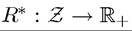 such that the individual will stop the process when
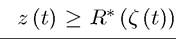 when the current state is Z (t). Explain why the stopping rule is no longer constant. What does this result imply for the job acceptance decisions of unemployed workers studied in Exercise 16.12 when the distribution of wages is different during periods of recession?