Exercises
Exercise 17.1. Proposition 17.2 shows that k (t + 1) is increasing in k (t) and z (t). Provide sufficient conditions such that c (t) is also increasing in these variables.
Exercise 17.2.
Consider the neoclassical growth model under uncertainty analyzed in Section 17.1 and assume that z (t) is realized after c (t) and k (t + 1) are chosen.(1) Show that if z (t) is distributed independently across periods, the choice of capital stock and consumption in this economy is identical to that in a neoclassical growth model under certainty with a modified production function. Explain this result.
(2) Now suppose that z (t) is not distributed independently across periods, Establish the equivalent of Proposition 17.1 for this case. How does the behavior in this economy differ from the canonical version of the neoclassical growth model under uncertainty in Section 17.1.
Exercise 17.3. Consider the same production structure as in Sections 17.1 and 17.2 but assume that irrespective of the level of the capital stock and the realization of the stochastic variable, each household saves a constant fraction s of its income. Characterize the stochastic laws of motion of this economy. How does behavior in this economy differ from that in the canonical neoclassical growth model under uncertainty.
Exercise 17.4. Consider the neoclassical growth model under uncertainty studied in Section
17.1.
(1) Provide conditions under which π (k, z) is strictly increasing in both of its arguments.
(2) Show that when this is the case, the capital-labor ratio can never converge to a constant unless z has a degenerate distribution (i.e., it always takes the same value).
Exercise 17.5. Consider Example 17.1.
(1) Prove that equation (17.9) cannot be satisfied for any
(2) Conjecture that the value function for this example takes the form V (k, z) = B2 + B3 log k + B 4 log z.
Verify this guess and compute the parameters B2, B3 and B3.Exercise 17.6. Show that the policy function in Example 17.1 π (k,z) = βαzkα applies when z follows a general Markov process rather than a Markov chain. [Hint: instead of the summation, replace the expectations sign with an appropriately defined (Lebesgue) integral and cancel terms under the integral sign].
Exercise 17.7. (1) Consider the economy analyzed in Example 17.1 with 0 < zι <
zn < ∞. Characterize the limiting invariant distribution of the capital-labor ratio and show that the stochastic correspondence of the capital stock can be represented by Figure 17.1 in Section 17.5. Use this figure to show that the capital-labor ratio, k, will always grow when it is sufficiently small and always decline when it is sufficiently large.
(2) Next consider the special case where z takes two values z⅛ and zι, with each value persisting with probability q > 1/2 and switching to the other value with probability 1 — q. Show that as q → 1, the behavior of the capital-labor ratio converges to the equilibrium behavior of the same object in the neoclassical growth model under certainty.
Exercise 17.8. Consider the economy studied in Example 17.1 but suppose that δ < 1. Show that in this case there does not exist a closed-form expression for the policy function π (k, z).
Exercise 17.9. Consider an extended version of the neoclassical growth model under uncertainty such that the instantaneous utility function of the representative household is u (c, b), where b is a random variable following a Markov chain.
(1) Setup and analyze the optimal growth problem in this economy. Show that the optimal consumption sequence satisfies a modified stochastic Euler equation.
(2) Prove that Theorem 5.7 can be applied to this economy and the optimum growth path can be decentralized as a competitive growth path.
Exercise 17.10. Write the maximization problem of the social planner explicitly as a sequence problem, with output, capital and labor following different histories interpreted as a different Arrow-Debreu commodity.
Using this formulation, show that the conditions of Theorem 5.7 are satisfied, so that the optimal growth path can be decentralized as an equilibrium growth path.Exercise 17.11. Explain why in subsection 16.5.1 in the previous chapter, the Lagrange multiplier λ [yl'] was conditioned on the entire history of labor income realizations, while in the formulation of the competitive equilibrium with a full set of Arrow-Debreu commodities (contingent claims) in Section 17.2, there is a single multiplier λ associated with the lifetime budget constraint.
Exercise 17.12. Consider the model of competitive equilibrium in Section 17.2. Repeat the analysis of the competitive equilibrium of the neoclassical growth model under uncertainty by assuming that instead of a price for buying and selling capital goods in each state (at the price sequence in terms of date 0 final good given by Rθ [zl]) there is a market for renting capital goods. Let the rental price of capital goods in terms of date 0 final good be ro [zl] when the sequence of stochastic variables is zl. Characterize the competitive equilibrium and show that it is equivalent to that obtained in Section 17.2. Explain why the two formulations give identical results.
Exercise 17.13. Prove Proposition 17.3.
Exercise 17.14. Characterize the competitive equilibrium path of the neoclassical growth model under uncertainty analyzed in Section 17.2 using sequential trading, but the sequence problem formulation rather than the recursive formulation.
Exercise 17.15. Show that Theorems 16.1-16.7 can be applied to V (a, z) defined in (17.19) and establish that V (a, z) is continuous, strictly increasing in both of its arguments, concave and differentiable in a.
Exercise 17.16. Derive equation (17.21).
Exercise 17.17. Prove Proposition 17.4.
Exercise 17.18. Consider the RBC model presented in Section 17.3 and suppose that the production function takes the form F (K,zAL), with both z and A corresponding to laboraugmenting technological productivity terms.
Suppose that z follows a Markov chain and A (t + 1) = (1 + g) A (t) is an exogenous and deterministic productivity growth process. Setup the social planner’s problem in this case. [Hint: use a transformation of variables to make the recursive equation stationary]. What restrictions do we need to impose on 693U (C, L) such that the optimal growth path corresponds to a “balanced growth path,” where labor supply does not (with probability 1) go to zero or infinity?
Exercise 17.19. In Example 17.2, suppose that the utility function of the representative household is u (C,L) = log C + h (L), where h (∙) is a continuous, decreasing and concave function. Show that the equilibrium level of labor supply is constant and independent of the level of capital stock and the realization of the productivity shock.
Exercise 17.20. Prove Proposition 17.5.
Exercise 17.21. Prove Proposition 17.6.
Exercise 17.22. What would happen if, instead of the logarithmic preferences (17.37), the utility function of the representative household in Section 17.6 took the more general form u (ci (t)) + Etu (c2 (t + 1))? Could the growth rate on an economy be higher in this case when the level of diversification is limited? [Hint: first show that full diversification always achieves higher growth; then consider extremely risk-averse preferences and construct an example in which lower diversification can encourage sufficiently more savings to increase growth].
Exercise 17.23. In the model of Section 17.6, prove that the maximization problem of the representative household involves for any j,j0 ∈ J (t), I* (j,t) = I* (j0,t).
Exercise 17.24. In the model of Section 17.6, prove that if an intermediate sector j* ∈ J (t), then all sectors j ≤ j* are also in J (t).
Exercise 17.25. In the model of Section 17.6, prove that the condition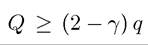 is
is
sufficient to ensure that there is a unique intersection between the curves for (17.36) and (17.49) in Figure 17.2.
Exercise 17.26. Prove Proposition 17.8. In particular, show that (i) if the equilibrium n < n* [K], then there exists a profitable deviation for a financial intermediary to offer securities based on a previously-unavailable sector and make positive profits; and (ii) if n > n* [K], feasibility is violated.
Exercise 17.27. (1) Prove Proposition 17.10.
(2) Suppose that condition (17.54) is not satisfied. Does the stochastic process
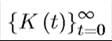 converge? Does it converge to a point?
Exercise 17.28. Prove Proposition 17.11.
Exercise 17.29. Prove Proposition 17.12. [Hint: setup the Lagrangian for the social planner and show that when all sectors can not be active the social planner will not choose a balanced portfolio.]
Exercise 17.30. * Consider the following two-period economy similar to the environment described in Section 17.6. There are I financial intermediaries who compete a la Bertrand without using any resources. They invest funds on behalf of consumers in any of the projects of this economy. There is a continuum of measure 1 of projects each denoted by j. Asset j
requires a minimum size investment M(j) and without loss of generality rank the projects in ascending order of minimum size.
There is continuum of consumers with measure normalized to 1, each with the utility function u(c) + Ev(c0), where c is consumption today, c0 is consumption tomorrow, so that Ev(c0) denotes expected utility from tomorrow’s consumption. Each consumer has total resources equal to w and decides how much to consume and how much to save and then how to allocate his savings. Assume that u(∙) and v(∙) are strictly concave and increasing. Funds today are turned into consumption tomorrow by financial intermediaries. Alternatively, funds can also be invested in a safe linear technology with rate of return q. Let the investment in asset j be K(j), then if K(j) ≥ M(j), then asset j has probability π of paying out Qk(j) such that πQ > q (thus the safe technology is less productive).
On the other hand if K(j) < M(j), the pay-out is equal to zero.(1) Denote the “share price” of $1 invested in project j, which pays out $Q with probability π and zero otherwise, by p(j). Show that financial competition ensures that if K(j), K(j0) > 0, then p(j) = p(j') = 1.
(2) Now assume that the returns of each project is independent from the return of all other projects and show that K(j) = K(j0)—that is, the probability that asset j pays out Q conditional on asset j0 having paid out Q (or 0) is π for all j and j0.
(3) Characterize the decentralized equilibrium of this economy.
(4) Show that when some projects are inactive, the decentralized equilibrium is constrained Pareto inefficient.
(5) Characterize the efficient allocation.
(6) Can you establish the inefficiency of the decentralized equilibrium without independence?
(7) Informally discuss what happens if M (j) is not a minimum size requirement but a fixed cost (such that average costs are falling). [Hint: there are two cases to distinguish; (1) linear prices; (2) price discrimination].