Exercises
Exercise 12.1. Deriveeq. (12.2).
Exercise 12.2. Prove Proposition 12.1. In particular:
Exercise 12.5.
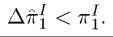
Consider the model in Section 12.3, and suppose that there is no patent protection for the innovating firm. The firm can undertake two different types of innovations at the same cost η. The first is a general technological improvement, which can be copied by all firms. It reduces the marginal cost of production to λ-1ψ. The second is specific to the needs of the current firm and cannot be copied by others. It reduces the marginal cost of production by λ0 < λ. Show that the firm would never adopt the λ technology, but may adopt λ0 technology. Calculate the difference in the social values generated by these two technologies.Exercise 12.6. Prove Proposition 12.3. In particular, verify that the conclusion is also true with limit pricing, i.e.,
474
Exercise 12.7. Consider the model in Section 12.3 with an incumbent monopolist and an entrant. Suppose that the cost of innovation for the incumbent is μ, while for the entrant it

(1) Explain why we may have χ > 1.
(2) Show that there exists the entrant has greater incentives
to undertake innovation, and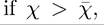 the incumbent has greater incentives to
undertake innovation.
(3) What is the effect of the elasticity of demand on the relative incentives of the incumbent and the entrant to undertake innovation? Provide in intuition for this effect.
Exercise 12.8. (1) Prove Proposition 12.4 by providing an example in which there is
excessive innovation incentives.
(2) What factors make excessive innovation more likely?
Exercise 12.9. The discussion in the text presumed a particular form of patent policy, which provided ex post monopoly power to the innovator. An alternative intellectual property right policy is licensing, where firms that have made an innovation can license the rights to use this innovation to others. This exercise asks you to work through the implications of this type of licensing. Throughout, let us think of the licensing stage as follows: the innovator can make a take-it-or-leave-it-offer to one or many firms so that they can buy the rights to use the innovation (and produce as many units of the output as they like) in return for some licensing fee ν.
(1) Consider the competitive environment we started with and show that if firm 1 is allowed to license its innovation to others, this can never raise its profits and it can never increase its incentives to undertake the innovation. Provide an intuition for this result.
(2) Now modify the model, so that each firm has a strictly convex and increasing cost of producing, ψι (q), and also has to pay a fixed cost of ψ0 > 0 to be active (so that the average costs take the familiar inverse U shape). Show that licensing can be beneficial for firm 1 in this case and therefore increase incentives to undertake the innovation. Explain why the results differ between the two cases.
Exercise 12.10. Derive the expression for the ideal price index, (12.11), from (12.10) and the definition of the consumption index C.
Exercise 12.11. Consider the maximization problem in (12.13) and write down the first- order conditions taking into account the impact of pi on P and C. Show that as N → ∞, the solution to this problem converges to (12.14).
Exercise 12.12. In the Dixit-Stiglitz model, determine the conditions on the function v (∙) such that an increase in N raises the profits of a monopolist.
Exercise 12.13. Suppose that with α ∈
(0,1). Suppose also that new varieties can be introduced at the fixed cost μ.
(1) Consider the allocation determined by a social planner also controlling prices. Characterize the number of varieties that a social planner would choose in order to maximize the utility of the representative household in this case.
(2) Suppose that prices are given by (12.14). Characterize the number of varieties that the social planner would choose in order to maximize utility of the representative household in this case.
(3) Characterize the equilibrium number of varieties (at which all monopolistically competitive variety producers makes zero profits) and compare this with the answers to the previous two parts. Explain the sources of differences between the equilibrium and the social planner’s solution in each case.
Exercise 12.14. This exercise asks you to work through the Salop (1979) model of product differentiation, which differs from the Dixit-Stiglitz model in that equilibrium markups are declining in the number of firms. Imagine that consumers are located uniformly around a circle with perimeter equal to 1. The circle indexes both the preferences of heterogeneous consumers and the types of goods. The point where the consumer is located along the circle corresponds to the type of product that he most prefers. When a consumer at point x around the circle consumes a good of type z, his utility is
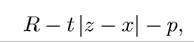
while if he chooses not to consume, his utility is 0. Here R can be thought of as the reservation utility of the individual, while t parameterizes the “transport” costs that the individual has to pay in order to consume a good that is away from his ideal point along the circle. Suppose that each firm has a marginal cost of ψ per unit of production
(1) Imagine a consumer at point x, with the two neighboring firms at points zι > x > z2.
As long as the prices of these firms are not much higher than those further a far, the consumer will buy from one of these two firms. Denote the prices of these two firms by pi and p2. Show that the price difference that would make the consumer indifferent between purchasing from the two firms satisfies
with
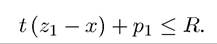
(2) Suppose that pi and p2 satisfy the above relationships. Then, show that all x0 ∈
 strictly prefer to buy from firm 2 and all x0 ∈ (x, zi] strictly prefer to buy from firm 1.
(3) Now assume that there are three firms along the circle at locations zi > z2 > z3. Show that firm 2’s profits are given by

and calculate its profit maximizing price.
Introduction to Modern Economic Growth
(4) Now look at the location choice of firm 2. Suppose that pi = p3. Show that it would like to locate half way between zi and z3.
(5) Prove that in an equilibrium with N firms charging the same price must have the distance between any two firms equal to 1 /N.
(6) Show that when there are N equity-distant firms, it is an equilibrium for all firms to charge
