Article 8.6 UBS joins exodus from Euribor panel
By Daniel Schafer
Financial Times March 19, 2013
UBS is pulling out of the Euribor rate setting panel, thwarting efforts by European authorities to keep intact the number of banks involved in the fixing process following the global rate manipulation scandal.
The Swiss lender joins the exodus from the panel by banks including Dutch lender Rabobank, Citigroup from the US and Bayerische Landesbank in Germany.
This week, Svenska Handelsbanken will become the latest bank to withdraw from the rate-setting panel according to Euribor-EBF, the organisation that administers the benchmark.
UBS said: ‘We have decided to withdraw from the Euribor panel and to focus on our core funding markets Swiss franc and US dollar.'
The Swiss lender added that this was related to a strategy announced last October to drastically cut back the investment bank by exiting most of its fixed income businesses.
UBS is one of three global banks that have paid large fines to US and UK authorities over involvement in the manipulation of Libor, another benchmark interest rate.
The Euribor panel currently consists of 39 banks. Authorities including the European Central Bank have been calling on lenders to continue contributing to the fixings to avoid further damage to the credibility of the benchmark.
Michel Barnier, EU commissioner responsible for the financial sector, said last month he was considering forcing banks to contribute to the rate-setting process.
FT
Source: Schafer, D. (2013) UBS joins exodus from Euribor panel, Financial Times, 19 March.
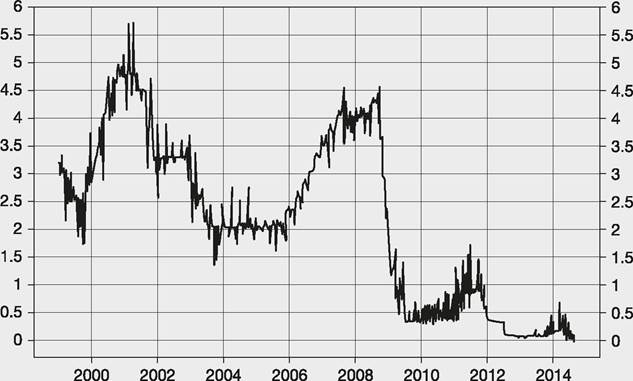
Figure 8.2 Eonia chart since its beginning
Source: European Central Bank www.ecb.europa.euhttp://sdw.ecb.europa.eu/ quickview.do?SERIES_KEY=198.EON.D.EONIA_TO.RATE
Eonia
Eonia or EONIA (Euro OverNight Index Average) is the effective overnight rate for the euro, a ‘one-day Euribor'. It is computed as a weighted average of all overnight unsecured lending transactions in the interbank market initiated within the European Union and European Free Trade Association (EFTA) countries by the same 26 panel banks as for Euribor. It is calculated by the European Central Bank. Figure 8.2 and Article 8.7 illustrate the dramatic effect of the financial crisis and the long recession on Eonia, with policy makers pushing down interest rates: before 2008 Eonia remained in the range of 2-6%, today it hovers just above zero.