Banks differentiate between risk and uncertainty.
Risk is—by definition—the possibility that something may happen away from the expected. If we foresee this possibility, we can then include the associated risk factors in the analysis, and thus the rate of return will be at “risk-free.” On the other hand, uncertainty describes risks that are unforeseen.
Managing uncertain risks is very difficult, and quantifying precisely their contribution to return is nearly impossible. Banks therefore embrace risk, but shun uncertainty. This is important to remember when we discuss markets.Financial contracts directly link to market conditions described by certain factors. In financial analysis and risk management, we use several risk factors that are linked to markets. Such factors are interest rates and spreads, exchange rates, stocks, indices and commodity market prices. Micro and macroeconomic parameters influence these market risk factors directly and indirectly. For instance, interest rates take into account inflation, unemployment rates, and many more as risk parameters.
Analysts use only these sparse risk factors to achieve holistic and mutual usability and consistency in their analysis among different markets in a practical manner. Following this approach, the models they use for pricing interest rates should have the same underlying parameters and commonly accepted models, such as LIBOR. This results in consistency and transparency and gains acceptance from both markets and regulators. Moreover, the data that underlie these risk factors are commonly shared within the markets. Nowadays, past and current market prices of commodities, stocks, FX and interest rates from the entire global markets are easily accessible. Actual data represents the real-world view; however, future positions must be forecasted.
The forecast of the market risk factors at future times must be based on reliable and consistent market models.
For this, we need arbitrage-free models that take into account the risk for profit taken beyond the risk-free return on capital. As we will see, yield curves and forward rate models play the role of arbitrage-free from current to future time models. As we will discuss in this chapter, using arbitrage-free reduces the complexity in applying financial analysis; it also aligns with the expected behavior of investors, which is to avoid risk whenever possible.Being risk-averse implies that people try to reduce risk or choose an option with the minimum of uncertainty possible. In fact, investors are reluctant to accept a deal with an uncertain payoff. They will always prefer a deal with more certain, but possibly lower expected payoff. Consider the following example: somebody offers you the option between accepting
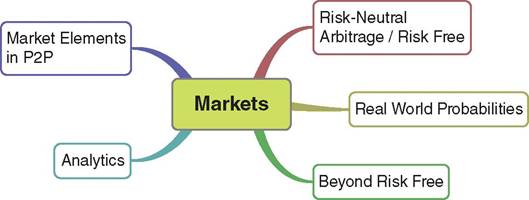
FIGURE 6.1 Main market analysis elements
$50 or flipping a coin where heads will give $100 and tails nothing at all. Which option would you choose? Most people will choose the sure bet of $50 and a minority will prefer to gamble with the unknown payoff. But based on the risk-neutral probability (heads and tails are equally likely with a probability of 0.5 each), both options have exactly the same payoff (0.5 ? 100 + 0.5 ? 0 = 50). Still, most people will be tempted to take no risks. Even if you offer $49 or less in cash, where a rational person should choose the option that is worth more, people will prefer the non-risky return instead of flipping the coin.
On the other hand, if the deal offered a choice between $1 and 49 cents, most people will prefer to flip the coin. This explains why people tend to be risk takers when the expected loss is low. This is exactly the perception lenders have with marketplace lending. Even though P2P loans come with a high risk of default, investors feel they are relatively safe. Most marketplace lending platforms advise investors to diversify across at least 100 loans.
Nevertheless, the underlying assets by themselves still have the same risk as before.Before we continue, let's briefly go back to our coin flipping game. Even though people are courageous when the stakes are low—as in gambling for $1 or getting 49 cents for sure— most of us get cold feet when the choice is between $1 million and $499,000 in cash. A high expected loss tips our animal spirits towards risk-averse decisions. This explains why most people choose to park their hard-earned capital in a low-yielding savings account at the bank. Despite minuscule interest rates, at least the payoff is certain, they reason. Most savers forget that savings accounts slowly diminish their savings because the interest rates are lower than inflation rates. In recent times, interest rates have even turned negative.
To sum it up, only a few investors are risk seekers who prefer to put their money into stocks that may have high expected returns, but also high risk and thus a chance of losing all of the capital or part of it. Uncertainty is the main element when quantifying risk.
Figure 6.1 illustrates the main topics discussed in this chapter.
6.1