GOOD IDEAS IN MARKETPLACE LENDING THAT MIGHT BE HERE TO STAY
It is always difficult to look into the crystal ball, and we have no claims to special insight into the future. At the same time, some ideas we came across in our research of marketplace lending strike us as stronger than others, and we briefly outline the most important ones.
If the hybrid financial sector takes these ideas seriously, and looks for ways to integrate them, win-win situations might emerge between existing players and new entrants. None of the ideas are fully developed as of yet, and we need all the brainpower available to make them stronger in the future. These ideas in marketplace lending that might be here to stay include credit scoring with fringe alternative data, the responsive bank, lending as a service (LaaS), the ability to invest in fragments of loans, unbundled financial services, and industrial-strength analytics for retail investors. Figure 16.1 summarizes them.Let's look at some of the ideas with a high likelihood of staying relevant in the hybrid financial sector. We will discuss each of them in more detail now.
16.3.1 Credit scoring with fringe alternative data
These alternative data can make or break a deal, especially for consumers outside of the credit system. In the United States, credit bureaus now gather mainstream alternative data— for example, monthly bill payments. Such payments are similar in kind to monthly credit payments that are already a part of consumers' credit files. At the same time, some companies use so-called fringe alternative data to underwrite loans when no full credit report is available or as a complement to existing credit scores. These data include activity on social networks, shopping habits, location data, and web tracking, among others. Big Data and social network
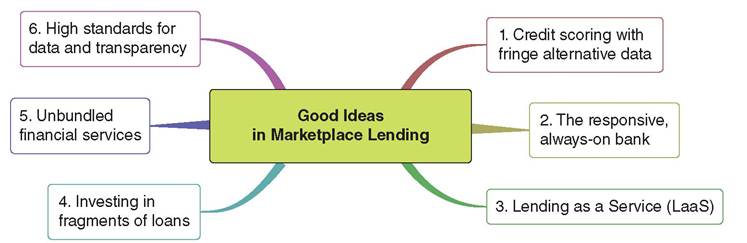
FIGURE 16.1 Good ideas in marketplace lending that might be here to stay
analysis (SNA) are a big part of marketplace lending platforms.
Every online interaction generates droves of data, and they can help to determine who gets access to credit and on what terms. Whether fringe alternative data can accurately predict credit events is unproven. The fairness of credit scoring with fringe alternative data is also up for debate.5Some FinTech founders believe new types of data have improved assessing counterparties, and they see the new approach to credit scoring as clearly superior to what banks are doing. Banks still largely rely on the financial history of borrowers and their credit ratings. However, it is far from clear if a rating approach that involves Big Data is superior. Some alternative rating algorithms, for example, take into account whether a borrower uses correct capitalization when filling out the loan application, along with the amount of time they spend online reading terms and conditions. Max Levchin, co-founder of PayPal, believes “The long game is to use data and software to chew up and revolutionize the financial ecosystem.” Unfortunately, things are a little more complicated, and there is a risk of putting too much trust in data and software. Few venture capitalists who are funding FinTech startups are experts in the lending processes of banks and associated risk analytics.
While Big Data holds much promise, it still remains to be seen how the new models of borrower rating hold up. Fringe alternative data sources are still unproven in their efficacy and fairness when it comes to underwriting loans. Nevertheless, it is quite clear that internet- enabled devices will produce large amounts of data that will drive business in the future. The number of people online in the world will increase from 1.2 billion in 2010 to around 5 billion by 2020.6 Each of the additional 3.8 billion people will generate data in each second of their waking lives. Where they go, what they do, and who they interact with will leave a trail of information that will inform business decisions.
Despite the shortcomings of alternative data, it is obvious that more than the credit score alone will indicate a borrower’s willingness and ability to repay a loan.
Robinson and Yu recommend that traditional credit bureaus seriously consider the inclusion of mainstream alternative data into credit files. Nevertheless, they should be careful with credit scoring models that rely on fringe alternative data. On the flipside, regulators should also scrutinize online marketing practices that rely upon credit data, as it is difficult for outside observers to understand the impact of online marketing on financially underserved individuals.716.3.2 Responsive, always-on banking and near-real-time credit
Over time, the expectations of customers of their financial service providers have changed and, in the digital age, the rate of change is increasing ever faster. As author Brett King points out, customers now expect to be in control and to have a choice about the services their bank offers them. By voting with their mouse clicks, customers will penalize those banks that fail to offer them flexibility and a level of empowerment.8
In Chapter 3 of this book, we discussed the technological and social factors that enabled online lending. Clearly, customers want financial services that are always on and ready when they are. They want their financial services to be comparable among the offerings of competitors, and they demand a customer experience that matches that of using a social network. The tolerance for tedious compliance, onerous documentation requirements, and unavailable representatives is wearing ever thinner. It just takes one company to introduce a more convenient way of doing banking and customers are certain to abandon those services that fall short without blinking.
Even though marketplace lending is still serving only a small fraction of the credit sector, it has introduced a new way of what getting a loan could feel like. This applies to consumer loans, but it might also work for larger ticket sizes, including large credit lines and home mortgages. More and more people will become accustomed to a cleaner and more pleasant user experience over time.
Credit decisions still take several days, but some innovators have already set their sights on real-time credit provision. When this is a reality, a shopper would receive financing offers from marketplace lenders right on checkout at her favorite store: instead of a credit card company giving the option to “pay no money down for 90 days,” a private investor would now lend money to the shopper in real-time. When marketplace loans become real-time or near-real-time, the glacially slow way of provisioning credit with a signature in the branch will fossilize overnight.Is there a reason that these innovations and user experience factors should remain the exclusive domain of marketplace lenders? Hardly. Banks are free to act on those ideas just as anyone else. The emergence of innovations in mobile payments and wallets, such as PayPal and ApplePay should have been a wake-up call for banks. As soon as they become innovators themselves, banks could offer a more responsive service and up-to-date banking experience natively. To be fair, many banks already try their best in this respect. At the same time, some of their legacy and compliance processes prevent them from fully stepping up to the plate and moving their operations into the 21st century. Banks need to undo their shackles and leave their comfort zone. Why do customers need to step into a branch to complete security checks? Is there any reason that customers can only reach certain core functions of the bank Monday to Friday between 9 am and 5 pm? One gets the feeling that all such requests are more in favor of the bank than its customers. If nothing else, banks should at least learn a thing or two about the streamlined customer service that some FinTech companies have brought into the consciousness of consumers. For a bank, joining forces with a marketplace lending platform might be worthwhile for this reason alone.
16.3.3 LendingasaService(LaaS)
According to author Frank Rotman,9 there exist more than 13,000 small banks in the U.S.
alone with difficulty generating high-quality loan portfolios. While small banks are excellent at deposit gathering, they often lack the skills to manage a lending business. Lending platforms with a streamlined origination process could offer loan origination as a service to banks— hence the term Lending as a Service (LaaS). Next to being an important service that small financial institutions may benefit from, LaaS could turn out to be the unifying glue that ties the emerging originations platforms to more established banking.There exist several benefits in the segmentation of services between lending platforms and banks. For instance, banks can market products to their customers but retain only the assets they want. If banks wish to keep loans of a certain rating, the LaaS platforms can clear the other loans with capital from institutional and retail investors. In addition, LaaS provides non-banks with a convenient service to create loan products that serve their customers without having to build the systems and skills themselves. Banks can also profit from the experience and insight that some marketplace lenders have gained in years of collecting performance data. Being relatively nimble and unfettered operations, LaaS platforms can hire talent and invest in innovation, which has been notoriously difficult for traditional banks. In terms of user experience, banks that outsource their lending to LaaS platforms will have a strong competitive advantage over the traditional incumbents, especially in opening new digital channels that speak to younger customers.
As we pointed out in Chapter 13, when we discussed the analysis of a portfolio of marketplace loans, it seems the business model for marketplace loans could still become stronger with the better use of analytics and risk management. However, when platforms have collected additional information, experienced market stress, and have improved their models in the process, the time for Lending as a Service could be just around the corner for marketplace lenders.
Instead of imagining what it would be like if a bank acquired a marketplace lending platform, it makes more sense to think of them as service providers. The same could be the case for those platforms that already partner with banks. Even though banks have always outsourced their lending operations and have a long history of buying loan portfolios from other partners, the innovation in LaaS is that technology-enabled platforms could now play the parts of credit scorer, loan originator, and loan servicer at the same time.What would this new synergy between platforms and banks look like? Lending as a Service might take a similar form to the credit card program in a bank. Even though credit cards look like they are a native service of the bank, credit card companies are mostly separate entities from banks. It is also common that separate companies service different card programs in a bank. For instance, one company might operate the Platinum Card and another one the Gold Card of the same bank. The customer is often blissfully unaware of this fragmentation. In a similar approach, Lending as a Service might live under the brand of the bank, but a marketplace lending platform would provide the entire front-end experience and backend operations of the loan origination and servicing process.
16.3.4 The ability to invest in fragments of loans
Never before have retail investors had access to credit as an asset class. Sure, banks have always offered certificates of deposit (CDs), which are time deposits that pay interest that the bank receives by lending out the funds for a certain time. However, structuring their own credit portfolios across several loan grades or even directly investing in loans on a larger scale has only become possible with the advent of marketplace lending. Investors can browse the different loans, filter them by criteria, and finally select the ones they like to fund with as little as $25. Platforms present their loans like items in a store, where an investor simply adds loans to a shopping cart and pays for them on checkout. Alternatively, investors can let the system allocate their capital automatically to hundreds of loans according to certain criteria. Micro investments in consumer credit, auto loans, startups, student loans, and—eventually—corporate bonds, are an innovation that marketplace lending has pioneered. Just as online discount brokers have made investing in equities a mainstream phenomenon, marketplace lending platforms might eventually do the same for investments in loans to consumers and SMEs.
Again, before investment in marketplace loans can reach the mainstream, the asset class should mature and prove itself over a longer period of time. Secondary market liquidity would definitely help to make the asset class more attractive to those investors who might wish to trade in and out of loans before the duration is up. Variable-interest loans with a more flexible duration could also help tailor the asset class to even more investor tastes. In the end, credit exposure has been the missing asset class in retail portfolios that marketplace lenders could pioneer. If platforms partner with banks, offering crowd-sourced CDs might become a standard feature in our savings accounts of the future. Unified Analytics, which we will encounter in Chapter 17, could strongly support this approach. It would allow retail investors to understand their exposure and would make different contracts and portfolios comparable across all platforms.
16.3.5 Unbundled, streamlined financial services
When you step into the branch of a bank to renew your mortgage, the value you bring to the bank is much more than just the interest you will pay over the ensuing decades. The bank's sales representatives routinely use your data to cross-sell you additional banking services. The point of sale and the personal touch are one way for banks to maximize the value of their customers. At the same time, most people dread these meetings with their banker. Often lasting several hours, more than one of the people we interviewed in the course of writing this book likened the appointment with the bank's mortgage specialist with a trip to the dentist. At the end of the day, most of us care little about the coffee that the banker might serve you and the chit-chat about your job or your family. We prefer just to get the loan and then on with our lives.
Marketplace lenders have shown that they can meet KYC regulations over the internet without personal interaction. The screening and approval process for a loan is also much faster, and because we do everything online, the cost of origination is much lower. Getting a loan online is much more convenient for the customer. Because all interactions are digital, all documents exist on a server and have little risk of going missing. This ultimately also plays in the favor of banks. The Mortgage Bankers Association (MBA) reports the total loan production expense—commissions, compensation, occupancy, equipment and other production expenses and corporate allocations—increased to a whopping $7,000 per loan in Q1 2015.10 The net cost to originate, which includes all production operating expenses and commissions minus fee income, secondary marketing gains, capitalized servicing, servicing released premiums, and warehouse interest spread, rose to $5,238 per loan.11 Keeping staff occupied may still be a priority for banks, but their high origination costs will make it hard for banks to compete with online lenders in the future. Just as with Lending as a Service, providing an unbundled and streamlined user experience can help banks gain and retain customers. At the same time, they can rein in and manage their overhead, both in time and outlays.
Instead of driving down costs, most banks insist they graduate their services to a more premium experience. This may work on paper, because premium services have a bigger ticket size and fatter commissions. But is this what the customer wants? Most customers want simpler banking services rather than more complex ones. Instead of pushing toward the higher end of the market, banks should focus more on the long tail of no-frills services that most of their customers want. Banks should take a page from FinTech companies and rethink their push toward expensive premium services. At the end of the day, customers will wake up and realize it is them who pay for the glitter and the gold. With simpler financial services just mouse clicks away, customers are already opting for less complexity in their financial lives. This trend is bound to continue, and banks can profit from it just as much as FinTech companies.
16.3.6 High standards for data and transparency
Banks excel at gathering data about their borrowers. They organize and analyze data about market conditions and use it to drive decisions. Market data are relatively easy to access and well organized; yet personal information about individuals is often spotty and unreliable. Banks have long-standing experience when it comes to asking potential borrowers for documentation about their assets, income, and collateral—anything that is even remotely connected with the risk of a loan. Finally, banks leverage corporate ratings and credit scores to arrive at the decision whether to lend or not. When there is any doubt about a borrower’s ability or willingness to repay, they will play it safe and decline the loan or mitigate counterparty risk to the market. This is why banks put so much effort in collateralizing their exposure.
Even though banks are good at corroborating a financial snapshot of their borrowers with traditional data, they have missed the boat on new data sources. As we just learned, credit bureaus already collect alternative data, such as bill payments, but banks rarely consider these data when underwriting loans. One level deeper is the universe of fringe alternative data—activity on social networks, shopping habits, location data, and web tracking. While marketplace lenders make frequent use of such data in their scoring algorithms, only a few banks do. They mostly outsource the task to collect and analyze fringe alternative data to third parties, and such data only play a limited role in lending decisions. This practice excludes borrowers without a credit history from becoming potential banking clients.
Finding appropriate data sources for a decision to lend is only half the story of underwriting profitable loans. A more pressing issue is data quality: personal data are often domain specific, spotty, and out of date, and are often unfit for use across different divisions of an organization, let alone different organizations or an entire sector. Each business unit in the financial industry uses different labels to describe the same thing. One unit might talk about sales and another about revenues when describing the same thing. Different financial professionals may call the amount of money given to the borrower capital, principal amount, or notional principal amount. Different business units are storing the same information using different attributes, which can lead to unnecessary confusion. The fact that labeling of data with identifiers is still far from standardized requires additional effort when conducting analysis and reporting with information. Some banks have literally hundreds of databases in their organization, each organized differently, and many with incomplete and outdated datasets. It often takes months—sometimes years—to untangle this mess. For banks, disorganization has been less of a problem. Whenever there are regulatory inquiries, they often request additional time to dive into their data to extract information, only to revise it later to the upside or downside, whichever is more convenient at the time.
When it comes to clean data, most online lenders have a leg up on banks. Because their operations are relatively nimble and have been fully digital from the start, online lenders collect large amounts of transaction data and organize them relatively well. In terms of transparency, banks are clearly making a hobbling entrance into a race where marketplace lenders are already circling the track in a blur. For example, market leader Lending Club is offering its entire loan books online for download, which would be unthinkable for banks.12 Banks hardly have access to standardized and clean datasets themselves even if they wanted to. In any event, disclosure of client data would be against the modus operandi of banks. Deliberately clouding their operations is more the style of banks.
Marketplace lenders are also transparent to their borrowers about the cost of loans. Because their products are relatively Spartan—in essence a simple fixed annuity for all their contracts—platforms are at an advantage when it comes to explaining the product to borrowers and lenders. Banks, on the other hand, offer hundreds of different types of loans, some of which have hidden information that is hard to untangle. For borrowers, comparing loans across different marketplace lending platforms is therefore relatively straightforward. Nevertheless, the experience is different for lenders who would like to analyze and compare different platforms as potential investments. Even though marketplace lenders might make data and analytics available on their sites, each again has different data collection standards, nomenclature, and conventions about which data to collect and how to organize it. Objectively comparing the risk of such loans is almost impossible for the layperson but relatively easy for a professional investor.
16.3
More on the topic GOOD IDEAS IN MARKETPLACE LENDING THAT MIGHT BE HERE TO STAY:
- Public and professional ideas about ecology often differ
- To understand marketplace lending better, we apply a banking risk-management approach to a portfolio of marketplace loans.