TYPES AND ROLES OF COUNTERPARTIES
Depending on the role that counterparties are playing in the credit system, they can have different functions: they can play the part of borrowers, lenders and guarantors. In some instances, guarantors play the role of protection sellers.
Counterparties can play several or all roles at the same time.Lenders are the counterparties that provide capital and thus they are aiming for a return of profit on their investment. In the case of loan contract (or portfolio of loans), lenders are expecting contingent cash flows resulting in the predefined rules and algorithmic mechanics
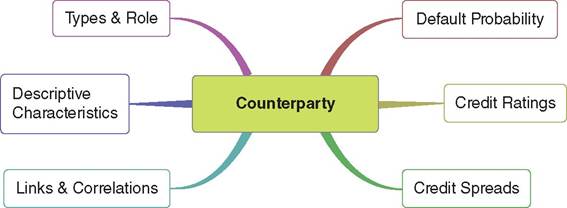
FIGURE 7.1 Main counterparty risk elements
of the individual contracts. In fact, these cash flows are expected payments from the lender, which split to the following categories:
■ Principal cash flows, denoted as CFprl, whose sum equals the capital investment
■ Interest income, denoted as CFlnt, which is driven by the market conditions, as well as credit and profit spreads
Moreover, the lenders may sell the loan deposits to receive liquidity and income.
Borrowers, also called obligors, receive capital, loan, for a predefined duration in exchange for interest and sometimes fees. These counterparties have an obligation to return the capital, as principal cash flows denoted above, based on predefined terms set in the contract rules.
Although financial contracts are legal agreements, there is always a probability that borrowers will default on fulfilling the agreed obligations. If they default, credit losses ensue. Therefore, financial contracts can be enhanced with additional rules defining the possible actions to cover such losses from other counterparties. As we will discuss in Chapter 10, in regards to counterparties, these enhancements are referring to guarantors and protection sellers in guarantees and credit derivatives instruments.
Banks play multiple roles as counterparties. When they act as lenders, they are very strong counterparties compared with P2P systems, mostly in terms of understanding and managing risk, maximizing performance, in size of assets, absorbing losses, and legal rights against the borrowers. On the other hand, banks are also acting as borrowers. They are more trustworthy counterparties compared to P2P systems because they have a good reputation, legal departments, and they provide collaterals including deposit guarantee from central banks. Finally, banks may act as guarantors/protection sellers. Compared to P2P systems they are more trusted, have a better knowhow and reputation in derivative markets.
In marketplace lending, the same counterparties exist as in bank lending. However, their roles are slightly different: lenders and borrowers interact directly with each other, where the platform abdicates risk management and guarantees to the lenders themselves. Borrowers and lenders still interact with the platform after it has underwritten a loan, but more in an administrative capacity. For example, when lenders decide to fund a loan, they do so via an account set up by the platform. In the event of delinquency, lenders will also depend on the platform to collect any outstanding payments and remind the borrower of his legal obligation to repay. The main difference lies in the part of guarantors. In marketplace lending, they are largely absent. Unless a platform has organized a third party to step in and take over administration of outstanding loans, nobody guarantees for the deposits of lenders in case of a collapse of the platform. Deposit insurance from central banks only comes with a banking license. At the same time, most lenders have no way of insuring their deposits with credit default swaps (CDS) because they do not exist yet for online loans. However, when larger borrowers, such as credit hedge funds securitize their loans, they may enhance them with a guarantee.
7.2