I FITNESS ^xv ^224 ^266 ^274
General fitness assessment is an important aspect of every individual’s physical examination. Obstetrician-gynecologists should evaluate each patient’s fitness level and offer appropriate interventions or referrals to promote healthy living.
Goals should include maintaining an appropriate weight, consuming a healthy diet, and participating in regular physical activities at appropriate intensity and duration.Weight
Weight Assessment
Body mass index (BMI) describes relative weight for height and is used as a practical marker to assess obesity. The calculation is as follows:
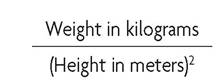
If pounds and inches are used to calculate BMI, multiply the division results by 703 as follows: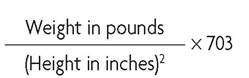
Online resources, electronic medical records, and charts have made calculating BMI much easier. The National Heart, Lung, and Blood Institute online adult BMI calculator is available at www.nhlbi.nih.gov/guidelines/ obesity/BMI/bmicalc.htm. Although the BMI value is calculated the same way for adolescents and adults, the interpretation of the BMI number varies for adolescents depending on age (see also the “Adolescents” section later in Part 3).
Obesity management guidelines issued jointly in 2013 by the American College of Cardiology, the American Heart Association, and The Obesity
Society support the following BMI classification published in 1998 by the National Heart, Lung, and Blood Institute:
• Underweight: BMI lower than 18.5
• Normal weight: BMI 18.5-24.9
• Overweight: BMI 25.0-29.9
• Obesity: BMI 30.0 or greater
— Obesity Class I: BMI 30.0-34.9
— Obesity Class II: BMI: 35.0-39.9
— Obesity Class III (extreme): 40.0 or more
Measuring waist circumference, which specifically assesses abdominal fat content, is another useful tool.
In women, a waist circumference greater than 35 inches is considered to be abnormal; however, more recent guidelines recommend including a measurement of 35 inches in the abnormal classification. Elevated waist circumference in the specific population of patients with a BMI between 25 and 34.9 is associated with an increased risk of type 2 diabetes mellitus, hypertension, dyslipidemia, and coronary vascular disease. This measurement is a useful adjunct to the BMI because it can provide an estimate of increased abdominal fat even in the absence of a change in BMI. Waist measurements in patients with a BMI of 35 or higher, however, are not useful because predictive power is lost. Waist measurement is performed as follows:• The patient stands and the examiner, positioned at the right of the patient, palpates the upper hip bone to locate the right iliac crest.
• Just above the uppermost lateral border of the right iliac crest, the measuring tape is placed in a horizontal plane around the abdomen and parallel to the floor with the tape snug, but not compressing the skin.
• The measurement is made at a normal minimal respiration.
Weight Loss Benefits
Most Americans are aware that losing weight is beneficial to their health if they are not at their optimum weight, but physicians should relay what specific benefits may be reaped based on available evidence. Weight loss has been proved to lower elevated blood pressure in overweight and obese patients with hypertension. It also lowers elevated levels of total cholesterol, low-density lipoprotein cholesterol, and triglycerides while increasing high-density lipoproteins in overweight and obese patients with dyslipidemia. Patients with type 2 diabetes mellitus will decrease their blood glucose levels with weight loss. In addition, exercise will strengthen muscles, maintain bone health, and give more energy (see also “Exercise” later in this section).
Weight loss also can decrease the likelihood of developing morbidities associated with obesity, including heart disease, infertility, gallbladder disease, osteoarthritis, and many types of cancer, including breast, uterine, and colon cancer.
For example, endometrial cancer is five times more prevalent in obese women than in nonobese women. Heart disease, the leading cause of death of women, is directly associated with obesity.Dietary Therapy for Weight Loss
Dietary therapy for weight loss involves a diet in which fewer calories are consumed than expended. The 2010 Dietary Guidelines for Americans developed by the U.S. Department of Agriculture (USDA) includes recommendations to help individuals achieve a healthy diet. A useful adjunct to the guidelines is the ChooseMyPlate web site (www.choosemyplate.gov/), which offers an interactive web-based program to determine the number of servings needed per day in each food group and the recommended number of calories per day based on weight and height. The site also provides tables to best determine how many calories are in some of the most common food items.
Calculating caloric intake in any given day is an important tool to assist with weight loss. A 20-25% reduction in calories from the amount required for baseline maintenance will result in gradual and safe weight loss of approximately 1-2 lb/wk. Table 3-1 includes the Dietary Guidelines for Americans’ recommendations for women’s daily caloric needs by age and level of physical activity. If, for example, baseline caloric needs for maintenance are 2,000 kcal/d, a 25% reduction to 1,500 kcal/d would be suggested. Simply keeping a diet and calorie diary can be illuminating and
Table 3-1. Estimated Daily Caloric Needs for Nonpregnant Adolescents and
| Women by Level of Physical Activity* ^ | |||
| Age (years) | Physical Activity Level | ||
| Sedentaryf | Moderately Active1 | Active§ | |
| 14-18 | 1,800l1 | 2,000l1 | 2,400l1 |
| 19-30 | 1,800-2,000 | 2,000-2,200 | 2,400 |
| 31-50 | 1,800 | 2,000 | 2,200 |
| 51+ | 1,600 | 1,800 | 2,000-2,200 |
*The estimated calories are rounded to the nearest 200 calories and are based on Estimated Energy Requirement equations, using reference heights (average) and reference weights (healthy) for each age group.
For adolescents, reference height and weight vary. For women, the reference is height 5 ft 4 in. and weight 126 lb. An individual’s caloric needs may be higher or lower than these average estimates. Estimates do not include women who are pregnant or breastfeeding. Estimated Energy Requirement equations are from the Institute of Medicine. Dietary Reference Intakes for Energy, Carbohydrate, Fiber, Fat, Fatty Acids, Cholesterol, Protein, and Amino Acids. Washington (DC): The National Academies Press; 2002.!Sedentary means a lifestyle that includes only the light physical activity associated with typical day-to-day life.
tModerately active means a lifestyle that includes physical activity equivalent to walking approximately 1.5-3 miles per day at 3-4 miles per hour, in addition to the light physical activity associated with typical day-to-day life.
§Active means a lifestyle that includes physical activity equivalent to walking more than 3 miles per day at 3-4 miles per hour, in addition to the light physical activity associated with typical day-to-day life.
llThe calorie ranges shown are to accommodate needs of different ages within the group. For adolescents, more calories are needed at older ages. For women, fewer calories are needed at older ages.
Modified from Table 2-3 In: Department of Agriculture, Department of Health and Human Services. Dietary guidelines for Americans, 2010. 7th ed. Washington, DC: Government Printing Office; 2010. Available at: http://www.cnpp.usda.gov/DGAs2010-PolicyDocument.htm. Retrieved July 24, 2013.
can assist with weight loss. The USDA’s SuperTracker web site (available at www.supertracker.usda.gov/default.aspx) allows individuals to create personalized nutrition and exercise plans and track their progress. Apps for smart phones and tablets also are available.
Successful weight reduction by following a low-calorie diet is more likely to occur when dietary allowances are met. Dietary education focuses on the following:
• Understanding energy values of different foods
• Understanding food composition (fats, carbohydrates, and proteins)
• Preparing foods
• Developing new food-purchasing habits
• Avoiding overeating high-calorie foods
• Maintaining adequate fluid intake
• Reducing portion sizes
• Limiting alcohol consumption
Table 3-1 provides estimated daily caloric intake requirements for women based on age group and level of physical activity.
Pharmacotherapy for Weight Loss
The American College of Cardiology, American Heart Association, and The Obesity Society recommend that weight-loss drugs approved by the U.S. Food and Drug Administration (FDA) are only to be used as part of a comprehensive program that includes physical activity and dietary therapy. In addition, their use is recommended only in patients with a BMI greater than or equal to 30 with no concomitant obesity-related risk factors or diseases or in patients with a BMI greater than or equal to 27 with hypertension, dyslipidemia, type 2 diabetes mellitus, sleep apnea, or coronary heart disease. Because of the risks associated with the use of weight-loss drugs and the lack of long-term safety data beyond 1 year, the administration of these drugs is limited to these select patient populations. Because weight loss using phentermine and topiramate extended-release can cause fetal harm, females capable of becoming pregnant should have a negative pregnancy test result before initiation and every month while using the drug and should use effective contraception consistently while taking phentermine and topiramate extended-release.
The availability of pharmacologic therapy for weight loss continues to change at a rapid pace. The FDA provides information about currently approved weight-loss drugs on their web site, available at www.fda.gov/ Drugs/DrugSafety/InformationbyDrugClass/ucm308412.htm.
Weight Loss Surgery
Surgical options for weight loss currently include gastroplasty (including sleeve gastrectomy), adjustable gastric banding, and gastric bypass (Roux-en-Y). The primary function of each procedure is to reduce food consumption. The American College of Cardiology, American Heart Association, and The Obesity Society consider surgical candidates to be patients with a BMI greater than or equal to 40 or greater than or equal to 35 with comorbid conditions, such as cardiovascular disease, type 2 diabetes mel- litus, and sleep apnea.
The goal is to create enough of a caloric deficit that sufficient weight loss is achieved to decrease weight-associated risk factors or comorbidities. Beyond the risks associated with a major surgical intervention, nutritional deficiencies can occur long term. Thus, there is a need for monitoring and maintenance, and a multidisciplinary team is highly recommended for these patients. Long-term outcome studies have shown that all-cause mortality is 40% lower in patients who undergo gastric bypass surgery compared with controls. Women who have had bariatric surgery with malabsorptive procedures (eg, Roux-en-Y gastric bypass, bilio- pancreatic diversion) should generally avoid the use of oral contraceptives (combined estrogen and progestin and progestin-only) because failure rates may be higher because of inadequate gastrointestinal absorption. There are no contraceptive method interactions with restrictive bariatric procedures.Weight Loss Maintenance
Patients involved in a multifocused approach to weight loss, including dietary therapy, physical activity, and behavior therapy, are more successful at maintaining weight loss than others. Behavior therapy includes strategies such as self-monitoring. This involves recording what types of food are eaten, their caloric value, and their nutrient composition. Other types of therapy include stress management, stimulus control, cognitive- behavioral therapy, and the use of social supports. There also is an association between weight loss success and more frequent patient-practitioner visits, which provide encouragement and accountability.
Nutrition
Consuming a nutritious, balanced diet is essential for achieving and maintaining good health and an appropriate weight. Despite the wide variety of nutritious foods available, many Americans do not eat the array of foods that will provide all needed nutrients while staying within caloric needs. Daily intakes of nutrient-dense foods are lower than recommended, whereas consumption of nutrient-lacking foods and food components exceeds recommended levels. Box 3-5 and Box 3-6 include key recommendations from the USDA’s report, Dietary Guidelines for Americans, 2010, which recommends food choices that should be emphasized as well as those to be limited to help close nutrient gaps and move toward healthful eating patterns. For additional information, please see the full USDA report (available at www.cnpp.usda.gov/DGAs2010-PolicyDocument.htm) as well as the dietary reference intake tables from the Institute of Medicine (IOM) (available at www.iom.edu/Activities/Nutrition/SummaryDRIs/DRI- Tables.aspx).
Box 3-5. Foods and Nutrients to Increase to Achieve a Healthy Diet
Box 3-5. Foods and Nutrients to Increase to Achieve a Healthy Diet (continued)
Key Recommendations (continued)
• Nutrients—Choose foods that provide more of the following nutrients, which are inadequately consumed by the general population: potassium, dietary fiber, calcium, and vitamin D.[IV] [V]
Additional Recommendations for Specific Population Groups
Women Capable of Becoming Pregnant5
• Choose foods that supply heme iron (ie, iron from animal foods that originally contained hemoglobin, such as red meat, fish, and poultry), which is more readily absorbed by the body. Absorption of nonheme iron (ie, from plant sources) can be enhanced by combining intake with vitamin C-rich foods.
• Consume 0.4 mg per day of synthetic folic acid (from fortified foods, supplements, or both) in addition to food forms of folate from a varied diet.1
Women Who Are Pregnant or Breastfeeding5
• Consume 8-12 oz of seafood per week from a variety of seafood types. Because of their methyl mercury content, limit white (albacore) tuna to 6 oz per week and do not eat the following four types of fish: tilefish, shark, swordfish, and king mackerel.
• If pregnant, take an iron supplement as recommended by an obstetrician or other health care provider.
Individuals Aged 50 Years and Older
• Consume foods fortified with vitamin B12, such as fortified cereals, or dietary supplements.
Box 3-5. Foods and Nutrients to Increase to Achieve a Healthy Diet (continued)
1See the Institute of Medicine Dietary Reference Intake tables for recommended daily allowances and adequate intake levels of these nutrients: http://www.iom.edu/ Activities/Nutrition/SummaryDRIs/DRI-Tables.aspx.
includes adolescent girls.
’“Folic acid” is the synthetic form of the nutrient, whereas “folate” is the form found naturally in foods.
Modified from Chapter 4: Foods and nutrients to increase. In: Department of Agriculture, Department of Health and Human Services. Dietary guidelines for Americans, 2010. 7th ed. Washington, DC: Government Printing Office; 2010. Available at: http://www.cnpp. usda.gov/DGAs2010-PolicyDocument.htm. Retrieved July 24, 2013.
Foods and Nutrients to Increase
Greater consumption of nutrient-dense foods is advised to provide recommended levels of vitamins and minerals while controlling caloric intake and reducing the risk of chronic health conditions, such as obesity, cardiovascular disease, and type 2 diabetes mellitus. Nutrient-dense foods include vegetables, fruits, whole grains, fat-free or low-fat dairy products, and lean protein that are prepared without added solid fats, sugars, starches, and sodium. In the United States, inadequate consumption of these foods has led to lower than recommended intake of dietary fiber and other essential nutrients (Box 3-5), several of which are particularly important for women’s health, including calcium, vitamin D, folic acid, and iron.
Dietary Fiber
Dietary fiber is the nondigestible form of carbohydrates and lignin. Dietary fiber naturally occurs in plants and is important in promoting bowel regularity. Because foods that contain fiber are digested slowly, they help provide a greater feeling of fullness and are helpful in maintaining a healthy weight and controlling blood glucose levels. The IOM recommends that individuals intake 14 g of fiber per 1,000 calories consumed. Some of the best sources of dietary fiber are beans and peas, such as navy beans, split
Box 3-6. Foods and Food Components to Reduce
• Reduce daily sodium intake to less than 2,300 mg and further reduce intake to 1,500 mg among individuals who are 51 years and older and those of any age who are African American or have hypertension, diabetes, or chronic kidney disease. The 1,500-mg recommendation applies to approximately one half of the U.S. population, including children and most adults.[††]
• Consume less than 10% of calories from saturated fatty acids by replacing them with monounsaturated and polyunsaturated fatty acids.
• Consume less than 300 mg per day of dietary cholesterol. Consuming less than 300 mg/d of cholesterol can help maintain normal blood cholesterol levels, and intake of less than 200 mg/d can further help individuals at high risk of cardiovascular disease.
• Keep trans-fatty acid consumption as low as possible, especially by limiting foods that contain synthetic sources of trans-fats, such as partially hydrogenated oils, and by limiting other solid fats.
• Reduce the intake of calories from solid fats and added sugars.
• Limit the consumption of foods that contain refined grains, especially refined grain foods that contain solid fats, added sugars, and sodium.
• If alcohol is consumed, it should be consumed in moderation—up to one drink per dayτ for women—and only by adults of legal drinking age. peas, lentils, pinto beans, and black beans. Additional sources of dietary fiber include other vegetables, fruits, whole grains, and nuts.
Calcium and Vitamin D
To help promote good bone health and reduce fracture risk, the IOM’s recommended dietary allowance of calcium is 1,000 mg/d for women aged 19-50 years and 1,200 mg/d for women 51 years and older. This is the necessary amount of calcium that should be consumed through food sources to achieve peak bone mass and maintain bone health. Vitamin D has a role in calcium absorption, muscle performance, and balance. The most common sources are fortified milk, cereals, egg yolks, salt-water fish, and liver. The recommended dietary allowance is 600 international units/day for most of life and 800 international units/day for adults older than 70 years.
Folic Acid
Daily intake of 0.4 mg/d of folic acid is recommended for all women capable of becoming pregnant because the preconception ingestion of folic acid has been shown to reduce the risk of neural tube defects. Daily supplementation with a multivitamin is recommended for all women in this group because most women are unable to attain this level of folic acid through dietary sources alone, and approximately 50% of pregnancies are unplanned. A higher folic acid dosage of 4 mg/d is recommended for women who take anticonvulsant medication, have a history of neural tube defects, or have already given birth to a child affected by a neural tube defect. This higher dosage of folic acid should be prescribed by a health care provider. Although folic acid is relatively nontoxic, increasing the doses of multivitamin preparations to reach the higher level is not advised because of the potential for ingesting excessive amounts of other vitamins that may be harmful.
Iron
Many women of reproductive age are deficient in iron. The IOM’s recommended dietary allowance of iron is 18 mg/d for women aged 19-50 years. Women can improve their iron status by choosing foods that supply heme iron, which is readily absorbed by the body, as well as foods that enhance iron absorption such as those rich in vitamin C. Sources of heme iron include lean meat, poultry, and seafood. Additional sources of iron include most breads and cereals, which are enriched with iron. Plant sources of nonheme iron—the less bioavailable form of iron—include white beans, lentils, and spinach.
Foods and Food Components to Reduce
Decreased consumption of nutrient-lacking foods and food components is advised. Sodium, solid fats, added sugars, and refined grains should be consumed in moderation (Box 3-6).
Sodium
Sodium is an essential nutrient but is needed by the body in relatively small quantities, provided that substantial sweating does not occur. On average, the higher an individual’s sodium intake, the higher the individual’s blood pressure. Sodium is found in a wide variety of foods, some expected—such as deli meats and canned soups—and others more surprising—such as breakfast cereals and baked goods. Caloric intake is associated with sodium intake; therefore, reducing caloric intake can help reduce sodium intake, thereby contributing to the health benefits that occur with lowering sodium intake. Recommended daily sodium intake levels are listed in Box 3-6. Individuals can reduce their consumption of sodium in a variety of ways, including consuming more fresh foods, choosing low-sodium processed foods, and limiting the use of salt when cooking or dining out.
Solid Fats and Added Sugar
Fats should provide no more than 20-35% of the total calories in an adult diet, with most fats coming from sources of polyunsaturated fatty acids and monounsaturated fats. It is also important to include sources of omega-3 fatty acids, which may be beneficial for disease prevention and maintenance of overall health. Intake of saturated fatty acids, trans-fatty acids, and cholesterol should be limited.
Reducing dietary fat alone without reducing overall calories is not sufficient for weight loss. Added sugar is another major source of excess empty calories. Most sugars in typical American diets are sugars added to foods during processing or preparation or at the table. Reducing the consumption of solid fats and added sugars allows for increased intake of nutrient-dense foods without exceeding overall caloric needs. Individuals can reduce their consumption of solid fat and added sugar by focusing on eating the most nutrient-dense forms of foods from all food groups; limiting the amount of solid fats and added sugars when cooking or eating; and consuming fewer and smaller portions of foods and beverages that contain solid fats, added sugars, or both, such as grain-based desserts, sodas, and other sugar-sweetened beverages.
Refined Grains
The refining of whole grains involves a process that results in the loss of dietary fiber, vitamins, and minerals. Most refined grains are enriched with iron, thiamin, riboflavin, niacin, and folic acid before being further used as ingredients in foods; however, dietary fiber and some vitamins and minerals that are present in whole grains are not routinely added back to refined grains. In addition, because many refined grain products are high in solid fats and added sugars, they commonly provide excess calories when consumed beyond recommended levels. For individuals maintaining a 2,000-calorie daily diet, the USDA recommends consumption of no more than 3 ounce-equivalents per day. Consumption of refined grain products that also are high in solid fats, added sugars, or both—such as cakes, cookies, donuts, and other desserts—should be reduced. Refined grains should be replaced with whole grains, such that at least half of all grains eaten are whole grains.
Special Diets
Special diets abound for a variety of reasons and conditions. Some are based on clinical evidence, whereas others are merely popular fads or trends based on testimonials.
The vegetarian diet continues to grow in popularity, with the increasing number of vegetarian products available in supermarkets, vegetarian menu options at restaurants, and vegetarian cookbooks and web sites as evidence of the considerable interest in this dietary way of life. Although there are many variations, the Academy of Nutrition and Dietetics (formerly, the American Dietetic Association) defines a vegetarian diet as one that excludes meat (or fowl), seafood, or products containing these foods. A vegan diet differs from a vegetarian diet in that it excludes eggs, dairy, and other animal products. According to the Academy, vegetarian diets (including total vegetarian or vegan diets) support good health when appropriately planned to meet nutrient and energy needs and may help in the prevention and treatment of certain diseases.
The gluten-free diet has gained recent popularity, although it has been in existence for decades as the treatment for celiac disease. More recently, it has been suggested that the avoidance of dietary gluten, a protein found in wheat, rye, and barley, can lead to better sleep, increased energy, weight loss, and feelings of health and well-being. At this time, scientific evidence does not support the benefits of a gluten-free diet for individuals without a known diagnosis of celiac disease or gluten sensitivity.
For individuals with lactose intolerance, a dairy-free diet might seem to be the only option for symptom management. However, most people with lactose intolerance can tolerate small volumes of milk and lactose from dairy foods other than milk, such as cheese and yogurt. Because milk and milk products are a significant source of calcium and other important nutrients, complete dietary avoidance is not recommended, especially for women who may be at risk of osteoporosis. Instead, strategies such as limiting the consumption of dairy products, choosing dairy products with added lactase, and using lactase enzyme supplements when eating foods containing lactose are generally recommended to help individuals manage the symptoms of lactose intolerance.
Exercise ^247
All adults should engage in regular physical activity. Women should be counseled about various medical limitations, such as arthritis, that may limit their activities, or be referred to a fitness instructor for safety guidelines. There are two general types of exercise: 1) aerobic and 2) muscle strengthening. Inactive adults should work gradually toward the aerobic exercise and muscle-strengthening goals listed in the following discussions. To avoid injury risks, it is important to exercise for shorter periods of time at a light or moderate intensity with more frequent sessions spread throughout the week. For example, walking sessions could begin at 5 minutes three times a day for 5-6 days of the week. The length of time could then gradually be lengthened and the walking speed slowly increased.
Aerobic Exercise
Aerobic exercises, by definition, are physical activities that move large muscles in a rhythmic manner for a sustained period. These include running, brisk walking, bicycling, dancing, and swimming. These activities increase the heart rate to meet the increased oxygen demands of the body during exercise. Aerobic exercise guidelines for adults are as follows:
• For substantial health benefits, the recommendation is for moderate-intensity aerobic activity (eg, brisk walking) for 150 minutes (2 hours, 30 minutes) per week or vigorous-intensity aerobic activity (eg, jogging or running) for 75 minutes (1 hour and 15 minutes) per week, spread throughout the week in episodes of at least
10 minutes each.
• For additional and more extensive health benefits, increasing this time span to 300 minutes (5 hours) of moderate-intensity aerobic physical activity or 2 hours and 30 minutes of vigorous-intensity physical activity per week will lower the risk of colon and breast cancer, prevent unhealthy weight gain, and lower risk of heart disease and diabetes.
• Activities spread over at least 3 days of the week produce health benefits and may help reduce the risk of injury and avoid fatigue.
Older adults should follow these aerobic exercises guidelines. If chronic conditions limit their activities, older adults should be as physically active as their abilities allow. They should avoid inactivity. Older adults should do exercises that maintain or improve balance if they are at risk of falling.
Measurement of heart rate during exercise is an excellent method by which to evaluate cardiovascular fitness. The heart rate at which conditioning will develop is called the target heart rate. As conditioning improves, the heart rate stabilizes at a fixed level. The following formula is used to calculate the target heart rate:
220 - (patient's age) = maximum heart rate
60-80% of the maximum heart rate = target heart rate
It is recommended that individuals know their heart rate while exercising and aim for being within the target heart rate range for 20-30 minutes. Exceeding the target heart rate range may be dangerous and should be done only under supervision.
Muscle Strengthening
Muscle-strengthening exercises are activities that overload the muscles to increase bone strength and maintain muscle mass. These exercises work the major muscle groups of the body: legs, hips, back, chest, abdomen, shoulders, and arms. Weight training, calisthenics, working with resistance bands, carrying heavy loads, and heavy gardening activities (including digging, raking, shoveling, and sweeping) are all examples. Musclestrengthening activity recommendations for adults are as follows:
• No specific amount of time per day is recommended, but 2 days per week is the minimum.
• Sets of 8-12 repetitions of each exercise are effective, but 2-3 sets of these repetitions are even more effective. Increasing the amount of weight or the number of days per week will result in stronger muscles.
Bibliography
Adams TD, Gress RE, Smith SC, Halverson RC, Simper SC, Rosamond WD, et al. Long-term mortality after gastric bypass surgery. N Engl J Med 2007;357:753-61. [PubMed] [Full Text]
American College of Obstetricians and Gynecologists. Obesity in adolescents. Guidelines for adolescent health care [CD-ROM]. 2nd ed. ed. Washington, DC: American College of Obstetricians and Gynecologists; 2011. p. 148-63.
Craig WJ, Mangels AR. Position of the American Dietetic Association: vegetarian diets. American Dietetic Association. J Am Diet Assoc 2009;109:1266-82. [PubMed] Department of Agriculture, Department of Health and Human Services. Dietary guidelines for Americans, 2010. 7th ed. Washington, DC: Government Printing Office; 2010. Available at: http://www.cnpp.usda.gov/DGAs2010-PolicyDocument. htm. Retrieved July 24, 2013.
Department of Health and Human Services. Physical activity guidelines for Americans at-a-glance: a fact sheet for professionals. Available at: http://www. health.gov/paguidelines/factsheetprof.aspx. Retrieved July 24, 2013.
Gaesser GA, Angadi SS. Gluten-free diet: imprudent dietary advice for the general population? J Acad Nutr Diet 2012;112:1330-3. [PubMed]
Institute of Medicine. Dietary reference intakes tables and application. Available at: http://www.iom.edu/Activities/Nutrition/SummaryDRIs/DRI-Tables.aspx. Retrieved July 24, 2013.
Jensen MD, Ryan DH, Apovian CM, Ard JD, Comuzzie AG, Donato KA, et al. 2013 AHA/ACC/TOS guideline for the management of overweight and obesity in adults: a report of the American College of CardiologyZAmerican Heart Association Task Force on Practice Guidelines and The Obesity Society. Circulation 2013; DOI: 10.1161/01.cir.0000437739.71477.ee. J Am Coll Cardiol 2013; DOI: 10.1016/j.jacc.2013.11.004. Obesity (Silver Spring). 2013 Nov 12. DOI: 10.1002/ oby.20660. [PubMed] [Full Text]
Moyer VA. Behavioral counseling interventions to promote a healthful diet and physical activity for cardiovascular disease prevention in adults: U.S. Preventive Services Task Force recommendation statement. U.S. Preventive Services Task Force. Ann Intern Med 2012;157:367-72. [PubMed] [Full Text]
Moyer VA. Screening for and management of obesity in adults: U.S. Preventive Services Task Force recommendation statement. U.S. Preventive Services Task Force. Ann Intern Med 2012;157:373-8. [PubMed] [Full Text]
National Heart, Lung, and Blood Institute. Clinical guidelines on the identification, evaluation, and treatment of overweight and obesity in adults: the evidence report. NIH Publication No. 98-4083. Bethesda (MD): NHLBI; 1998. Available at: http:// www.nhlbi.nih.gov/guidelines/obesity/ob_gdlns.pdf. Retrieved July 24, 2013.
National Institute of Diabetes and Digestive and Kidney Diseases. Lactose intolerance. Available at: http://digestive.niddk.nih.gov/ddiseases/pubs/lactoseintoler- ance. Retrieved July 24, 2013.
Understanding and using the U.S. Medical Eligibility Criteria For Contraceptive Use, 2010. Committee Opinion No. 505. American College of Obstetricians and Gynecologists. Obstet Gynecol 2011;118:754-60. [PubMed] [Obstetrics & Gynecology]
Resources
American College of Obstetricians and Gynecologists. Annual women's health care. Washington, DC: American College of Obstetricians and Gynecologists; 2011. Available at: http://www.acog.org/wellwoman. Retrieved July 19, 2013.
American College of Obstetricians and Gynecologists. Exercise and fitness: a guide for women. Patient Education Pamphlet AP045. Washington, DC: American College of Obstetricians and Gynecologists; 2010.
American College of Obstetricians and Gynecologists. Healthy eating. Patient Education Pamphlet AP130. Washington, DC: American College of Obstetricians and Gynecologists; 2013.
American College of Obstetricians and Gynecologists. Weight control: eating right and keeping fit. Patient Education Pamphlet AP064. Washington, DC: American College of Obstetricians and Gynecologists; 2013.
Department of Agriculture. ChooseMyPlate. Available at: http://www.choosemy plate.gov/. Retrieved July 24, 2013.
Department of Agriculture. ChooseMyPlate: information for health care professionals. Available at: http://www.choosemyplate.gov/information-healthcare-profes sionals.html. Retrieved July 24, 2013.
Department of Agriculture. Dietary guidelines for Americans. Available at: http:// www.cnpp.usda.gov/dietaryguidelines.htm. Retrieved July 24, 2013.
Department of Agriculture. SuperTracker. Available at: https://www.supertracker. usda.gov/default.aspx. Retrieved July 24, 2013.
Food and Drug Administration. Weight loss drugs. Available at: http://www.fda. gov/Drugs/DrugSafety/InformationbyDrugClass/ucm308412.htm. Retrieved July 24, 2013.
Hall KD. What is the required energy deficit per unit weight loss? Int J Obes (Lond) 2008;32:573-6. [PubMed] [Full Text]
Haskell WL, Lee IM, Pate RR, Powell KE, Blair SN, Franklin BA, et al. Physical activity and public health: updated recommendation for adults from the American College of Sports Medicine and the American Heart Association. American College of Sports Medicine and American Heart Association. Circulation 2007;116:1081-93. [PubMed] [Full Text]
Kushi LH, Byers T, Doyle C, Bandera EV, McCullough M, McTiernan A, et al. American Cancer Society Guidelines on Nutrition and Physical Activity for cancer prevention: reducing the risk of cancer with healthy food choices and physical activity. American Cancer Society 2006 Nutrition and Physical Activity Guidelines Advisory Committee. CA Cancer J Clin 2006;56:254,81; quiz 313-4. [PubMed] National Foundation for Celiac Awareness. Celiac disease and women's health. Available at: http://www.celiaccentral.org/education/Women-s-Health/438. Retrieved August 20, 2013.
National Heart, Lung, and Blood Institute. Aim for a healthy weight. Available at: http://www.nhlbi.nih.gov/health/public/heart/obesity/lose_wt/index.htm. Retrieved July 24, 2013.
National Heart, Lung, and Blood Institute. Calculate your body mass index. Available at: http://www.nhlbi.nih.gov/guidelines/obesity/BMI/bmicalc.htm. Retrieved July 24, 2013.
National Institute of Diabetes and Digestive and Kidney Diseases. Digestive disorders. Available at: http://www.nutrition.gov/nutrition-and-health-issues/digestive- disorders. Retrieved July 24, 2013.
Osteoporosis. Practice Bulletin No. 129. American College of Obstetricians and Gynecologists. Obstet Gynecol 2012;120:718-34. [PubMed] [Obstetrics & Gynecology]
Ross AC, Manson JE, Abrams SA, Aloia JF, Brannon PM, Clinton SK, et al. The 2011 report on dietary reference intakes for calcium and vitamin D from the Institute of Medicine: what clinicians need to know. J Clin Endocrinol Metab 2011;96:53-8. [PubMed] [Full Text]