Access to Health Care
Access to health care for young adults has been problematic for funding reasons as well as transition-of-care difficulties. Lack of insurance has been highlighted, and is as common among young adults without disabilities as those with disabilities, as noted through the National Health Information Survey (277).
However, adults with disabilities had eight times greater odds of reporting unmet health care needs and six times greater odds of having no usual source of care, compared to those without disabilities. The majority of young adults with disabilities reported a gap in their insurance coverage, and many were uninsured over a three-year period (278).Access also involves environment, attitudes, and systems. Architectural barriers have been addressed through the Americans with Disabilities Act, although accessible health care providers’ offices and accessible
15.3 examination and procedure tables continue to be available on only a limited basis. Attitudinal barriers are more difficult to remedy, and involve both consumers and providers. Rehabilitation clinicians may need to ask more direct questions of their patients regarding secondary conditions and additional health concerns to better identify conditions and begin management. Physiatrists can act as a resource for primary care providers, who likely have limited knowledge regarding persons with lifelong disabilities. Consumers with communication or cognitive impairments (eg, hearing impairment, speech production impairment, brain injury, ID) may need more time to communicate, require an interpreter, or require personal preparation time for the appointment in order to have their needs conveyed; modification of appointment times, with preplanning and written lists of concerns, can often be helpful. Consumers may seek help only late in the course of an acute medical condition or change because of previous difficulties managing the system. Specifically, consumers report that their routine health care providers know little about their disability and its impact on health and function (43).
Characteristics That Affect Successful Transition of Care*
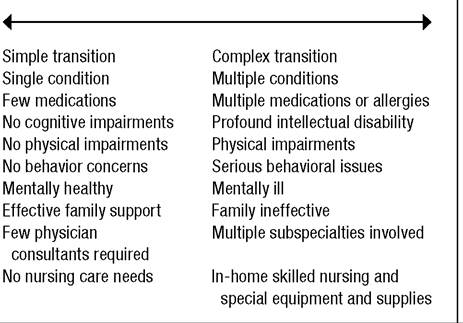
Adapted from Ref 282.