Background
Before directing our attention toward the stresses of transport, it is necessary to have the background knowledge pertaining to the atmosphere, physical gas laws, and cabin altitude.
A general understanding of these 3 topics will help illustrate how the human body responds to the atmospheric changes and begins to explain the various stresses of flight. The Atmosphere
The atmosphere is composed of various gases. To an altitude of approximately 70 000 ft, these gases exist in a uniform percentage. Nitrogen constitutes the largest percentage (78.08%), followed by oxygen (20.95%). Argon, carbon dioxide, hydrogen, neon, and helium, all in very small percentages, represent the remaining gases in the atmosphere.
The atmosphere can be characterized by the physiologic zones that predict the effects of altitude on the human body. Many of these predictable effects are based on atmospheric properties that can be observed at any given altitude. Atmospheric pressure, or barometric pressure, is the force or weight
exerted by the atmosphere at any given point. Temperature and volume changes will also be observed at the varying altitudes. Table 11.1 summarizes altitude-related properties.
There are 4 physiologic zones that compose the earth's atmosphere. These zones are characterized by the pressure changes that take place within the altitude boundaries and their physiologic effects on the human body.
The physiologic zone, or the efficient zone, extends from sea level to approximately 12 000 ft. Within this zone, the barometric pressure decreases from 760 to 483 mm Hg. This is the most acceptable zone for normal physiologic functioning, unless a person acclimatizes to a higher altitude or supplemental oxygen is used. With prolonged exposure, only minor problems may occur, especially if the person continues to ascend, exerts himself or herself, or stays too long at the higher altitude.
The majority of private aviation occurs within this zone. A dramatic drop in barometric pressure and temperature is seen in the physiologic deficient zone. From 12 000 to 50 000 ft, the barometric pressure drops from 483 to 87 mm Hg. Normal physiologic function is seriously impaired at the upper limits of this zone if there is no appropriate intervention. Most commercial aviation occurs in this zone.
The partial space equivalent zone and the total space equivalent zone represent the final 2 physiologic zones of the atmosphere. The partial space equivalent zone extends from 50 000 ft to 120 miles, where a pressurized environment is mandatory to compensate for the barometric changes that
Table 11.1: Altitude-Related Effects in the Earth's Atmosphere
| Altitude (feet) | Barometric Pressure, torr (mm Hg) | Temperature | Gas Expansion Ratio |
| oC | oF |
| 0 | 760 | 15.0 | 59.0 | 1.0 |
| 2000 | 706 | 11.0 | 51.8 | 1.1 |
| 5000 | 632 | 5.1 | 41.2 | 1.2 |
| 8000 | 565 | -0.9 | 30.4 | 1.3 |
| 10 000 | 523 | -4.8 | 3.4 | 1.5 |
| 15 000 | 429 | -14.7 | 5.5 | 1.8 |
| 18 000 | 380 | -20.7 | -5.2 | 2.0 |
| 20 000 | 349 | -24.6 | -12.3 | 2.4 |
| 25 000 | 282 | -34.5 | -30.1 | 2.7 |
| 30 000 | 228 | -44.4 | -47.9 | 3.3 |
| 40 000 | 141 | -56.5 | -69.7 | 5.4 |
| 50 000 | 87 | -56.5 | -69.7 | 8.7 |
can affect the body.
Beyond 120 miles above sea level is the total space equivalent zone, where weightlessness occurs in “true space.” Physical Gas Laws
Boyle’s Law
Boyle's law relates to the expansion of gases in the earth's atmosphere. It states that the volume of a given gas varies inversely as its pressure. The formula for Boyle's law is as follows:
P1V1=P2V2
P1 equals the initial barometric pressure; V1, the initial volume of gas; P2, the final barometric pressure; and V2, the final volume of the enclosed gas.
As an aircraft ascends, the ambient (surrounding) barometric pressure decreases and, according to Boyle's law, the volume of gas within an enclosed space expands (Table 11.1). As the aircraft descends, the reverse is true.
Gas expansion ratios can be calculated for different altitudes. The amount of gas expansion will be relatively small (10%-15%) at the altitudes that helicopters usually fly (up to a few thousand feet above ground level, except in mountainous regions). At 8000 ft above sea level, the gas expansion will be 30%. This altitude is an important consideration for unpressurized aircraft and also represents the effective cabin altitude for many pressurized aircraft flying at 35 000 to 40 000 ft.
Boyle's law can affect any medical equipment or body cavity that has an enclosed air space. Intravenous flow rates, the pressure in air splints, and endotracheal tube cuff expansion can be altered. One recent study demonstrated that endotracheal tube cuff pressures can be affected significantly at altitudes as low as 1000 to 2000 ft in helicopters. Body cavities that can be affected include the stomach, intestines, middle ear, sinuses, and a closed pneumothorax. Other potential areas of involvement include the intracranial space and brain (pneumocephalus), bowel wall (pneumatosis), the abdominal cavity (pneumoperitoneum), and skin (subcutaneous emphysema). The respiratory rate and volume of gas exchange may be affected.
Dalton’s Law
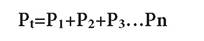
Dalton's law of partial pressure describes the pressure exerted by gases at various altitudes, stating that the total pressure of a gas mixture is the sum of the individual or partial pressures of all the gases in the mixture.
Mathematically, Dalton's law can be represented by the following equation: ![]()
Pt is equal to the total pressure, and P1, P2, and so forth represent the partial pressure of each gas in the mixture containing “n” gases (Table 11.2).
Table 11.2: Partial Pressure of Gases in the Earth's Atmosphere
| Gas | Percentage Within the Atmosphere | Partial Pressure (torr) |
| at Sea Level | at 2000 ft | at 5000 ft | at 10 000 ft |
| Nitrogen | 78% | 593 | 551 | 493 | 408 |
| Oxygen | 21% | 160 | 148 | 133 | 110 |
| Other gases | 1% | 7 | 7 | 6 | 5 |
| Total in the atmosphere | 100% | 760 | 706 | 632 | 523 |
Within a mixture of gases, each gas exerts a pressure equal to its own percentage of the total gaseous concentration. At sea level, where the total barometric pressure is 760 mm Hg, the percentage of oxygen is equal to 20.95%. The partial pressure of oxygen (PO2) at sea level can be calculated as follows:![]()
From sea level to 70 000 ft, the relative percentage of each gas within the atmosphere remains constant. As the altitude increases and the total barometric pressure decreases, the partial pressure of the gaseous components decreases, exerting less pressure. At an altitude of 10 000 ft, the atmospheric pressure is 523 mm Hg. The percentage of oxygen remains 20.95%, but the PO2 will decrease as follows (Table 11.3): ![]()
Table 11.3: Effects of Altitude on Oxygenation border=0>
| Altitude (ft) | Barometric Pressure (mm Hg) | PO2 (mm Hg) | PAO2 (mm Hg) | PaO2 (mm Hg) | PaCO2 (mm Hg) | Oxygen Saturation (%) |
| Sea level | 760 | 159.2 | 103.0 | 95 | 40.0 | 98 |
| 2000 | 706 | 148.0 | 93.8 | 86 | 39.0 | 97 |
| 5000 | 632 | 132.5 | 81.0 | 73 | 37.4 | 95 |
| 8000 | 565 | 118.4 | 68.9 | 61 | 36.0 | 93 |
| 10 000 | 523 | 109.6 | 61.2 | 53 | 35.0 | 87 |
| 15 000 | 429 | 89.9 | 45.0 | 37 | 32.0 | 84 |
| 18 000 | 380 | 79.6 | 37.8 | 30 | 30.4 | 72 |
| 20 000 | 349 | 73.1 | 34.3 | 26 | 29.4 | 66 |
| 22 000 | 321 | 67.2 | 32.8 | 25 | 28.4 | 60 |
*PO2 indicates partial pressure of ambient oxygen; PAO2, partial pressure of alveolar oxygen; PaO2, partial pressure of arterial oxygen; and PaCO2, partial pressure of arterial carbon dioxide.
PaO2 varies with underlying pathophysiology and, therefore, may require periodic or continuous monitoring.
Almost all neonates have pulmonary systemic shunts of varying magnitudes. Therefore, the data in the column labeled PaO2 should be considered an approximation only. The data are presented for illustrative purposes. The actual equation is as follows: ![]()
A-a (O2) is the difference between the alveolar (A) and arterial (a) oxygen; Fio2, the fraction of inspired oxygen; Patm is the barometric pressure in mm Hg; and 47 mm Hg at 37°C represents the partial pressure of water at body temperature. Because carbon dioxide displaces oxygen in the alveoli, the estimated alveolar carbon dioxide must be subtracted. The alveolar carbon dioxide is estimated by dividing the arterial PaCO2 by a “respiratory quotient fudge factor” of 0.8. Some authorities prefer to multiply the PaCO2 by a respiratory quotient fudge factor of 1.25. The net result is the same.
Henry’s Law
Henry's law is another important gas law affecting air medical transport and explains the solubility of gases within a liquid. According to this law, the amount of gas dissolved in a liquid is determined by the partial pressure and the solubility of the gas. With a significant change in barometric pressure, nitrogen gas bubbles can form in the blood. The bends, a type of decompression sickness, is a clinical condition exemplifying this law.
There is no specific altitude threshold to predict a clinical response to Henry's law and the probability of developing a decompression sickness. However, there is evidence of altitude decompression sickness occurring in healthy people at altitudes below 18 000 ft who have recently been scuba (self-contained underwater breathing apparatus) diving. Exposure to altitudes between 18 000 and 25 000 ft has shown a low occurrence of a decompression sickness, and most cases occur among people exposed to altitudes of 25 000 ft or higher.
The higher the altitude of exposure, the greater the risk of developing decompression illness. Cabin Altitude
The first protection against the influences of a changing altitude is the creation of an artificial atmosphere or cabin altitude. In a pressurized fixed- wing aircraft, compressed air is pumped into the cabin to maintain a cabin altitude significantly less than the flight altitude. The cabin altitude that can be maintained in various ambient altitudes varies with aircraft. Of note, helicopters are unpressurized and, therefore, cannot create an artificial atmosphere. Therefore, these vehicles offer nothing to prevent the effects of a changing altitude, because the cabin altitude will be the same as the actual flight altitude.
Although airplane travel is clearly affected by flight physiology and the stresses of flight, helicopter transport is also susceptible. It is often thought that flying at altitudes only above 8000 ft affects the patient, transport team, or flight crew, but this is not always the case. According to Boyle's law, team or flight crew members or patients flying with sinus problems, ear problems, or upper respiratory infections may feel the effects of barometric pressure changes with as little as a 1000- to 2000-ft change in altitude.
Smaller, unpressurized airplanes and helicopters are equally ineffective in combating the effects of the gas laws and, therefore, are generally limited to altitudes less than 10 000 ft. Pressurized fixed-wing aircraft, however, can fly higher while counteracting the negative effects of altitude. At flight altitudes of 30 000 to 40 000 ft, environmentally modified (pressurized) aircraft can often create an internal cabin altitude of 5000 to 8000 feet above sea level. This corresponds to an interior cabin pressure equal to approximately 3/4 atm (565 mm Hg), which also prevents pressurized airplanes from expanding and contracting too much as they change altitude. Although pressurization of the cabin can help to alleviate the risk of hypoxia, it is important to realize that most fixed-wing cabins are pressurized to approximately 7000 ft; in reality, this is still a high-altitude environment. By flying at lower altitudes, high-differential cabin-pressure aircraft have the ability to create a cabin pressure that simulates pressures at ground altitude. This may be beneficial when transporting a patient with a decompression illness.
Up to 25% of people who rapidly ascend to an altitude of 8000 ft (cabin altitude of 8000 ft or actual attitude of 8000 ft in an unpressurized aircraft) will become symptomatic. Nearly everyone abruptly exposed to an altitude of 12 000 ft will have symptoms commonly referred to as altitude sickness.
A malfunction of the pressurization equipment or aircraft structural damage (ie, cracked window or foreign object strike) may result in a loss of cabin pressure or decompression. When this happens, the pilot will attempt to rapidly descend to a lower altitude. The transport team must be prepared to deal with the effects of decompression, which will depend on several factors: total cabin volume, size of the structural defect in the hull, flight altitude, and the pressure differential between the flight altitude and the cabin altitude.
During a rapid decompression, objects move toward the structural defect and will be affected by the gravitational forces of a rapid descent. At the same time, there is a sudden decrease in the cabin temperature. This causes the aircraft to fill with fog because of moisture condensation in the expanding cabin atmosphere. This fog may be mistaken for smoke in the cabin. Hearing becomes impaired secondary to noise and to effects of the rapid decompression on the middle ear. The most important clinical consequence of rapid decompression at high altitude is a rapid drop in the cabin PO2, which can quickly lead to hypoxia in the flight crew, transport team, and patient. Supplemental oxygen for the pilot, transport team members, and patient is essential, and the window of time for effectiveness of this intervention can be very short before unconsciousness ensues. A loss of cabin pressurization may result in a variety of decompression illnesses as gas dissolved in the blood is released. Another clinically significant event is the rapid expansion of air within an enclosed space. If decompression occurs, all catheters, chest tubes, and nasogastric tubes should be unclamped (Table 11.4).
Table 11.4: Prevention of Complications During Air Transport of Neonatal and Pediatric Patients
Gas Expansion
1. Insert orogastric or nasogastric tubes open to air in every infant and child who may experience gastrointestinal symptoms or may be at risk for vomiting.
2. If a cuffed endotracheal or tracheostomy tube is in place, carefully monitor cuff pressure or consider replacement of air with water to prevent expansion of the cuff with altitude changes.
3. Ensure that chest tubes, endotracheal tubes, and other artificial vents are patent.
4. Suction airway well before and during transport, as needed.
5. Reevaluate frequently for presence of extrapulmonary air.
a. Carry a portable transillumination device (for neonates).
b. Have a needle thoracentesis set available.
6. Request that, if possible, the pilot fly at a lower altitude or increase the cabin pressurization (to simulate a lower altitude) when transporting a patient with trapped gas (eg, pneumothorax, pneumoperitoneum, or bowel obstruction).
Decreased PO2
1. Before leaving the referring hospital:
a. Ensure that the child is optimally oxygenated
b. Correlate arterial PO2 and CO2 measurements with cutaneous pulse oximetry and end-tidal CO2 (ETCO2) (in-line or nasal) and/or blood gas values by using point-of-care testing.
c. Check placement and stabilization of the endotracheal tube.
2. En route:
a. Use a cutaneous oxygen saturation monitor for all patients requiring oxygen or assisted ventilation (along with frequent careful assessment of the color of skin and mucous membranes).
b. Increase F∣O2 as needed to maintain adequate oxygenation saturation.
c. The oxygen adjustment equation can be used to calculate the F∣02 required at any cabin altitude or destination altitude as follows:
(F∣O2 • BP1) = F∣02 Required
BP2
where F∣O2 is the fraction of inspired oxygen the patient is receiving; BP1, the current barometric pressure; and BP2, the destination or altitude barometric pressure.