Formulating a Marketing Plan: Business Strategy
After assessing the market and analyzing what your program can offer, the next step is to define program goals in the context of the existing market. A commonly used method for this strategic planning is SWOT analysis (strengths, weaknesses, opportunities, threats).
An example of SWOT analysis as it pertains to transport medicine is shown in Table 13.2.A SWOT analysis helps determine how your service fits into the competitive landscape. This strategic technique allows programs to decide where/how to ration key marketing resources to either capture new market elements or prevent market share from being lost to competitors. This analysis should highlight areas that are underserved or inefficiently served.
Table 13.2: SWOT Analysis
S (Strengths)
Strong reputation, capable staff
Solid relationships with air and ground vendors
Solid relationships with several referring facilities
W (Weaknesses)
High cost structure
Location of receiving facility
Timeliness when transport queue is high
O (Opportunities)
New technologies
Possible merger with other facility
T (Threats)
Tighter regulations
Growing capabilities of competitor transport programs
Development of the Marketing Plan
The marketing plan is the written blueprint detailing how the message will be communicated to the customer. This plan identifies targets and details the strategies that will be necessary to successfully penetrate, capture, and maintain the market share of the program's referral area.
Key elements of the marketing plan include the following:
1. mission statement
2. market research and analysis
3. program goals and business strategy
4. marketing action plans
5. evaluation process
Because budget is an inherent limitation, it is imperative to prioritize the marketing goals based on necessity. Program directors should, therefore, consider the anticipated costs of available marketing strategies so that options can be weighed and resources can be identified. If sponsors are involved, directors should also consider return on investment.
A complete marketing plan utilizes multiple avenues to advertise and promote the transport services. This plan should be a combination of personal and traditional advertising techniques using media exposure and incentive services. Do not promise something that you cannot deliver.
Transport medicine has inevitable limitations, such as geographic distance, weather fronts, traffic patterns, and availability of programs. Recognized limitations of the program should be publicized to prevent unrealistic expectations (or potential litigation).
Marketing strategies include: branding, educating providers, and highlighting program accomplishments. Branding of the transport program is a key marketing tool that can enhance the program's reputation and build trust among customers. Consistency in the use of logos, colors, and uniforms is helpful to identify and increase the visibility of an institution or the transport program's service (Fig 13.1). When branding, it is helpful to use distinguishing colors and characteristics to distinguish the transport program from other ambulance teams in the local area. Use of slogans or visual images that are consistent with the referral hospital's corporate identity also can reinforce
Fig 13.1: Branding the Transport Program
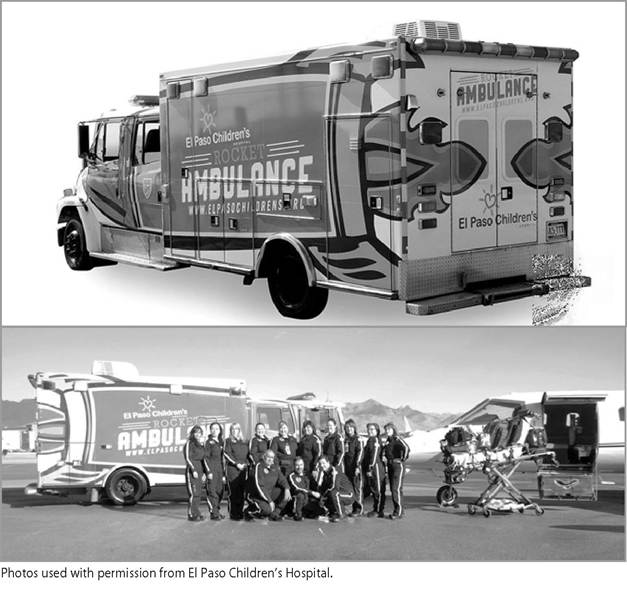
the marketing plan. Other strategies include the incorporation of customer service training in the transport program's education plan and highlighting the transport program's expertise, professional affiliations, safety awards, speeches, or recognition in newsletters or marketing brochures. Program members who actively attend or lead educational offerings or obtain special certifications may lend credence to the transport program's unique expertise. Examples of marketing strategies are shown in Table 13.3.