Intervention, Prosthetic Treatment, and Adaptive Equipment
Prosthetic fittings for the child with a fibular deficiency and subsequent ankle disarticulation should be successful. At the time of the child's first prosthetic fitting, there is still significant soft tissue surrounding the lower leg and ankle region.
As the child grows, the definition around their ankle will become greater, resulting in a “bulbous-shaped” distal residuum. This is not as large as the typical Syme amputation because the lateral malleolus is not present. Therefore, using the ankle as a sole means of suspension is inappropriate (124). Often, a waist belt and fork strap will be fitted to the child for suspension of his or her prosthesis. This will permit unencumbered range of motion and provide the parents a means of keeping the prosthesis with the child. The child may still be crawling when he or she begins to wear the prosthesis. Because the foot cannot actively plantar flex during these activities, the prosthesis may drag on the floor and pull off the child's limb. As the toddler becomes more active, the waist belt and fork strap may be replaced by a suspension sleeve. This sleeve will serve the purpose of keeping the prosthesis on the child's limb, but should be pliable enough not to restrict range of motion during ambulation (48). As the child and limb matures, anatomical suspension can be utilized. Children with the Boyd amputation may be able to take advantage of this sooner, as the distal residuum becomes more bulbous sooner. The prosthetists should be able to take advantage of the distal residuum and eliminate the need for auxiliary suspension. Many methods have been used to accommodate donning of bulbous residuum into prostheses. The major challenge is permitting the larger, distal end to pass through a narrower portion of the socket that should provide total contact with the limb when it is fully seated.Intervention for children with femoral abnormalities varies from shoe inserts to transfemoral (PFFD- style) prostheses. The child with a small femoral length discrepancy may need nothing more than a shoe insert or external shoe lift in order to equalize the length of the legs. This is only possible if hip flexion, abduction, and external rotation are addressed. Hips contracted in a flexed position often lead to a compensatory flexed knee. This posture is unstable in early stance phase of gait and may, therefore, require further intervention. Ankle foot orthoses (AFOs) that accommodate for the attitude of the leg and foot (usually equinus) can be used with shoe modifications. These orthoses may need to provide an external extension moment (ie, floor-reaction AFO design) if contractures have not been resolved.
As leg length discrepancy increases, the orthoses begin to morph into prostheses. The components used are no longer shoe lifts, but prosthetic feet inside regular shoes. The gait of the child can be asymmetrical because of different knee center heights. Transtibial prostheses have been used for some of these children with stable knees and knee centers that are higher than the contralateral side. Benefits of this are better gait mechanics and control of external knee flexion movement in early stance by quadriceps versus hip extensors. A drawback of this type of fitting is that when this individual sits, the top of the affected knee will be much higher than the nonaffected knee because the tibia is longer than the femur. This is generally acceptable to the user and preferred to lengthening or amputation. In the event that the entire leg length, including foot or ankle disarticulation limb, is equal to or more proximal than the contralateral knee, a PFFD-style, transfemoral prosthesis is indicated. Capturing the proximal contours of the limb, with or without a foot present, and determining the appropriate height of the prosthesis are just two problems for the prosthetists.
Attempts are made to fit ischial containment sockets to block the motion of the pelvis with respect to the femur, thus preventing subluxation of the femoral head. The difficulty with this is that with the soft tissue mass in the proximal thigh, the socket often is so high that it contacts the contralateral side perineum. If an articulation is going to be added to these longer limbs, many times, “outside hinges” are used in conjunction with an elastic extension assist for stability at initial contact and loading response. Single pivot, upper-extremity hinges are frequently used because of the size of the child at initial fitting. If there is room, a locking knee joint may be added initially to provide stability and can be unlocked during sitting. Frequently, polycentric knee joints are used for these children as they get older to address hip instability and control of the prosthesis, enable swing phase clearance because the linkages “shorten” the lower leg when the knee is flexed, and provide minimal femoral length discrepancy during sitting.A myriad of prosthetic knees and feet can be used for these children, provided there is room for the components and that they are at an appropriate functional level to benefit from the components. Even with higher levels of involvement, children are frequently variable cadence ambulators and can take advantage of the high-technology components and components that can adapt to changes in speed and terrain (138,139). Figure 13.22 shows a foot with a shell that allows sandal wear.
When a knee disarticulation has been performed, as is typically the case with a complete absence of the tibia, prostheses similar to the “above-knee” prosthesis mentioned for the children with femoral absence exist. The knees and feet are used in a similar sequence and fashion. The main difference is the socket design. The child may have a relatively invasive socket at a young age to capture the limb and provide maximum stability. When the child matures, the socket will be trimmed much lower because the presence of all good hip musculature, including the hip adductors, will enable the
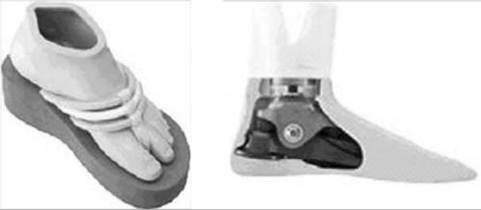
Figure 13.22 College Park Industries TruPer Foot.
Note that configuration of separated great toe on foot shell permits use of flip flops or sandals.child to control the prosthesis well and walk with only minor gait deviations.
The child with a partial tibial deficiency will be fitted with a prosthesis that resembles a standard transtibial design. Once the tibiofibular synostosis has healed, the child can utilize most of the options of transtibial prostheses, including pin-locking liners and multiaxial dynamic response feet. The angular deformities that follow surgical reconstruction may prove challenging to the prosthetists in terms of the socket design. They may need to provide a means of donning the device that is atypical of transtibial designs and more like that of ankle disarticulations. A socket with a removable panel (door) may need to be created to permit the limb to successfully enter the socket. Closure is often provided for by straps or Velcro.
Frequently, congenital lower-extremity limb deficiency may present with odd combinations of absent portions of the extremity and deformities of the remaining segments. The deficiency may include proximal muscles, skin, nails, and parts of the joint. The child with bilateral PFFD, for instance, may also have upper-extremity limb deficiencies, which create challenges for donning/doffing clothes, prosthesis, and the use of prosthesis.
Treatments of varying levels of deficiency of acquired amputation are frequently individualized based on the level, number, and condition of the amputation(s).
Cases of traumatic limb loss will be treated in a fashion similar to adults, with the exception of potential growth and “overgrowth.” Children with amputations secondary to sarcoma may be treated slightly different, as their limb volume will often fluctuate dramatically when they are undergoing chemotherapy and radiation therapy (55). Major concerns for fitting the child with a septicemic cause of amputation is the resulting condition of skin and bone (65). The child will most likely have experienced skin grafting procedures, and underlying bone will often progress at different rates than expected. These growth rates may be sporadic, delayed, or cause angulation deformities to occur (63).